Kirjojen hintavertailu. Mukana 12 435 549 kirjaa ja 12 kauppaa.

Kirjahaku

Etsi kirjoja tekijän nimen, kirjan nimen tai ISBN:n perusteella.

1000 tulosta hakusanalla James C. Hamilton

Preaching the Psalms / J. Clinton Mccann, Jr. & James C. Howell.
This book is designed to help preachers find and use the riches of the Psalms for preaching. The authors address the perception that the Psalms often go neglected in preparing for one of the central acts of worship: preaching. McCann and Howell demonstrate that the Psalms offer the preacher broad, rich possibilities for the congregation s engagement with the Scripture. Each chapter concludes with a brief sample."
James's Will-To-Believe Doctrine

James's Will-To-Believe Doctrine

James C.S. Wernham

McGill-Queen's University Press
1997
sidottu
In 1896 William James published an essay entitled The Will to Believe, in which he defended the legitimacy of religious faith against the attacks of such champions of scientific method as W.K. Clifford and Thomas Huxley. James's work quickly became one of the most important writings in the philosophy of religious belief. James Wernham analyses James's arguments, discusses his relation to Pascal and Renouvier, and considers the interpretations, and misinterpretations, of James's major critics. Wernham shows convincingly that James was unaware of many destructive ambiguitities in his own doctrines and arguments, although clear and consistent in his view that our obligation to believe in theism is not a moral but a prudential obligation -- a foolish-not-to-believe doctrine, rather than a not-immoral-to-believe one. Wernham also shows that the doctrine is best read as affirming the wisdom of gambling that God exists, a notion which James failed to distinguish from believing and which, among other things, he explicitly identified with faith. James's pragmatism, a theory concerning the meaning of truth, is shown to be quite distinct from the doctrine of The Will to Believe. In concentrating on a careful analysis of this doctrine of the will-to-believe, Wernham not only makes a major contribution to understanding James's philosophy, but also clarifies issues in the philosophy of religion and in the analysis of belief and faith.
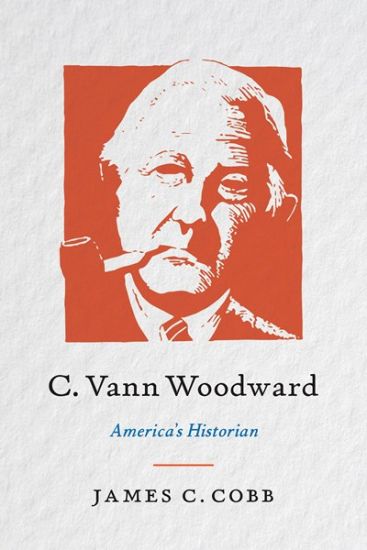
C. Vann Woodward

C. Vann Woodward

James C. Cobb

THE UNIVERSITY OF NORTH CAROLINA PRESS
2022
sidottu
With an epic career that spanned two-thirds of the twentieth century, C. Vann Woodward (1908–1999) was a historian of singular importance. A brilliant writer, his work captivated both academic and public audiences. He also figured prominently in the major intellectual conflicts between left and right during the last half of the twentieth century, although his unwavering commitment to free speech and racial integration that affirmed his liberalism in the 1950s struck some as emblematic of his growing conservatism by the 1990s. Woodward's vision still permeates our understandings of the American South and of the history of race relations in the United States. Indeed, as this fresh and revealing biography shows, he displayed a rare genius and enthusiasm for crafting lessons from the past that seemed directly applicable to the concerns of the present—a practice that more than once cast doubt on his scholarship.James C. Cobb offers many original insights into Woodward's early years and private life, his long career, and his almost mythic public persona. In a time where the study and substance of American history are profoundly contested, Woodward's career is replete with lessons in how myths about the past, some created by historians themselves, come to be enshrined as historical truth.
Check-List Of Birds Of The World; A Continuation Of The Work Of James L. Peters (Volume Ix)
This book has been considered by academicians and scholars of great significance and value to literature. This forms a part of the knowledge base for future generations. So that the book is never forgotten we have represented this book in a print format as the same form as it was originally first published. Hence any marks or annotations seen are left intentionally to preserve its true nature.
C. Vann Woodward

C. Vann Woodward

James C. Cobb

THE UNIVERSITY OF NORTH CAROLINA PRESS
2026
pokkari
With an epic career that spanned two-thirds of the twentieth century, C. Vann Woodward (1908–1999) was a historian of singular importance. A brilliant writer, his work captivated both academic and public audiences. He also figured prominently in the major intellectual conflicts between left and right during the last half of the twentieth century, although his unwavering commitment to free speech and racial integration that affirmed his liberalism in the 1950s struck some as emblematic of his growing conservatism by the 1990s. Woodward’s vision still permeates our understandings of the American South and of the history of race relations in the United States. Indeed, as this fresh and revealing biography shows, he displayed a rare genius and enthusiasm for crafting lessons from the past that seemed directly applicable to the concerns of the present—a practice that more than once cast doubt on his scholarship. James C. Cobb offers many original insights into Woodward’s early years and private life, his long career, and his almost mythic public persona. In a time where the study and substance of American history are profoundly contested, Woodward’s career is replete with lessons in how myths about the past, some created by historians themselves, come to be enshrined as historical truth.
Check-List Of Birds Of The World; A Continuation Of The Work Of James L. Peters (Volume Xv)
This book has been considered by academicians and scholars of great significance and value to literature. This forms a part of the knowledge base for future generations. So that the book is never forgotten we have represented this book in a print format as the same form as it was originally first published. Hence any marks or annotations seen are left intentionally to preserve its true nature.
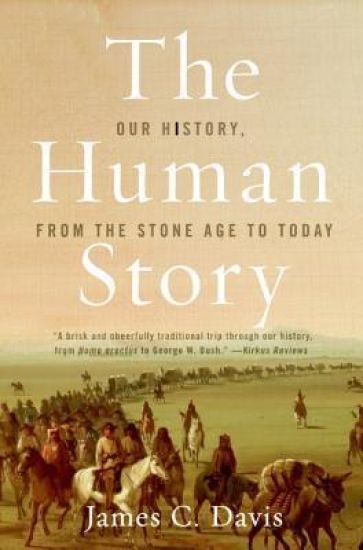
The Human Story

The Human Story

James C Davis

HarperCollins
2005
nidottu
Has there ever been a history of the world as readable as this?In The Human Story, James C. Davis takes us on a journey to ancient times, telling how peoples of the world settled down and founded cities, conquered neighbors, and established religions, and continues over the course of history, when they fought two nearly global wars and journeyed into space.Davis's account is swift and clear, never dull or dry. He lightens it with pungent anecdotes and witty quotes. Although this compact volume may not be hard to pick up, it's definitely hard to put down.For example, on the death of Alexander the Great, who in a decade had never lost a single battle, and who had staked out an empire that spanned the entire Near East and Egypt, Davis writes: "When they heard how ill he was, the king's devoted troops insisted on seeing him. He couldn't speak, but as his soldiers -- every one -- filed by in silence, Alexander's eyes uttered his farewells. He died in June 323 B.C., at the ripe old age of thirty-two."In similar fashion Davis recounts Russia's triumph in the space race as it happened on an autumn night in 1957: "A bugle sounded, flames erupted, and with a roar like rolling thunder, Russia's rocket lifted off. It bore aloft the earth's first artificial satellite, a shiny sphere the size of a basketball. Its name was Sputnik, meaning 'companion' or 'fellow traveler' (through space). The watchers shouted, 'Off. She's off. Our baby's off ' Some danced; others kissed and waved their arms."Though we live in an age of many doubts, James C. Davis thinks we humans are advancing. As The Human Story ends, he concludes, "The world's still cruel; that's understood, / But once was worse. So far so good."