Kirjojen hintavertailu. Mukana 12 016 292 kirjaa ja 12 kauppaa.

Kirjahaku

Etsi kirjoja tekijän nimen, kirjan nimen tai ISBN:n perusteella.

1000 tulosta hakusanalla James Cunningham

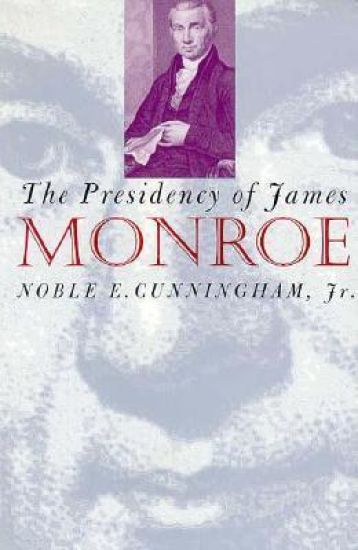
The Presidency of James Monroe

The Presidency of James Monroe

Noble E. Cunningham

University Press of Kansas
1996
sidottu
Noble Cunningham's history of the fifth presidency (1817-25) shows a young nation beset by growing pains and led by a cautious politician who had neither the learning nor the intellect of Jefferson or Madison, but whose actions strengthened both the United States and the presidency itself. Cunningham makes clear that the mislabelled ""era of good feelings"" had more than its fair share of crises, including those resulting from revolutions in Latin America, Spanish possession of Florida, the depression of 1819, and the controversy over slavery in Missouri. Monroe, he shows, successfully defused these potentially explosive situations, most notably by negotiating the 1820 Missouri Compromise and announcing in 1823 what became to be known as the Monroe Doctrine, a document that still guides American policy in the western hemisphere. Cunningham effectively places these actions within the context of Monroe's life and times and sheds new light on the inner workings of his cabinet and his relations with Congress. In addition, he features the prominent roles of two future presidents: John Quincy Adams as secretary of state and Andrew Jackson as the controversial general whose actions in the Seminole War created a headache for the administration. Though substantially informed by previous scholarship, Cunningham writes largely from the abundant primary source materials of the era to provide a fresh look at a president and a nation on the brink of greatness.

The Seasons.

The Seasons.

James Thomson; Allan Cunningham

British Library, Historical Print Editions
2011
pokkari
Title: The Seasons.Publisher: British Library, Historical Print EditionsThe British Library is the national library of the United Kingdom. It is one of the world's largest research libraries holding over 150 million items in all known languages and formats: books, journals, newspapers, sound recordings, patents, maps, stamps, prints and much more. Its collections include around 14 million books, along with substantial additional collections of manuscripts and historical items dating back as far as 300 BC.The FICTION & PROSE LITERATURE collection includes books from the British Library digitised by Microsoft. The collection provides readers with a perspective of the world from some of the 18th and 19th century's most talented writers. Written for a range of audiences, these works are a treasure for any curious reader looking to see the world through the eyes of ages past. Beyond the main body of works the collection also includes song-books, comedy, and works of satire. ++++The below data was compiled from various identification fields in the bibliographic record of this title. This data is provided as an additional tool in helping to insure edition identification: ++++ British Library Thomson, James; Cunningham, Allan; 1892. lxx. 271 p.; 8 . 11611.e.31.
Evolution of Ireland’s Industrial, Science and Technology Policy

Evolution of Ireland’s Industrial, Science and Technology Policy

James A. Cunningham; Patrick Collins; Majella Giblin

now publishers Inc
2020
nidottu
Evolution of Ireland’s Industrial, Science and Technology Policy examines the evolution of industrial, science and technology policy from a small country perspective. In particular, the monograph focuses on the evolution of Irish industrial development, the develop of Irish industrial cluster with a distinct focus on the case of the medical technology cluster in the West of Ireland, and Ireland’s education research policy designed to build capacity and scientific capabilities. The authors conclude by discussing the challenges and implications of industrial science and technology from a small country perspective.The monograph reflects on the future industrial, science and technology policy considerations that Ireland as a small open economy needs to focus on in order to evolve, maintain, and grow its international industrial, science, and technology reputation and standing.
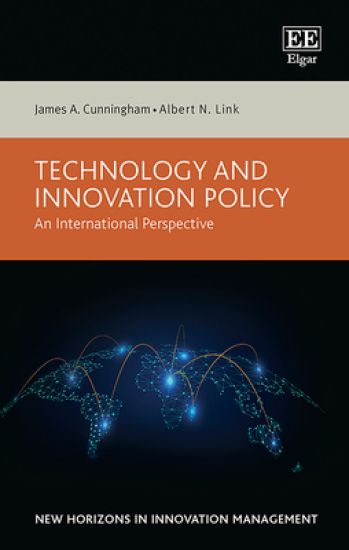
Technology and Innovation Policy

Technology and Innovation Policy

James A. Cunningham; Albert N. Link

Edward Elgar Publishing Ltd
2021
sidottu
This book discusses technology policy and innovation policy from an international perspective, with a particular emphasis on the policies of the United States and the United Kingdom. The importance of these policy areas, as well as their relationship to one another, is a unifying theme throughout, and this relationship is illustrated through an integrating policy framework.Private sector and public sector investments in R&D are posited to be the relevant target variables for technology policy, and vehicles to provide incentives for making each more effective are discussed along with suggestive information about how effective incentives have actually been. Consideration is given to the unintended consequences of technology policy. Also emphasized is the environment in which technology policy is promulgated and its relationship to a global innovation ecosystem. Innovation policy is a consequence of technology policy, and the innovation policies of various countries are also discussed.Technology and Innovation Policy will benefit academic researchers, senior scientists, innovation and technology policy makers, and graduate students who seek a deeper understanding of the relationship between technology and innovation policies from an international perspective.
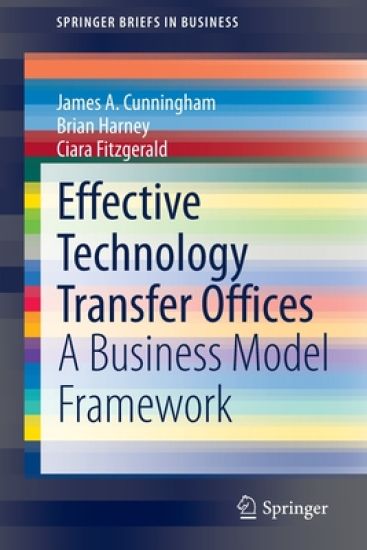
Effective Technology Transfer Offices

Effective Technology Transfer Offices

James A. Cunningham; Brian Harney; Ciara Fitzgerald

Springer Nature Switzerland AG
2020
nidottu
Combining best practices, empirical studies and the authors’ own research on technology transfer offices (TTOs), technology transfer, ecosystems and scientists in the principal investigator role, this book presents a business model framework for TTOs. From a practitioner’s perspective the business model framework captures key elements of TTOs’ strategic and operational activities that are needed for effective management and leadership. Moreover, the frameworkaddresses central issues including strategy, organisational structure, staff and resources, activities, mechanisms, policy and procedures, and evaluation and outcomes, while also consideringcontextual factors that directly and indirectly affectTTOs, namely thecommercialisation culture and ethos,as well as researchers’ commitment, awareness and motivation. For each element of the framework, the book outlines the key success factors and facilitating factors that enable effectivetechnology transfer.
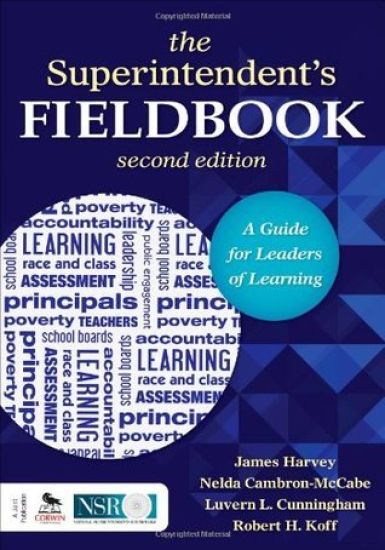
The Superintendent's Fieldbook

The Superintendent's Fieldbook

James S. Harvey; Cambron-McCabe Nelda H.; Cunningham Luvern L.; Koff Robert H.

Corwin Press Inc
2013
nidottu
An updated edition of the most comprehensive, complete handbook for the superintendency! The original book grew out of extensive funding and professional development from the highly-respected Danforth Foundation, and examines the role of the superintendent through field-based research with over 150 superintendents over ten years. Intended for urban, rural, and suburban superintendents, the book is designed to help these dirtrict leaders improve their effectiveness, learn from best practices, and fully understand the tenets of NCLB and other critical legislation. As a fieldbook, the book reflects stories, anecdotes, vignettes from practicing superintendents and is truly a practioner-friendly resource for school leaders. In updating The Superintendent's Fieldbook, the authors draw on their five-year experience with some 100 members of the National Superintendents Roundtable. Internationally, this experience involves extensive attention to education in China and Europe, including four site visits to China, plans to send a delegation of Roundtable superintendents to Finland later this year, and a month spent in England and Israel by one of our colleagues examining principal development.
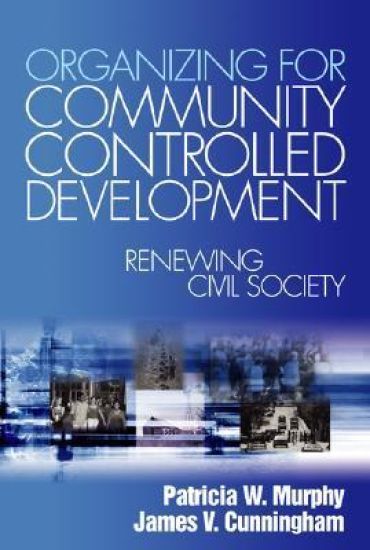
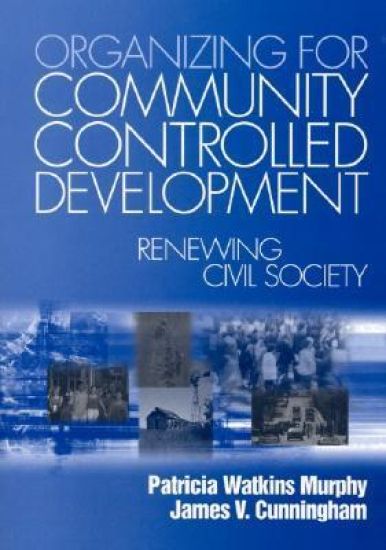
Organizing for Community Controlled Development

Organizing for Community Controlled Development

Patricia Watkins Murphy; James V. Cunningham

SAGE Publications Inc
2003
sidottu
"It is a worthy book, with probably the best collection of resources anywhere for those trying to combine organizing and development." --SHELTERFORCE MAGAZINE Organizing for Community Controlled Development is about renewing and revitalizing local living places through shared grassroots work focused on stimulating racial unity, civic vigor, and economic fairness. It proposes a detailed model for understanding the communities we call home and for guiding residents and their allies to strengthen local assets, reduce distress, and make and control needed social, political, and economic plans for change. This book's coast-to-coast and beyond set of down-to-earth case studies aims at helping readers understand what are effective and what are ineffective methods for tackling renewal. Key FeaturesCases and their assessments: These offer ways that small communities across the globe today can honor diversity and civic responsibility and build programs that promote and facilitate year-around participation, while maintaining fruitful links to the governments, businesses, foundations and other institutions that can provide essential resources for change "How to" chapters: These chapters contain detailed, tested techniques for recruiting, planning, fundraising, communicating, leadership growth, and other skills and processes that are part of the book's model which combines community organizing and community economic development. Suggestions on how and why authentic renewal groups can lay claim to resources adequate to carry out quality programs and projects with lasting impact: Throughout, the authors propose how organizing, planning, and implementation activities can be carried out with widespread inclusion of residents and other parties of interest, thereby insuring authenticity, ownership and support.Technical chapters on making a long-range plan for a renewal organization: Making a plan for a small community and all its interests is covered from building social strength, securing adequate resources, building a community's financial assets, and creating affordable housing, to transforming a local shopping area, and boosting workforce development. Intended Audience: The book was written for students who aspire to work as community organizers, and all those who practice organizing and community development whether as volunteers or professionals.
Organizing for Community Controlled Development

Organizing for Community Controlled Development

Patricia Watkins Murphy; James V. Cunningham

SAGE Publications Inc
2003
nidottu
"It is a worthy book, with probably the best collection of resources anywhere for those trying to combine organizing and development." --SHELTERFORCE MAGAZINE Organizing for Community Controlled Development is about renewing and revitalizing local living places through shared grassroots work focused on stimulating racial unity, civic vigor, and economic fairness. It proposes a detailed model for understanding the communities we call home and for guiding residents and their allies to strengthen local assets, reduce distress, and make and control needed social, political, and economic plans for change. This book's coast-to-coast and beyond set of down-to-earth case studies aims at helping readers understand what are effective and what are ineffective methods for tackling renewal. Key FeaturesCases and their assessments: These offer ways that small communities across the globe today can honor diversity and civic responsibility and build programs that promote and facilitate year-around participation, while maintaining fruitful links to the governments, businesses, foundations and other institutions that can provide essential resources for change "How to" chapters: These chapters contain detailed, tested techniques for recruiting, planning, fundraising, communicating, leadership growth, and other skills and processes that are part of the book's model which combines community organizing and community economic development. Suggestions on how and why authentic renewal groups can lay claim to resources adequate to carry out quality programs and projects with lasting impact: Throughout, the authors propose how organizing, planning, and implementation activities can be carried out with widespread inclusion of residents and other parties of interest, thereby insuring authenticity, ownership and support.Technical chapters on making a long-range plan for a renewal organization: Making a plan for a small community and all its interests is covered from building social strength, securing adequate resources, building a community's financial assets, and creating affordable housing, to transforming a local shopping area, and boosting workforce development. Intended Audience: The book was written for students who aspire to work as community organizers, and all those who practice organizing and community development whether as volunteers or professionals.
The Superintendent's Fieldbook

The Superintendent's Fieldbook

Cambron-McCabe Nelda H.; Cunningham Luvern L.; James S. Harvey; Koff Robert H.

SAGE Publications Inc
2004
sidottu
The Superintendent's Fieldbook: A Guide for Leaders of Learning is the most comprehensive, complete handbook for the superintendency. It grew out of extensive funding and professional development from the highly-respected Danforth Foundation, and examines the role of the superintendent through field-based research with over 150 superintendents over ten years. Intended for urban, rural, and suburban superintendents, the book is designed to help these district leaders improve their effectiveness, learn from best practices, and fully understand the tenets of NCLB and other critical legislation. As a fieldbook, the book reflects stories, anecdotes, and vignettes from practicing superintendents and is truly a practitioner-friendly resource for school leaders.
Creative Economies in Peripheral Regions

Creative Economies in Peripheral Regions

Patrick Collins; James A. Cunningham

Springer International Publishing AG
2017
sidottu
This is the first study to draw on international research carried out across four EU member states to add to the neglected area of the creative economy of peripheral regions.Economies are dynamic entities and subject to constant flux. Driven by changing tastes, new ways to make and disruptive innovations, new routes of economic development present themselves at ever increasing rates. This study is concerned with the rise of the creative economy. UNCTAD has marked the emergence of the creative economy across the globe and noted its resilience in the face of recent economic turmoil. Here, the authors intend to bring the level of analysis down to the regional and firm level by uncovering the extent of the creative economy in some of Europe’s most peripheral regions. This is the first study to draw on international research carried out across four EU member states to add to the neglected area of the creative economy of peripheral regions. The work contributes to expanding theory in the areas of economic geography, business studies and regional development.
Creative Economies in Peripheral Regions

Creative Economies in Peripheral Regions

Patrick Collins; James A. Cunningham

Springer International Publishing AG
2018
nidottu
This is the first study to draw on international research carried out across four EU member states to add to the neglected area of the creative economy of peripheral regions.Economies are dynamic entities and subject to constant flux. Driven by changing tastes, new ways to make and disruptive innovations, new routes of economic development present themselves at ever increasing rates. This study is concerned with the rise of the creative economy. UNCTAD has marked the emergence of the creative economy across the globe and noted its resilience in the face of recent economic turmoil. Here, the authors intend to bring the level of analysis down to the regional and firm level by uncovering the extent of the creative economy in some of Europe’s most peripheral regions. This is the first study to draw on international research carried out across four EU member states to add to the neglected area of the creative economy of peripheral regions. The work contributes to expanding theory in the areas of economic geography, business studies and regional development.
Business Failure and Entrepreneurship

Business Failure and Entrepreneurship

Grace S. Walsh; James A. Cunningham

now publishers Inc
2016
nidottu
This book explores the issues and provides a comprehensive overview of the evolution of business failure research that has surrounded the subject over the years within the entrepreneurship literature. This literature review is organized as follows:Section 2 discusses the lack of a universally accepted definition of business failure, the difficulties that arise from this, and the way in which this has directly contributed to the limitations of quantitative studies. Furthermore the range of definitions employed by various studies within the literature is examined in addition to the diverse methodological approaches.Section 3 charts the emergence of failure studies in the business literature, from their roots in financially driven bankruptcy prediction models to the more encompassing organizational decline models. The review also explores competing perspectives of business failure - deterministic and voluntaristic. These two distinct schools of thought raise compelling, albeit reductionist arguments in their exploration of the drivers of business failure.Section 4 provides a review of the extant literature on business failure in the entrepreneurship field. The focus is on the areas of enquiry that have dominated literature in the area. The section examines the body of knowledge on causes of, learning from, and psychological effect of failure in the context of entrepreneurship. Additionally the literature pertaining to emotions and failure as well as recovery from failure are discussed and popular theories that accompany these subjects are considered. This section culminates in an overview of the methodological approaches that are more commonly seen in the recent literature and then discusses the way in which these approaches compare to previous research methods.The latter part of the review is comprised of Section 5 where an overview of the limitations of current approaches to the study of business failure is presented; particular focus is given to the issues that arise from retrospective biases.Finally, Section 6 explores the future of the research topic within the entrepreneurship literature.The review concludes with a summary of the key arguments presented and an iteration of the importance, for both theory and practice, of sustaining and advancing business failure research.