Kirjahaku
Etsi kirjoja tekijän nimen, kirjan nimen tai ISBN:n perusteella.
1000 tulosta hakusanalla James Gordon Farrell




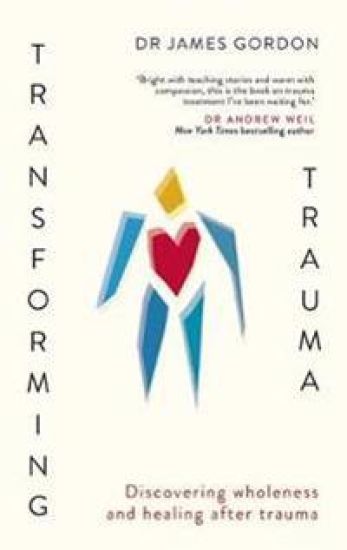
The definitive new guide on healing trauma and taming our triggers, by Harvard-trained-Psychiatrist and pioneer of mind-body medicine, Doctor James Gordon.Trauma comes to all of us, through grief or from a painful experience; even if our symptoms do not reach that of Post-Traumatic Stress Disorder, the consequences can be devastating. The good news is that there are self-care tools to help us face the storm, heal our traumas and become healthier and more whole than ever before because of them. In Transforming Trauma, Doctor Gordon equips readers with the first evidence-based program to reverse the effects of trauma on our bodies and minds that he has used to support thousands of people across the world who have suffered - from Syrian refugees and 9/11 survivors to everyday people with emotional or physical illness.Doctor Gordon believes that any challenge can be overcome once you have the right techniques - he will show us how to recognise our triggers step-by-step - those words, actions, perceptions that in some way resemble a past trauma - and let them become our teachers, so we can finally realise that that is then and this is now and in turn, open the door for freedom from our past and a fresh route for hope, purpose and love.'This is the book on trauma treatment I've been waiting for' - Dr Andrew Weil, New York Times bestselling author + Professor of Medicine'This book could give you back your life in unimaginable ways, it will inspire you to say 'yes' to the seemingly inconceivable and impossible' - Jon Kabat-Zinn


As dreams of rock stardom fade and die, the yawning gap it leaves in our hero's life leads him to a major reassessment of his life-purpose. Missing his girl-friend Sarah, he moves, finding temporary work in London. At first Sarah resists the move, though she gradually becomes more comfortable with him the more he becomes so with himself. Aware of much in his past he needs to face, he at first seeks to reconcile himself to the Catholicism of his youth. This fails as dramatically as the bands, and for a time he thinks he is predestined for Hell. His fall-out exploration of other systems of belief emerges in contradictory ways, most prominently in a continuing preoccupation with eastern philosophies, Zen Buddhism especially. Finally (through an apparently trivial, random event) he finds himself drawn to the Quakers.His father, an American whom he has only met twice in his life, is a Quaker. This never particularly interested him before, but it intrigues him enough now for him to fly to New York to get to know him and his family better. From this, combined with his independent discovery of a form of Christianity he finds congenial, emerges a desire to work abroad, a form of service. To finance this, he takes on a range of different jobs, all of which turn out to be growth-points in different ways.Among the memories of his past life that he now confronts are those of his schools, from whose class exclusivity he is now as estranged as he is from their Catholicism. His return as a visitor to school and college triggers other ironies and revelations, and John Gerard is well on the way to replacing earlier stories with a fresh new narrative, one self-made rather than conditioned by either of his parents, or his education. Throughout he is haunted by another apparently chance event, to which can be traced his growing delusion, born of a literalistic belief in prophecy, that he is not Christ but Antichrist. This is so alien to the Quaker approach, that he conceals it from them as he perseveres in attending their meetings. When he applies to work in the Third World, the Quakers find him 'too wild for them', and sponsor him to work with Operation Omega, an anarchic aid agency in Bangladesh.As our hero reaches Bangladesh in the last chapter, it is already more home to him than Kew, Cambridge, or even New York ever were, let alone any of Gerard's various stopping-places on the way.

Soon after John has moved to Dacca to become joint co-ordinator, a newly arrived volunteer becomes seriously ill, and JG has to accompany him back to the UK. In a stay that is meant to last no more than a week, but lasts another ten, a series of critical events combine to destroy his self-confidence and sense of purpose. After many challenges to his certainties, not to speak of his sanity, he decides finally after much soul-searching to return to Bangladesh for a second time.The various undercurrents and relationships within the growing band of Omegans provide for more than one surprise, both in Dacca and elsewhere, while for the previously cloistered John, most of what he experiences is revelatory in one way or another. The changes in Omega come thick and fast, many arising from chance happenings, and provide a fair measure of humour along the way, most of it various shades of dark.A Dacca Surprise (so in more ways than one) continues the personal Odyssey on which John Gerard embarked on the death of his mother at the beginning of the quartet. In following up what he sees as his Christian duty to help the unfortunate, he surprisingly finds the identification giving way to one far more compatible with his previous hippie persona than he could ever have expected.

OMEGA UNWINDSWhat had begun as a direct action project had become an ostensibly more humdrum affair, a relief effort which held up the fig-leaf of reconciliation between communities. It was not so much that Bengalis were not getting reconciled with their Bihari neighbours. They didn't have all that much to do with them, as they had problems enough of their own in the newly emerging nation of Bangladesh.In this mature phase of the project it became clear that those Biharis most able to do so, were managing to leave, most for India, some for Nepal or even Pakistan. It was also apparent that in areas where Omega had never much set foot, the Biharis were doing as well if not better than in those places where Omega had been working.This somewhat undermined confidence, and led to an increasingly cynical approach to their presence, a preparedness to engage more in personal and group adventures as the projects continued to evolve, increasingly run by the Biharis themselves. This, combined with radical pressure from the original Omegans, who had always favoured direct action over being, as they saw it, effectively mere agents for the UN or Oxfam, led Omega finally to a consensus. They would hand over the projects to the Biharis themselves, and begin a programme of withdrawal.High ideals had only ever been matched in intensity by the unconventional nature of their preferred lifestyles and choices, as is most clearly spelt out in this, the fourth in the Shantiluyah series. Although partially successful in their bid to live closer to the people than was usual for western agencies - a success that impacted on their health, both physical and mental - the Omegan volunteers were nonetheless never able or willing to go native to anything like the extent that would have been required to satisfy their lofty intentions. This increasingly led to a special kind of nihilistic and surreal style of living, which could not mitigate the nostalgia and chronic culture shock which never left them. The story told is one that does not shy from dramatising some of the consequences of all this in personal relationships and individual behaviours, which were not always exemplary from a strict standpoint of how one should behave in another's country, and indeed in a strikingly contrasting culture. Nevertheless, it is also a story of successes, of difficulties overcome, of some heroism, much survival, often through the anarchic humour with which they variously viewed their situation, and even their task. It is finally the true story (however fictionally told) of a little known episode in the history of youth in the early 1970s, just as little known in the annals of the emergence of Bangladesh.

Operation Omega, the anarchic, nominally pacifist, one time direct action group in Bangladesh that had cooled into a relief and rehabilitation agency, had effectively ceased operating at the end of the previous book in the series 'Omega Unwinds'. As 1972 ripened and started to decay, the energies of group members turned more overtly to diversions of various sorts, as either mood or chance took them. The mere hint of a hurricane, a reverse in love, or a momentous revelation about one of its founding members, any one of these could trigger a further spiraling descent into farce, or even tragedy. This most high-minded of actions, originally designed to halt a genocide, became an arena for mostly young westerners to discover themselves, their weaknesses, the real colour of their ideals. In telling this tale (and it is finally a tale, a fiction, however much one of real events and passions), the author saw himself as fulfilling a promise made to an agency that had funded their last days; despite the fact that they were no longer actually doing anything in the way of relief or rehabilitation, let alone direct action, in Bangladesh, or anywhere else. Except possibly, and it is an important exception, with regard to themselves, their relationships, and their various talents. The agency's officer was convinced that such work should no longer be done by well-meaning expatriates of a former colonial power, but by recruits closer to the land itself. Omega's story seemed to bear out his theory rather well, and he imposed the condition that Omega write a report that was not a whitewash, but told the story very much as it was, the truth with all its knobs. The author took on this charge as a personal duty. Having found himself unable to write a conventional report, he had viewed the destruction of the Omega papers by a hurricane consisting of his children and their friends (who were one day inspired to ransack the shed where the papers were stored) as a sign that he was to write something more imaginative about the experience. A novel perhaps, that might recreate the events while to some extent protecting, where they wished them protected, the identities of the persons involved. Above all, it should be a true account, one that not merely sang such praises as were due, but trumpeted the human dramas that accompanied them; the extent to which the young people involved were, as some of them were always aware, mere adventurers, true outsiders in a strange yet curiously connected land (for Bangladesh was part of the original province of Bengal, whence the British had four centuries before, started and consolidated their rule of India.) The scene of action in this last book, varies more than any of the previous: from Dacca to Tetulia in the north, to Chittagong and Cox's Bazaar in the south-east, to Calcutta to the south, to Nepal, to the coastline down to Rameswaram in Tamil Nadu, to Kerala and Bombay, and finally back to Britain. The story is close enough to what happened to be a true record, without failing to exploit some of the advantages of a fictional approach; the principal of which (I hope ) is humour, though, as said earlier, there is pathos and sadness to be found too, as in all true human dramas. Finally I hope very much it fulfils the assignment set by the relief agency concerned, though showing that, with all the mistakes, the shortcomings, the personal agendas, and the intrigues, Omega managed finally to have made the right sort of difference. Not least, I would submit, in correctly reading the signs that showed their direction could at any time be questioned, challenged; and that finally, it was high time to leave, just when we did.


In 2015, at the age of 70, having experienced strange coincident events for most of his life, the author made a major discovery. He was not going mad. More, he was not alone. A class he was teaching, through further coincidences, came to share the story. From just affecting the author personally, synchronicities (Jung's term for meaningful coincidences) had become a shared experience, and one that seemed set to continue. Not only were the students aware of synchronicity, but each had a tale to tell. At about the same time, the author's own family members, previously indifferent or hostile, were themselves reporting such events. By now, the author himself was experiencing them on a daily basis, careful to record each event faithfully in his personal log, as he had done since 2004. The more all this intrigued him, the more frustrated he became in his attempts to persuade closest friends of the reality of what he was experiencing. He sought Jungian counselling, with mixed results, though not without a further explosion of synchronous events The task of persuading even Jungian analysts of the reality, let alone the importance of this phenomenon, was an uphill one. It led him to wonder whether experiments could be devised, that might yield data to convince so-called 'sceptics'. These ideas bore fruit in the following year in the experiments to be told of in the sequel/sister volume to Ravens, soon itself to be published under the title 'The Greek Class: Lessons in Synchronicity'. Ravens in Full Bloom, with its excellent foreword by Christopher McIntosh (himself author of The Return of the Tetrad and The Lebensborn Spy), is an entertaining yet instructive introduction to this intriguing subject. If the phenomena are genuine, as the author sets out to show they are, then they have major implications for our lives and how we live them. Life is much more mysterious and magical than most of us, in what is still a very rationalist, 'no-nonsense' age, are even prepared to contemplate. Coincidences happen to us all, whether we notice them or not, and whether we remember them once noticed. Most don't. However, anyone who makes the effort to do so, may find that they can be meaningful, even in some cases life-changing.

Sequels normally refer to works of fiction. This is a true sequel to my earlier Ravens in Full Bloom. Though non-fictional, the books have a strongly narrative aspect, the one having arisen from, indeed following the other. Ravens told how, looking for a support group for my studies of synchronicity, a class on Greek Mythology (we called it 'The Greek Class', for short) unexpectedly stepped in to fill this role, and did so through a synchronicity. This second book tells how most members of the Greek Class opted to participate in a synchronicity experiment. When seeking their consent, in December 2015, I did not myself know what form the experiment would take. I should have known that synchronicity would itself come up with the answer. In February 2016 (perfect timing) I was directed to a new book on Synchronicity by a Dr Kirby Surprise. I read it at speed, found it both entertaining and refreshing. More importantly, it provided a real opportunity to conduct a worthwhile, and potentially valid, experiment on this perplexing subject.Due to my inexperience of scientific method, the project as I devised it turned out to be "as full of holes as a colander"; but it was to have quite unexpected results, making a real contribution to our understanding of the phenomenon. While it did give an answer (insofar as that was possible) to the rather limited starting question, further synchronistic events pointed to what I came to term 'entanglement', a metaphor from submolecular physics: the phenomenon that Einstein dubbed 'spooky action at a distance' though it is no longer controversial among physicists, having been amply proved by experiment.Clod-hopping though this project may appear to some (it will be entertaining to more) its spin-off conclusions are worthy of serious attention; although they would clearly need to be replicated in the hundreds of instances that our sceptical Cartesian/Baconian science has come to require. I am personally more than prepared to accept what they tell me - that these phenomena are real, that they are a lot more than Dr Surprise thinks them, mere self-reflecting parlour-games. They are, or can be, actual messages from spirit, from some other world. I can understand too, how some can interpret them as coming from the universe, or even God.Whether they are so or no, they are certainly not going away. As I suggest in my last chapter, it may well be that anyone may experience them, have they a mind to. I am not alone, and I am not mad, or even merely deluded. These signs from another plane can help us in life's choices, though not necessarily too obviously . They need interpretation, as all symbols do. But in their interconnections, if properly noticed and recorded - because, like dreams, they are easily forgotten the next day, or even the next hour - they can truly assist us.

A sea battle in 1683 between a Spanish galleon and a smaller French corsair results in the galleon being sunk, its treasure stolen and the Spanish captain and two ladies taken prisoner for ransom. Later a storm howls for three days and pushes the corsair into a large cave where a landslide removes all trace of it from the world outside.Three hundred and thirty-five years later the Franks twins, on holiday from their home in Norfolk to their aunt and uncle's on the south coast of Cornwall, find a gold coin and a gold cross with an engraving on the back. The two turn detective to see how their discoveries made their way to Cornwall and find themselves in the middle of a centuries-old mystery of the fate of the Sea Hound.

Credulous Fools?: A personal study of the first 3 years of THE TEACHING
James Gordon
Independently Published
2018
nidottu
The author, then living in London UK, was led by a curious spiritual experience in 2004 to study a previously unknown website from the other side of the world, New Zealand, records of an unusual channelled body of teaching. (The spirits directing this themselves called it simply "The Teaching".) Over 28 years (1932 to 1960) these revelations included accounts of life on the other side, advice on how to live life here, some prediction of how things were to turn out for us, and how much this itself depended on how we conduct ourselves on this plane of existence. The seer, the channel for all this, was a young woman born in 1890 called Kathleen Long. Originally from Guildford UK she had lived many years in South Africa and what is now Mozambique, before migrating to New Zealand in her late thirties. Here she stumbled upon a formidable gift as a seer (she never accepted the term medium), one with a very special calling. The author forcibly argues that she was genuinely in touch with spirits that we know from their earthly incarnations as the Christ, the divine Mother, and the Apostle Paul, to name but three. Paul (or Brother Saul as he is known to the Teaching) makes some striking omissions from the doctrines for which his Epistles are famous, such as predestination, the Eucharist, and contempt for the Jewish Law. This book describes just the first three years of The Teaching. Perhaps its most sensational section concerns Kath's own previous existence as a temple assistant in Phoenicia of 3,000 years ago. The considerable detail in which her life and death are told make it possible to compare her accounts with what is known from archaeology and scholarship generally about the Phoenician culture and times, most of it discovered decades after she received the memories. There are even a few words of ancient Phoenician, spoken by the seer in the course of channelling which the author establishes as genuine. The question-mark of the title is finally answered firmly in the negative.Those looking more closely will acknowledge that this extraordinary text calls the highest authorities possible as witness to a much more comprehensive Truth, not a new religion, but a solvent for the uniting of all religions, a true presage of a renewed and better age.