Kirjojen hintavertailu. Mukana 11 244 527 kirjaa ja 12 kauppaa.

Kirjahaku

Etsi kirjoja tekijän nimen, kirjan nimen tai ISBN:n perusteella.

1000 tulosta hakusanalla James Long

Mindfulness Workbook

Mindfulness Workbook

James Long

Rob Miles
2020
pokkari
For those who seek to detach themselves from the mundane existence of an autopilot life and begin truly experiencing all that the world has to offer, mindfulness is a wonderful practice.In this book you'll learn: - What is meditation?- The basics of meditation- Why mindfulness is so powerful- Strategies to use in 5 minutes or less- Daily mindfulness routines- Different breathing techniques when meditating- How to use meditation to relieve stress, anxiety, and depression- How to work through deeper troubles- The different states of consciousness- Maintaining a mindfulness practice 24/7- Common pitfalls- Keys to successTo do that, you need to cultivate awareness of it, something you can do by becoming more mindful of the present using a practice called mindfulness.
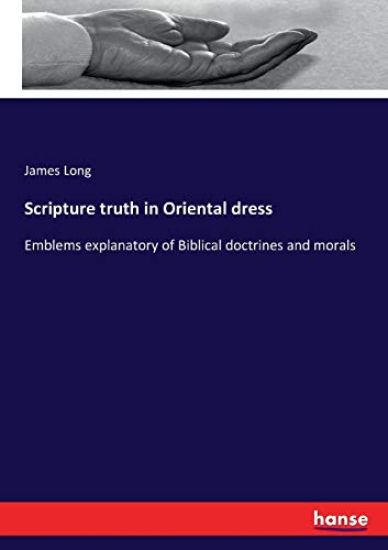
Scripture truth in Oriental dress
Scripture truth in Oriental dress - Emblems explanatory of Biblical doctrines and morals ist ein unver nderter, hochwertiger Nachdruck der Originalausgabe aus dem Jahr 1871. Hansebooks ist Herausgeber von Literatur zu unterschiedlichen Themengebieten wie Forschung und Wissenschaft, Reisen und Expeditionen, Kochen und Ern hrung, Medizin und weiteren Genres. Der Schwerpunkt des Verlages liegt auf dem Erhalt historischer Literatur. Viele Werke historischer Schriftsteller und Wissenschaftler sind heute nur noch als Antiquit ten erh ltlich. Hansebooks verlegt diese B cher neu und tr gt damit zum Erhalt selten gewordener Literatur und historischem Wissen auch f r die Zukunft bei.
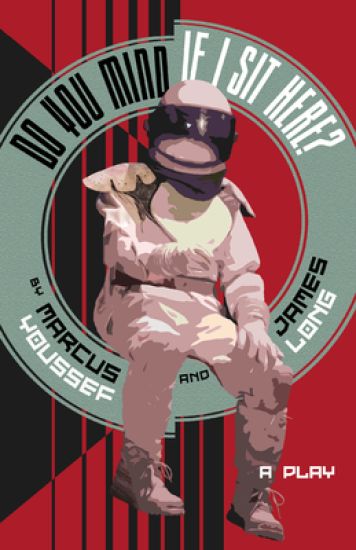
Do You Mind If I Sit Here?

Do You Mind If I Sit Here?

James Long; Marcus Youssef

TALON BOOKS,CANADA
2024
pokkari
A powerful new play by the author of Jabber and The In-Between, with a text exploring social issues, interclass dialogue, and the possibility of communal improvementAward-winning playwright Marcus Youssef takes his readers to the future with his riveting new play Do You Mind If I Sit Here? Thirty years from now, three social planners visit Vancouver's Russian Hall, long abandoned due to earthquakes and flooding, with a seemingly straightforward task: repurpose the hall for common use. But the trio soon discover the project won't be as easy as they'd thought. An eccentric squatter has made the damaged hall his home, and he not only possesses a trove of Soviet industrial films on 16-mm stock but also refuses to leave. Do You Mind If I Sit Here? is a witty theatrical allegory about the possibilities of radical transformation, in which Youssef dares us to imagine a future borne from our most important beliefs, fears, and hope.
Cheese and Cheese-Making Butter and Milk

Cheese and Cheese-Making Butter and Milk

James Long; John Benson

Hansebooks
2016
pokkari
Cheese and Cheese-Making Butter and Milk - With Special Reference to Continental Fancy Cheeses is an unchanged, high-quality reprint of the original edition of 1896. Hansebooks is editor of the literature on different topic areas such as research and science, travel and expeditions, cooking and nutrition, medicine, and other genres. As a publisher we focus on the preservation of historical literature. Many works of historical writers and scientists are available today as antiques only. Hansebooks newly publishes these books and contributes to the preservation of literature which has become rare and historical knowledge for the future.
Stone Cottage

Stone Cottage

James Longenbach

Oxford University Press Inc
1991
nidottu
Ezra Pound and W.B. Yeats spent the winters of 1913-16 living together in a Cottage in Sussex. During that period, Yeats, with Pound's help, developed his autobiographies and Noh-style plays. Pound, similarly, under Yeats's influence, experimented with esoteric texts in the development of his own Imagistic theory. Drawing on extensive literary scholarship and previously unpublished work by Pound and Yeats, Longenbach's book breaks new ground in the study of this critical period in the rise of Modernism.
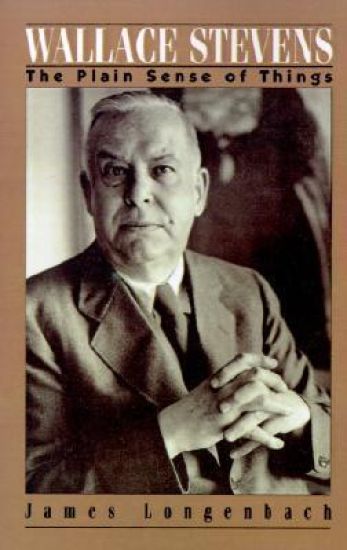
Wallace Stevens: The Plain Sense of Things

Wallace Stevens: The Plain Sense of Things

James Longenbach

Oxford University Press Inc
1992
nidottu
Most readers of Wallace Stevens wonder at his `double life'; the poet and the lawyer who worked in the insurance business. But Longenbach argues that Stevens lived no such double life. By examining a full range of Stevens' writing in the context of American political and intellectual history, Longenbach's book reveals for the first time a poet who was not only aware of events taking place around him but whose work was often inspired by those events. While the focus is on Stevens, and the historical events and ideological debates around him, poets like Eliot, Williams, Marianne Moore, and Burke are also examined.
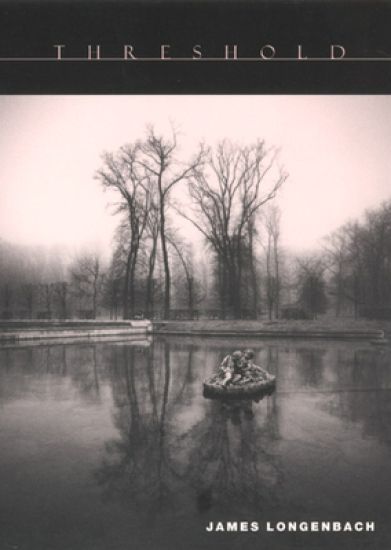
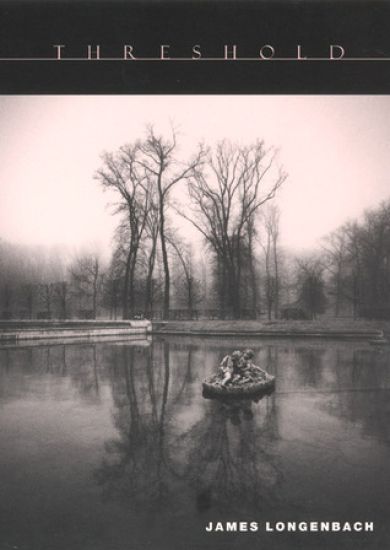
Threshold

Threshold

James Longenbach

University of Chicago Press
1998
sidottu
Threshold is an extraordinary first collection that explores the shifting spaces between differing states of human experience. James Longenbach's poems dwell on metaphoric gates, doorways, and end points past which our everyday world seems luminous and strange. Technically superb and quietly moving, Threshold resonates with a fresh poetic voice.
Threshold

Threshold

James Longenbach

University of Chicago Press
1998
nidottu
Threshold is an extraordinary first collection that explores the shifting spaces between differing states of human experience. James Longenbach's poems dwell on metaphoric gates, doorways, and end points past which our everyday world seems luminous and strange. Technically superb and quietly moving, Threshold resonates with a fresh poetic voice.
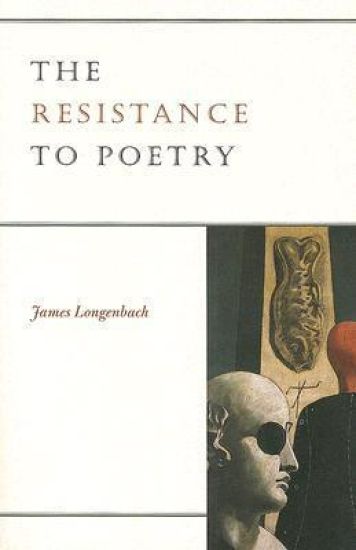
The Resistance to Poetry

The Resistance to Poetry

James Longenbach

University of Chicago Press
2005
nidottu
Poetry, argues James Longenbach, is its own best enemy. Examining a wide array of poets, from Callimachus to Louise Gluck, he explains that the resistance to poetry is, quite specifically, the wonder of poetry. Poems do convey knowledge, he suggests, but they do so in forms that continually work against their being facile vehicles for its efficient transmission. In fact, this self-resistance is the source of the reader's pleasure: we read poetry not to escape difficulty but to embrace it. Longenbach makes his case through a sustained engagement with the language of poems. Each chapter brings a fresh perspective to a crucial aspect of poetry (line, syntax, figurative language, voice, disjunction), showing that the power of language depends less on meaning than on the way in which it means - on the temporal process we negotiate in the act of reading or writing a poem. A graceful and skilled study, "The Resistance to Poetry" comes at a crucial time - a time when many people are trying to mold and market poetry into something it is not.
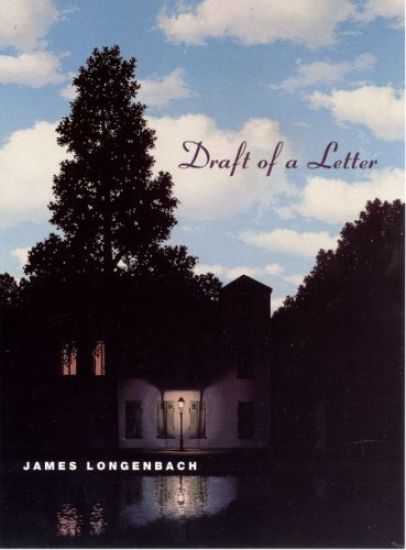
Draft of a Letter

Draft of a Letter

James Longenbach

University of Chicago Press
2007
nidottu
From the Second Draft: What other people learn From birth, Betrayal, I learned late. My soul perched On an olive branch Combing itself, Waving its plumes. I said Being mortal, I aspire to Mortal things. I need you, Said my soul, If you're telling the truth. "Draft of a Letter" is a book about belief - not belief in the unknowable but belief in what seems bewilderingly plain. Pondering the bodies we inhabit, the words we speak, these poems discover infinitude in the most familiar places. The revelation is disorienting and, as a result, these poems talk to themselves, revise themselves, fashioning a dialogue between self and soul that opens outward to include other voices, lovers, children, angels, and ghosts. For James Longenbach, great distance makes the messages we send sweeter. To be divided from ourselves is never to be alone. "If the kingdom is in the sky," says the body to the soul, "Birds will get there before you." "In time," says the awakening soul, "I liked my second/Body better/Than the first." To live, these poems insist, is to arise every day to the strange magnificence of the people and places we thought we knew best. "Draft of a Letter" is an unsettled and radiant paradiso, imagined in the death-shadowed, birth-haunted middle of a long life.
Fleet River

Fleet River

James Longenbach

University of Chicago Press
2003
sidottu
A sequel of sorts to his first book of poetry, James Longenbach's new collection is about wonder: falling in love with the world, as though for the first time. With crisp phrasing and tightly controlled abstraction, "Fleet River" traces the journey of two children, two lovers and two travellers through landscapes earthly and otherworldly, following the river as it turns, dips underground, then reemerges unexpectedly as they experience awe at the workings of the universe. Mimicking the river's shifting course, the poems revise themselves as the book moves forward, turning against their own best conclusions, proving that the pilgrims' journey is less the discovery of love than the recreation, poem by poem, of love's possibilities.
Fleet River

Fleet River

James Longenbach

University of Chicago Press
2003
nidottu
A sequel of sorts to his first book of poetry, James Longenbach's new collection is about wonder: falling in love with the world, as though for the first time. With crisp phrasing and tightly controlled abstraction, "Fleet River" traces the journey of two children, two lovers and two travellers through landscapes earthly and otherworldly, following the river as it turns, dips underground, then reemerges unexpectedly as they experience awe at the workings of the universe. Mimicking the river's shifting course, the poems revise themselves as the book moves forward, turning against their own best conclusions, proving that the pilgrims' journey is less the discovery of love than the recreation, poem by poem, of love's possibilities.
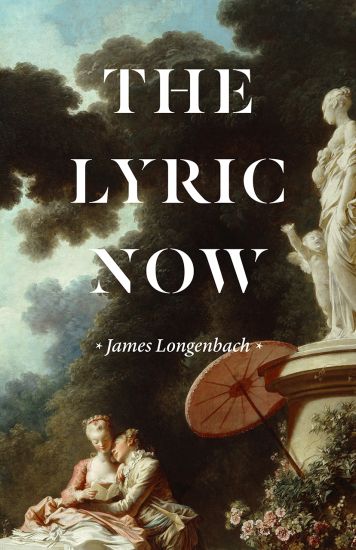
The Lyric Now

The Lyric Now

James Longenbach

University of Chicago Press
2020
sidottu
For more than a century, American poets have heeded the siren song of Ezra Pound’s make it new, staking a claim for the next poem on the supposed obsolescence of the last. But great poems are forever rehearsing their own present, inviting readers into a nowness that makes itself new each time we read or reread them. They create the present moment as we enter it, their language relying on the long history of lyric poetry while at the same time creating a feeling of unprecedented experience. ?In poet and critic James Longenbach’s title, the word “now” does double duty, evoking both a lyric sense of the present and twentieth-century writers’ assertion of “nowness” as they crafted their poetry in the wake of Modernism. Longenbach examines the fruitfulness of poetic repetition and indecision, of naming and renaming, and of the evolving search for newness in the construction, history, and life of lyrics. Looking to the work of thirteen poets, from Marianne Moore and T. S. Eliot through George Oppen and Jorie Graham to Carl Phillips and Sally Keith, and several musicians, including Virgil Thomson and Patti Smith, he shows how immediacy is constructed through language. Longenbach also considers the life and times of these poets, taking a close look at the syntax and diction of poetry, and offers an original look at the nowness of lyrics.
The Lyric Now

The Lyric Now

James Longenbach

University of Chicago Press
2020
nidottu
For more than a century, American poets have heeded the siren song of Ezra Pound’s make it new, staking a claim for the next poem on the supposed obsolescence of the last. But great poems are forever rehearsing their own present, inviting readers into a nowness that makes itself new each time we read or reread them. They create the present moment as we enter it, their language relying on the long history of lyric poetry while at the same time creating a feeling of unprecedented experience. ?In poet and critic James Longenbach’s title, the word “now” does double duty, evoking both a lyric sense of the present and twentieth-century writers’ assertion of “nowness” as they crafted their poetry in the wake of Modernism. Longenbach examines the fruitfulness of poetic repetition and indecision, of naming and renaming, and of the evolving search for newness in the construction, history, and life of lyrics. Looking to the work of thirteen poets, from Marianne Moore and T. S. Eliot through George Oppen and Jorie Graham to Carl Phillips and Sally Keith, and several musicians, including Virgil Thomson and Patti Smith, he shows how immediacy is constructed through language. Longenbach also considers the life and times of these poets, taking a close look at the syntax and diction of poetry, and offers an original look at the nowness of lyrics.