We all know that law is a people business. Clients buy from lawyers whom they like, respect, and trust, and they judge those lawyers and their firms on the quality of service that the firm provides, the results achieved, and whether they receive value for money. This applies to corporate, institutional, and private clients alike. For their business plans to be connected to reality, partners and law firm leaders must learn how they are perceived by their clients and adapt accordingly. They do this by listening to their clients. Historically this was through informal, fireside chats. In recent years, many firms have devised formal client listening programs and in recent years there has been an explosion of review sites and social media channels enabling clients to leave their unfiltered and public feedback, whether solicited or not. Forward-looking firms are adopting multi-channel approaches to taking feedback to maximize the intelligence they gather and to adapt to clients' own preferences. As ever, the most nimble and adaptable will reap the rewards. The Client Experience: How to Optimize Client Service and Deliver Value looks at the client experience from end-to-end, from client listening programs to journey mapping, from customer audits to how legal tech can help improve the way a client interacts with a law firm throughout its relationship. A client-centric business model is essential for future law firm success and the authors of this far-reaching title utilize their own experience and real-life case studies to drill down into the importance of maintaining the one thing no business can do without: its client.
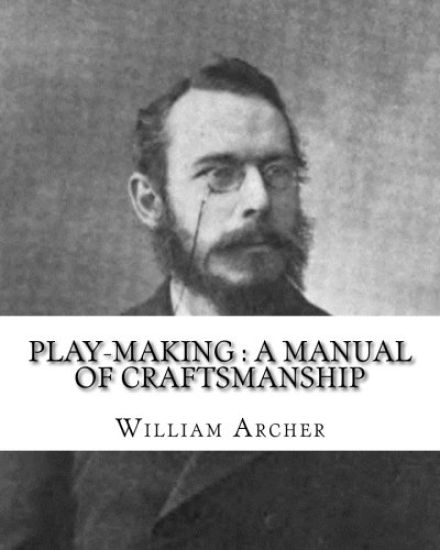
James Brander Matthews (February 21, 1852 - March 31, 1929) was an American writer and educator. He was the first full-time professor of dramatic literature at an American university and played a significant role in establishing theater as a subject worthy of formal study in the academic world. His interests ranged from Shakespeare, Moli re, and Ibsen to French boulevard comedies, folk theater, and the new realism of his own day.Biography edit] Matthews born to a wealthy family in New Orleans, grew up in New York City, and graduated from Columbia College in 1871, where he was a member of the Philolexian Society and the fraternity of Delta Psi, and from Columbia Law School in 1873. He had no real interest in the law, never needed to work for a living (given his family fortune), 1] and turned to a literary career, publishing in the 1880s and 1890s short stories, novels, plays, books about drama, biographies of actors, and three books of sketches of city life. One of these, Vignettes of Manhattan (1894), was dedicated to his friend Theodore Roosevelt. From 1892 to 1900, he was a professor of literature at Columbia and thereafter held the Chair of Dramatic Literature until his retirement in 1924. He was known as an engaging lecturer and a charismatic if demanding teacher. His influence was such that a popular pun claimed that an entire generation had been "brandered by the same Matthews." During his long tenure at Columbia, Matthews created and curated a "dramatic museum" of costumes, scripts, props, and other stage memorabilia. Originally housed in a four-room complex in Philosophy Hall, the collection was broken up and sold after his death. However, its books were incorporated into the university library and its dioramas of the Globe Theatre and other historic dramatic venues have been dispersed for public display around campus, mainly in Dodge Hall. Matthews was the inspiration for the now-destroyed Brander Matthews Theater on 117th Street, between Amsterdam Avenue and Morningside Drive. An English professorship in his name still exists at Columbia. William Archer (23 September 1856 - 27 December 1924) was a Scottish critic and writer. Life: He was born in Perth, the son of Thomas Archer. He spent large parts of his boyhood in Norway where he became acquainted with the works of Henrik Ibsen, and was later educated at the University of Edinburgh, where he received the degree of M.A. in 1876. Archer became a leader-writer on the Edinburgh Evening News in 1875, and after a year in Australia returned to Edinburgh. In 1878 he took up residence in London.In 1879 he became dramatic critic of the London Figaro, and in 1884 of the World, where he remained until 1905. In London he soon took a prominent literary place and exercised much influence. Archer had much to do with introducing Henrik Ibsen to the English public with his translation of The Pillars of Society, produced at the Gaiety Theatre, London, 1880. It was the first Ibsen play to be produced in London but made little impression.He also translated, alone or in collaboration, other productions of the Scandinavian stage: Ibsen's A Doll's House (1889), The Master Builder (1893, with Edmund Gosse); Edvard Brandes's A Visit (1892); Ibsen's Peer Gynt (1892, with Charles Archer); Little Eyolf (1895); and John Gabriel Borkman (1897); and he edited Henrik Ibsen's Prose Dramas vols., 1890-1891). In 1897 Archer, along with Elizabeth Robins, Henry William Massingham, and Alfred Sutro, formed the Provisional Committee to organize an association to produce plays of high literary intrinsic merit, such as Ibsen's. The association was called the "New Century Theatre" but was a disappointment by 1899, although it continued until at least 1904.In 1899, a more successful association, called the Stage Society, was formed to replace it. Max Beerbohm's caricature of Archer paying a humble visit to Henrik Ibsen was published in The Poets' Corner, London 1904....
Title: My Holiday; how I spent it: being some rough notes of a trip to Europe and back in the summer of 1866.Publisher: British Library, Historical Print EditionsThe British Library is the national library of the United Kingdom. It is one of the world's largest research libraries holding over 150 million items in all known languages and formats: books, journals, newspapers, sound recordings, patents, maps, stamps, prints and much more. Its collections include around 14 million books, along with substantial additional collections of manuscripts and historical items dating back as far as 300 BC.The HISTORY OF TRAVEL collection includes books from the British Library digitised by Microsoft. This collection contains personal narratives, travel guides and documentary accounts by Victorian travelers, male and female. Also included are pamphlets, travel guides, and personal narratives of trips to and around the Americas, the Indies, Europe, Africa and the Middle East. ++++The below data was compiled from various identification fields in the bibliographic record of this title. This data is provided as an additional tool in helping to insure edition identification: ++++ British Library Matthews, James N.; 1867. 12 . 10106.bbb.15.
My Holiday - How I Spent It - Being Some Rough Notes of a Trip to Europe and Back, in the Summer of 1866 is an unchanged, high-quality reprint of the original edition of 1867. Hansebooks is editor of the literature on different topic areas such as research and science, travel and expeditions, cooking and nutrition, medicine, and other genres. As a publisher we focus on the preservation of historical literature. Many works of historical writers and scientists are available today as antiques only. Hansebooks newly publishes these books and contributes to the preservation of literature which has become rare and historical knowledge for the future.
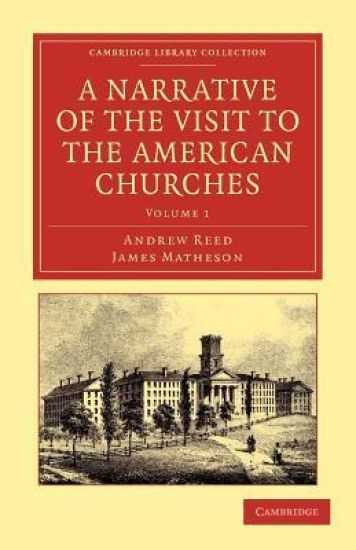
Andrew Reed (1787–1862) was a Congregational Minister and one of the leading philanthropists of his day, fund-raising for and founding a number of orphanages and asylums. In 1834, he and fellow Congregational Minister James Matheson (1766–1840) were sent to the Congregational churches of the United States, in order to promote peace and friendship between the two communities. This two-volume 1835 work consists of thirty-nine letters in which the authors recount their journey, and their meetings with their fellow Congregationalists. They visited a large number of cities, mostly on the Eastern Seaboard, and made one excursion to Canada. In Volume 1, the focus is on their arrival in America and their first impression of the country and its people. They note with approval that that 'there is less claptrap, less trifling, and no frivolity' in Congregational services in the United States, as compared with England.
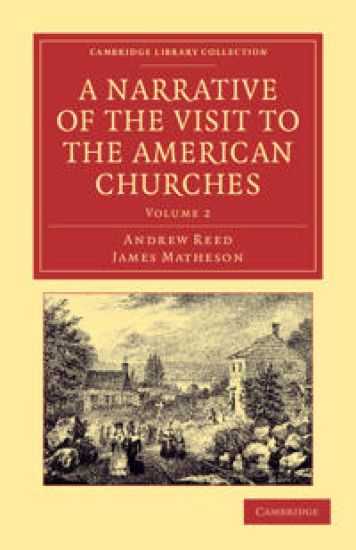
Andrew Reed (1787–1862) was a Congregational Minister and one of the leading philanthropists of his day, fund-raising for and founding a number of orphanages and asylums. In 1834, he and fellow Congregational Minister James Matheson (1766–1840) were sent to the Congregational churches of the United States, in order to promote peace and friendship between the two communities. This two-volume 1835 work consists of thirty-nine letters in which the authors recount their journey, and their meetings with their fellow Congregationalists. They visited a large number of cities, mostly on the Eastern Seaboard, and made one excursion to Canada. Volume 2 tells of the many different communities that Reed and Matheson encounter in America, and the focus is mostly on theological and educational issues. They approve of female academies, asking rhetorically, 'why should not our daughters, equally with our sons, possess the advantages, which these institutions … so readily supply?'.