
Kirjahaku
Etsi kirjoja tekijän nimen, kirjan nimen tai ISBN:n perusteella.
1000 tulosta hakusanalla James Ralph

Simplified Masonry Planning and Building
J. Ralph (James Ralph) 1900 Dalzell
Hassell Street Press
2021
sidottu
This work has been selected by scholars as being culturally important and is part of the knowledge base of civilization as we know it.This work is in the public domain in the United States of America, and possibly other nations. Within the United States, you may freely copy and distribute this work, as no entity (individual or corporate) has a copyright on the body of the work.Scholars believe, and we concur, that this work is important enough to be preserved, reproduced, and made generally available to the public. To ensure a quality reading experience, this work has been proofread and republished using a format that seamlessly blends the original graphical elements with text in an easy-to-read typeface.We appreciate your support of the preservation process, and thank you for being an important part of keeping this knowledge alive and relevant.

Simplified Masonry Planning and Building
J. Ralph (James Ralph) 1900 Dalzell
Hassell Street Press
2021
nidottu
This work has been selected by scholars as being culturally important and is part of the knowledge base of civilization as we know it.This work is in the public domain in the United States of America, and possibly other nations. Within the United States, you may freely copy and distribute this work, as no entity (individual or corporate) has a copyright on the body of the work.Scholars believe, and we concur, that this work is important enough to be preserved, reproduced, and made generally available to the public. To ensure a quality reading experience, this work has been proofread and republished using a format that seamlessly blends the original graphical elements with text in an easy-to-read typeface.We appreciate your support of the preservation process, and thank you for being an important part of keeping this knowledge alive and relevant.

Of The Use And Abuse Of Parliaments V1
Algernon Sidney; James Ralph
KESSINGER PUBLISHING CO
2008
pokkari

Of The Use And Abuse Of Parliaments V1
Algernon Sidney; James Ralph
KESSINGER PUBLISHING CO
2008
muu

This is the first full history of Operation Breadbasket, the interfaith economic justice program that transformed into Jesse Jackson’s Operation PUSH (now the Rainbow PUSH Coalition). Begun by Martin Luther King Jr. during the 1966 Chicago Freedom Movement, Breadbasket was directed by Jackson. Author Martin L. Deppe was one of Breadbasket’s founding pastors. He digs deeply into the program’s past to update the meager narrative about Breadbasket, add details to King’s and Jackson’s roles, and tell Breadbasket’s little-known story.Under the motto “Your Ministers Fight for Jobs and Rights,” the program put bread on the tables of the city’s African American families in the form of steady jobs. Deppe details how Breadbasket used the power of the pulpit to persuade businesses that sought black dollars to also employ a fair share of blacks. Though they favored negotiations, Breadbasket pastors also organized effective boycotts, as they did after one manager declared that he was “not about to let Negro preachers tell him what to do.” Over six years, Breadbasket’s efforts netted forty-five hundred jobs and sharply increased commerce involving black-owned businesses. Economic gains on Chicago’s South Side amounted to $57.5 million annually by 1971.Deppe traces Breadbasket’s history from its early “Don’t Buy” campaigns through a string of achievements related to black employment and black-owned products, services, and businesses. To the emerging call for black power, Breadbasket offered a program that actually empowered the black community, helping it engage the mainstream economic powers on an equal footing. Deppe recounts plans for Breadbasket’s national expansion; its sponsored business expos; and the Saturday Breadbasket gatherings, a hugely popular black-pride forum. Deppe shows how the program evolved in response to growing pains, changing alliances, and the King assassination. Breadbasket’s rich history, as told here, offers a still-viable model for attaining economic justice today.

This is the first full history of Operation Breadbasket, the interfaith economic justice program that transformed into Jesse Jackson’s Operation PUSH (now the Rainbow PUSH Coalition). Begun by Martin Luther King Jr. during the 1966 Chicago Freedom Movement, Breadbasket was directed by Jackson. Author Martin L. Deppe was one of Breadbasket’s founding pastors. He digs deeply into the program’s past to update the meager narrative about Breadbasket, add details to King’s and Jackson’s roles, and tell Breadbasket’s little-known story.Under the motto “Your Ministers Fight for Jobs and Rights,” the program put bread on the tables of the city’s African American families in the form of steady jobs. Deppe details how Breadbasket used the power of the pulpit to persuade businesses that sought black dollars to also employ a fair share of blacks. Though they favored negotiations, Breadbasket pastors also organized effective boycotts, as they did after one manager declared that he was “not about to let Negro preachers tell him what to do.” Over six years, Breadbasket’s efforts netted forty-five hundred jobs and sharply increased commerce involving black-owned businesses. Economic gains on Chicago’s South Side amounted to $57.5 million annually by 1971.Deppe traces Breadbasket’s history from its early “Don’t Buy” campaigns through a string of achievements related to black employment and black-owned products, services, and businesses. To the emerging call for black power, Breadbasket offered a program that actually empowered the black community, helping it engage the mainstream economic powers on an equal footing. Deppe recounts plans for Breadbasket’s national expansion; its sponsored business expos; and the Saturday Breadbasket gatherings, a hugely popular black-pride forum. Deppe shows how the program evolved in response to growing pains, changing alliances, and the King assassination. Breadbasket’s rich history, as told here, offers a still-viable model for attaining economic justice today.

The Construction Industry in Ohio: A Statistical Analysis of a Seasonal Industry
Ralph James Watkins; Spurgeon Bell
Literary Licensing, LLC
2012
nidottu
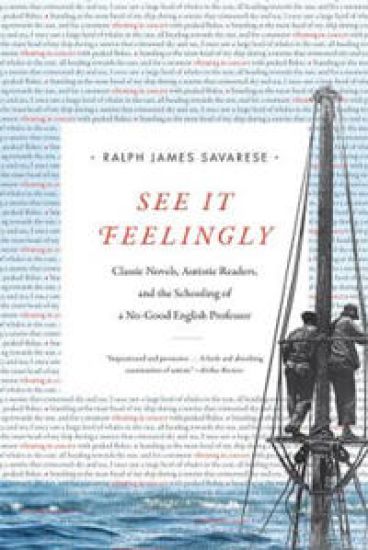
“We each have Skype accounts and use them to discuss [Moby-Dick] face to face. Once a week, we spread the worded whale out in front of us; we dissect its head, eyes, and bones, careful not to hurt or kill it. The Professor and I are not whale hunters. We are not letting the whale die. We are shaping it, letting it swim through the Web with a new and polished look.”-Tito Mukhopadhyay Since the 1940s researchers have been repeating claims about autistic people's limited ability to understand language, to partake in imaginative play, and to generate the complex theory of mind necessary to appreciate literature. In See It Feelingly Ralph James Savarese, an English professor whose son is one of the first nonspeaking autistics to graduate from college, challenges this view. Discussing fictional works over a period of years with readers from across the autism spectrum, Savarese was stunned by the readers' ability to expand his understanding of texts he knew intimately. Their startling insights emerged not only from the way their different bodies and brains lined up with a story but also from their experiences of stigma and exclusion. For Mukhopadhyay Moby-Dick is an allegory of revenge against autism, the frantic quest for a cure. The white whale represents the autist's baffling, because wordless, immersion in the sensory. Computer programmer and cyberpunk author Dora Raymaker skewers the empathetic failings of the bounty hunters in Philip K. Dick's Do Androids Dream of Electric Sheep? Autistics, some studies suggest, offer instruction in embracing the nonhuman. Encountering a short story about a lonely marine biologist in Antarctica, Temple Grandin remembers her past with an uncharacteristic emotional intensity, and she reminds the reader of the myriad ways in which people can relate to fiction. Why must there be a norm? Mixing memoir with current research in autism and cognitive literary studies, Savarese celebrates how literature springs to life through the contrasting responses of unique individuals, while helping people both on and off the spectrum to engage more richly with the world.
Ghosts of Harvest: Awakenings
Ralph James Waterbury
Createspace Independent Publishing Platform
2015
nidottu
It had been nearly a year since David's injury had taken him out of the field, and he was looking forward to returning to action. His assignment was to put together a new team for the Special Projects division of the Security Services of the Americas; the 2SA.Book 1 of the Ghosts of Harvest series. What the team was for, what their mission was, he didn't know or care; he was going to be working with his old partner, John Simon, once again. Little did he know that he would be sent back into the cross-hairs of some of his old enemies. Set in the near future, this story follows the beginnings of the team code-named, 'Spare Change', and the people who choose to 'serve and protect' from the shadows.

Ghosts of Harvest: Greek Fire
Ralph James Waterbury
Createspace Independent Publishing Platform
2015
nidottu
Book two of the Ghosts of Harvest series, Greek Fire carries forward the story of the agents of Harvest Base as they continue their mission; to protect their part of the world from those who would seek to tear it apart.Book 2 of the Ghosts of Harvest series.

Ghosts of Harvest: Hel's Gift
Ralph James Waterbury
Createspace Independent Publishing Platform
2016
nidottu
"Some things are best left buried in the past" These words ring just as true today, as they did when they were first uttered. However, they fail to convey the dire consequences that could result from digging up something that never should have existed; something created for the world's greatest genocidal maniac. The agents of Harvest Base are about to be pulled into a game where losing could mean devastation on a global scale. 'Hel's Gift' is the third installment in the 'Ghosts of Harvest' series. Find a comfortable chair, maybe a drink and a snack, and enjoy the ride.Book 3 of the Ghosts of Harvest series.
Set in The Land of OZ, 75 harvests (years) after Dorothy, her family, and friends have returned to the mortal world, the consequences of their actions have born a most wicked fruit. The Emerald Palace has turned black. Clouds block out the sun over the once beautiful Emerald City. The Dark Empress has returned to the Land of OZ. Continue your journey with Sage Strawheart and her friends as they quest to restore balance to their world, and drive out The Dark Empress and her followers. The good (and the wicked) people of OZ must join forces in order to succeed. Failure means that the Land of OZ will forever fall into evil darkness, and become a land of nightmares. Characters that you know and love from the original stories are joined by new and unusual characters in this series based lovingly on the original OZ books by L. Frank Baum.

The Misty Shadows of OZ
Ralph James Waterbury
Createspace Independent Publishing Platform
2018
nidottu
It's been 75 years since Dorothy had left the Land of OZ and returned to the mortal world for good. Now, events that she set in motion are causing the barrier that protects this wonderful realm to fail. Outside of this barrier an ancient evil waits to return to claim the Emerald Throne. Join Sage Strawheart, granddaughter of the scarecrow who travelled with Dorothy, as she and her friends try to set things right. Based lovingly on the original series by L. Frank Baum.

From January 18 to January 23, 1813, Frenchtown, on the banks of the River Raisin, became a battleground where the military forces of the United States and Great Britain fought each other for control of the Lower Great Lakes. At stake were the destinies of Michigan, Upper Canada, and the Native-American alliance.Invaded on All Sides is a readable but detailed study of the largest field battle ever fought within the present confines of the state of Michigan. By the end of the fighting, General Winchester's army of Kentuckians had been entirely destroyed, resulting in the largest total American casualties of any single day's battle during the War of 1812.The debacle at the River Raisin and the subsequent murder of some wounded Americans served to galvanize U.S. forces on the western frontier. "Remember the Raisin" became the battle cry by which a newly reformed army sought to avenge their countrymen and turn defeat into victory in the Old Northwest.Once a polluted industrial site, the battleground itself is now being restored and preserved for the River Raisin National Battlefield Park. This is also part of the story.

Ready On The Right: A True Story Of A Naturalist-Seabee On The Islands Of Kodiak, Unalaska, Adak, Tanaga, Oahu, Eniwetok, Guam, Mogmog (Ul
Ralph J. (Ralph James) 1897- Donahue
Hassell Street Press
2021
nidottu
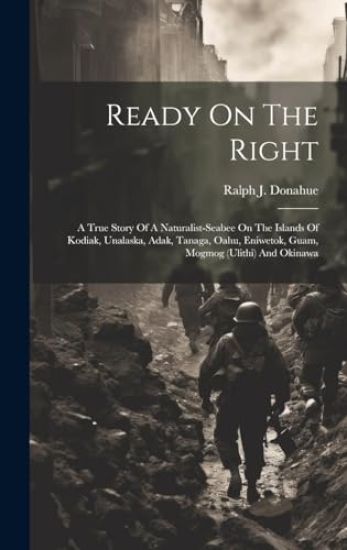
Ready On The Right: A True Story Of A Naturalist-Seabee On The Islands Of Kodiak, Unalaska, Adak, Tanaga, Oahu, Eniwetok, Guam, Mogmog (Ul
Ralph J. (Ralph James) 1897- Donahue
Hassell Street Press
2023
sidottu
Ralph J. Donahue, a naturalist and Seabee, shares his remarkable experience during World War II, where he served in various islands in the Pacific. The memoir combines natural history, adventure, and military history.This work has been selected by scholars as being culturally important, and is part of the knowledge base of civilization as we know it.This work is in the "public domain in the United States of America, and possibly other nations. Within the United States, you may freely copy and distribute this work, as no entity (individual or corporate) has a copyright on the body of the work.Scholars believe, and we concur, that this work is important enough to be preserved, reproduced, and made generally available to the public. We appreciate your support of the preservation process, and thank you for being an important part of keeping this knowledge alive and relevant.
Herman Melville and Neurodiversity, or Why Hunt Difference with Harpoons?
Pilar Martinez Benedi; Ralph James Savarese
BLOOMSBURY PUBLISHING PLC
2024
sidottu
Focusing on the difference between lower-level perceptual processes in the “neural unconscious” and higher-order thought in the frontal lobes, this open access book shows how Herman Melville sought to reclaim the fluid world of the sensory, with its precategorical and radically egalitarian impulses. By studying this previously underexamined facet of Melville’s work, this book offers an essential corrective to the “pathology paradigm,” which demonizes departures from a neurological norm and feasts on pejorative categorization. The neurodiversity movement arose precisely as a response to how so-called “mental disorders” have been described, understood, and treated. Unlike standard neuroscientific or psychiatric investigation, Melville’s work doesn’t strive to explain typical functioning through the negative and, in the process, to shore up a regime of normalcy. To the contrary, it exploits the lack of congealed diagnoses in the 19th Century, much more neutrally asking the question: what can an atypical body-mind do? Steeped in current studies about autism, Alzheimer’s, Capgras and Fregoli syndromes, Mirror-touch synesthesia, phantom limb syndrome, stuttering, and tinnitus, and fully conversant with Melville scholarship, Phenomenological Primitives demonstrates what the humanities can contribute to the sciences and what the sciences can contribute to the humanities.The ebook editions of this book are available open access under a CC BY-NC-ND 4.0 licence on bloomsburycollections.com. Open access was funded in part by Grinnell College.
Herman Melville and Neurodiversity, or Why Hunt Difference with Harpoons?
Pilar Martinez Benedi; Ralph James Savarese
BLOOMSBURY PUBLISHING PLC
2026
pokkari
Focusing on the difference between lower-level perceptual processes in the "neural unconscious" and higher-order thought in the frontal lobes, this open access book shows how Herman Melville sought to reclaim the fluid world of the sensory, with its precategorical and radically egalitarian impulses. By studying this previously underexamined facet of Melville's work, this book offers an essential corrective to the "pathology paradigm," which demonizes departures from a neurological norm and feasts on pejorative categorization. The neurodiversity movement arose precisely as a response to how so-called "mental disorders" have been described, understood, and treated. Unlike standard neuroscientific or psychiatric investigation, Melville's work doesn't strive to explain typical functioning through the negative and, in the process, to shore up a regime of normalcy. To the contrary, it exploits the lack of congealed diagnoses in the 19th Century, much more neutrally asking the question: what can an atypical body-mind do? Steeped in current studies about autism, Alzheimer's, Capgras and Fregoli syndromes, Mirror-touch synesthesia, phantom limb syndrome, stuttering, and tinnitus, and fully conversant with Melville scholarship, Phenomenological Primitives demonstrates what the humanities can contribute to the sciences and what the sciences can contribute to the humanities. The ebook editions of this book are available open access under a CC BY-NC-ND 4.0 licence on bloomsburycollections.com. Open access was funded in part by Grinnell College.
The Reminiscences of Rear Adm. Ralph Kirk James, USN (Ret.)
Naval Institute Press
2022
sidottu
After serving in the USS New York (BB-34) and USS Utah (BB-31), he received a master of science degree from MIT. Was assigned as Construction Corps officer at Bremerton, Washington, then served in the Whitney as construction officer. In 1942 was sent to French West Africa as BuShips representative at U.S. Military Mission, during which time he also served briefly on staff of Commander, U.S. Forces Europe at Algiers, and in January 1943 attended part of the Casablanca Conference. Later duty included: maintenance officer at Espiritu Santo in the New Hebrides; staff of Commander Service Squadron Ten at Manus Island; officer in charge of ship parts control center, Mechanicsburg, Pennsylvania; Repair and Building Superintendent at Mare Island; and Chief of Bureau of Ships and Coordinator of Shipbuilding Conversion and Repair for the Department of Defense.