

Kirjahaku
Etsi kirjoja tekijän nimen, kirjan nimen tai ISBN:n perusteella.
1000 tulosta hakusanalla James Wallis Pycroft
""How To Write Letters"" by James Willis Westlake is a comprehensive guide that provides readers with tips and techniques on how to write effective letters for various purposes. The book covers a wide range of letter-writing topics, including business letters, personal letters, cover letters, thank-you letters, and more. The author begins by explaining the importance of good letter-writing skills and the impact it can have on personal and professional relationships. He then goes on to discuss the different types of letters and their specific formats and structures. Throughout the book, Westlake provides numerous examples of well-written letters and offers practical advice on how to tailor each letter to its intended audience. He also includes helpful tips on grammar, punctuation, and style, as well as common mistakes to avoid. In addition to providing guidance on the actual writing process, the book also covers important topics such as etiquette, tone, and how to handle difficult situations. Overall, ""How To Write Letters"" is a valuable resource for anyone looking to improve their letter-writing skills and create more effective and impactful correspondence.This Is A New Release Of The Original 1876 Edition. A Manual Of Correspondence, Showing The Correct Structure, Composition, Punctuation, Formalities, And Uses Of The Various Kinds Of Letters, Notes, And Cards.This scarce antiquarian book is a facsimile reprint of the old original and may contain some imperfections such as library marks and notations. Because we believe this work is culturally important, we have made it available as part of our commitment for protecting, preserving, and promoting the world's literature in affordable, high quality, modern editions, that are true to their original work.

Painting buildings is an exciting and versatile genre - it allows you to enjoy the lines of architecture but also to add feeling and context to a picture. This practical book explains the full depth of the subject, from first sketches to final presentation. Using a range of examples, it is packed with advice and information, and follows the riches of painting the built landscape. Not just a handy reference, this is a beautiful and inspirational guide for every artist who wants to capture and interpret a scene. Topics covered include: Drawing - practise observation and sketching to identify the principal lines of view. Perspective - understand three-dimensional structures and their position to each other and in space. Oils - use the versatility of the paint to express and experiment with your ideas. Location - develop your paintings outdoors and in the studio. Style - add figures, weather and atmosphere to your work to give it character and mood. Finally, Inspiration - learn new ideas and themes from finished examples by a number of leading artists.


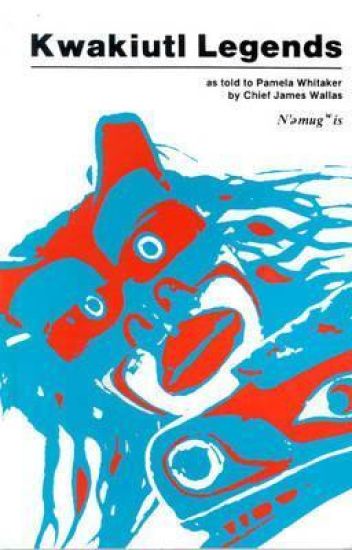
Kwakiutl Legends
Chief James Wallas; Pamela Whitaker
Hancock House Publishers Ltd ,Canada
2016
pokkari
Legends from Kwakiutl Peoples. The stories in this book relate the traditional tales which Mr. James Wallas has learned from his elders, who lived in Quatsino Sound and on Hope Island. Mr. Wallas's forefathers are members of a people known generally as the Kwakiutl, although the term is misleading because it originally referred to a sub-group living at Fort Rupert. The Kwakiutl inhabit an area which at present includes Campbell River at the southern extreme, Quatsino Sound at the western extreme, various inlets of mainland B.C. at the eastern extreme, and Smiths Inlet at the northern extreme. Traditionally, the Kwakiutl lived in villages located in this general area (excluding Campbell River an Cape Mudge) which were organized into tribes. Today, most of them live on reserves near towns, maintaining some remote villages for food preparation and preserving during the spring, summer and fall.



Wealth, Work, and Health
James Patrick Smith; Robert James Willis
The University of Michigan Press
1999
sidottu
Wealth, Work, and Health takes as its inspiration the illustrious career of F. Thomas Juster, former Director of the University of Michigan's Institute for Social Research. Juster devoted forty years to the question of how to measure behavior by asking people questions about the objective and subjective circumstances of their lives. During those same years, his innovative work in retirement decisions, allocation of time, and distribution of wealth influenced a new generation of scholars in the social sciences.Chapters in the volume address advances in measurement as well as disciplinary attitudes toward various forms of measurement--for example, the resistance of economics to qualitative measurements. Specific topics include measurement of expenditures and wealth; lifetime earnings, saving choices, and wealth at retirement; inheritances and bequests; impact of education and heart attack on smoking cessation among older adults; and intergenerational transfers. Crossing many disciplinary lines, this rich volume should be of interest to economists--especially those interested in health--sociologists, and demographers. Contributors are Richard V. Burkhauser, Jeff Dominitz, Debra Dwyer, Alan L. Gustman, John C. Henretta, A. Regula Herzog, Daniel Hill, Michael D. Hurd, N. Anders Klevmarken, Maarten Lindeboom, Charles Manski, Olivia S. Mitchell, Sara Nichols, Andrew A. Samwick, James P. Smith, Beth J. Soldo, Frank P. Stafford, Thomas L. Steinmeier, Jules Theeuwes, Stephen F. Venti, Robert B. Wallace, Robert J. Willis, David A. Wise, Isolde Woittiez, Douglas A. Wolf, Edward N. Wolff, and Linda A. Wray.James P. Smith is Senior Economist, RAND. Robert J. Willis is Professor of Economics and Research Scientist at the Institute for Social Research, University of Michigan.
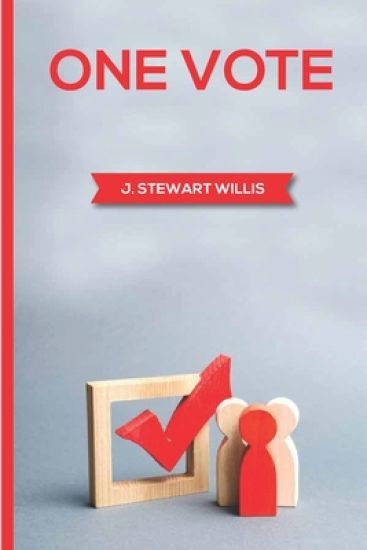
When the President-elect, a Democrat, dies shortly after the Presidential Election, the nation is thrown into Constitutional chaos as the Democratic Party tries to hold its 272 Presidential Electors together. One Elector balks and two are bought off, creating a stalemate. Read how one Faithless Elector affects the future of the entire nation.

This work has been selected by scholars as being culturally important, and is part of the knowledge base of civilization as we know it. This work was reproduced from the original artifact, and remains as true to the original work as possible. Therefore, you will see the original copyright references, library stamps (as most of these works have been housed in our most important libraries around the world), and other notations in the work.This work is in the public domain in the United States of America, and possibly other nations. Within the United States, you may freely copy and distribute this work, as no entity (individual or corporate) has a copyright on the body of the work.As a reproduction of a historical artifact, this work may contain missing or blurred pages, poor pictures, errant marks, etc. Scholars believe, and we concur, that this work is important enough to be preserved, reproduced, and made generally available to the public. We appreciate your support of the preservation process, and thank you for being an important part of keeping this knowledge alive and relevant.
The United States of America, Plaintiff, vs. Northern Securities Company, Great Northern Railway Company, Northern Pacific Railway Company, James J. Hill, William P. Clough, D. Willis James, John S. Kennedy, J. Pierpont Morgan, Robert Bacon, George F....
Philander C Knox
Gale, Making of Modern Law
2012
pokkari

Reprint of the original, first published in 1872. The publishing house Anatiposi publishes historical books as reprints. Due to their age, these books may have missing pages or inferior quality. Our aim is to preserve these books and make them available to the public so that they do not get lost.

Reprint of the original, first published in 1872. The publishing house Anatiposi publishes historical books as reprints. Due to their age, these books may have missing pages or inferior quality. Our aim is to preserve these books and make them available to the public so that they do not get lost.