Kirjojen hintavertailu. Mukana 11 627 363 kirjaa ja 12 kauppaa.

Kirjahaku

Etsi kirjoja tekijän nimen, kirjan nimen tai ISBN:n perusteella.

1000 tulosta hakusanalla James-H

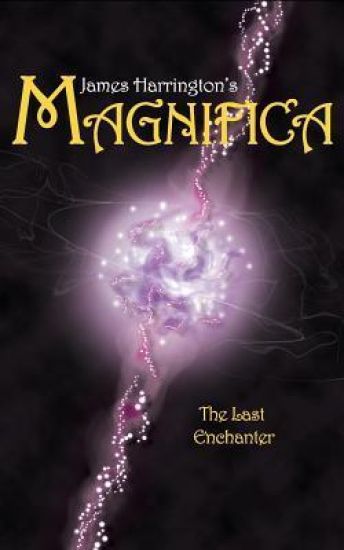
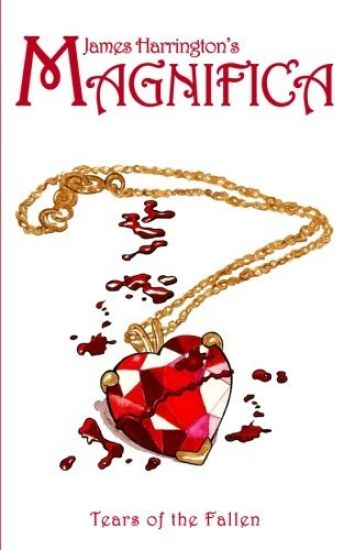
James Harrington's Magnifica: Tears of the Fallen

James Harrington's Magnifica: Tears of the Fallen

James a. Harrington

James\Harrington
2014
nidottu
The continuation of the story of Lia'na, Toby, and their friends. With the primary nemesis dead and an ancient cult leaderless, a new but familiar evil comes forward to take control.This story takes a very dark path and leads the characters on a quest that puts the entire world at stake. Things will happen that cannot be undone and choices will need to be made that the group may not be able to live with, considering any of them survive at all. As in the previous story many locations and sites will be familiar, but in other ways, this world is very different from our own. Yet should Toby and Lia'na fail, even our world may not be spared.
RIDE OF A LIFETIME The Life and Times of James Houston. Book Two
Continuing the Life and Times of James Houston, Book Two focuses on 38 years in Melbourne, where James worked initially as a research officer for the Victorian Council of Churches' project aimed at promoting a multicultural approach to the training of clergy. Though intending to return to Canberra when the program was completed, an association with the then Anglican Archbishop of Melbourne, the Rev Dr David Penman, who supported multiculturalism and other justice issues, led to a suggestion to consider ordination to the Anglican ministry. At the age of 55 James eventually took this step, and after appropriate theological training was appointed to the parish of St Mary Magdalene in Dallas, Broadmeadows, where he and his wife Marjorie spent seven fulfilling years. The journey from academic writer to pastoral carer had begun.This continued when he was invited to become the Director of Cross-Cultural Ministry for the Diocese of Melbourne. During the three years he served in this position, he sought to encourage Anglicans generally to broaden their essentially mono-cultural identity, given that the city itself was arguably the most multicultural in the country, as well as supporting the few cross-cultural parishes existing at the time. After retiring from that position James joined forces with Chinese priest Rick Cheung and served together with him in a bilingual parish. This was a heartwarming venture and one which subsequently opened doors to ministry in China. This book is written in exquisite prose: it tells the story of a beautiful man who loved life and lived it to the full, who also loved Jesus and sought to follow in his way. Passionate about travel and the splendour of creation, he respected and valued human life in all its diversity, hating injustice and all forms of discrimination. It is a personal story but also a social commentary on the issues of its time, and well worth the reading.
James Hanley

James Hanley

John Fordham

University of Wales Press
2002
sidottu
James Hanley (1901-1985) was brought up in Liverpool and worked as a merchant seaman before becoming a professional writer. The first of his twenty-four novels, Drift, was published in 1930. In this wide-ranging study of Hanley's life and writings, John Fordham argues that, although Hanley's work is most commonly identified with 'proletarian' realism, it should instead be thought of as a sustained engagement with modernism. Fordham discusses Hanley's relationship to London and the institutional culture of high modernism, as well as his association with his adopted country, Wales, where he lived for more than thirty years and which figures so importantly in his imagination. Through a close analysis of Hanley's writing and the social and cultural contexts of his work, Fordham demonstrates the importance of the category of class for understanding the literary history of modernism and shows how Hanley's work reveals the conflicting and contradictory aspects of modernist culture. James Hanley: Modernism and the Working Class is a ground-breaking analysis of this significant but neglected writer whose work opens the way to a new understanding of twentieth-century working-class writing.
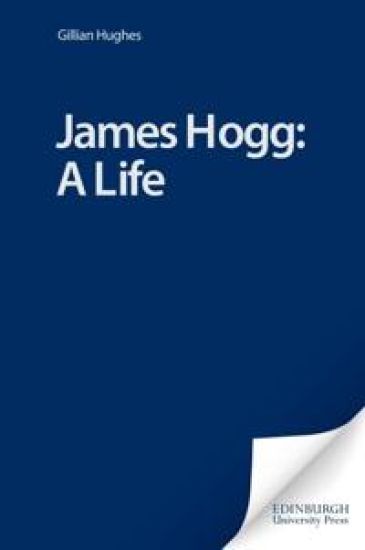
James Hogg: A Life

James Hogg: A Life

Gillian Hughes

Edinburgh University Press
2007
sidottu
James Hogg's life-story is one of extraordinary transitions and in his own lifetime he was best known as a heaven-inspired and naive Scottish rustic who featured as the boozing buffoon of Blackwood's Edinburgh Magazine. In his own fascinating Memoir this notoriously open-hearted man was curiously reticent about certain passages in his life. He was a man of apparent contradictions: a partisan Tory with Radical friends; an upholder of oral tradition who eagerly embraced every new development in early nineteenth-century print culture; a man who wrote against biographical intrusions yet in his own life writing, stories and poems emphasised his persona and origins as the Ettrick Shepherd. His formidable intelligence and drive were seldom acknowledged, and his most challenging work disturbed conventional readerly preconceptions. Key Features: *Documents a life from ragged boy cowherd to famous author. *Gives due weight to the neglected parts of Hogg's story for the first time. *Draws extensively on Hogg's correspondence and a rich archive of documentary material.
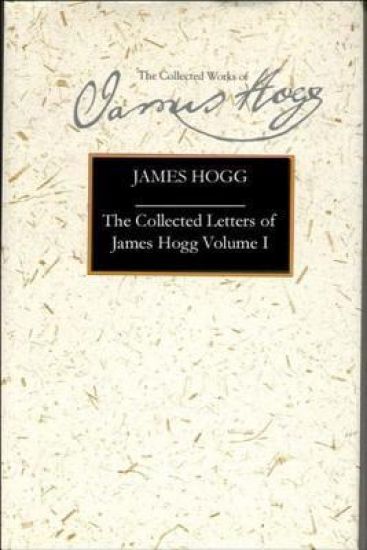
The Collected Letters of James Hogg, Volume 1, 1800-1819
Hogg was a superb letter-writer, and this is the initial volume of the first collected edition of his letters (to be completed in three volumes). Many of the letters have never been published before, or published only in part. They vividly reflect Hogg's varied social experience and shed new light on his own writings and those of his contemporaries. Among his famous correspondents were writers such as Scott, Byron, and Southey, antiquarians such as Robert Surtees, politicians such as Sir Robert Peel, and editors and publishers such as John Murray, William Blackwood, and Robert Chambers. But there are also letters to shepherds, farmers, aristocrats, musicians, young ladies, and bluestockings. Hogg first appears in this volume in 1800 as a young shepherd with literary ambitions, and becomes the famous author of The Queen's Wake (1813) and a key supporter of the early Blackwood's Edinburgh Magazine (1817). Among the final letters it contains are some tender if idiosyncratic love-letters to the Dumfriesshire girl he married in 1820 at the mature age of forty-nine.Hogg's entertaining and informative letters are supplemented by detailed annotation and a full editorial apparatus, including biographical notes on his chief correspondents and a concise overview of this phase of his life. This edition of Hogg's Letters has its roots in the late 1970s and 1980s, when the four founder members of the James Hogg Society (Gillian Hughes, Douglas Mack, Robin MacLachlan, and Elaine Petrie) began work on tracing and transcribing Hogg's surviving letters. The major tasks of completing this work and preparing a full-scale edition of Hogg's Letters were subsequently passed to Gillian Hughes, who is now bringing this important research project to fruition. Key Features: * The first ever edition of Hogg's letters to be published * Includes many letters never previously published * Features Hogg's correspondence with figures such as Sir Walter Scott, Lord Byron and Sir Robert Peel
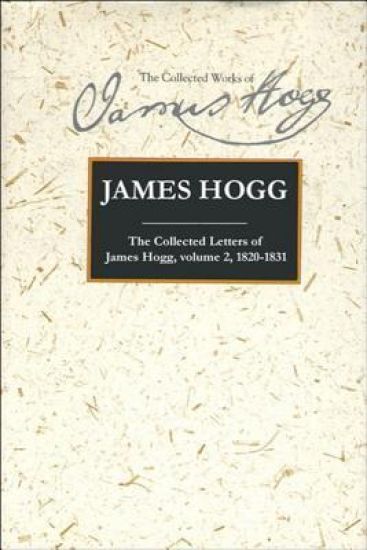
The Collected Letters of James Hogg, Volume 2, 1820-1831
The letters in the second volume of Gillian Hughes's pioneering edition vividly reflect Hogg's varied social experience and shed new light on his own writings and those of his contemporaries. His correspondents included major writers such as Scott and Byron, politicians such as Sir Robert Peel, and publishers such as John Murray and William Blackwood. But there are also letters to shepherds, farmers, aristocrats, musicians, young ladies, and bluestockings. In this meticulous and thoroughly researched edition, Hogg's entertaining and informative letters are illuminatingly placed in context by an editorial apparatus that includes full annotation and biographical notes on Hogg's chief correspondents.