

Kirjahaku
Etsi kirjoja tekijän nimen, kirjan nimen tai ISBN:n perusteella.
1000 tulosta hakusanalla Jan Ebert


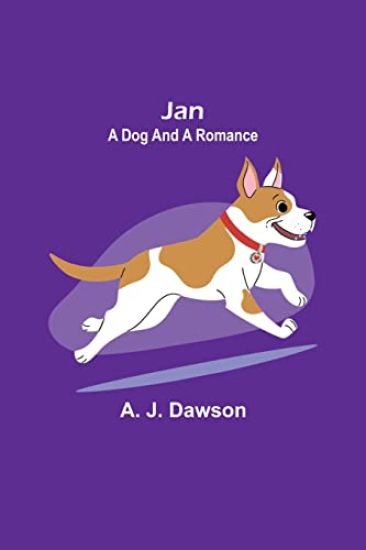
This book "" Jan: A Dog and a Romance "", has been considered important throughout the human history, and so that this work is never forgotten we have made efforts in its preservation by republishing this book in a modern format for present and future generations. This whole book has been reformatted, retyped and designed. These books are not made of scanned copies and hence the text is clear and readable.

A spirited and truly compelling literary biography of the immortal travel writer, journalist and twentieth-century trans pioneer, Jan Morris. When Jan Morris joined the 1953 Everest expedition and was first to get news of the ascent back to the young Queen Elizabeth in London, she became the most famous journalist in the world overnight. So began a glittering career that saw her cover the Eichmann trial, interview Che Guevara and scoop the story of Suez collusion. Morris transitioned in the early seventies, and documented the experience in Conundrum, still considered a classic of trans literature today. She was a trailblazer adored around the globe and her books, including Venice and the Pax Britannica trilogy, have inspired hundreds of thousands of readers. In these pages, celebrated travel writer and biographer Sara Wheeler uncovers the complexity of this twentieth-century icon to reveal a mosaic of contradictions. Morris conjured the spirit of place in her work, yet her late masterpiece Trieste celebrates "the meaning of nowhere; she was a Welsh nationalist who wasn't Welsh; and a preacher of kindness with a cruel side. Drawing on unprecedented access to Morris's papers as well as interviews with family, friends and colleagues, Wheeler assembles a captivating portrait of her astonishing life--a story of longing, traveling and never reaching home.
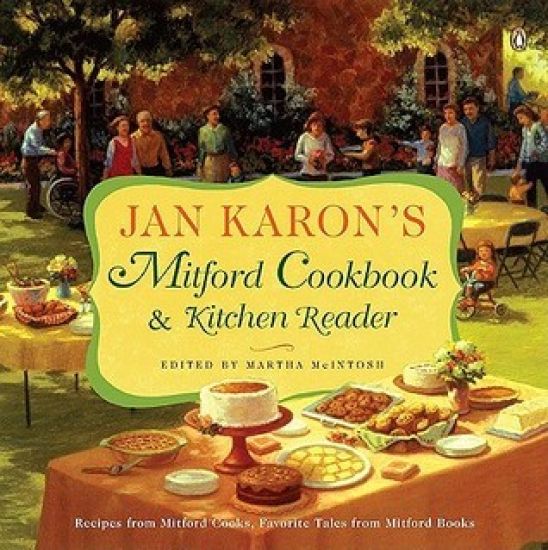
A collection of beautiful anedotes, delicious recipes, and memorable scenes from the Mitford books by #1 New York Times bestselling author Jan Karon. Millions of readers have discovered the delights of a trip to Mitford, and they've all found themselves hankering for mouthwatering dishes like Father Tim's Rector's Meatloaf and Esther Bolick's outrageously delicious Orange Marmalade Cake. Now, Jan Karon makes it easy to satisfy all these cravings and many more. Along with 150 fabulous recipes are Jan's personal reminiscences, dozens fo beloved scenes from each of the Mitford books, jokes, cooking tips, blessings, and a wonderful story never before published in the novels. For readers and cooks alike, Jan Karon's Mitford Cookbook & Kitchen Reader is a veritable feast. " Jan Karon's] wonderful cookbook is like a souvenir scrapbook to be dipped into time and again. The real world should be as good as Mitford."--The Cleveland Plain Dealer

Jan's dad makes a corncob doll that looks just like her

Only in the latter half of the twentieth century did the star of Jan Dismas Zelenka begin to ascend. Why did this major Bohemian composer of the Baroque era - who was known to, and esteemed by Johann Sebastian Bach - remain in the shadows for so long? Although most of Zelenka's music was composed to serve the Catholic liturgy, he left a handful of secular compositions, including six remarkable chamber sonatas. When these were first published in the 1960s, the resurrection of the almost-forgotten Zelenka was heralded. Drawing upon surviving musical materials, contemporary accounts, and Jesuit documentation, this volume presents insights into Zelenka's life and his music and the brilliant context in which he worked - the Dresden court during the reigns of the Kings of Poland and Electors of Saxony, Friedrich August I and II. A catalogue of Zelenka's compositions is also included.

One of the most important Central European philosophers of this century, Jan Patocka (1907-77) was a student and heir of Masaryk, Husserl, and Heidegger as well as a philosopher and historian of ideas in his own right. Patocka, who was forced to retire prematurely from Charles University in Prague for his political convictions, died of a brain hemorrhage while under Czech police interrogation for having signed the human rights manifesto Charta 77. Although many of his works are available in French and German, in this volume Erazim Kohák has translated Patocka's central philosophical texts into English for the first time. As a student and personal friend of Husserl, Patocka was keenly aware of the focal role of reason in the constitution of experienced reality. Simultaneously, as a student of Heidegger, he was no less aware of the irreducible autonomy of that reality. This double recognition led Patocka on a lifelong philosophical quest for a synthesis that would bridge modernity's split between the freedom of humans and the givenness of the world and, more broadly, between the Enlightenment and romanticism. For the philosophical reader, Patocka's perceptive writings provide the most helpful key to understanding the basic modern dialogue acted out by Husserl and Heidegger. Yet Patocka, widely respected for his writings on culture and the arts as well as for his studies of J. A. Comenius and the history of science, offers much more: a comprehensive attempt to come to terms with our intellectual heritage and our divided present. Kohák, as well as translating the writings, provides a comprehensive introduction, covering the full scope of Patocka's thought, and a complete bibliography of his writings. The result is an intellectually rich volume equally well suited as an introduction to Patocka, an advanced study in phenomenology, and a historical insight into philosophy behind the Iron Curtain since 1938.

It's Poland 1941 and the fortuitous event of a munitions lorry falling into his hands motivates Jan Guterman, a young Czech Jew on the run, to assemble a fighting force of men and women, with diverse skills and backgrounds, to wreak vengeance upon the Nazis, but with unforeseen consequences, as long-held prejudices are challenged and an impermissible infatuation is aroused.
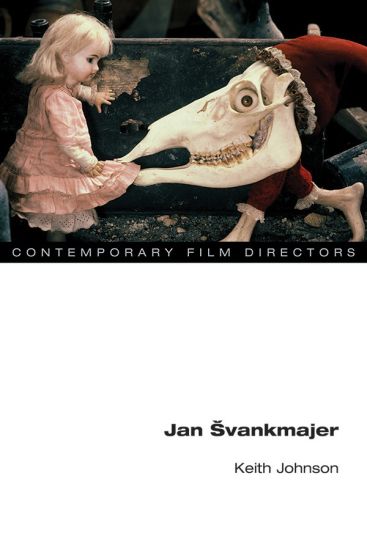
Jan Svankmajer enjoys a curious sort of anti-reputation: he is famous for being obscure. Unapologetically surrealist, Svankmajer draws on the traditions and techniques of stop-motion animation, collage, montage, puppetry, and clay to craft bizarre filmscapes. If these creative choices are off-putting to some, they have nonetheless won the Czech filmmaker recognition as a visionary animator. Keith Leslie Johnson explores Svankmajer's work as a cinema that spawns new and weird life forms "hybrids of machine, animal, and non-organic materials like stone and dust. Johnson's ambitious approach unlocks access to the director's world, a place governed by a single, uncanny order of being where all things are at once animated and inert. For Svankmajer, everything is at stake in every aspect of life, whether that life takes the form of an object, creature, or human. Sexuality, social bonds, religious longings "all get recapitulated on the stage of inanimate things. In Johnson's view, Svankmajer stands as the proponent of a biopolitical, ethical, and ecological outlook that implores us to reprogram our relationship with the vital matter all around us, including ourselves and our bodies.

Jan Svankmajer enjoys a curious sort of anti-reputation: he is famous for being obscure. Unapologetically surrealist, Svankmajer draws on the traditions and techniques of stop-motion animation, collage, montage, puppetry, and clay to craft bizarre filmscapes. If these creative choices are off-putting to some, they have nonetheless won the Czech filmmaker recognition as a visionary animator. Keith Leslie Johnson explores Svankmajer's work as a cinema that spawns new and weird life forms "hybrids of machine, animal, and non-organic materials like stone and dust. Johnson's ambitious approach unlocks access to the director's world, a place governed by a single, uncanny order of being where all things are at once animated and inert. For Svankmajer, everything is at stake in every aspect of life, whether that life takes the form of an object, creature, or human. Sexuality, social bonds, religious longings "all get recapitulated on the stage of inanimate things. In Johnson's view, Svankmajer stands as the proponent of a biopolitical, ethical, and ecological outlook that implores us to reprogram our relationship with the vital matter all around us, including ourselves and our bodies.
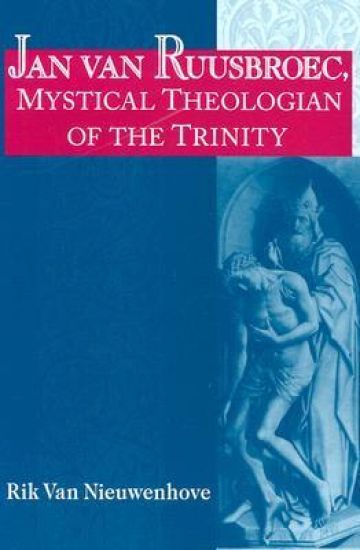
Jan Van Ruusbroec, Mystical Theologian of the Trinity
Rik Van Nieuwenhove
University of Notre Dame Press
2003
sidottu
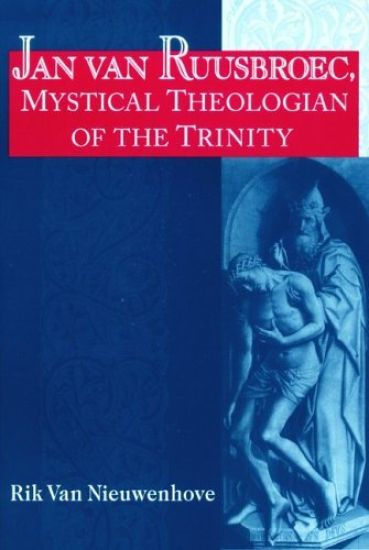
Jan van Ruusbroec (1293–1381), a Flemish mystical theologian, was one of the most original Trinitarian thinkers in the medieval West. Yet, his works—written in Middle-Dutch—have remained relatively unknown. In this book, Rik Van Nieuwenhove presents the first major study in English of Ruusbroec's thought. Van Nieuwenhove explores in detail Ruusbroec's theology of the Trinity, his anthropology, Christology, and his understanding of union with God. Van Nieuwenhove's study reveals that Ruusbroec, while incorporating aspects of the rich theological and spiritual tradition that preceded him, wrote at the beginning of a modern age in which mystical theology changed radically in nature. Ruusbroec claimed that the divine Persons are subject to an eternal dynamic of procession or out-going from the Father, on the one hand, and returning to the shared divine essence, on the other. The human person is called to participate in this continuous ebbing and flowing by leading a life that combines contemplation and charitable activity. Ruusbroec argued that mysticism should be interpreted in terms of a transformation of the human person rather than in terms of an immediate experience of God. Jan van Ruusbroec, Mystical Theologian of the Trinity is an innovative, original study of one of late medieval theology's undiscovered treasures. Written in clear, accessible language, this new interpretation of Ruusbroec's theology will appeal to all those interested in mysticism, medieval theology, and the doctrine of the Trinity.
Jan Van Ruusbroec, Mystical Theologian of the Trinity
Rik Van Nieuwenhove
University of Notre Dame Press
2003
nidottu
Jan van Ruusbroec (1293–1381), a Flemish mystical theologian, was one of the most original Trinitarian thinkers in the medieval West. Yet, his works—written in Middle-Dutch—have remained relatively unknown. In this book, Rik Van Nieuwenhove presents the first major study in English of Ruusbroec's thought. Van Nieuwenhove explores in detail Ruusbroec's theology of the Trinity, his anthropology, Christology, and his understanding of union with God. Van Nieuwenhove's study reveals that Ruusbroec, while incorporating aspects of the rich theological and spiritual tradition that preceded him, wrote at the beginning of a modern age in which mystical theology changed radically in nature. Ruusbroec claimed that the divine Persons are subject to an eternal dynamic of procession or out-going from the Father, on the one hand, and returning to the shared divine essence, on the other. The human person is called to participate in this continuous ebbing and flowing by leading a life that combines contemplation and charitable activity. Ruusbroec argued that mysticism should be interpreted in terms of a transformation of the human person rather than in terms of an immediate experience of God. Jan van Ruusbroec, Mystical Theologian of the Trinity is an innovative, original study of one of late medieval theology's undiscovered treasures. Written in clear, accessible language, this new interpretation of Ruusbroec's theology will appeal to all those interested in mysticism, medieval theology, and the doctrine of the Trinity.

Jan Brueghel and the Senses of Scale
Elizabeth Alice Honig
Pennsylvania State University Press
2016
sidottu
Unlike the work of his contemporaries Rubens and Caravaggio, who painted on a grand scale, seventeenth-century Flemish painter Jan Brueghel’s tiny, detail-filled paintings took their place not in galleries but among touchable objects. This first book-length study of his work investigates how educated beholders valued the experience of refined, miniaturized artworks in Baroque Europe, and how, conversely, Brueghel’s distinctive aesthetic set a standard—and a technique—for the production of inexpensive popular images.It has been easy for art historians to overlook the work of Jan Brueghel, Pieter’s son. Yet the very qualities of smallness and intimacy that have marginalized him among historians made the younger Brueghel a central figure in the seventeenth-century art world. Elizabeth Honig’s thoughtful exploration reveals how his works—which were portable, mobile, and intimate—questioned conceptions of distance, dimension, and style. Honig proposes an alternate form of visuality that allows us to reevaluate how pictures were experienced in seventeenth-century Europe, how they functioned, and how and what they communicated.A monumental examination of an extraordinary artist, Jan Brueghel and the Senses of Scale reconsiders Brueghel’s paintings and restores them to their rightful place in history.

An original account of the life and work of legendary designer Jan Tschichold and his role in the movement in Weimar Germany to create modern graphic design Richly illustrated with images from Jan Tschichold’s little-known private collection of design ephemera, this important book explores a legendary figure in the history of modern graphic design through the artists, ideas, and texts from the Bauhaus that most influenced him. Tschichold (1902–1974), a prolific designer, writer, and theorist, stood at the forefront of a revolution in visual culture that made printed material more elemental and dynamic. His designs were applied to everyday graphics, from billboard advertisements and business cards to book jackets and invoices. This handsome volume offers a new understanding of Tschichold’s work, and of the underlying theories of the artistic movement he helped to form, by analyzing his collections: illustrations, advertisements, magazines, and books by well-known figures, such as Kurt Schwitters, El Lissitzky, Aleksandr Rodchenko, and László Moholy-Nagy, and lesser-known artist-designers, including Willi Baumeister, Max Burchartz, Walter Dexel, and Piet Zwart. This book also charts the development of the New Typography, a broad-based movement across Central Europe that included “The Ring,” a group formed by Schwitters in 1927. Tschichold played a crucial role in defining this movement, documenting the theory and practice in his most influential book, The New Typography (1928), still regarded as a seminal text of graphic design.Published in association with the Bard Graduate CenterExhibition Schedule:Bard Graduate Center, New York (02/15/19–07/07/19)
Jan Van Imschoot
Selen Ansen; Hendrik Folkerts; Dieter Roelstraete; Alain Tapié
YALE UNIVERSITY PRESS
2023
sidottu
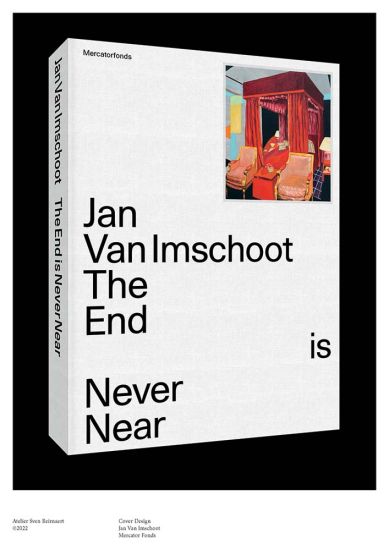
A comprehensive overview of the oeuvre of Belgian painter Jan Van Imschoot A comprehensive overview of the oeuvre of Belgian painter Jan Van Imschoot (b. 1963), whose contemporary work builds bridges to predecessors such as Caravaggio, Tintoretto, Goya, and Manet. Van Imschoot’s painting consciously opts for a clear, sometimes contradictory and ironic style. The directness of his decisive brushwork and his balanced yet audacious use of color is strikingly contemporary, while his work draws on historical themes from literature and art history. In this way, Van Imschoot engages in a continuous dialogue with the past, in which he, with a dose of cynicism, often targets phenomena or figures that find themselves on the fringes of (contemporary) society. Bringing together more than 220 works by Van Imschoot with five accompanying texts, this book gives fresh insight into the painting practice of this Belgian master.Distributed for Mercatorfonds
Jan de Witt’s Elementa Curvarum Linearum, Liber Primus
Albertus W. Grootendorst
Springer-Verlag New York Inc.
2000
sidottu
The present book is a translation into English of Elernenta CU'f'Varurn Linearurn-Liber Prirnus, written in Latin, by the Dutch statesman and mathematician Jan de Witt (1625-1672). Together with its sequel, Ele- rnenta CU'f'Varurn Linearurn-Liber Secundus, it constitutes the first text- book on Analytic Geometry, based on the ideas of Descartes, as laid down in his Geornetrie of 1637. The first edition of de Witt's work appeared in 1659 and this translation is its first translation into English. For more details the reader is referred to the Introduction. Apart from this translation and this introduction, the present work con- tains an extensive summary, annotations to the translation, and two ap- pendices on the role of the conics in Greek mathematics. The translation has been made from the second edition, printed by the Blaeu Company in Amsterdam in 1684. In 1997 the translator published a translation into Dutch of the same work, likewise supplied with an introduction, a summary, notes, and two appendices. This edition appeared as a publication of the Stichting Mathe- matisch Centrum Amsterdam. The present translation, however, is a direct translation of the Latin text. The rest of this work is an English version of the introduction, the summary, the notes, and the appendices, based on the Dutch original.

Lively, colorful characters decorate a new slipcase for Jan Brett's Little Library, home to three favorite board books: The Mitten, The Hat and Gingerbread Baby. This new look is sure to pull in gift-givers who will find this little library the perfect gift year round, especially during the holiday season. It's the easy, surefire present to give to board book fans and a great way to make future readers of Jan Brett picture books
Jan Tschichold - Master Typographer
Cees W. de Jong; Alston W. Purvis; Martijn F. Le Coultre; Richard B. Doubleday; Hans Reichardt
Thames Hudson Ltd
2008
sidottu
Few have left a deeper impression on the world of typography than Jan Tschichold (1902–74), one of the most outstanding and influential designers of the 20th century. Not only was he was a master in his field, but he wrote a number of highly influential books and became instrumental in promoting the modernist design strategy called the New Typography. This substantial volume covers Tschichold’s life and career, placing the designer’s vision firmly in the rich cultural and historical context of his era. Tschichold embraced avant-garde ideas from movements such as the Bauhaus and De Stijl and made them accessible to working designers and printers, stressing clarity in communication, with form and function going hand in hand. The contributing writers discuss the designer’s major influences and the highlights of his varied career, including his seminal poster designs, his groundbreaking work with Penguin Books, and his creation of the classic typeface Sabon. Lavish illustrations – archive photographs, many published here for the first time, as well as copious examples of Tschichold’s work – accompany the text, confirming that Tschichold’s heritage lives on in the digital age, and proving that he is amongst the greatest typographic designers ever.