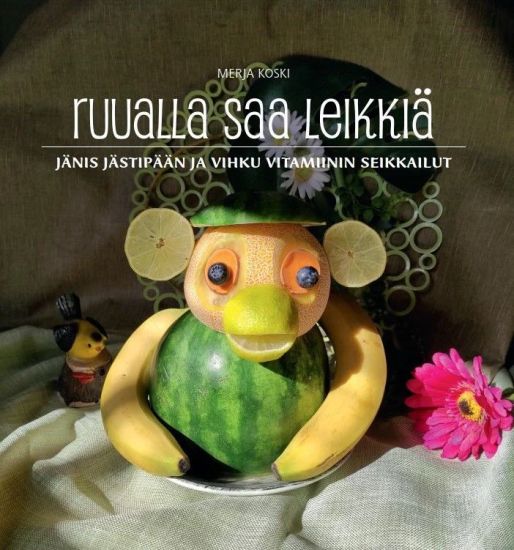
Ruualla saa leikkiä - Jänis Jästipään ja Vihku Vitamiinin seikkailut, on tarina, joka saa karkkeja ja herkkuja rakastavan Jänis Jästipään tutustumaan kasvisten hauskaan ja värikkääseen maailmaan. Hän yllättyy iloisesti makujen ja seikkailujen keskellä monta kertaa. Jänis Jästipää kavereineen käy kanalassa ja maatilalla, he tapaavat kalastajan ja paljon muuta. Lopussa heillä on tietenkin juhlat, koska aina on aihetta juhlaan!
Malaki käy koulua. Yleensä siellä on kivaa, mutta joskus ahdistaakin. Tämä terapeuttinen kirja lapsille ja vanhemmille perustuu psykoanalytikko tri Norberto Keppen sisäistämistekniikkaan. Se, mikä meitä ärsyttää muissa, kertoo jotain meistä itsestämme. Paras tapa tuntea itsemme on kanssaihmistemme kautta. Yleensä emme halua kohdata tietoisuutta omista vaikeuksistamme, joita muiden vaikeudet heijastavat.Samalta kirjailijalta on aikaisemmin julkaistu ajankohtainen teos Malaki pelkää sotaa - Terapeuttinen lastenkirja, jonka tarkoituksena on auttaa suomalaisia lapsia käsittelemään niin sodanpelkoa kuin sisarkateuttakin.
The best portrait of the iconic blues singer, offering glimpses of life on the road and the self-destruction that lies at the heart of the rock 'n' roll myth.
*Includes pictures. *Includes Joplin's own quotes about her life and career. *Includes footnotes and a bibliography for further reading. "The more you live, the less you die." - Janis Joplin The life and career of Janis Joplin marks such a stark departure from the blues, rock and soul traditions as American society has come to know them that her brief and tempestuous career defies artistic analysis, if only because there is so little precedent aside from the great African-American blues and jazz singers that influenced her. For a woman born in 1943 and coming into her professional prime in the 1960s, Joplin stood as a mesmerizing and baffling foil to the female tradition in non-classical music, which had previously been symbolized by pure, mellow voices singing thoughtful texts. In the world of rock ensembles, women often stood near the back to play peripheral percussion instruments, such as the tambourine, and from time to time, they filled in a harmony or enjoyed a brief stint on the front of the stage. However, due to Joplin's belief that the mellow and refined tradition was not the way for her to go, the young firebrand with the conflicted past and personality opted for a complete, unrestrained expression of her deepest feelings. In the process, she both thrilled and frightened American audiences who had never seen her kind and never would again. The American music scene was entirely unprepared to witness the emergence of a white woman who could sing the blues with such authenticity, force, and depth of feeling. Dubbed by many as the "First Lady" or "Queen" of Rock & Roll, Joplin both invented and installed the "rock mama paradigm" into the American rock consciousness, a patriarchal and fraternal industry that, much like the societal traits it protested, restricted women to a narrow and conservative criteria for entrance. However, when Joplin was fully committed, she would have none of it, and in time she became "the middle class white girl who sang the blues" for her generation and the generation to come, releasing four powerful albums between the socially intense years of 1966-1970. With only a very few kindred spirits, such as Grace Slick of Jefferson Airplane, "she pioneered a new range of expression for white women." In Joplin's case, performing was a critical aspect of her popularity, but drugs and alcohol were central to her performances, which often found her under the influence of heroin and sipping from a whiskey bottle while playing before live crowds. Despite the dangerous mixtures, Joplin's performances became such a phenomenon that they turned her into an unlikely sex symbol, something she had a hard time understanding and often joked about ("Guess what, I might be the first hippie pinup girl."). Nonetheless, she could pull it off because her "blues-soaked voice...was matched by her uninhibited physical movements...in a mesmerizing display of soulfulness few thought a white singer could pull off." At the height of her powers, before crippling addictions eventually overwhelmed her, her Monterey and Woodstock appearances are "considered by many specialists...to have been classic moments in the history of rock" Of course, for all the mention of Joplin's career, there is nearly as much focus on her untimely death at the age of 27, particularly because she died just a few weeks after Jimi Hendrix's death at the age of 27 and was followed in death by Jim Morrison at the age of 27 less than a year later. Those three all died as a result of alcohol and drug abuse, and they formed the starting point for the legendary "27 Club", which memorializes rock stars who died at the age of 27. American Legends: The Life of Janis Joplin examines the life and career of one of America's most famous musicians. Along with pictures of important people, places, and events, you will learn about Janis Joplin like never before, in no time at all.
*Includes pictures. *Includes Joplin's own quotes about her life and career. *Includes footnotes and a bibliography for further reading. "The more you live, the less you die." - Janis Joplin The life and career of Janis Joplin marks such a stark departure from the blues, rock and soul traditions as American society has come to know them that her brief and tempestuous career defies artistic analysis, if only because there is so little precedent aside from the great African-American blues and jazz singers that influenced her. For a woman born in 1943 and coming into her professional prime in the 1960s, Joplin stood as a mesmerizing and baffling foil to the female tradition in non-classical music, which had previously been symbolized by pure, mellow voices singing thoughtful texts. In the world of rock ensembles, women often stood near the back to play peripheral percussion instruments, such as the tambourine, and from time to time, they filled in a harmony or enjoyed a brief stint on the front of the stage. However, due to Joplin's belief that the mellow and refined tradition was not the way for her to go, the young firebrand with the conflicted past and personality opted for a complete, unrestrained expression of her deepest feelings. In the process, she both thrilled and frightened American audiences who had never seen her kind and never would again. The American music scene was entirely unprepared to witness the emergence of a white woman who could sing the blues with such authenticity, force, and depth of feeling. Dubbed by many as the "First Lady" or "Queen" of Rock & Roll, Joplin both invented and installed the "rock mama paradigm" into the American rock consciousness, a patriarchal and fraternal industry that, much like the societal traits it protested, restricted women to a narrow and conservative criteria for entrance. However, when Joplin was fully committed, she would have none of it, and in time she became "the middle class white girl who sang the blues" for her generation and the generation to come, releasing four powerful albums between the socially intense years of 1966-1970. With only a very few kindred spirits, such as Grace Slick of Jefferson Airplane, "she pioneered a new range of expression for white women." In Joplin's case, performing was a critical aspect of her popularity, but drugs and alcohol were central to her performances, which often found her under the influence of heroin and sipping from a whiskey bottle while playing before live crowds. Despite the dangerous mixtures, Joplin's performances became such a phenomenon that they turned her into an unlikely sex symbol, something she had a hard time understanding and often joked about ("Guess what, I might be the first hippie pinup girl."). Nonetheless, she could pull it off because her "blues-soaked voice...was matched by her uninhibited physical movements...in a mesmerizing display of soulfulness few thought a white singer could pull off." At the height of her powers, before crippling addictions eventually overwhelmed her, her Monterey and Woodstock appearances are "considered by many specialists...to have been classic moments in the history of rock" Of course, for all the mention of Joplin's career, there is nearly as much focus on her untimely death at the age of 27, particularly because she died just a few weeks after Jimi Hendrix's death at the age of 27 and was followed in death by Jim Morrison at the age of 27 less than a year later. Those three all died as a result of alcohol and drug abuse, and they formed the starting point for the legendary "27 Club", which memorializes rock stars who died at the age of 27. American Legends: The Life of Janis Joplin examines the life and career of one of America's most famous musicians. Along with pictures of important people, places, and events, you will learn about Janis Joplin like never before, in no time at all.
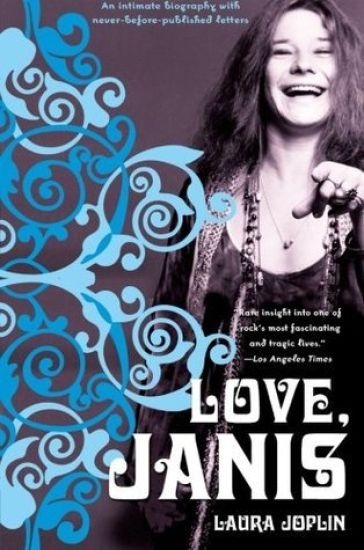
A revealing and intimate biography about Janis Joplin, the Queen of Classic Rock, written by her younger sister. Janis Joplin blazed across the sixties music scene, electrifying audiences with her staggering voice and the way she seemed to pour her very soul into her music. By the time her life and artistry were cut tragically short by a heroin overdose, Joplin had become the stuff of rock-and-roll legend. Through the eyes of her family and closest friends , we see Janis as a young girl, already rebelling against injustice, racism, and hypocrisy in society. We follow Janis as she discovers her amazing talents in the Beat hangouts of Venice and North Beach-singing in coffeehouses, shooting speed to enhance her creativity, challenging the norms of straight society. Janis truly came into her own in the fantastic, psychedelic, acid-soaked world of Haight-Asbury. At the height of her fame, Janis's life is a whirlwind of public adoration and hard living. Laura Joplin shows us not only the public Janice who could drink Jim Morrison under the table and bean him with a bottle of booze when he got fresh; she shows us the private Janis, struggling to perfect her art, searching for the balance between love and stardom, battling to overcome her alcohol addiction and heroin use in a world where substance abuse was nearly universal. At the heart of Love, Janis is an astonishing series of letters by Janis herself that have never been previously published. In them she conveys as no one else could the wild ride from awkward small-town teenager to rock-and-roll queen. Love, Janis is the new life of Janis Joplin we have been waiting for-a celebration of the sixties' joyous experimentation and creativity, and a loving, compassionate examination of one of that era's greatest talents.
This book is a catalogue for the fourth exhibition of the work of the artist Piet Mondrian, presented by Sidney Janis at his gallery. The exhibition features a collection of Mondrian's artwork, including his iconic abstract paintings that are characterized by geometric shapes and primary colors. The catalogue includes high-quality images of the artwork, along with descriptions and analysis of each piece. It also includes an introduction by Sidney Janis, providing insight into Mondrian's artistic style and the significance of his work. This book is a valuable resource for art enthusiasts, scholars, and anyone interested in the history of modern art.A Selection Of Thirty-One Paintings By Mondrian From The Years Of 1900-1943.This scarce antiquarian book is a facsimile reprint of the old original and may contain some imperfections such as library marks and notations. Because we believe this work is culturally important, we have made it available as part of our commitment for protecting, preserving, and promoting the world's literature in affordable, high quality, modern editions, that are true to their original work.
A personalised storybook for girls called JANIS. The story is based on the letters of the child's own name. All books are different from one another.The girl wakes up but can't remember her name. Magic Mouse knows how to solve the problem. They go on a wonderful adventure in the Magic Bus Translated and adapted by the author from the top-selling Finnish language children's namebook series "Tytt /Poika, joka unohti nimens ". The beautiful hand-drawn pictures will delight both the young and the young-at-heart Looking for a namebook "What's my name?" but couldn't find a book for the name you are looking for? Please don't hesitate to contact me with your name request -Tiina WalshAuthorfb.me/whatsmynamestorybooks for more details about the storybooks
*Includes pictures. *Includes the stars' own quotes about their lives and careers. *Includes suggested playlists and analyses of their music. *Includes bibliographies for further reading. It is rare in the world of music for a general consensus to form over who was the best at anything. Many would call The Beatles the greatest rock band, but it's easy to find strongly opinionated dissenters. However, when it came to playing a guitar and laying the soundtrack for the psychedelic era, just about everyone agrees there was Jimi Hendrix (1942-1970) and then there was everyone else. Anyone arguing otherwise either never heard his music or saw him perform. In fact, Jimi Hendrix is one of the few musicians known primarily for his sound and what he could do with a guitar than for his discography. A part of that is due to his untimely death and entry into the 27 Club, but it is also due to the fact that he was so revolutionary with the use of an electric guitar and so skilled at playing it that the effects have largely not been duplicated since. It was heavy, loud, and completely raw, and yet he was a pioneer in genres as varied as blues and heavy metal. As Pete Townshend famously put it, "With Jimi, I didn't have any envy. I never had any sense that I could ever come close." The life and career of Janis Joplin marks such a stark departure from the blues, rock and soul traditions as American society has come to know them that her brief and tempestuous career defies artistic analysis, if only because there is so little precedent aside from the great African-American blues and jazz singers that influenced her. For a woman born in 1943 and coming into her professional prime in the 1960s, Joplin stood as a mesmerizing and baffling foil to the female tradition in non-classical music, which had previously been symbolized by pure, mellow voices singing thoughtful texts. The American music scene was entirely unprepared to witness the emergence of a white woman who could sing the blues with such authenticity, force, and depth of feeling. Of course, for all the mention of Joplin's career, there is nearly as much focus on her untimely death at the age of 27, particularly because she died just a few weeks after Jimi Hendrix's death at the age of 27 and was followed in death by Jim Morrison at the age of 27 less than a year later. Those three all died as a result of alcohol and drug abuse, and they formed the starting point for the legendary "27 Club", which memorializes rock stars who died at the age of 27. Morrison, the charismatic poet/musician of The Doors, helped to transform the subgenre of rock n' roll as a stylistic flavor into the full-fledged institution of Rock Music, and he accomplished all of this by being extreme, in every sense of the word. His poetry was assaultive, blatant and graphic, a sign of the times, and his voice was mystical and haunting, lacking any sense of what was previously or typically considered vocal beauty. Whether intentional or not, Morrison also led the charge of excessive defiance toward anything hierarchical or rule-laden, and the acting out of his subconscious urges on public stages around the world amazed and shocked everyone who saw or heard about it.
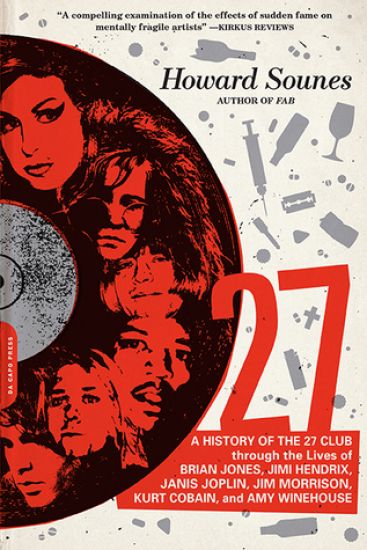
When singer Amy Winehouse was found dead at her London home in 2011, the press inducted her into what Kurt Cobain's mother named the 27 Club. "Now he's gone and joined that stupid club," she said in 1994, after being told that her son, the front man of Nirvana, had committed suicide. "I told him not to..." Kurt's mom was referring to the extraordinary roll call of stars who died at the same young age, including Brian Jones of the Rolling Stones, Jimi Hendrix, Janis Joplin, and Jim Morrison of the Doors. All were talented. All were dissipated. All were 27. In this haunting book, author Howard Sounes conducts the definitive forensic investigation into the lives and deaths of the six most iconic members of the Club, as well as some lesser known members, to discover what, apart from coincidence, this phenomenon signifies. In a grimly fascinating journey through the dark side of the music business, Sounes uncovers a common story of excess, madness, and self-destruction. The fantasies, half-truths, and mythologies that have become associated with the Club are debunked. Instead, a clear and compelling narrative emerges, one based on hard facts, that unites these lost souls in both life and death.
Think "Woodstock" and the mind turns to the seminal 1969 festival that crowned a seismic decade of sex, drugs, and rock 'n' roll. But the town of Woodstock, New York, the original planned venue of the concert, is located over 60 miles from the site to which the fabled half a million flocked. Long before the landmark music festival usurped the name, Woodstock--the tiny Catskills town where Bob Dylan holed up after his infamous 1966 motorcycle accident--was already a key location in the '60s rock landscape. Drawing on numerous first-hand interviews with the remaining key players in the scene--and on the period when he lived there himself in the 1990s--Hoskyns has produced an East Coast companion to his bestselling L.A. canyon classic Hotel California. This is a richly absorbing study of a vital music scene in a revolutionary time and place.
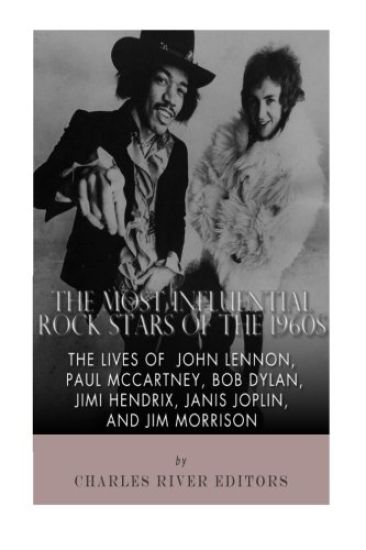
*Includes pictures *Includes the rock stars' quotes about their lives and careers *Includes an introduction and bibliography for each one In 1964, girls all across the United States filled venues, almost literally screamed their heads off, and fainted en masse. Almost from the second they played the first note, The Beatles would be hit with the resounding screams, which made it impossible for them to even hear themselves sing. When they made their American debut on The Ed Sullivan Show in early 1964, they were greeted by young fans who whipped themselves up into such a frenzy that some of them fainted. Beatlemania had struck North America, creating a musical and pop culture phenomenon unlike anything the world had ever seen. At the center of it all was John Lennon and Paul McCartney, the principal songwriting duo who were instrumental in creating the soundtrack of the 1960s, while producing some of the world's most timeless classics. Together with George Harrison and Ringo Starr, Lennon and McCartney propelled The Beatles to unprecedented heights, sparking Beatlemania on two sides of the Atlantic and experimenting with their sound in ways that revolutionized rock and inspired bands across various musical genres. In the space of just a few years, Bob Dylan, born Robert Allen Zimmerman, rose from the obscurity of a small Minnesota town to a position of royalty atop the folk music landscape of the 1960s, with a universal esteem and status on a par with Elvis Presley and The Beatles. In the 1960s, "Blowin' in the Wind" and "The Times They Are A' Changing" "became anthems of the anti-war and civil rights movements," but long after the transition from the '50s to the late '60s and '70s was accomplished, the initially baffling young folk singer who appeared out of nowhere was awarded a special Pulitzer Prize for "his profound impact on popular music, and American culture, marked by lyrical compositions of extraordinary poetic power." Over the span of his career, he has received Grammy Awards, Golden Globes, Academy Award Oscars, and he has been inducted into the Rock & Roll Hall of Fame, the Minnesota Music Hall of Fame, the Nashville Songwriters Hall of Fame, and the Songwriters Hall of Fame, not to mention the Pulitzer Prize and Presidential Medal of Freedom. It is rare in the world of music for a general consensus to form over who was the best at anything. Many would call The Beatles the greatest rock band, but it's easy to find strongly opinionated dissenters. However, when it came to playing a guitar and laying the soundtrack for the psychedelic era, just about everyone agrees there was Jimi Hendrix (1942-1970) and then there was everyone else. Anyone arguing otherwise either never heard his music or saw him perform. In fact, Jimi Hendrix is one of the few musicians known primarily for his sound and what he could do with a guitar than for his discography. Dubbed by many as the "First Lady" or "Queen" of Rock & Roll, Joplin both invented and installed the "rock mama paradigm" into the American rock consciousness, a patriarchal and fraternal industry that, much like the societal traits it protested, restricted women to a narrow and conservative criteria for entrance. With only a very few kindred spirits, such as Grace Slick of Jefferson Airplane, "she pioneered a new range of expression for white women." In the mid-1960s, an era on the cusp of change from the musical and social norms of the previous decade, the emergence of Jim Morrison, the charismatic poet/musician of The Doors, helped to transform the subgenre of rock n' roll as a stylistic flavor to the full-fledged institution of Rock Music. Morrison accomplished this transformation by avoiding membership in any of the known categories of modern rock music during the age of protest, but at the same time, he became the general symbol of anti-authoritarianism for his generation and the next.
« Elle, Janis. Moi, Sam. Notre enfance. Notre amour. Nos vies soud es par la d sesp rante recherche du bonheur. Des existences sold es par l'in vitable d nouement dramatique. Et la fin de tout pour nous. C'est a la vraie d ch ance. ...] J'ai longtemps pens que les astres taient parfaitement align s. Doc, j'y ai vraiment cru. De tout mon coeur. Je me suis lanc corps et me dans cette relation, comme un maudit fou, des fois comme un d cha n ivre de mes illusions. Janis aussi voulait y croire, l'amour parfait, mais elle tait plus r ticente. C' tait un mirage pour elle. Moi, je poussais vite, elle, elle se h tait lentement. Elle tait plus prudente, la Janis. Moins t te folle que moi en amour. Doc, tu te tapotes les l vres avec ton stylo...
Collins Big Cat supports every primary child on their reading journey from phonics to fluency. Top authors and illustrators have created fiction and non-fiction books that children love to read. Book banded for guided and independent reading, there are reading notes in the back, comprehensive teaching and assessment support and ebooks available. When Cody’s adventurous summer plans were suddenly cancelled, the looming school holidays felt like a bleak emptiness, with nothing to do, nowhere to go. Until someone, new and unexpected, changed all that. Pearl/Band 18 books offer fluent readers a complex, substantial text with challenging themes to facilitate sustained comprehension, bridging the gap between a reading programme and longer chapter books. Ideas for reading in the back of the book provide practical support and stimulating activities.