The legend of Timpanogos Mountain is a Native American tale of a woman named Utahna who goes on a journey to save her people from starvation. The monument to her legend is the Timpanogos Mountain in American Fork, Utah where she lies in an eternal slumber to remind all people to respect Mother Earth. Red Eagle pretended to be the Guardian Timpanogos and took Utahna as his wife. The Creator honored their eternal love by placing a giant heart rock in Timpanogos Cave in American Fork canyon in Utah, which can be visited today. This is a story to remind all people to respect Mother Earth.
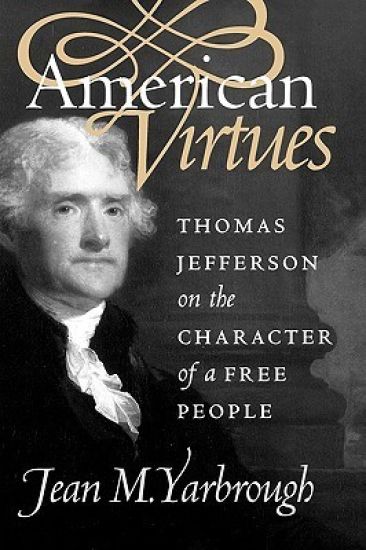
Since the early days of the republic, Americans have recognized Thomas Jefferson's distinctive role in helping to shape the American national character. As Founder and statesman, Jefferson thought broadly about the virtues Americans would need to cultivate in order to preserve and perfect their experiment in republican self-government. Now in an age preoccupied with rights and divided over questions of character in public and private life, Jefferson can help us to think more clearly about our most urgent concerns. American Virtues is the first comprehensive analysis of Jefferson's moral and political philosophy in over twenty years and the first ever to focus exclusively on the full range of moral, civic, and intellectual virtues that together form the American character. It asks what kind of character Americans as a people must cultivate to ensure their freedom and happiness and how we as a free society can nurture moral and intellectual excellence in our citizens and statesmen. Beginning with the Declaration of Independence, Jean Yarbrough explores how Jefferson's conception of rights helps to form the American character. In subsequent chapters, she examines the moral sense virtues of justice and benevolence; the agrarian virtues of industry, moderation, patience, self-reliance, and independence; patriotism and modern republicanism; slavery and agrarian vice; the effect of commerce on character; the virtues connected with private property; the civic virtues of vigilance and spirited participation; the meaning of virtue and happiness for women; the virtues of republican statesmen; the place of the Epicurean virtues of wisdom and friendship in liberal republicanism; and piety and the secularized virtues of charity, toleration, and hope. In broadening the examination of virtue to include not only civic or republican virtue but the whole range of moral and intellectual excellence that perfect the individual character, American Virtues moves beyond the liberal-republican debates and makes a fresh contribution to the Jeffersonian literature.
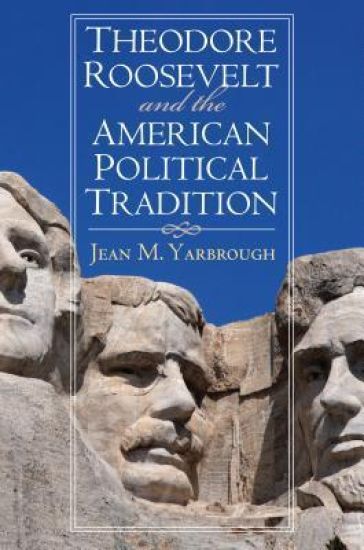
Rough Rider, hunter, trust-buster, president and Bull Moose candidate. Biographers have long fastened on TR as man of action, while largely ignoring his political thought. Now, in time for the centennial of his Progressive run for the presidency, Jean Yarbrough provides a searching examination of TR’s political thought, especially in relation to the ideas of Washington, Hamilton and Lincoln - the statesmen TR claimed most to admire.Yarbrough sets out not only to explore Roosevelt’s vision for America but also to consider what his political ideas have meant for republican self-government. She praises TR for his fighting spirit, his love of country and efforts to promote republican greatness, but faults him for departing from the political principles of the more nationalistic Founders he esteemed. With the benefit of hindsight, she argues that the progressive policies he came to embrace have over time undermined the very qualities Roosevelt regarded as essential to civic life. In particular, the social welfare policies he championed have eroded industry and self-reliance; the expansion of the regulatory state has multiplied the special interests seeking access to political power; and the bureaucratic experts in whom he reposed such confidence have all too often turned out to be neither disinterested nor effective.Yarbrough argues that TR’s early historical studies - inspired by Darwinian biology and Hegelian political thought - treated westward expansion from an evolutionary and developmental perspective that placed race and conquest at the centre of the narrative, while relegating individual rights and consent of the governed to the sidelines.Although his early career showed him to be a moderate Republican reformer, Yarbrough argues that even then he did not share Hamilton’s enthusiasm for the commercial republic and substituted an appeal to “abstract duty” for The Federalist’s reliance on self-interest. As New York governor and first-term president, TR attempted to strike a “just balance” between democratic and oligarchic interests, but by the end of his presidency he had tipped the balance in favour of progressive policies. From the New Nationalism until his death in 1919, Roosevelt continued to claim the mantle of Washington and Lincoln, even as he moved further from their political principles.Through careful examination of TR’s political thought, Yarbrough’s book sheds new light on his place in the American political tradition, while enhancing our understanding of the roots of progressivism and its transformation of the Constitution.
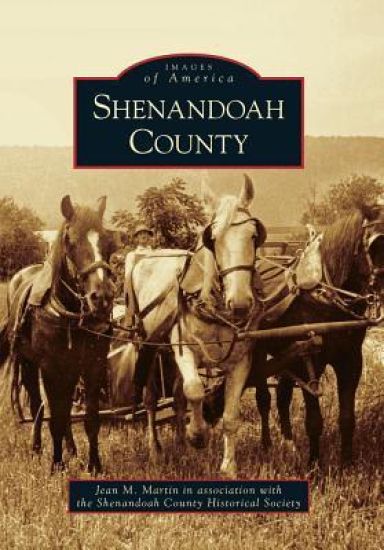
Shenandoah County was created in 1772 from Frederick County and, at that time, was named for the English governor Lord Dunmore. In 1778, the name was officially changed to Shenandoah, possibly after the river that runs through the valley between the Blue Ridge and Appalachian Mountains. Religion brought some of the earliest pioneers to the Shenandoah Valley in the 1740s and still plays a large part in the lives of most residents. Images of America: Shenandoah County focuses on the people who have made this valley a comfortable place to raise families and communities that pray together, work alongside each other, and enjoy life surrounded by the mountains. The images show the strengths and the creativity of those who have lived on the farms and in the diverse villages throughout the county.
Using over 190 archive images, this pictorial history charts the development of Whitnash (and some surrounding villages) from a rural village into a busy town on the edge of Royal Leamington Spa. Aspects of everyday life are featured: schools, churches, shops and public houses, leisure pursuits and celebrations, such as the 1950 Whitnash Carnival.
Artioles and symposia on major controversial social issues: integration and civil rights; President Clinton's recent race initiative; poverty; education; the environment; democratic participation; disability rights; corporate welfare; and others. The range of contributors is wide, and includes Julian Bond, Herbert Gans, James Loewen, Jonathan Kozol, Manning Marable, Howard Zinn, Benjamin DeMott, Frances Fox Piven, and Marian Wright Edelman.
Artioles and symposia on major controversial social issues: integration and civil rights; President Clinton's recent race initiative; poverty; education; the environment; democratic participation; disability rights; corporate welfare; and others. The range of contributors is wide, and includes Julian Bond, Herbert Gans, James Loewen, Jonathan Kozol, Manning Marable, Howard Zinn, Benjamin DeMott, Frances Fox Piven, and Marian Wright Edelman.
The twenty-five years between 1821 and 1846 were turbulent but important years in the history of the fur trade in the Pacific Northwest: 1821 saw the merger of the Hudson's Bay Company and the North West Company, and 1846 saw the signing of the Oregon Treaty, which established the Canada-U.S. border.Archibald McDonald was a man who experienced these changes first hand. As a senior HBC officer, he was sent to the Columbia District headquarters at Fort George in 1821 to oversee the recently absorbed NWC posts and assets. After the merger, McDonald went on to direct operations at Thompson River (1826-28), Fort Langley (1828-33), and Fort Colvile (1833-44).During his tenure in the Pacific Northwest, letters were McDonald's only link with the outside world. Collected here for the first time by Jean Murray Cole, these public and private letters to friends, business colleagues, missionaries, botanists, and many others provide a fascinating narrative of the expansion of the fur trade at a critical time in its history. McDonald's witty and ironic style make these informative letters highly readable and entertaining. They are an invaluable primary resource for historians of the fur trade and the Pacific Northwest, anthropologists, geographers, and specialists in native studies. More general readers will be fascinated by these amusing snapshots of early settlement in the Pacific Northwest.
The twenty-five years between 1821 and 1846 were turbulent but important years in the history of the fur trade in the Pacific Northwest: 1821 saw the merger of the Hudson's Bay Company and the North West Company, and 1846 saw the signing of the Oregon Treaty, which established the Canada-U.S. border.Archibald McDonald was a man who experienced these changes first hand. As a senior HBC officer, he was sent to the Columbia District headquarters at Fort George in 1821 to oversee the recently absorbed NWC posts and assets. After the merger, McDonald went on to direct operations at Thompson River (1826-28), Fort Langley (1828-33), and Fort Colvile (1833-44).During his tenure in the Pacific Northwest, letters were McDonald's only link with the outside world. Collected here for the first time by Jean Murray Cole, these public and private letters to friends, business colleagues, missionaries, botanists, and many others provide a fascinating narrative of the expansion of the fur trade at a critical time in its history. McDonald's witty and ironic style make these informative letters highly readable and entertaining. They are an invaluable primary resource for historians of the fur trade and the Pacific Northwest, anthropologists, geographers, and specialists in native studies. More general readers will be fascinated by these amusing snapshots of early settlement in the Pacific Northwest.
As a clinical psychologist, Jean Baker had always considered herself open-minded and tolerant, but found she wasn’t prepared for the revelation that her only two children were both gay. Family Secrets is an inspirational story of how she and her family learned to accept one another and overcome their internalized fears and prejudices as well as how they coped with a much greater challenge in their personal lives--HIV/AIDS. Family Secrets is more than a parenting memoir, however. It is a guide that draws upon research and scientific findings to capsize the myths and stereotypes that contribute to societal homophobia. It offers important insight into the developmental needs of gay children, and it discusses the issues faced by gay and lesbian youth and their families.Offering practical suggestions about how parents and schools can help gay, lesbian, and bisexual children grow up to be productive, psychologically healthy adults, Family Secrets discusses the effects of social prejudice and stigma on the social and emotional development of sexual minorities. As long as homophobia is running rampant in American society, gay children are going to be reluctant or afraid to confide in their parents, and parents will have trouble understanding and accepting homosexuality in their children. To end the secrecy and build open and healthy environments for all children and adolescents, this book discusses:tactics for reducing homophobia in non-gay youths promoting tolerance and understanding of sexual minorities at home and in school the effects an AIDS death has on families “coming out” about HIV/AIDS discussing homosexuality with your children, regardless of whether or not they are gay or lesbian sexual orientation and the interaction of biology with experienceBecause Family Secrets is written from the viewpoint of a parent/psychologist, it offers insights into the developmental needs of gay and lesbian children in a way that no other book has done. School counselors, psychologists, marriage and family counselors, teachers, school administrators, and the parents and siblings of gays and lesbians will all benefit from reading this honest, helpful, and encouraging book.
Even in the earliest stages of progressive dementia, patients have difficulty evaluating their own needs and engaging in appropriate activities. A therapeutic program of care, including constructive activities and behavior management, is necessary for maximizing patients' functioning and quality of life. The Handbook of Dementia Care and its companion Training Manual and Video for Dementia Care Specialists offer a complete training system for teachers and students providing dementia care in a variety of settings. Developed at the well-known George G. Glenner Alzheimer's Family Centers, the program's instructor's manual and student handbook are organized into six teaching modules: basic information on dementia, positive interaction techniques, supportive physical environment, therapeutic activities, group activities, and family support. Each module is accompanied by a videotaped lecture and demonstration presentation to further illustrate the topic being discussed. This exciting project is a comprehensive instructional tool for dementia care professionals working in adult day centers, long-term care and residential settings, hospitals, nursing homes, and home health care agencies.
Despite popular belief, Native peoples did not simply disappear from colonial New England as the English extended their domination in the seventeenth and eighteenth centuries. Rather, the Native peoples in such places as Natick, Massachusetts, creatively resisted colonialism, defended their lands, and rebuilt kin networks and community through the strategic use of English cultural practices and institutions. So why did New England settlers believe that the Native peoples had vanished? In this thoroughly researched and astutely argued study, historian Jean M. O'Brien reveals that, in the late eighteenth century, the Natick tribe experienced a process of "dispossession by degrees," which rendered them invisible within the larger context of the colonial social order, thus enabling the construction of the myth of Indian extinction.
"An extremely useful handbook for students and any newcomers to survey research."--NetworkRecent research has yielded many new clues about how survey questions "behave," and some of these findings have offered practical guidance for question writing. Volume 63 reviews this experimental literature and provides both general guiding principles and specific advice on how to develop a survey questionnaire, emphasizing the practical implications of the experience and research of questionnaire designers. The authors also suggest a number of ways in which to make pilot and pretest work more fruitful. The material is easily accessible, yet professionally sophisticated.This volume should be useful to social scientists and others who design survey questionnaires.
Jean M. Bartunek, the 2001-2002 President of the Academy of Management, has written an excellent scholarly book on organizational and educational change. Using a joint insider/outsider approach, this book tells the story of a change agent group--a group of teachers--that was creating change in its organization setting, a Network of Independent Schools. The group's focus was on empowerment and professional development for teachers in the Network. The book describes virtually everything that happened in the group over its first seven years and summarizes what happened during its final two years. It explores the identity, work, and evolution of change agent groups in organizations, with particular emphasis on teachers and educational change. Through the book's extensive quotations and narrative account, the reader is enabled to enter into the world of the teacher group studied over the course of its nine-year history. In addition, the book includes analysis of the underlying processes involved in the change, focusing on the change agent group's identity, its actions and relationships with stakeholders as they jointly evolved over time, and their impacts on the vitality of the change effort. It contributes a new understanding of fundamental processes involved in organizational change, especially when viewed from the perspective of change agents. In addition, the book provides practical implications for change agents, specifically change agents in schools. As such, this account will be useful for graduate students and researchers in organizational change, educational leadership, and professional development. It is a part of Lawrence Erlbaum Associates growing series in organization management.
When she first became interested in using puppets in library programs, Jean Pollock discovered there were few interesting scripts suitable for amateur puppeteers that were appropriate for performance in library and school settings. She decided to write plays taking into account the puppet collection available, the time available for rehearsal and performance, and limited puppeteering skills. The plays acknowledge that children know what is funny and what is not, appreciate and use witticisms, and have the sophistication to follow a plot and participate in the joy of creating an illusion. Playful and fast-paced, the scripts are simple enough to be suitable for young audiences, while the humor and interaction between puppets and the audience will extend the appeal to older children as well. Each play is supported with useful production notes, program building notes to adapt the plays for classroom and library use, and a bibliography listing books and media that can be used to develop a study unit or program around the play.
This Catalogue provides scholars and performers with a survey of the breadth and variety of the repertoire of the composer whom Christoph Wolff describes as "one of the most seminal and influential musicians of the pre-Bach generation in Germany." Pachelbel composed the majority of his 527 works for keyboard instruments, as well as choral, vocal, and chamber music. The Catalogue presents incipits for each that can be identified. The list of works is intended to determine the totality of the corpus and knowledge about it, to determine the best means of identifying each work, and to settle problems of identity among similarly titled works. An essay on authorities examines the controversies of authenticity of Pachelbel manuscripts. Liberally footnoted and meticulously compiled, the Catalogue is invaluable to those familiar with Pachelbel's compositions and will create new interest.
Across nineteenth-century New England, antiquarians and community leaders wrote hundreds of local histories about the founding and growth of their cities and towns. Ranging from pamphlets to multivolume treatments, these narratives shared a preoccupation with establishing the region as the cradle of an Anglo-Saxon nation and the center of a modern American culture. They also insisted, often in mournful tones, that New England’s original inhabitants, the Indians, had become extinct, even though many Indians still lived in the very towns being chronicled. In Firsting and Lasting, Jean M. O’Brien argues that local histories became a primary means by which European Americans asserted their own modernity while denying it to Indian peoples. Erasing and then memorializing Indian peoples also served a more pragmatic colonial goal: refuting Indian claims to land and rights. Drawing on more than six hundred local histories from Massachusetts, Connecticut, and Rhode Island written between 1820 and 1880, as well as censuses, monuments, and accounts of historical pageants and commemorations, O’Brien explores how these narratives inculcated the myth of Indian extinction, a myth that has stubbornly remained in the American consciousness. In order to convince themselves that the Indians had vanished despite their continued presence, O’Brien finds that local historians and their readers embraced notions of racial purity rooted in the century’s scientific racism and saw living Indians as “mixed” and therefore no longer truly Indian. Adaptation to modern life on the part of Indian peoples was used as further evidence of their demise. Indians did not-and have not-accepted this effacement, and O’Brien details how Indians have resisted their erasure through narratives of their own. These debates and the rich and surprising history uncovered in O’Brien’s work continue to have a profound influence on discourses about race and indigenous rights.
In conversation with emigrants from Laos and Cambodia, Jean M. Langford repeatedly met with spirits: the wandering souls of the seriously ill, dangerous ghosts of those who died by violence, restless ancestors displaced from their homes. For these emigrants, the dead not only appear in memories, safely ensconced in the past, but also erupt with a physical force into the daily life and dreams of the present. Inspired by these conversations, Consoling Ghosts is a sustained contemplation of relationships with the dying and the dead. At their heart, as Langford’s work reveals, emigrants’ stories are parables not of cultural difference but rather of life and death. Langford inquires how and why spirits become implicated in remembering and responding to violence, whether the bloody violence of war or the more structural violence of social marginalization and poverty. What is at stake, she asks, when spirits break out of their usual confinement as symbolic figures for history, heritage, or trauma to haunt the corridors of hospitals and funeral homes? Emigrants’ theories and stories of ghosts, Langford suggests, inherently question the metaphorical status of spirits, in the process challenging both contemporary bioethics of dying and dominant styles of mourning. Consoling Ghosts explores the possibilities opened up by a more literal existence of ghosts, from the confrontation of shades of past violence through bodily ritual to rites of mourning that unfold in acts of material care for the dead instead of memorialization. Ultimately the book invites us to consider alternate ways of facing death, conducting relationships with the dead and dying, and addressing the effects of violence that continue to reverberate in bodies and social worlds.
In 1577 France a prominent member of the court of King Henri III murdered his wife under mysterious circumstances. Shortly afterward a group of anonymous poems written about the murder circulated in print. Seven years later, one of those poems, an enigmatic sonnet, appeared on the final page of a controversial edition of poems by the well-known French author, Pierre de Ronsard. Because that edition has been considered unauthorized throughout the years, the mysterious sonnet has rarely been read or examined. This book proposes attributing authorship of the sonnet to Ronsard by investigating numerous historical figures and events associated with the sonnet, the contested, controversial edition of the poems, and the life of the poet himself. Calling attention to a fascinating poem, a turbulent society as well as to forgotten voices by combining intelligent speculation with historical data, His Story, Her Story reopens a literary mystery that has been neglected for centuries.