Kirjojen hintavertailu. Mukana 11 244 527 kirjaa ja 12 kauppaa.

Kirjahaku

Etsi kirjoja tekijän nimen, kirjan nimen tai ISBN:n perusteella.

1000 tulosta hakusanalla Jean MacColl

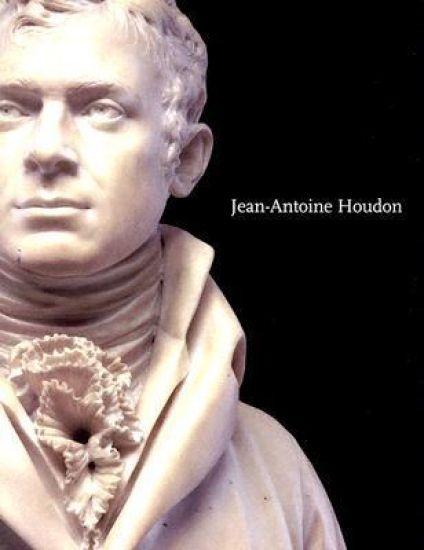
Jean-Antoine Houdon

Jean-Antoine Houdon

Anne L. Poulet

University of Chicago Press
2005
nidottu
Jean-Antoine Houdon (1741-1826) has long been recognized as the greatest European portrait sculptor of the late eighteenth century, flourishing during both the American and French Revolutions as well as during the Directoire and Empire in France. This lavish exhibition catalog, now available in paperback, contains more than 100 color plates and 200 halftones which illustrate every stage of the sculptor's fascinating career. Accompanying the images of Houdon's masterworks are four insightful essays that discuss Houdon's views on art as well as his prominence in the highly varied cultures of eighteenth-century France, Germany, and Russia. From aristocrats to revolutionaries, actors to philosophers, Houdon's amazingly vivid portraits constitute the visual record of the Enlightenment and capture the true spirit of a remarkable age.
Jean-Paul Marat

Jean-Paul Marat

Keith Michael Baker

THE UNIVERSITY OF CHICAGO PRESS
2025
sidottu
A landmark biography of one of the most notorious and controversial protagonists of the French Revolution—Jean-Paul Marat. Who better to pen an authoritative biography of Jean-Paul Marat (1743–93) than preeminent historian of France, Keith Michael Baker? Decades in the making, this monumental work takes readers on a journey through the intriguing, sometimes shocking life of this writer and thinker. Starting with his Swiss family and upbringing, Baker then sheds light on Marat’s early years in England, his career as an aspiring scientist in Paris, his gradual transformation from impassioned pamphleteer to revolutionary newspaperman, and, finally, his murder and martyrdom. Throughout, Baker offers readers the unique opportunity to reconsider the outbreak and development of the French Revolution through Marat’s eyes and in his own words. To help make sense of Marat’s trajectory, he shows how his violent and incendiary public calls to render unseen forces visible, to inject immediacy into an increasingly abstract modern world, would transform classical republicanism into the language of the Terror. Far beyond a standard rendering of Marat’s life and its milestones, this biography offers readers an opportunity to see the French Revolution as never before, through the perspective of one of its major figures. Baker’s book reveals how someone like Marat could go from translating Newton and engaging Franklin to calling for an ever-growing number of heads to roll—a transformation as chillingly relevant as ever.
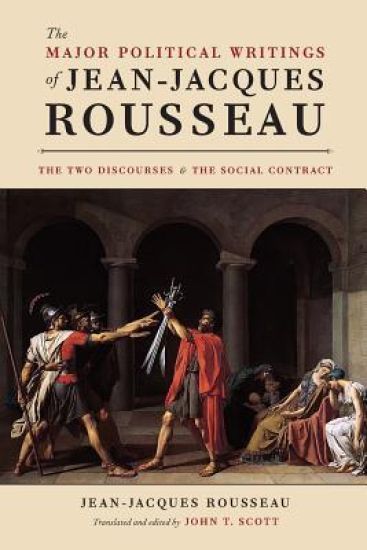
The Major Political Writings of Jean-Jacques Rousseau

The Major Political Writings of Jean-Jacques Rousseau

Jean-Jacques Rousseau

University of Chicago Press
2012
sidottu
Individualist and communitarian. Anarchist and totalitarian. Classicist and romanticist. Progressive and reactionary. Since the eighteenth century, Jean-Jacques Rousseau has been said to be all of these things. Few philosophers have been the subject of as much or as intense debate, yet almost everyone agrees that Rousseau is among the most important and influential thinkers in the history of political philosophy. This new edition of his major political writings, published in the year of the three-hundredth anniversary of his birth, renews attention to the perennial importance of Rousseau's work. The book brings together superb new translations of three of Rousseau's works: the "Discourse on the Sciences and Arts", the "Discourse on the Origin and Foundations of Inequality Among Men", and "On the Social Contract". The two discourses show Rousseau developing his well-known conception of the natural goodness of man and the problems posed by life in society. With the "Social Contract", Rousseau became the first major thinker to argue that democracy is the only legitimate form of political organization. Translation and editorial notes clarify ideas and terms that might not be immediately familiar to most readers. The three works collected in "The Major Political Writings of Jean-Jacques Rousseau" represent an important contribution to eighteenth-century political theory that has exerted an extensive influence on generations of thinkers, beginning with the leaders of the French Revolution and continuing to the present day.
Jean Paul Riopelle and the Automatiste Movement

Jean Paul Riopelle and the Automatiste Movement

François-Marc Gagnon

McGill-Queen's University Press
2020
sidottu
The artist Jean Paul Riopelle is best known for his renowned mature abstract style. In this fascinating history, François-Marc Gagnon begins with the artist's first paintings and his early commitment to objectivity to explore Riopelle's involvement with the Automatiste movement and its lasting impact on his work. Gagnon traces Riopelle's early development from the traditional figurative style imparted by his first teacher, Henri Bisson, through a turn toward the subjective on seeing a travelling exhibition of Dutch art that included the works of Vincent van Gogh, to Automatiste experiments in an alley studio in Montreal where he painted with Marcel Barbeau and Jean-Paul Mousseau. As early as 1946, Riopelle was an Automatiste emissary in Paris, organizing the first group show there. In spite of the perception that Riopelle was ideologically disinterested, Gagnon shows that he was in fact instrumental to the publication of Refus global – which includes his art on its cover – and publicly defended the manifesto amid controversy in both artistic and intellectual circles in Quebec. Initially devoted to the Automatiste notion of painting without preconception, by 1949 Riopelle was breaking into a markedly individual style in which the idea of chance was central. Gagnon reads this approach through Riopelle's own work and testimony, placing it in careful conversation with writing by philosophers and theorists on the role of chance in creativity. Gagnon also makes use of formal analysis of Riopelle's style and technique as he abandoned the paintbrush to work exclusively with the spatula. The well-established narrative of Jackson Pollock's influence on Riopelle is tested – and found wanting – in the first extended examination of Riopelle's relationship to American painting and to Pollock in particular. Demonstrating the qualities of scholarship and writing that were the hallmark of Gagnon's long career, his last book is engaging and clear and stands out for its originality, integrity, and profound insight into the work and milieu of the artist that André Breton called "the peerless trapper."
Jean Paul Riopelle et le Mouvement Automatiste

Jean Paul Riopelle et le Mouvement Automatiste

François-Marc Gagnon

McGill-Queen's University Press
2020
sidottu
Jean Paul Riopelle est surtout connu pour les célèbres toiles abstraites de sa maturité artistique. Toutefois, François Marc Gagnon amorce cette histoire fascinante avec les premières peintures et l'adhésion précoce à l'objectivité, avant de sonder la participation de l'artiste à l'automatisme et l'incidence durable de ce mouvement sur son œuvre. Gagnon retrace les premières étapes du cheminement de Riopelle depuis le style figuratif traditionnel enseigné par Henri Bisson, son premier professeur, jusqu'au virage subjectif inspiré par une exposition itinérante d'art hollandais et, en particulier, des toiles de Vincent Van Gogh, ainsi qu'aux expériences automatistes dans un atelier d'une ruelle de Montréal où le peintre travaille en compagnie de Marcel Barbeau et de Jean Paul Mousseau. Dès 1946, Riopelle est un émissaire de l'automatisme à Paris, où il organise la première exposition collective consacrée à ce style. L'auteur montre que malgré la perception d'un désintéressement idéologique, Riopelle a joué un rôle déterminant dans la publication du Refus global, manifeste dont il a dessiné la couverture et qu'il défendra publiquement, alors que la controverse agite les cercles artistiques et intellectuels du Québec. En 1949, après avoir embrassé la notion automatiste d'une peinture sans préconception, Riopelle adopte un style très personnel, où le hasard tient une place prépondérante. L'auteur retrouve cette démarche dans l'œuvre et les témoignages du peintre lui-même, qu'il fait dialoguer habilement avec les textes de philosophes et de théoriciens sur le rôle du hasard dans la créativité. Il propose en outre une analyse formelle du style et de la technique privilégiés par son sujet au moment où il abandonne définitivement le pinceau pour la spatule. Dans ce premier examen approfondi du rapport de Riopelle à la peinture américaine et à Jackson Pollock en particulier, il remet en question l'idée, pourtant largement acceptée, d'une influence de Pollock, qu'il juge peu probante. Cet ouvrage d'érudition, stimulant et clair, dernier de la longue carrière de l'auteur, est porté comme toujours par une écriture brillante. Il se distingue par son originalité, son intégrité et une connaissance approfondie de l'œuvre et du milieu de l'artiste, ce « trappeur supérieur » selon le mot d'André Breton.
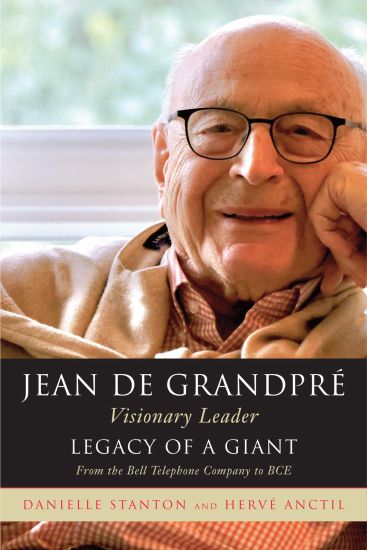
Jean de Grandpré

Jean de Grandpré

Danielle Stanton; Hervé Anctil

MCGILL-QUEEN'S UNIVERSITY PRESS
2022
sidottu
Visionary leader and businessman Jean de Grandpré has earned many nicknames: he is known variously as the Simplifier, the Architect, and the Strategist. A lawyer when he joined Bell Canada in 1966, he went on to build a telecommunications empire that spanned the continent, crossing paths with politicians, moguls, and philanthropists along the way.Beginning as Bell’s general counsel, de Grandpré quickly rose through the corporate ranks and became president in 1973. A few years later he created Bell Canada Enterprises, one of America’s largest telecommunications companies. A globally recognized manager and director, he has served on the boards of numerous companies, both in Canada and abroad. As generous as he is discreet, he is involved with several charities, including the Papillon Foundation, which helps disabled children. At McGill University, his alma mater, De Grandpré served as chancellor from 1984 to 1991 and is now governor emeritus and chancellor emeritus.Danielle Stanton and Hervé Anctil retrace the admirable career of this influential man whose life has spanned a century. Offering insight into the secrets of his success, Jean de Grandpré will inspire new generations of entrepreneurs.
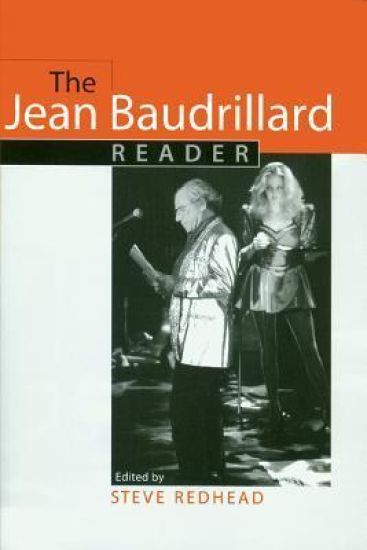
The Jean Baudrillard Reader

The Jean Baudrillard Reader

Jean Baudrillard

Columbia University Press
2008
sidottu
Jean Baudrillard (1929-2007) was a controversial social and cultural theorist known for his trenchant analyses of media and technological communication. Belonging to the generation of French thinkers that included Gilles Deleuze, Jean-Francois Lyotard, Michel Foucault, and Jacques Lacan, Baudrillard has at times been vilified by his detractors, but the influence of his work on critical thought and pop culture is impossible to deny (many might recognize his name from The Matrix movies, which claimed to be based on the French theorist's ideas). Steve Redhead takes a fresh look at Baudrillard in relation to the intellectual and political climates in which he wrote. Baudrillard sought to produce a theory of modernity, but the modern world of the 1950s was radically different from the reality of the early twenty-first century. Beginning with Baudrillard's initial publications in the 1960s and concluding with his writings on 9/11 and Abu Ghraib, Redhead guides the reader through Baudrillard's difficult texts and unorthodox views on current issues. He also proposes an original theory of Baudrillard's relation to postmodernism, presenting the theorist's work as "non-postmodernist," after Bruno Latour's concept of "non-modernity." Each section of the Reader includes an extract from one of Baudrillard's writings, prefaced by a short bibliographical introduction that places the piece in context and puts the debate surrounding the theorist into sharp perspective. The conflict over Baudrillard's legacy stems largely from the fact that a comprehensive selection of his writings has yet to be translated and collected into one volume. The Jean Baudrillard Reader provides an expansive and much-needed portrait of the critic's resonant work.
The Jean Baudrillard Reader

The Jean Baudrillard Reader

Jean Baudrillard

Columbia University Press
2008
pokkari
Jean Baudrillard (1929-2007) was a controversial social and cultural theorist known for his trenchant analyses of media and technological communication. Belonging to the generation of French thinkers that included Gilles Deleuze, Jean-Francois Lyotard, Michel Foucault, and Jacques Lacan, Baudrillard has at times been vilified by his detractors, but the influence of his work on critical thought and pop culture is impossible to deny (many might recognize his name from The Matrix movies, which claimed to be based on the French theorist's ideas). Steve Redhead takes a fresh look at Baudrillard in relation to the intellectual and political climates in which he wrote. Baudrillard sought to produce a theory of modernity, but the modern world of the 1950s was radically different from the reality of the early twenty-first century. Beginning with Baudrillard's initial publications in the 1960s and concluding with his writings on 9/11 and Abu Ghraib, Redhead guides the reader through Baudrillard's difficult texts and unorthodox views on current issues. He also proposes an original theory of Baudrillard's relation to postmodernism, presenting the theorist's work as "non-postmodernist," after Bruno Latour's concept of "non-modernity." Each section of the Reader includes an extract from one of Baudrillard's writings, prefaced by a short bibliographical introduction that places the piece in context and puts the debate surrounding the theorist into sharp perspective. The conflict over Baudrillard's legacy stems largely from the fact that a comprehensive selection of his writings has yet to be translated and collected into one volume. The Jean Baudrillard Reader provides an expansive and much-needed portrait of the critic's resonant work.
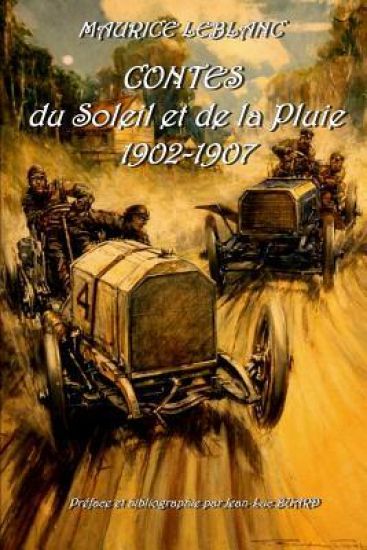
CONTES du Soleil et de la Pluie 1902-1907 Préface et bibliographie par Jean-Luc Buard
Conteur, collaborateur litteraire de journaux quotidiens, du Gil Blas puis du Journal avant d'etre engage en 1902 par L'Auto, Maurice Leblanc etait un admirateur du naturalisme de Maupassant. Mais sa carriere prit un brusque tournant en 1905, lorsqu'il crea le personnage d'Arsene Lupin dans le magazine Je sais tout.Ce recueil rassemble, pour la premiere fois, l'integralite des 110 contes et articles que Maurice Leblanc a publies, de 1902 a 1907, la plupart sous l'intitule " Contes du soleil et de la pluie ", dans le quotidien sportif L'Auto. Il y adapte ses themes favoris a un contexte particulier : les adulteres deviennent sportifs et sont aides par le moyen de la bicyclette ou de l'automobile, deux elements liberateurs des forces naturelles et instinctives des personnages.Presente par Jean-Luc Buard (co-fondateur et redacteur en chef du Rocambole, bulletin des amis du roman populaire), le volume est complete d'une bibliographie commentee des reproductions de ces contes, reeditions et traductions.
CONTES du Soleil et de la Pluie 1902-1907 Préface et bibliographie par Jean-Luc Buard
Conteur, collaborateur litteraire de journaux quotidiens, du Gil Blas puis du Journal avant d'etre engage en 1902 par L'Auto, Maurice Leblanc etait un admirateur du naturalisme de Maupassant. Mais sa carriere prit un brusque tournant en 1905, lorsqu'il crea le personnage d'Arsene Lupin dans le magazine Je sais tout.Ce recueil rassemble, pour la premiere fois, l'integralite des 110 contes et articles que Maurice Leblanc a publies, de 1902 a 1907, la plupart sous l'intitule " Contes du soleil et de la pluie ", dans le quotidien sportif L'Auto. Il y adapte ses themes favoris a un contexte particulier : les adulteres deviennent sportifs et sont aides par le moyen de la bicyclette ou de l'automobile, deux elements liberateurs des forces naturelles et instinctives des personnages.Presente par Jean-Luc Buard (co-fondateur et redacteur en chef du Rocambole, bulletin des amis du roman populaire), le volume est complete d'une bibliographie commentee des reproductions de ces contes, reeditions et traductions.
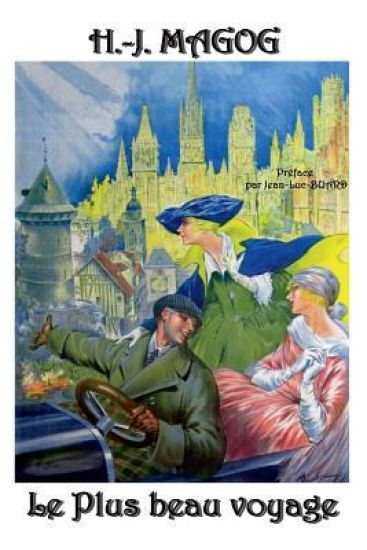
Le Plus beau voyage Préface par Jean-Luc Buard

Le Plus beau voyage Préface par Jean-Luc Buard

Jean-Luc BUARD; H.-J. MAGOG

Lulu.com
2019
nidottu
Henri Georges Jeanne dit H.-J. Magog debuta par des dialogues et des poesies. Il devint feuilletoniste en 1911 au Journal, a Excelsior et a L'Eclair, et fut conteur au quotidien Le Matin, a partir de 1923. Le Plus beau voyage, retrouve lors d'une exploration de " La Page du dimanche " du Matin, a ete compose pour les vacances de l'ete 1923. OEuvre de circonstance, roman de tourisme et de mystere, chaque episode fait l'objet d'une magnifique mise en image composee par Jacques Touchet (1887-1949).Hymne au tourisme hexagonal, au patrimoine et aux richesses archeologiques, architecturales, religieuses et naturelles de la France, a ses paysages, le roman de Magog invite a une decouverte hebdomadaire des differentes regions du pays : pour chaque jour, une etape, une visite, une aventure nouvelle vecues par les personnages et le lecteur, en temps reel.Ce court roman est precede par une introduction de Jean-Luc Buard (co-fondateur et redacteur en chef de la revue Le Rocambole).
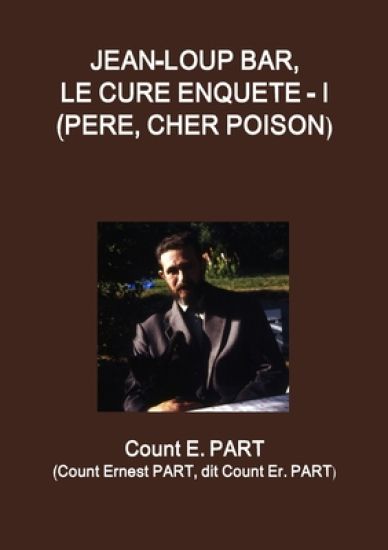
Jean-Loup Bar, le curé enquête - I (Père, Cher poison)
Ce roman est maudit. Il a fait l'objet de contrats a compte d'editeur par deux maisons d'edition du Centre, mais aucune n'a honore son contrat : l'une a fait faillite, l'autre etait dirigee par une "petite fenetre" qui changea d'avis sur un coup de tete d'un petit editeur.De fait, il a fait l'objet d'un tres long travail d'ecriture-corrections-reecriture,etc. sur pres de dix-neuf ans.Jean-Loup Bar est un cure berrichon atypique, ancien mercenaire enquetant sur le suicide du maire communiste de son village. Une atmosphere est creee, les personnages sont bien campes, mais le genre est indefinissable, tenant a la fois du romanesque, du polar noir, de la poesie, de l'ethnologie, et... du franc guignol. Ce roman, aussi atypique que son cure, navigue donc entre plusieurs genres mais s'ecarte volontairement du sanglant et du grand spectaculaire. Il est agreable a lire, n'est pas Vidde de sens.Au final, il est pour l'adulte et pour les grands enfants...
The Complete Fables of Jean de La Fontaine

The Complete Fables of Jean de La Fontaine

Jean La Fontaine

University of Illinois Press
2007
sidottu
Inspired new translations of the work of one of the world's greatest fabulists Told in an elegant style, Jean de la Fontaine's (1621-95) charming animal fables depict sly foxes and scheming cats, vain birds and greedy wolves, all of which subtly express his penetrating insights into French society and the beasts found in all of us. Norman R. Shapiro has been translating La Fontaine's fables for over twenty years, capturing the original work's lively mix of plain and archaic language. This newly complete translation is destined to set the English standard for this work. Awarded the Lewis Galantière Prize by the American Translators Association, 2008.
Jean-Pierre Jeunet

Jean-Pierre Jeunet

Ezra Elizabeth

University of Illinois Press
2008
sidottu
This is the first book on Jean-Pierre Jeunet, the popular and critically acclaimed director of films such as Amélie, Delicatessen, A Very Long Engagement, Alien Resurrection, and City of Lost Children. Jeunet's work exemplifies Europe's engagement with Hollywood, while at the same time making him a figurehead of the critically overlooked, specifically French tradition of the cinema of the fantastic.Having garnered both commercial success and critical esteem in genres such as science fiction, fantasy, romantic comedy, and the war epic, Jeunet's work nevertheless engages with key aspects of French history and contemporary French culture. This study analyzes the director's major films, including those he made with Marc Caro, and his early short works. Elizabeth Ezra brings a new perspective to the study of Jeunet's work, uncovering instances of repressed historical trauma involving France's role in Algeria and the Second World War. The book includes a commentary by Jeunet himself on his career and corpus of films.
Jean-Pierre and Luc Dardenne

Jean-Pierre and Luc Dardenne

Joseph Mai

University of Illinois Press
2010
sidottu
For well over a decade, Jean-Pierre and Luc Dardenne have produced highly original and ethically charged films that immerse their audiences in an intense and embodied viewing experience. Their work has consistently attracted international recognition, including the rare feat of two Palmes d'Or at Cannes.In this first book-length study of the Belgian brothers, Joseph Mai delivers sophisticated close analyses of their directorial style and explores the many philosophical issues dealt with in their films (especially the ethics of Emmanuel Levinas). Mai discusses the Dardennes' varied and searching career from its inception in the late 1970s, starting with the working-class political consciousness and lost utopias of their documentary period; passing through their transition toward fictional narrative, experimental techniques, and familial themes; and finishing with a series of in-depth and philosophically informed interpretations of the brothers' more recent work. In such highly influential films such as La promesse, Rosetta, The Son, and The Child, the brothers have recast filmmaking through what Mai calls a "sensuous realism"--realism capable of touching the audience with the most compelling problems and moral dilemmas of contemporary society. This volume also features an interview in which the Dardennes discuss their approach to film production and the direction of actors.
Jean Toomer

Jean Toomer

Barbara Foley

University of Illinois Press
2014
sidottu
The 1923 publication of Cane established Jean Toomer as a modernist master and one of the key literary figures of the emerging Harlem Renaissance. Though critics and biographers alike have praised his artistic experimentation and unflinching eyewitness portraits of Jim Crow violence, few seem to recognize how much Toomer's interest in class struggle, catalyzed by the Russian Revolution and the post–World War One radical upsurge, situate his masterwork in its immediate historical context. In Jean Toomer: Race, Repression, and Revolution, Barbara Foley explores Toomer's political and intellectual connections with socialism, the New Negro movement, and the project of Young America. Examining his rarely scrutinized early creative and journalistic writings, as well as unpublished versions of his autobiography, she recreates the complex and contradictory consciousness that produced Cane. Foley's discussion of political repression runs parallel with a portrait of repression on a personal level. Examining family secrets heretofore unexplored in Toomer scholarship, she traces their sporadic surfacing in Cane. Toomer's text, she argues, exhibits a political unconscious that is at once public and private.
The Complete Fables of Jean de La Fontaine

The Complete Fables of Jean de La Fontaine

Jean La Fontaine

University of Illinois Press
2007
nidottu
Inspired new translations of the work of one of the world's greatest fabulists Told in an elegant style, Jean de la Fontaine's (1621-95) charming animal fables depict sly foxes and scheming cats, vain birds and greedy wolves, all of which subtly express his penetrating insights into French society and the beasts found in all of us. Norman R. Shapiro has been translating La Fontaine's fables for over twenty years, capturing the original work's lively mix of plain and archaic language. This newly complete translation is destined to set the English standard for this work. Awarded the Lewis Galantière Prize by the American Translators Association, 2008.