Kirjojen hintavertailu. Mukana 11 699 587 kirjaa ja 12 kauppaa.

Kirjahaku

Etsi kirjoja tekijän nimen, kirjan nimen tai ISBN:n perusteella.

1000 tulosta hakusanalla John Bowes

Reflections on San Francisco Bay: A Kayaker's Tall Tales: Vol 15
For a group of San Francisco Bay Area residents, Thursday nights are reserved for kayaking on the bay. Islands, bights, caves, and more . . . no corner of the bay and its history are left unexplored. While the tales in this volume chronicle only the paddles in 2014, they are part of a longer time flow, starting in 2000. Better than any travel guide on San Francisco Bay, these volumes capture the flavor of one of the world's most renown bodies of water.
My Collection of Recipes from Across America and Germany
This is not a professionally written cookbook, but is a representation of homegrown family cooking. Minus a few corporate inspired recipes and one professional carrot cake recipe, My Little Book of Kitchen Recipes is a collection of hand-me-down family recipes from one generation to the next.The design of this book has been left plain, because in the author's opinion, too many illustrations cause distractions in the kitchen. It is his hope that, by providing the space to enter a recipe or alter an existing one, more people will take up cooking again and continue to pass these and other recipes on to future generation.
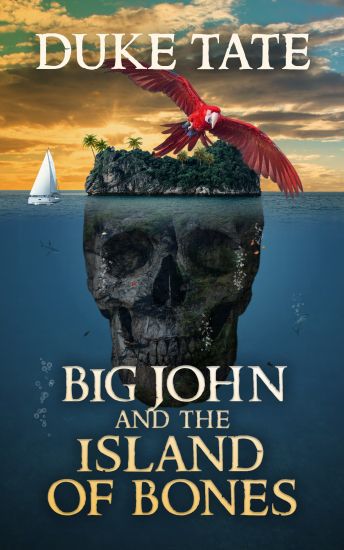
Big John and the Island of Bones

Big John and the Island of Bones

Duke Tate

Pearl Press LLC
2020
pokkari
It's Halloween in Key West. And all the ghosts are out. Big John Hoover and his wife Angela have just moved to Florida from Big Sur, California for John to pen a book.But John has traded his bad food addiction for Cuban coffee, rum, and cigars. Out of the blue, he gets attacked by a shadow being, which sends him and his wife running to a Voodoo Queen for help.Meanwhile, Maggie May flies down to the island from Vermont for a dose of sunshine, staying with her friend Hank Thomas. Everyone is seeing ghosts and John must figure out how to protect himself and his wife before it's too late. Will they see the light before Halloween eve on the key that never sleeps? Find out it in this exciting sequel to Big John and the Fortune Teller.
Engravings, Explaining the Anatomy of the Bones, Muscles, and Joints. By John Bell, Surgeon
The 18th century was a wealth of knowledge, exploration and rapidly growing technology and expanding record-keeping made possible by advances in the printing press. In its determination to preserve the century of revolution, Gale initiated a revolution of its own: digitization of epic proportions to preserve these invaluable works in the largest archive of its kind. Now for the first time these high-quality digital copies of original 18th century manuscripts are available in print, making them highly accessible to libraries, undergraduate students, and independent scholars.Medical theory and practice of the 1700s developed rapidly, as is evidenced by the extensive collection, which includes descriptions of diseases, their conditions, and treatments. Books on science and technology, agriculture, military technology, natural philosophy, even cookbooks, are all contained here.++++The below data was compiled from various identification fields in the bibliographic record of this title. This data is provided as an additional tool in helping to insure edition identification: ++++Countway Library of MedicineN001322With an additional titlepage, engraved: Anatomy of the bones muscles and joints by John Bell surgeon. The inserted leaves are numbered 38* (recto and verso) and 109* (verso blank).Edinburgh: printed by John Paterson; for Bell and Bradfute, and T. Duncan; and J. Johnson, and G. G. G. & J. Robinsons, London, 1794. 8], xxii, 2],38, 2],39-108, 2],109-191, 1]p., plates: ill.; 4
The Stolen Bones of St. John of Matha

The Stolen Bones of St. John of Matha

A. Katie Harris

Pennsylvania State University Press
2023
sidottu
On the night of March 18, 1655, two Spanish friars broke into a church to steal the bones of the founder of their religious institution, the Order of the Most Holy Trinity. This book investigates this little-known incident of relic theft and the lengthy legal case that followed, together with the larger questions that surround the remains of saints in seventeenth-century Catholic Europe.Drawing on a wealth of manuscript and print sources from the era, A. Katie Harris uses the case of St. John of Matha’s stolen remains to explore the roles played by saints’ relics, the anxieties invested in them, their cultural meanings, and the changing modes of thought with which early modern Catholics approached them. While in theory a relic’s authenticity and identity might be proved by supernatural evidence, in practice early modern Church authorities often reached for proofs grounded in the material, human world—preferences that were representative of the standardizing and streamlining of sixteenth- and seventeenth-century saint-making. Harris examines how Matha’s advocates deployed material and documentary proofs, locating them within a framework of Scholastic concepts of individuation, identity, change, and persistence, and applying moral certainty to accommodate the inherent uncertainty of human evidence and relic knowledge.Engaging and accessible, The Stolen Bones of St. John of Matha raises an array of important questions surrounding relic identity and authenticity in seventeenth-century Europe. It will be of interest to students, scholars, and casual readers interested in European history, religious history, material culture, and Renaissance studies.
The Stolen Bones of St. John of Matha

The Stolen Bones of St. John of Matha

A. Katie Harris

Pennsylvania State University Press
2025
pokkari
On the night of March 18, 1655, two Spanish friars broke into a church to steal the bones of the founder of their religious institution, the Order of the Most Holy Trinity. This book investigates this little-known incident of relic theft and the lengthy legal case that followed, together with the larger questions that surround the remains of saints in seventeenth-century Catholic Europe.Drawing on a wealth of manuscript and print sources from the era, A. Katie Harris uses the case of St. John of Matha’s stolen remains to explore the roles played by saints’ relics, the anxieties invested in them, their cultural meanings, and the changing modes of thought with which early modern Catholics approached them. While in theory a relic’s authenticity and identity might be proved by supernatural evidence, in practice early modern Church authorities often reached for proofs grounded in the material, human world—preferences that were representative of the standardizing and streamlining of sixteenth- and seventeenth-century saint-making. Harris examines how Matha’s advocates deployed material and documentary proofs, locating them within a framework of Scholastic concepts of individuation, identity, change, and persistence, and applying moral certainty to accommodate the inherent uncertainty of human evidence and relic knowledge.Engaging and accessible, The Stolen Bones of St. John of Matha raises an array of important questions surrounding relic identity and authenticity in seventeenth-century Europe. It will be of interest to students, scholars, and casual readers interested in European history, religious history, material culture, and Renaissance studies.
From Barebones to Old Bones. John St Nicholas (1604-1698)
John St Nicholas was a Leicestershire puritan minister, ejected after the Restoration in 1660. Subsequent to his ejection, he lived on for a further 38 years. How he used his time during his lengthy 'retirement' provides a helpful model for today's Christians seeking to continue serving God as they get older. This study considers the various activities St Nicholas undertook in his retirement years such as reflection on his life, relationships and hospitality, intellectual study and faithful ministry."John St Nicholas died aged 94 in 1698. He was a Puritan who thus lived through the turmoil of the seventeenth century. The particular interest of this lecture lies in his ministry in 'retirement' following his ejection from Lutterworth at the Restoration. Here we see the opportunities as well as the perils of such a ministry."Revd Mark Burkill, Chair of Latimer TrustDr Lesley A. Rowe is an independent church historian, lecturer and author, specialising in sixteenth- and seventeenth-century English religious history. Her 2009 PhD from the University of Warwick focused on the ministry and works of Arthur Hildersham (1563-1632). She is also the author of The Life and Times of Arthur Hildersham: Prince among Puritans (Reformation Heritage Books, 2013) and has edited two of Hildersham's works (published by Reformation Heritage Books, in 2017 and 2019).
Old Bones and Dust

Old Bones and Dust

John Lenning

John Lenning
2018
nidottu
This my second book. A collection of poems about life. no matter how insigniffient you think you are all life matters. Poems about love dying hate some are sad some make you smile. Hope you enjoy them as much as I did writing them.
Sharklock Bones: Bug Tails

Sharklock Bones: Bug Tails

John L. Leone

Createspace Independent Publishing Platform
2013
nidottu
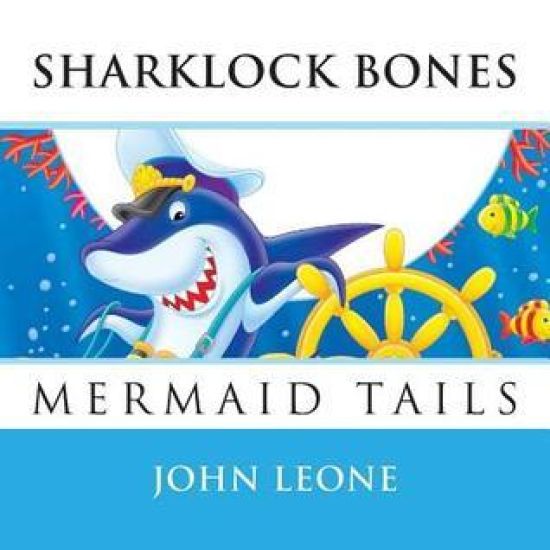
"Sharklock Bones: Bug Tails" is the fourth in a series about a shark detective and his trusty sidekick, Dr. Flotsam. They float around in a world of talking fish and animals, a world where everyone talks in puns, anecdotes, jokes and word plays. The stories are written in screenplay fashion to encourage role playing and interaction among readers. The dynamic duo of Bones and Watson take on and solve not-too-difficult mysteries in these stories or "tails". The target audience is ages eight to eighty. In this book "Sharklock Bones: Bug Tails" Sharklock and the Doc solve a kidnapping and then go on to a final confrontation on Mister Rhee Island with their arch enemy, the infamous Devious Dolphin. The first book in the series is "Sharklock Bones: Fish Tails" consisting of two "tails". The first is "Codfather" wherein our heroes stop a kidnapping by Devious Dolphin. The second "tail" is "Hound" and the duo helps Robert Eel Lee (atop a seahorse, of course) capture a giant hound on the Moor. The second in the series is "Sharklock Bones: Zoo Tails", also with two "tails". In "Horse", Sharklock's pony disappears from a locked stall. In "Seafood Restaurant", our boys locate animals missing from the zoo. The third book of "tails" is "Sharklock Bones: Pirate Tails", the "tail" is entitled "Parrots of the Carob Bean". Bones and Flotsam are on the hunt to locate Johnny Depth's missing pirate ship, the Black Twirl. All lots of fun, lots of puns, lots of giggles and more than a few groans. Swim on in and stay tuned for more "tails".
Sharklock Bones: Zoo Tails

Sharklock Bones: Zoo Tails

John L. Leone

Createspace Independent Publishing Platform
2013
nidottu
"Sharklock Bones: Zoo Tails" is the second in the Sharklock Bones series. "Zoo Tails" has two tails. The first is "Horse" wherein our detective's horse is missing, disappeared from a locked stall. The second is "The Seafood Restaurant". Our duo is contacted by the zoo keeper who is missing quite a few animals from their cages. All the "Bones" tails take place on or near Fish Town, a town inhabited by talking fish and animals. They talk, by the way, in puns, jokes and anecdotes, riddles and wordplays. All "Bones" tails are written in screenplay fashion to encourage role playing and interaction among readers. Target age group is from eight to eighty.