Kirjojen hintavertailu. Mukana 12 390 323 kirjaa ja 12 kauppaa.

Kirjahaku

Etsi kirjoja tekijän nimen, kirjan nimen tai ISBN:n perusteella.

1000 tulosta hakusanalla John Calvin

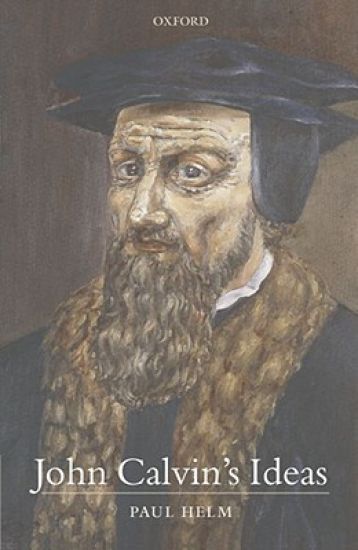
John Calvin's Ideas

John Calvin's Ideas

Paul Helm

Oxford University Press
2006
nidottu
This is a major study of the theological thought of John Calvin, which examines his central theological ideas through a philosophical lens, looking at issues in Metaphysics, Epistemology, and Ethics. The study, the first of its kind, is concerned with how Calvin actually uses philosophical ideas in his work as a theologian and biblical commentator. The book also includes a careful examination of those ideas of Calvin to which the Reformed Epistemologists appeal, to find grounds and precedent for their development of `Reformed Epistemology', notably the sensus divinitatis and the internal testimony of the Holy Spirit.
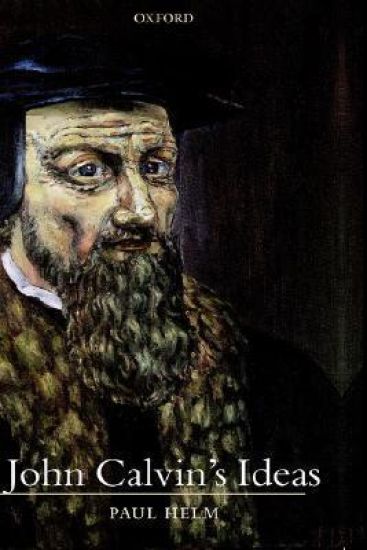
John Calvin's Ideas

John Calvin's Ideas

Paul Helm

Oxford University Press
2004
sidottu
This is a major study of the theological thought of John Calvin, which examines his central theological ideas through a philosophical lens, looking at issues in Metaphysics, Epistemology, and Ethics. The study, the first of its kind, is concerned with how Calvin actually uses philosophical ideas in his work as a theologian and biblical commentator. The book also includes a careful examination of those ideas of Calvin to which the Reformed Epistemologists appeal, to find grounds and precedent for their development of `Reformed Epistemology', notably the sensus divinitatis and the internal testimony of the Holy Spirit.
John Calvin's Ecclesiology

John Calvin's Ecclesiology

Gerard Mannion; Eduardus Van der Borght

T. T.Clark Ltd
2011
sidottu
Many events were staged and a plethora of new books appeared to mark the quincentenary of the birth of John Calvin, in 2009. But one area received considerably less attention in that anniversary year - namely, Calvin's ecclesiology. This study explores the development and fundamental legacy of Calvin's perspectives on and relationship with the church. Contributions are included which explore the later development and denominational variations' of Calvin's ecclesiology, along with ecumenical discussions/responses to and implications of Calvin's understanding of the church. There are further chapters which focus on particular aspects such as Calvin's ecclesiological method, understanding of ministry, the sacramental' principle, the invisible church' etc. Contributions on the use of Calvin's ecclesiology by later and modern/contemporary ecclesiologists also feature. This is a volume that brings together leading and emerging theological voices from Europe, North America and Latino America and from across the different theological sub-disciplines. Significantly, it also a book from genuinely ecumenical perspectives, with writers from several different denominational traditions contributing.
John Calvin Student of Church Fathers

John Calvin Student of Church Fathers

Anthony N. S. Lane

T. T.Clark Ltd
1991
nidottu
A fine study of John Calvin and his relationships with the fathers and medieval scholars, by one of the leading present-day experts in Calvin studies. Specific themes explored include, for example, Calvin's knowledge of the Greek fathers, his use and sources of Bernard of Clairvaux, his use of the fathers in Bondage and Liberation of the Will, and the sources for his Genesis commentary.
John Calvin's Ecclesiology

John Calvin's Ecclesiology

Gerard Mannion; Eduardus Van der Borght

T. T.Clark Ltd
2012
nidottu
Many events were staged and a plethora of new books appeared to mark the quincentenary of the birth of John Calvin, in 2009. But one area received considerably less attention in that anniversary year - namely, Calvin's ecclesiology. This study explores the development and fundamental legacy of Calvin's perspectives on and relationship with the church. Contributions are included which explore the later development and 'denominational variations' of Calvin's ecclesiology, along with ecumenical discussions/responses to and implications of Calvin's understanding of the church. There are further chapters which focus on particular aspects such as Calvin's ecclesiological method, understanding of ministry, the 'sacramental' principle, the 'invisible church' etc. Contributions on the use of Calvin's ecclesiology by later and modern/contemporary ecclesiologists also feature. This is a volume that brings together leading and emerging theological voices from Europe, North America and Latino America and from across the different theological sub-disciplines. Significantly, the book has a decidedly ecumenical perspective, with writers from several different denominational traditions contributing.
John Calvin's Exegesis of the Old Testament

John Calvin's Exegesis of the Old Testament

David L. Puckett

Westminster/John Knox Press,U.S.
1995
nidottu
John Calvin's reading of the Old Testament was a departure from that of many of his contemporaries. He rejected much of the traditional Christian exegesis of the Old Testament that attempted to to explain it in terms of the New Testament revelation of Christ. He also rejected much of the traditional Jewish exegesis of the Old Testament that favored a more so-called historical approach to the writings. Instead he offered a middle way to interpret the Old Testament scripture with respect to both traditions. David Puckett examines this often-neglected area of study of John Calvin's exegetical reasoning in this comprehensive and fascinating analysis.The Columbia Series in Reformed Theology represents a joint commitment by Columbia Theological Seminary and Westminster John Knox Press to provide theological resources from the Reformed tradition for the church today. This series examines theological and ethical issues that confront church and society in our own particular time and place.
John Calvin--A Biography

John Calvin--A Biography

T. H. L. Parker

Westminster/John Knox Press,U.S.
2007
nidottu
John Calvin was one of the most important leaders of the sixteenth-century Protestant Reformation. In this revision of his major biography, T. H. L. Parker explores Calvin's achievement against the backdrop of the turbulent times in which he lived. With clear and concise explanations of Calvin's theology, analyses of his major works, and insights into his preaching, this definitive biography brings this crucially important reformer and his world to life for readers.
John Calvin Rediscovered

John Calvin Rediscovered

Westminster/John Knox Press,U.S.
2007
nidottu
Having grown out of a 2004 consultation sponsored by the John Knox International Reformed Center, the University of Geneva, and the World Alliance of Reformed Churches, the essays in John Calvin Rediscovered revive the social and economic thought of John Calvin, first exploring Calvin in his own time and then turning to Calvin's global influence.
John Calvin and Evangelical Theology

John Calvin and Evangelical Theology

Westminster/John Knox Press,U.S.
2009
nidottu
This latest offering by noted theologian Sung Wook Chung examines the ways in which John Calvin continues to impact the global evangelical movement in the twenty-first century. This useful collection is perhaps most distinguished by the diversity of its contributors. Literally spanning the globe, the group of scholars whose work is included represents a wealth of viewpoints from various traditions including Dutch neo-Calvinism, the French Reformed tradition, Scottish-American Presbyterianism, Anglicanism, Congregationalism, the Baptist tradition, Calvinist Dispensationalism, Asian Reformed tradition, African American Reformed tradition, and Latin American Evangelicalism. Together, they offer an enlightening glimpse into the historical Calvin and project that understanding on the evangelical movement of the future.
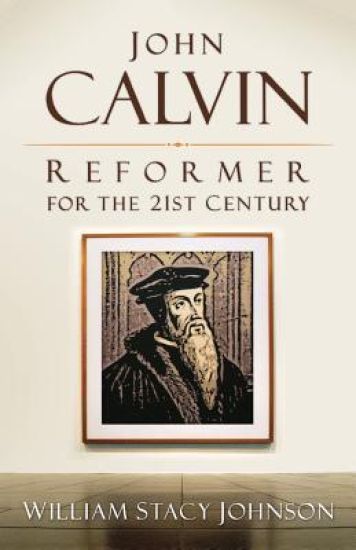
John Calvin, Reformer for the 21st Century

John Calvin, Reformer for the 21st Century

William Stacy Johnson

Westminster/John Knox Press,U.S.
2009
nidottu
Many would argue that a true understanding of contemporary Christian thought is impossible without a basic understanding of Calvin's contributions. William Stacy Johnson, a leading Presbyterian theologian, offers this clear and fundamental study of Calvin's insights as a primer for those with little or no knowledge of his work.This volume, enhanced with questions for discussion and a handy glossary, is sure to be an invaluable resource for those who seek an accessible way into a deeper understanding of Calvin's impact on the development of Christian faith and on society.
John Calvin and the Church

John Calvin and the Church

Westminster/John Knox Press,U.S.
1990
nidottu
The coherence of this volume arises from the way in which John Calvin serves as the centering focus of various disciplines and scholarly approaches that touch on the life of the church. Its five sections convey a wide range of interests among the contributors: Calvin and his times, theology, ecclesiology, interpretation of Holy Scripture, and worship and preaching.
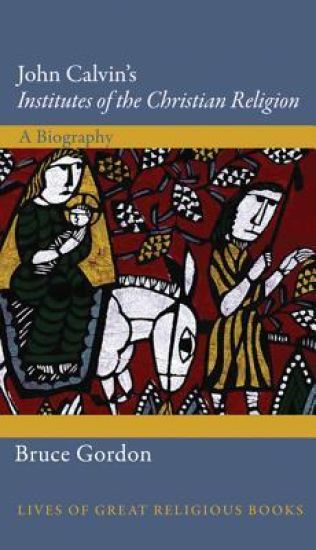
John Calvin's Institutes of the Christian Religion

John Calvin's Institutes of the Christian Religion

Bruce Gordon

PRINCETON UNIVERSITY PRESS
2016
sidottu
John Calvin's Institutes of the Christian Religion is a defining book of the Reformation and a pillar of Protestant theology. First published in Latin in 1536 and in Calvin's native French in 1541, the Institutes argues for the majesty of God and for justification by faith alone. The book decisively shaped Calvinism as a major religious and intellectual force in Europe and throughout the world. Here, Bruce Gordon provides an essential biography of Calvin's influential and enduring theological masterpiece, tracing the diverse ways it has been read and interpreted from Calvin's time to today. Gordon explores the origins and character of the Institutes, looking closely at its theological and historical roots, and explaining how it evolved through numerous editions to become a complete summary of Reformation doctrine. He shows how the development of the book reflected the evolving thought of Calvin, who instilled in the work a restlessness that reflected his understanding of the Christian life as a journey to God. Following Calvin's death in 1564, the Institutes continued to be reprinted, reedited, and reworked through the centuries. Gordon describes how it has been used in radically different ways, such as in South Africa, where it was invoked both to defend and attack the horror of apartheid. He examines its vexed relationship with the historical Calvin--a figure both revered and despised--and charts its robust and contentious reception history, taking readers from the Puritans and Voltaire to YouTube, the novels of Marilynne Robinson, and to China and Africa, where the Institutes continues to find new audiences today.
John Calvin, the Church and the Eucharist

John Calvin, the Church and the Eucharist

Kilian McDonnell

Princeton University Press
2015
pokkari
Calvin's eucharistic doctrine has been approached in the past from the standpoint of his polemic with the Lutherans and the Zwinglians, but Father McDonnell believes that Calvin's primary position was determined by his rejection of Roman Catholicism. The author, therefore, explores Calvin's eucharistic doctrine through a comprehensive analysis of his stand against the Roman Catholic Church. Introductory chapters are devoted to the broader currents of pre-Reformation thought: Scotist tradition, devotiomoderna, humanism, and the Platonic renewal. The study continues with a discussion of St. Augustine, the medieval disputants, and the doctrines of Calvin's contemporaries-Luther, Bucer, and Melanchthon. The final chapter considers the relevancy of Calvin's objections to Catholic eucharistic doctrine and their relation to modern developments in Catholic sacramental thought. Originally published in 1967. The Princeton Legacy Library uses the latest print-on-demand technology to again make available previously out-of-print books from the distinguished backlist of Princeton University Press. These editions preserve the original texts of these important books while presenting them in durable paperback and hardcover editions. The goal of the Princeton Legacy Library is to vastly increase access to the rich scholarly heritage found in the thousands of books published by Princeton University Press since its founding in 1905.
John Calvin, the Church and the Eucharist

John Calvin, the Church and the Eucharist

Kilian McDonnell

Princeton University Press
2016
sidottu
Calvin's eucharistic doctrine has been approached in the past from the standpoint of his polemic with the Lutherans and the Zwinglians, but Father McDonnell believes that Calvin's primary position was determined by his rejection of Roman Catholicism. The author, therefore, explores Calvin's eucharistic doctrine through a comprehensive analysis of his stand against the Roman Catholic Church. Introductory chapters are devoted to the broader currents of pre-Reformation thought: Scotist tradition, devotiomoderna, humanism, and the Platonic renewal. The study continues with a discussion of St. Augustine, the medieval disputants, and the doctrines of Calvin's contemporaries-Luther, Bucer, and Melanchthon. The final chapter considers the relevancy of Calvin's objections to Catholic eucharistic doctrine and their relation to modern developments in Catholic sacramental thought. Originally published in 1967. The Princeton Legacy Library uses the latest print-on-demand technology to again make available previously out-of-print books from the distinguished backlist of Princeton University Press. These editions preserve the original texts of these important books while presenting them in durable paperback and hardcover editions. The goal of the Princeton Legacy Library is to vastly increase access to the rich scholarly heritage found in the thousands of books published by Princeton University Press since its founding in 1905.
John Calvin and the Natural World

John Calvin and the Natural World

Davis A. Young

University Press of America
2007
sidottu
This work focuses on a rarely noted side of the Protestant reformer John Calvin: the theologian as a man appreciative of the details of God's creation, an admirer of those who investigate nature, and a leader that accepted their discoveries and conclusions. John Calvin and the Natural World explores the content of Calvin's scientific outlook by reviewing his views on the structure of the cosmos; the nature of matter and motion; weather; the age, shape, place, and history of the Earth; and the behaviors and characteristics of animals, plants, the human body, and disease. Also drawn out, are the classical, biblical, and medieval influences on Calvin's ideas about nature. Professor Davis A. Young concludes the work with a discussion of Calvin's attitudes, practices, and ideas with respect to science in comparison to how these ideas are carried out in the contemporary church. Professor Young surmises that the judicious application of Calvin's principle of accommodation would help the church to deal in a more thoughtful and balanced way in respect to science and nature, and to defuse some of the rancorous debates surrounding the age of the Earth, flood geology, and evolution.
John Calvin and the Natural World

John Calvin and the Natural World

Davis A. Young

University Press of America
2007
nidottu
This work focuses on a rarely noted side of the Protestant reformer John Calvin: the theologian as a man appreciative of the details of God's creation, an admirer of those who investigate nature, and a leader that accepted their discoveries and conclusions. John Calvin and the Natural World explores the content of Calvin's scientific outlook by reviewing his views on the structure of the cosmos; the nature of matter and motion; weather; the age, shape, place, and history of the Earth; and the behaviors and characteristics of animals, plants, the human body, and disease. Also drawn out, are the classical, biblical, and medieval influences on Calvin's ideas about nature. Professor Davis A. Young concludes the work with a discussion of Calvin's attitudes, practices, and ideas with respect to science in comparison to how these ideas are carried out in the contemporary church. Professor Young surmises that the judicious application of Calvin's principle of accommodation would help the church to deal in a more thoughtful and balanced way in respect to science and nature, and to defuse some of the rancorous debates surrounding the age of the Earth, flood geology, and evolution.
John Calvin as Teacher, Pastor, and Theologian

John Calvin as Teacher, Pastor, and Theologian

Randall C. Zachman

Baker Academic, Div of Baker Publishing Group
2006
nidottu
John Calvin has been the subject of numerous studies, but most have focused on one aspect of his thought or a limited selection of his writings. This study of Calvin adopts a uniquely holistic approach. Randall Zachman begins with a brief biography and considers Calvin's own understanding of his ministry as a teacher and pastor. From this perspective, he surveys Calvin's writings and their place in the work of reforming the church--both through the training of clergy and the instruction of the laity. Zachman then considers Calvin as a theologian. In contrast to Martin Luther, Calvin sought to balance the verbal proclamation of the Word with an emphasis on the visible manifestation of God--both in creation and in Christ. This study will be of great interest to Reformed clergy and to students of the Reformation and Calvinism.
John Calvin: A Pilgrim's Life

John Calvin: A Pilgrim's Life

Herman J. Selderhuis

IVP Academic
2009
nidottu
There are many biographies of John Calvin, the theologian--some villifying him and others extolling his virtues--but few that reveal John Calvin, the man.Professor and renowned Reformation historian Herman Selderhuis has written this book to bring Calvin near to the reader, showing him as a man who had an impressive impact on the development of the Western world, but who was first of all a believer struggling with God and with the way God governed both the world and his own life.Selderhuis draws on Calvin's own publications and commentary on the biblical figures with whom he strongly identified to describe his theology in the context of his personal development. Throughout we see a person who found himself alone at many of the decisive moments of his life--a fact that echoed through Calvin's subsequent sermons and commentaries. Selderhuis's unique and compelling look at John Calvin, with all of his merits and foibles, ultimately discloses a man who could not find himself at home in the world in which he lived.