Kirjojen hintavertailu. Mukana 11 244 527 kirjaa ja 12 kauppaa.

Kirjahaku

Etsi kirjoja tekijän nimen, kirjan nimen tai ISBN:n perusteella.

1000 tulosta hakusanalla John Carson

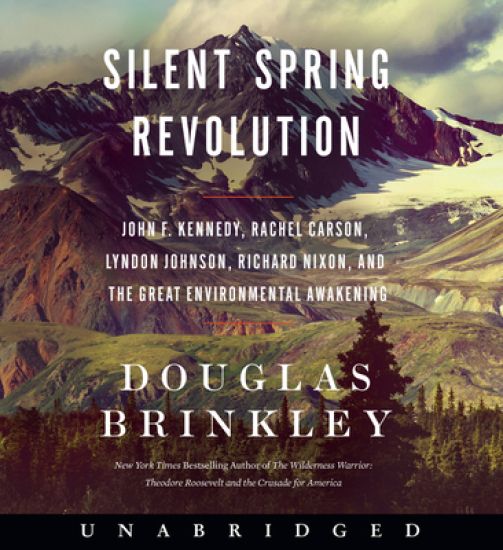
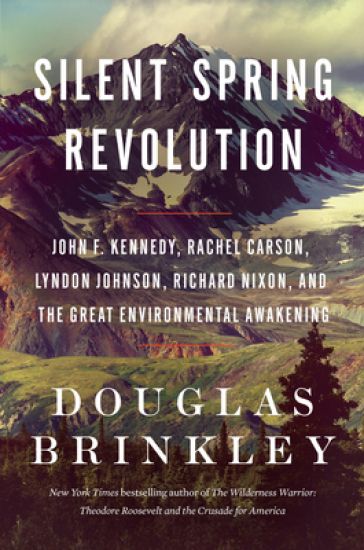
Silent Spring Revolution: John F. Kennedy, Rachel Carson, Lyndon Johnson, Richard Nixon, and the Great Environmental Awakening
New York Times bestselling author and acclaimed presidential historian Douglas Brinkley chronicles the rise of environmental activism during the Long Sixties (1960-1973), telling the story of an indomitable generation that saved the natural world under the leadership of John F. Kennedy, Lyndon Johnson, and Richard Nixon.With the detonation of the Trinity explosion in the New Mexico desert in 1945, the United States took control of Earth's destiny for the first time. After the Truman administration dropped atomic bombs on Japan to end World War II, a grim new epoch had arrived. During the early Cold War years, the federal government routinely detonated nuclear devices in the Nevada desert and the Marshall Islands. Not only was nuclear fallout a public health menace, but entire ecosystems were contaminated with radioactive materials. During the 1950s, an unprecedented postwar economic boom took hold, with America becoming the world's leading hyperindustrial and military giant. But with this historic prosperity came a heavy cost: oceans began to die, wilderness vanished, the insecticide DDT poisoned ecosystems, wildlife perished, and chronic smog blighted major cities. In Silent Spring Revolution, Douglas Brinkley pays tribute to those who combated the mauling of the natural world in the Long Sixties: Rachel Carson (a marine biologist and author), David Brower (director of the Sierra Club), Barry Commoner (an environmental justice advocate), Coretta Scott King (an antinuclear activist), Stewart Udall (the secretary of the interior), William O. Douglas (Supreme Court justice), Cesar Chavez (a labor organizer), and other crusaders are profiled with verve and insight. Carson's book Silent Spring, published in 1962, depicted how detrimental DDT was to living creatures. The expos launched an ecological revolution that inspired such landmark legislation as the Wilderness Act (1964), the Clean Air Acts (1963 and 1970), and the Endangered Species Acts (1966, 1969, and 1973). In intimate detail, Brinkley extrapolates on such epic events as the Donora (Pennsylvania) smog incident, JFK's Limited Nuclear Test Ban Treaty, Great Lakes preservation, the Santa Barbara oil spill, and the first Earth Day.With the United States grappling with climate change and resource exhaustion, Douglas Brinkley's meticulously researched and deftly written Silent Spring Revolution reminds us that a new generation of twenty-first-century environmentalists can save the planet from ruin.Silent Spring Revolution features two 8-page color photo inserts.
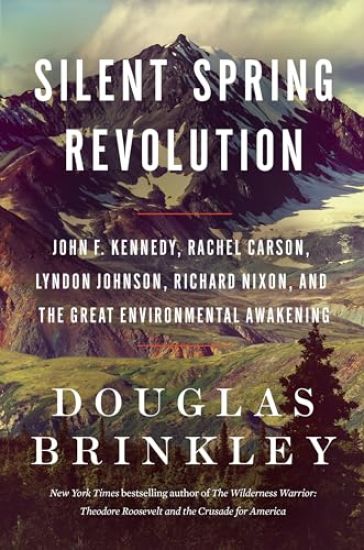
Silent Spring Revolution CD: John F. Kennedy, Rachel Carson, Lyndon Johnson, Richard Nixon, and the Great Environmental Awakening
New York Times bestselling author and acclaimed presidential historian Douglas Brinkley chronicles the rise of environmental activism during the Long Sixties (1960-1973), telling the story of an indomitable generation that saved the natural world under the leadership of John F. Kennedy, Lyndon Johnson, and Richard Nixon.With the detonation of the Trinity explosion in the New Mexico desert in 1945, the United States took control of Earth's destiny for the first time. After the Truman administration dropped atomic bombs on Japan to end World War II, a grim new epoch had arrived. During the early Cold War years, the federal government routinely detonated nuclear devices in the Nevada desert and the Marshall Islands. Not only was nuclear fallout a public health menace, but entire ecosystems were contaminated with radioactive materials. During the 1950s, an unprecedented postwar economic boom took hold, with America becoming the world's leading hyperindustrial and military giant. But with this historic prosperity came a heavy cost: oceans began to die, wilderness vanished, the insecticide DDT poisoned ecosystems, wildlife perished, and chronic smog blighted major cities.In Silent Spring Revolution, Douglas Brinkley pays tribute to those who combated the mauling of the natural world in the Long Sixties: Rachel Carson (a marine biologist and author), David Brower (director of the Sierra Club), Barry Commoner (an environmental justice advocate), Coretta Scott King (an antinuclear activist), Stewart Udall (the secretary of the interior), William O. Douglas (Supreme Court justice), Cesar Chavez (a labor organizer), and other crusaders are profiled with verve and insight.Carson's book Silent Spring, published in 1962, depicted how detrimental DDT was to living creatures. The expos launched an ecological revolution that inspired such landmark legislation as the Wilderness Act (1964), the Clean Air Acts (1963 and 1970), and the Endangered Species Acts (1966, 1969, and 1973). In intimate detail, Brinkley extrapolates on such epic events as the Donora (Pennsylvania) smog incident, JFK's Limited Nuclear Test Ban Treaty, Great Lakes preservation, the Santa Barbara oil spill, and the first Earth Day.With the United States grappling with climate change and resource exhaustion, Douglas Brinkley's meticulously researched and deftly written Silent Spring Revolution reminds us that a new generation of twenty-first-century environmentalists can save the planet from ruin.Supplemental enhancement PDF accompanies the audiobook.
Christopher Carson, Familiarly Known as Kit Carson

Christopher Carson, Familiarly Known as Kit Carson

John Stevens Cabot Abbott; Elizabeth Eleanor Greatorex

Anson Street Press
2025
pokkari
Explore the life of a legend in "Christopher Carson, Familiarly Known as Kit Carson" by John S. C. Abbott. This meticulously prepared biography chronicles the remarkable story of Kit Carson, the iconic American frontiersman. Immerse yourself in the thrilling adventures and historical significance of this celebrated figure of the American West. This biography delves into the experiences of Kit Carson (1809-1868), tracing his journey through a pivotal era in United States history. More than just an adventurer, Carson's life embodies the spirit of exploration and resilience that defined the westward expansion. Discover the captivating narrative of a man whose name became synonymous with courage and the untamed wilderness. A compelling read for anyone fascinated by historical biographies, American history, and the legacy of the West.This work has been selected by scholars as being culturally important, and is part of the knowledge base of civilization as we know it.This work is in the public domain in the United States of America, and possibly other nations. Within the United States, you may freely copy and distribute this work, as no entity (individual or corporate) has a copyright on the body of the work.Scholars believe, and we concur, that this work is important enough to be preserved, reproduced, and made generally available to the public. We appreciate your support of the preservation process, and thank you for being an important part of keeping this knowledge alive and relevant.
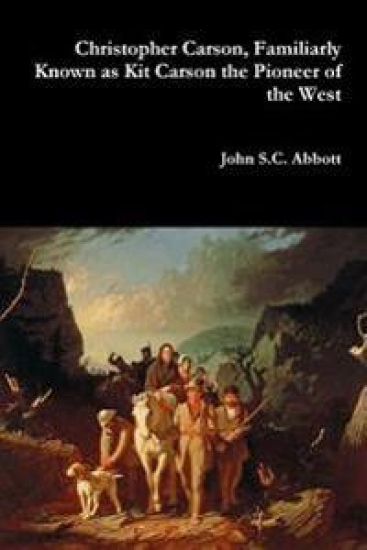
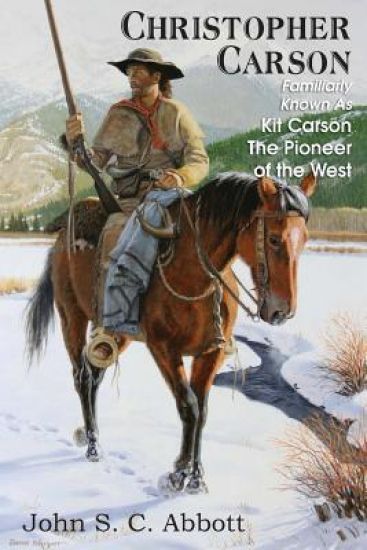
Christopher Carson, Familiarly Known as Kit Carson the Pioneer of the West
Christopher Houston "Kit" Carson (December 24, 1809 - May 23, 1868) was an American frontiersman, fur trapper, wilderness guide, Indian agent, and U.S. Army officer. He became a frontier legend in his own lifetime via biographies and news articles. His (sometimes exaggerated) exploits were the subject of dime novels. In 'Christopher Carson, Familiarly Known as Kit Carson the Pioneer of the West, ' historian John Abbott traces the remarkable life of this early American icon.
Christopher Carson, Familiarly Known as Kit Carson the Pioneer of the West
Christopher Houston "Kit" Carson (December 24, 1809 - May 23, 1868) was an American frontiersman, fur trapper, wilderness guide, Indian agent, and U.S. Army officer. He became a frontier legend in his own lifetime via biographies and news articles. His (sometimes exaggerated) exploits were the subject of dime novels. In Christopher Carson, Familiarly Known as Kit Carson the Pioneer of the West, historian John Abbott traces the remarkable life of this early American icon.
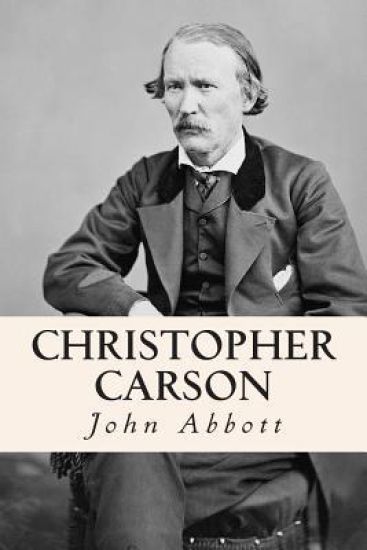
Christopher Carson

Christopher Carson

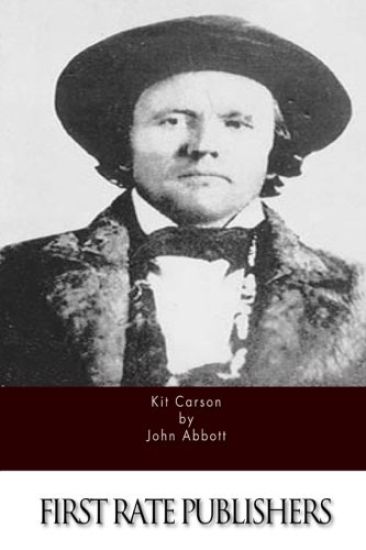
John Abbott

Createspace Independent Publishing Platform
2015
nidottu
It is a prominent object of this Kit Carson biography, Christopher Carson, to bring to light the wild adventures of the pioneers of this continent, in the solitudes of the mountains, the prairies and the forests; often amidst hostile Indians, and far away from the restraints and protection of civilization. This strange, weird-like life is rapidly passing away, before the progress of population, railroads and steamboats. But it is desirable that the memory of it should not drift into oblivion. Christopher Houston Carson (December 24, 1809 - May 23, 1868), better known as Kit Carson, was an American frontiersman. He was a mountain man (fur trapper), wilderness guide, Indian agent, and U.S. Army officer. Carson became a frontier legend in his own lifetime via biographies and news articles. Exaggerated versions of his exploits were the subject of dime novels. Carson left home in rural present-day Missouri at age 16 to become a mountain man and trapper in the West. In the 1830s, he accompanied Ewing Young on an expedition to Mexican California and joined fur trapping expeditions into the Rocky Mountains. He lived among and married into the Arapaho and Cheyenne tribes. In the 1840s, he was hired as a guide by John C. Fremont. Fremont's expedition covered much of California, Oregon, and the Great Basin area. Fremont mapped and wrote reports and commentaries on the Oregon Trail to assist and encourage westward-bound American pioneers. Carson achieved national fame through Fremont's accounts of his expeditions. Under Fremont's command, Carson participated in the uprising against Mexican rule in California at the beginning of the Mexican-American War. Later in the war, Carson was a scout and courier, celebrated for his rescue mission after the Battle of San Pasqual and for his coast-to-coast journey from California to Washington, DC to deliver news of the conflict in California to the U.S. government. In the 1850s, he was appointed as the Indian agent to the Ute Indians and the Jicarilla Apaches. During the American Civil War, Carson led a regiment of mostly Hispanic volunteers from New Mexico on the side of the Union at the Battle of Valverde in 1862. When the Confederate threat to New Mexico was eliminated, Carson led forces to suppress the Navajo, Mescalero Apache, and the Kiowa and Comanche Indians. Carson was breveted a Brigadier General and took command of Fort Garland, Colorado. He was there only briefly: poor health forced him to retire from military life. Carson was married three times and had ten children. The Carson home was in Taos, New Mexico. Carson died at Fort Lyon, Colorado, of an aortic aneurysm on May 23, 1868. He is buried in Taos, New Mexico, next to his third wife Josefa Jaramillo. In 1847, General William Tecumseh Sherman met Kit Carson in Monterey, California. Sherman wrote: "His fame was then at its height, ... and I was very anxious to see a man who had achieved such feats of daring among the wild animals of the Rocky Mountains, and still wilder Indians of the plains ... I cannot express my surprise at beholding such a small, stoop-shouldered man, with reddish hair, freckled face, soft blue eyes, and nothing to indicate extraordinary courage or daring. He spoke but little and answered questions in monosyllables." Colonel Edward W. Wynkoop wrote: "Kit Carson was five feet five and one half-inches tall, weighed about 140 pounds, of nervy, iron temperament, squarely built, slightly bow-legged, and those members apparently too short for his body. But, his head and face made up for all the imperfections of the rest of his person. His head was large and well-shaped with yellow straight hair, worn long, falling on his shoulders. His face was fair and smooth as a woman's with high cheekbones, straight nose, a mouth with a firm, but somewhat sad expression, a keen, deep-set but beautiful, mild blue eye, which could become terrible under some circumstances, and like the warning of the rattlesnake.