John Habberton (1842-1921) was an American author. He spent nearly twenty years as the literary and drama critic for the New York Herald, but he is best known for his stories about early California life, many of which were collected in his 1880 book Romance of California Life: Illustrated by Pacific Slope Stories, Thrilling, Pathetic and Humorous (New York: Baker, Pratt & Co., 1880). Habberton also wrote Helen's Babies, published in 1876 by Loring Publisher, Boston; and in the early 20th Century by George Routledge and Sons, London. In most of these copies, Habberton is not listed as the author. The novel is subtitled: "Helen's Babies with some account of their ways...innocent, crafty, angelic, impish, witching and repulsive by THEIR LATEST VICTIM." The book was one of the Ruby Books series for boys and girls. Habberton is acknowledged as the author of the book in an advertisement within the 1903 edition of Andersen's Fairy Tales published by Routledge. Habberton is acknowledged, also, in an inexpensive cardboard-back edition of "Helen's Babies" published by (and copyrighted by ) Whitman Publishing Company of Racine, Wisconsin in 1934. That edition is copiously illustrated by Pauline Adams. Helen's Babies was intended as just a piece of humour and aimed at an adult audience. But the hilarious novel almost instantly became a major juvenile literature success, highly estimated by the youngsters as well as authorities like Rudyard Kipling. It became a classic ranking on par with "Tom Sawyer", "Wind in the Willows", "Winnie-the Pooh" and the like. Popularity dwindled a bit after WW-II (although George Orwell mentions it very favourably in his 1946 essay on early American literature, Riding Down from Bangor), but started rising again in the 1980s. Translated into numerous foreign languages, it secured Habberton's modest share of immortality in literature. Curiously, as being one of the first pieces of an author, so insecure about his abilities, that he omitted his author name resp. wrote under pseudonym for many years. Habberton was also known under the pseudonym "Smelfungus." (Source: Initials and Pseudonyms: A Dictionary of Literary Disguises by Cushing, William).
John Habberton (1842-1921) was an American author. He spent nearly twenty years as the literary and drama critic for the New York Herald, but he is best known for his stories about early California life, many of which were collected in his 1880 book Romance of California Life: Illustrated by Pacific Slope Stories, Thrilling, Pathetic and Humorous (New York: Baker, Pratt & Co., 1880). Habberton also wrote Helen's Babies, published in 1876 by Loring Publisher, Boston; and in the early 20th Century by George Routledge and Sons, London. In most of these copies, Habberton is not listed as the author. The novel is subtitled: "Helen's Babies with some account of their ways...innocent, crafty, angelic, impish, witching and repulsive by THEIR LATEST VICTIM." The book was one of the Ruby Books series for boys and girls. Habberton is acknowledged as the author of the book in an advertisement within the 1903 edition of Andersen's Fairy Tales published by Routledge. Habberton is acknowledged, also, in an inexpensive cardboard-back edition of "Helen's Babies" published by (and copyrighted by ) Whitman Publishing Company of Racine, Wisconsin in 1934. That edition is copiously illustrated by Pauline Adams. Helen's Babies was intended as just a piece of humour and aimed at an adult audience. But the hilarious novel almost instantly became a major juvenile literature success, highly estimated by the youngsters as well as authorities like Rudyard Kipling. It became a classic ranking on par with "Tom Sawyer", "Wind in the Willows", "Winnie-the Pooh" and the like. Popularity dwindled a bit after WW-II (although George Orwell mentions it very favourably in his 1946 essay on early American literature, Riding Down from Bangor), but started rising again in the 1980s. Translated into numerous foreign languages, it secured Habberton's modest share of immortality in literature. Curiously, as being one of the first pieces of an author, so insecure about his abilities, that he omitted his author name resp. wrote under pseudonym for many years. Habberton was also known under the pseudonym "Smelfungus." (Source: Initials and Pseudonyms: A Dictionary of Literary Disguises by Cushing, William).
John Habberton (1842-1921) was an American author. He spent nearly twenty years as the literary and drama critic for the New York Herald, but he is best known for his stories about early California life, many of which were collected in his 1880 book Romance of California Life: Illustrated by Pacific Slope Stories, Thrilling, Pathetic and Humorous (New York: Baker, Pratt & Co., 1880). Habberton also wrote Helen's Babies, published in 1876 by Loring Publisher, Boston; and in the early 20th Century by George Routledge and Sons, London. In most of these copies, Habberton is not listed as the author. The novel is subtitled: "Helen's Babies with some account of their ways...innocent, crafty, angelic, impish, witching and repulsive by THEIR LATEST VICTIM." The book was one of the Ruby Books series for boys and girls. Habberton is acknowledged as the author of the book in an advertisement within the 1903 edition of Andersen's Fairy Tales published by Routledge. Habberton is acknowledged, also, in an inexpensive cardboard-back edition of "Helen's Babies" published by (and copyrighted by ) Whitman Publishing Company of Racine, Wisconsin in 1934. That edition is copiously illustrated by Pauline Adams. Helen's Babies was intended as just a piece of humour and aimed at an adult audience. But the hilarious novel almost instantly became a major juvenile literature success, highly estimated by the youngsters as well as authorities like Rudyard Kipling. It became a classic ranking on par with "Tom Sawyer", "Wind in the Willows", "Winnie-the Pooh" and the like. Popularity dwindled a bit after WW-II (although George Orwell mentions it very favourably in his 1946 essay on early American literature, Riding Down from Bangor), but started rising again in the 1980s. Translated into numerous foreign languages, it secured Habberton's modest share of immortality in literature. Curiously, as being one of the first pieces of an author, so insecure about his abilities, that he omitted his author name resp. wrote under pseudonym for many years. Habberton was also known under the pseudonym "Smelfungus." (Source: Initials and Pseudonyms: A Dictionary of Literary Disguises by Cushing, William).
Aunt Jane's Nieces is the title of a juvenile novel published in 1906, and written by L. Frank Baum under the pen name "Edith Van Dyne." Since the book was the first in a series of novels designed for adolescent girls, its title was applied to the entire series of ten books, published between 1906 and 1918. The novel "is genuinely original and interesting. It focuses on three adolescent girls, two of whom combine basic good character with ugly traits not usually found in fiction for young girls. Baum starts with a trite situation that could occasion prosy moralizing and gives it several original twists." The rest of the novels in the series feature travel, adventures, accidents, a kidnapping and rescue, romances, and a marriage for Louise. The final novel, Aunt Jane's Nieces in the Red Cross, was originally published in 1915.
The John Deere Classic is a well known, world-class PGA Tour golf tournament. Like its sponsor, the John Deere Company, it is widely respected among its peers for its character and integrity, leading the way in innovation. Through the Birdies for Charity program, this event is responsible for raising more than 80 million dollars in charitable giving... right here in the Quad Cities. And within the confines of the TPC at Deere Run is a not-so-well-known place, one that is home to a select group of self-labeled volunteer misfits who call themselves Grunts. They work tirelessly behind the scenes to insure this tournament goes off without a glitch (whatever that is). They can be found hanging out in their little clubhouse (my word), just off the fourth tee in THE GRUNT DOME (their word). While a completely separate band of working wizards, they are part of a larger group of more than 1800 volunteers, all instrumental in the success of this remarkable event. But the Grunt Dome is more than just a place. It embodies a spirit of dedication, support, and a 'can-do' attitude. The work ethic of these Grunts sets the tone for the passion and perseverance that make this tournament the 'little train that could'. Hop aboard my John Deere Gator as we take a peek inside the ropes to see what makes this place and these people so special.
John Griffith "Jack" London (born John Griffith Chaney, January 12, 1876 - November 22, 1916) was an American novelist, journalist, and social activist. A pioneer in the then-burgeoning world of commercial magazine fiction, he was one of the first fiction writers to obtain worldwide celebrity and a large fortune from his fiction alone. Some of his most famous works include The Call of the Wild and White Fang, both set in the Klondike Gold Rush, as well as the short stories "To Build a Fire", "An Odyssey of the North", and "Love of Life". He also wrote of the South Pacific in such stories as "The Pearls of Parlay" and "The Heathen", and of the San Francisco Bay area in The Sea Wolf. London was part of the radical literary group "The Crowd" in San Francisco and a passionate advocate of unionization, socialism, and the rights of workers. He wrote several powerful works dealing with these topics, such as his dystopian novel The Iron Heel, his non-fiction expos The People of the Abyss, and The War of the Classes.London was born near Third and Brannan Streets in San Francisco. The house burned down in the fire after the 1906 San Francisco earthquake; the California Historical Society placed a plaque at the site in 1953. Although the family was working class, it was not as impoverished as London's later accounts claimed citation needed]. London was largely self-educated citation needed]. In 1885, London found and read Ouida's long Victorian novel Signa. He credited this as the seed of his literary success.In 1886, he went to the Oakland Public Library and found a sympathetic librarian, Ina Coolbrith, who encouraged his learning. (She later became California's first poet laureate and an important figure in the San Francisco literary community). In 1889, London began working 12 to 18 hours a day at Hickmott's Cannery. Seeking a way out, he borrowed money from his foster mother Virginia Prentiss, bought the sloop Razzle-Dazzle from an oyster pirate named French Frank, and became an oyster pirate. In his memoir, John Barleycorn, he claims also to have stolen French Frank's mistress Mamie.After a few months, his sloop became damaged beyond repair. London hired on as a member of the California Fish Patrol. In 1893, he signed on to the sealing schooner Sophie Sutherland, bound for the coast of Japan. When he returned, the country was in the grip of the panic of '93 and Oakland was swept by labor unrest. After grueling jobs in a jute mill and a street-railway power plant, London joined Kelly's Army and began his career as a tramp. In 1894, he spent 30 days for vagrancy in the Erie County Penitentiary at Buffalo, New York. In The Road, he wrote: Man-handling was merely one of the very minor unprintable horrors of the Erie County Pen. I say 'unprintable'; and in justice I must also say undescribable. They were unthinkable to me until I saw them, and I was no spring chicken in the ways of the world and the awful abysses of human degradation. It would take a deep plummet to reach bottom in the Erie County Pen, and I do but skim lightly and facetiously the surface of things as I there saw them.After many experiences as a hobo and a sailor, he returned to Oakland and attended Oakland High School. He contributed a number of articles to the high school's magazine, The Aegis. His first published work was "Typhoon off the Coast of Japan", an account of his sailing experiences.London died November 22, 1916, in a sleeping porch in a cottage on his ranch. London had been a robust man but had suffered several serious illnesses, including scurvy in the Klondike.
John Richard Jefferies (6 November 1848 - 14 August 1887) was an English nature writer, noted for his depiction of English rural life in essays, books of natural history, and novels. His childhood on a small Wiltshire farm had a great influence on him and provides the background to all his major works of fiction. Jefferies's corpus of writings includes a diversity of genres and topics, including Bevis (1882), a classic children's book, and After London (1885), an early work of science fiction. For much of his adult life, he suffered from tuberculosis, and his struggles with the illness and with poverty also play a role in his writing. Jefferies valued and cultivated an intensity of feeling in his experience of the world around him, a cultivation that he describes in detail in The Story of My Heart (1883). This work, an introspective depiction of his thoughts and feelings on the world, gained him the reputation of a nature mystic at the time. But it is his success in conveying his awareness of nature and people within it, both in his fiction and in essay collections such as The Amateur Poacher (1879) and Round About a Great Estate (1880), that has drawn most admirers. Walter Besant wrote of his reaction on first reading Jefferies: "Why, we must have been blind all our lives; here were the most wonderful things possible going on under our very noses, but we saw them not."John Richard Jefferies (he used the first name only during his childhood) was born at Coate, in the parish of Chiseldon, near Swindon, Wiltshire, the son of a farmer, James Luckett Jefferies (1816-1896). His birthplace and home is now a museum open to the public. James Jefferies had the farm from his father, John Jefferies, who had been a London printer before returning to Swindon to run the family mill and bakery. Richard's mother, Elizabeth Gyde (1817-1895), always called Betsy, was the daughter of John Jefferies's binder and manager. These relationships are mirrored in the characters of Jefferies's late novel Amaryllis at the Fair (1887); and the portraits of the family in the novel tally with external accounts of the Jefferies.James Jefferies, like Iden in Amaryllis, was devoted to his garden, while struggling to make a financial success of the farm. The garden, lovingly recalled in Wood Magic and Amaryllis, also makes a strong impression on the memories of those who knew the Jefferies at the time.Betsy, like Iden's wife, seems to have been dissatisfied with life on the farm: "a town-bred woman with a beautiful face and a pleasure-loving soul, kind and generous to a fault, but unsuited to a country life." The farm was very small, with 39 acres (160,000 m2) of pasture; and a mortgage of 1500 would later begin a slide into debt for James Jefferies, who lost the farm in 1877 and became a jobbing gardener. But these difficulties were less evident in Richard's childhood. The situation was much as in After London (1885), where the farming and gardening Baron is again based on James Jefferies: "The whole place was thus falling to decay, while at the same time it seemed to be flowing with milk and honey". One part of the Jefferies family is strikingly missing from the books. In Wood Magic, Bevis and Amaryllis, the hero (or heroine) has no siblings; only After London gives the main character brothers and depicts the imperfect sympathy between them. James and Elizabeth's first child, Ellen, had died young; but Richard had two younger brothers and a younger sister....
John Richard Jefferies (6 November 1848 - 14 August 1887) was an English nature writer, noted for his depiction of English rural life in essays, books of natural history, and novels. His childhood on a small Wiltshire farm had a great influence on him and provides the background to all his major works of fiction. Jefferies's corpus of writings includes a diversity of genres and topics, including Bevis (1882), a classic children's book, and After London (1885), an early work of science fiction. For much of his adult life, he suffered from tuberculosis, and his struggles with the illness and with poverty also play a role in his writing. Jefferies valued and cultivated an intensity of feeling in his experience of the world around him, a cultivation that he describes in detail in The Story of My Heart (1883). This work, an introspective depiction of his thoughts and feelings on the world, gained him the reputation of a nature mystic at the time. But it is his success in conveying his awareness of nature and people within it, both in his fiction and in essay collections such as The Amateur Poacher (1879) and Round About a Great Estate (1880), that has drawn most admirers. Walter Besant wrote of his reaction on first reading Jefferies: "Why, we must have been blind all our lives; here were the most wonderful things possible going on under our very noses, but we saw them not."John Richard Jefferies (he used the first name only during his childhood) was born at Coate, in the parish of Chiseldon, near Swindon, Wiltshire, the son of a farmer, James Luckett Jefferies (1816-1896). His birthplace and home is now a museum open to the public. James Jefferies had the farm from his father, John Jefferies, who had been a London printer before returning to Swindon to run the family mill and bakery. Richard's mother, Elizabeth Gyde (1817-1895), always called Betsy, was the daughter of John Jefferies's binder and manager. These relationships are mirrored in the characters of Jefferies's late novel Amaryllis at the Fair (1887); and the portraits of the family in the novel tally with external accounts of the Jefferies.James Jefferies, like Iden in Amaryllis, was devoted to his garden, while struggling to make a financial success of the farm. The garden, lovingly recalled in Wood Magic and Amaryllis, also makes a strong impression on the memories of those who knew the Jefferies at the time.Betsy, like Iden's wife, seems to have been dissatisfied with life on the farm: "a town-bred woman with a beautiful face and a pleasure-loving soul, kind and generous to a fault, but unsuited to a country life." The farm was very small, with 39 acres (160,000 m2) of pasture; and a mortgage of 1500 would later begin a slide into debt for James Jefferies, who lost the farm in 1877 and became a jobbing gardener. But these difficulties were less evident in Richard's childhood. The situation was much as in After London (1885), where the farming and gardening Baron is again based on James Jefferies: "The whole place was thus falling to decay, while at the same time it seemed to be flowing with milk and honey". One part of the Jefferies family is strikingly missing from the books. In Wood Magic, Bevis and Amaryllis, the hero (or heroine) has no siblings; only After London gives the main character brothers and depicts the imperfect sympathy between them. James and Elizabeth's first child, Ellen, had died young; but Richard had two younger brothers and a younger sister....
With a new introduction by Nick Rhodes The talent. The charisma. The videos. From their 1981 hit Planet Earth to their latest number-one album, All You Need Is Now, John Taylor and Duran Duran have enchanted audiences around the world. It's been a wild ride, and--for John in particular--dangerous. John recounts the story of the band's formation, their massive success, and his journey to the brink of self-destruction. Told with humor, honesty--and packed with exclusive pictures--In the Pleasure Groove is an irresistible rock-and-roll portrait of a band whose popularity has never been stronger.
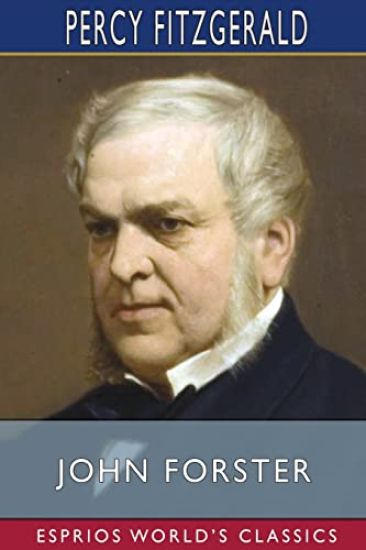
Percy Hetherington Fitzgerald (1834-1925) was an Anglo-Irish author and critic, painter and sculptor. He was born in Ireland at Fane Valley, County Louth, educated at Belvedere college Dublin, Stonyhurst College, Lancashire, and at Trinity College, Dublin. He was called to the Irish bar and was for a time crown prosecutor on the northeastern circuit. After moving to London, he became a contributor to Charles Dickens's magazine, Household Words, and later dramatic critic for the Observer and the Whitehall Review. Among his many writings are numerous biographies and works relating to the history of the theatre.
Featuring 11 easy arrangements for 1 piano, 4 hands, this book is a fun and engaging introduction to piano duets that perfectly complements Books 2-4 of John Thompson's Easiest Piano Course. Children will love learning classical favourites such as In the Hall of the Mountain King, Ode to Joy, and The Swan, within the rewarding and interactive context of duet playing. First Published in 1954, John Thompson's Easiest Piano Course is one of the most-loved and best-selling piano methods in the world. John Thompson's timeless approach to learning has been trusted by generations of teachers to start millions of students on their musical journey.