Kirjojen hintavertailu. Mukana 11 627 423 kirjaa ja 12 kauppaa.

Kirjahaku

Etsi kirjoja tekijän nimen, kirjan nimen tai ISBN:n perusteella.

1000 tulosta hakusanalla John Craig-Sharples

A 1961 Voyage Through the Big Creek Wilderness: Or Why I Should (Not) Have Voted for George Wallace
John Craig Shaw has a knack for writing stories, some of which are quite funny; others--serious or educational--but always interesting He writes mostly of personal adventures and happenings, but also of various friends, family, co-workers, saddle tramps, and sailors known during his lifetime. In the last section, Shaw gets philosophical. Read his off-the-wall essays of his thoughts, opinions, and what ifs, written to delight, annoy, or bore the reader. Take it with a grain of salt
The Centrality of Slavery

The Centrality of Slavery

John Craig Hammond

UNIVERSITY OF PENNSYLVANIA PRESS
2025
sidottu
How French and American colonizers created systems of enslavement in the Middle Mississippi Valley The Centrality of Slavery examines how French and American colonizers used the powers of various imperial regimes to create slave societies in present-day Missouri and Illinois from the 1720s through the 1820s. The first book-length study of slavery and empire in both Illinois and Missouri, it begins with the origins of Native American and African American enslavement in the region. It then traces how successive French, Spanish, British, and American regimes shaped the development of slavery over the course of a century, examines the significance of the Northwest Ordinance's ban on slavery in Illinois, and then analyzes the diverging histories of slavery in Illinois and Missouri in the early 1800s. The book concludes with an analysis of the Missouri Crisis and the compromise of 1820, along with the Middle Mississippi Valley's significance in the road towards disunion and civil war in the late 1850s. More broadly, The Centrality of Slavery argues that the Middle Mississippi Valley sat astride the crossroads of imperial North America. The practices of empire and enslavement forged and fought over there exerted an outsized influence on the history of slavery in North America and the United States. Rather than treating the region's eighteenth-century past as a prologue to the rise of the United States, John Craig Hammond analyzes the colonial history of the region on its own terms, through the European colonizers, American settlers, and enslaved people of Indigenous and African descent who shaped the development of slavery in the Middle Mississippi Valley.
A Protestant Church in Communist China

A Protestant Church in Communist China

John Craig William Keating

Lehigh University Press
2012
sidottu
Freedom of religious belief is guaranteed under the constitution of the People’s Republic of China, but the degree to which this freedom is able to be exercised remains a highly controversial issue. Much scholarly attention has been given to persecuted underground groups such as Falun, but one area that remains largely unexplored is the relationship between officially registered churches and the communist government. This study investigates the history of one such official church, Moore Memorial Church in Shanghai. This church was founded by American Methodist missionaries. By the time of the 1949 revolution, it was the largest Protestant church in East Asia, running seven day a week programs. As a case study of one individual church, operating from an historical (rather than theological) perspective, this study examines the experience of people at this church against the backdrop of the turbulent politics of the Mao and Deng eras. It asks and seeks to answer questions such as: were the people at the church pleased to see the foreign missionaries leave? Were people forced to sign the so-called “Christian manifesto”? Once the church doors were closed in 1966, did worshipers go underground? Why was this particular church especially chosen to be the first re-opened in Shanghai in 1979? What explanations are there for its phenomenal growth since then? A considerable proportion of the data for this study is drawn from Chinese language sources, including interviews, personal correspondence, statistics, internal church documents and archives, many of which have never previously been published or accessed by foreign researchers. The main focus of this study is on the period from 1949 to 1989, a period in which the church experienced many ups and downs, restrictions and limitations. The Mao era, in particular, remains one of the least understood and seldom written about periods in the history of Christianity in China. This study therefore makes a significant contribution to our evolving understanding of the delicate balancing act between compromise, co-operation and compliance that categorizes church-state relations in modern China.
Who Am I and What Is Presence

Who Am I and What Is Presence

Alex Ayuli; John Craig; Girard Haven

IngramSpark
2023
pokkari
Years ago I remember reading Rodney Collin say in Theory of Celestial Influence that the first time you hear about self-remembering, or the first time you read those words, in that very moment you self-remember. And I remember at the time I was sitting in front of a large plate glass window, it was dark on the other side of the window, and I read that line and looked up. And I saw myself looking at a reflection of myself, looking back at me. It was really powerful. It was an addition to being an observer. And the reflection in the window kind of triggered an intuition - something that was not fully formed, that was contributing to the power of that moment. But it was an immediate verification of the truth of what Collin had said, that those words would trigger the state. I didn't understand this at the time, but later I realized it also verified Rodney Collin's idea of self-remembering....
Introduction to Telemedicine, second edition

Introduction to Telemedicine, second edition

Richard Wootton; John Craig; Victor Patterson

Royal Society of Medicine Press Ltd
2006
nidottu
In rural and sparsely populated countries, telemedicine can be a vital and life-saving link to health care, and in those regions where demands on hospitals are ever increasing, it can provide a safe and comfortable alternative to hospital-based therapy. The second edition of this introductory guide to telemedicine and telecare services is invaluable to new practitioners in this growing field of medicine. The book describes the benefits of telemedicine and highlights the potential problems. The authors provide numerous examples of how telemedicine is used in the United States, Australia, and Scandinavia.
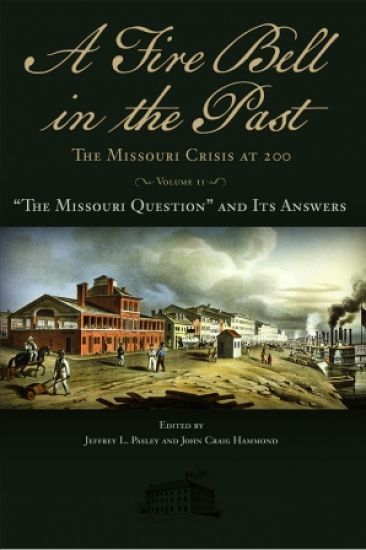
A Fire Bell in the Past

A Fire Bell in the Past

Jeffrey L. Pasley; John Craig Hammond

University of Missouri Press
2021
sidottu
Many new states entered the United States around 200 years ago, but only Missouri almost killed the nation it was trying to join. When the House of Representatives passed the Tallmadge Amendment banning slavery from the prospective new state in February 1819, it set off a two-year political crisis in which growing northern antislavery sentiment confronted the aggressive westward expansion of the peculiar institution by southerners. The Missouri Crisis divided the U.S. into slave and free states for the first time and crystallized many of the arguments and conflicts that would later be settled violently during the Civil War. The episode was, as Thomas Jefferson put it, “a fire bell in the night” that terrified him as the possible “knell of the Union.” Drawn from the of participants in two landmark conferences held at the University of Missouri and the City University of New York, those who contributed original essays to this second of two volumes—a group that includes young scholars and foremost authorities in the field—answer the Missouri “Question,” in bold fashion, challenging assumptions both old and new in the long historiography by approaching the event on its own terms, rather than as the inevitable sequel of the flawed founding of the republic or a prequel to its near destruction. This second volume of A Fire Bell in the Past features a foreword by Daive Dunkley. Contributors include Dianne Mutti Burke, Christopher Childers, Edward P. Green, Zachary Dowdle, David J. Gary, Peter Kastor, Miriam Liebman, Matthew Mason, Kate Masur, Mike McManus, Richard Newman, and Nicholas Wood.
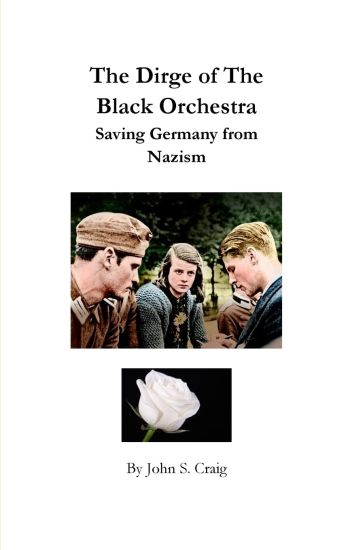
The Dirge of the Black Orchestra -- Saving Germany from Nazism
Adolf Hitler was the target of over forty assassination attempts during his political career, but none were more dramatic than the one executed by the German aristocrat and Nazi war hero, Col. Claus von Stauffenberg. The ancestry, accomplishments, ambition, and final demise of Hitler and Stauffenberg are compared. The lives of Hitler and the failed assassin Col. Stauffenberg are examined, as well as their relationship with the courageous anti-Nazi groups of the Kreisau Circle, White Rose, and Black Orchestra. The two most important and powerful figures in Nazi Intelligence, Admiral Wilhelm Canaris and Reinhardt Heydrich, held secrets about each other that shaped the course of the war. While Canaris became part of the plot to end the Nazi regime, Heydrich was the ultimate Nazi iron man who was targeted for assassination by Czech resistance fighters, though the Allies knew there would be terrible reprisals.
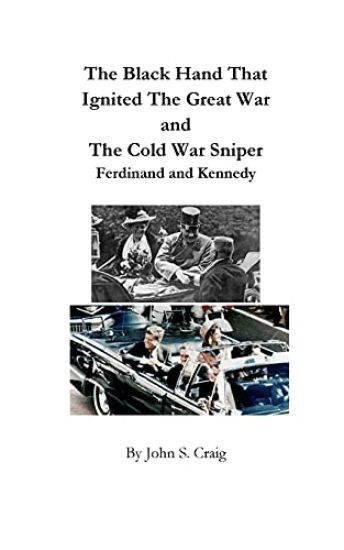
The Black Hand That Ignited The Great War and The Cold War Sniper
The opening chapter traces the troubled history of the Balkans up to the assassination of the Austrian Archduke Ferdinand by linking the influences of the Greek-Trojan War, Alexander the Great's conquest, the creation of Islam and Catholicism, conflicts with the Ottoman Empire, and the deadly and little known secret societies of Omalinida, Black Hand, Young Turks, the Internal Macedonian Revolutionary Organization, and the Croatian Ustasha. The Serbian terror group the Black Hand is disclosed as the force that ignited the worldwide cataclysm of World War I and the legacy that the War to End All Wars left the world when Gavrilo Princip murdered Ferdinand. This chapter uncovers the motives of the Black Hand and the possibility that other secret societies and political forces joined in the plot. It investigates the legacy of the war that created the Bolshevik Revolution and themes for film, literature, and religion that have shaped Western culture. The second chapter discloses the peculiar relationships of Franz Ferdinand and President Kennedy, Gavrilo Princip and Oswald, Oswald and his father-in-law Ilya Prusakov, Oswald and the Russian born businessman George deMohrenschildt, Oswald and CIA contract agent and alleged double agent Richard Nagell, Oswald and CIA agents and mercenaries (Jerry Patrick Hemming, and David Atlee Phillips), DavidFerrie and Jack Martin, Ferrie and Carlos Marcello, Ferrie and Clay Shaw, Ferrie and Sergio Archacha Smith, Perry Russo and Ferrie, Clay Shaw and Permindex, Jim Garrison and Ferrie, Jim Garrison and Perry Russo, Oswald and the Fair Play for Cuba Committee, film and fiction that may have motivated Oswald, Ferrie's alleged pre-knowledge of the assassination, Guy Banister and Oswald, right-wing racist Joseph Milteer's pre-knowledge of the assassination, mind control and hypnosis, Jack Ruby and the mafia.
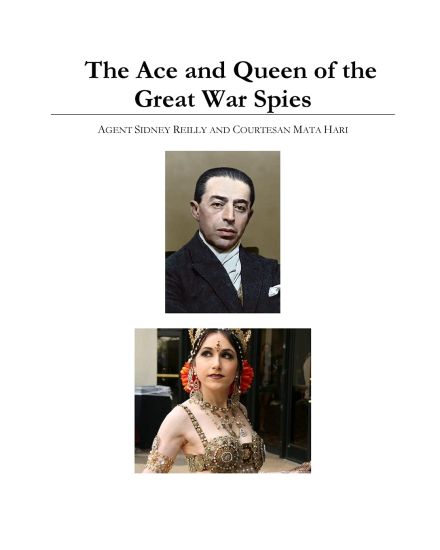
The Ace and Queen of the Great War Spies
Though the name Mata Hari is one of the most famous in all of espionage, she has been called the worst spy of the century, the most misunderstood and tragic espionage figure in history, and the "Spy Who Never Was." Margaretha Geertruida Zelle was a poor Dutch girl who became a European celebrity and brilliantly marketed herself as a Malaysian exotic dancer only to be accused by the French as a German espionage agent.. The name Sidney Reilly is associated with the Great War, British intelligence, and the Bolshevik uprising in 1917. He has been called the "Ace of Spies"; the facts of his life are difficult to find and shrouded in mystery largely by his own design. Newspapers and biographical works have gushed superlatives concerning his efficiency as a British agent. The names of Sidney Reilly and Mata Hari are synonymous with twentieth century espionage. Who they really were and what they did during the Great War has intrigued and mystified the public for decades. This color-illustrated essay investigates these two legendary figures along with other Great War spies. 8x10 inch tradebook, color, 38 pages.