
Kirjahaku
Etsi kirjoja tekijän nimen, kirjan nimen tai ISBN:n perusteella.
1000 tulosta hakusanalla John Dos Passos

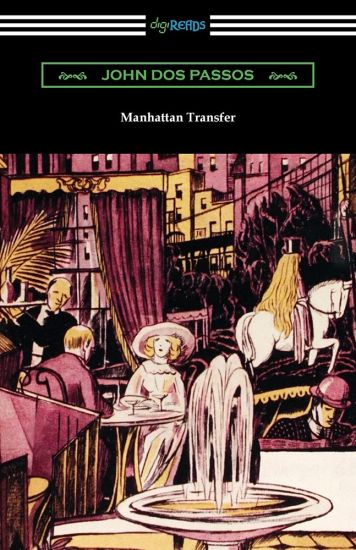
First published in 1925, "Manhattan Transfer" by American author John Dos Passos is an engrossing portrayal of urban life in New York City from the Gilded Age to the Jazz Age. Critically acclaimed and widely considered to be his most important work, Dos Passos tells the story of the city as it grows and changes through the perspectives of many of its inhabitants. The city itself is a central character of the novel. It is exciting and glamorous, but also indifferent and often cruel to its citizens. The novel is told as a series of stories of interconnected groups, couples, and individuals as they navigate an urban landscape that is becoming more crowded and modern. The characters from many different walks of life are followed through both their ordinary daily life of marriage, children, and jobs and are also captured in the midst of their complicated dramas, tragedies, betrayals, successes, and defeats. Dos Passos was influenced by the detailed style and modern tone of James Joyce's "Ulysses" and T. S. Eliot's "The Waste Land" when writing "Manhattan Transfer" and he succeeds in capturing both a people and a place in the midst of a great transformation. This edition is printed on premium acid-free paper.

A record of his childhood, young adulthood, and twenties, The Best Times is a collage of cherished memories. He reflects on the joys of an itinerant life enriched by new and diverse friendships, customs, cultures, and cuisines. Luminary personalities and landscapes abound in the 1920s literary world Dos Passos loved. F. Scott Fitzgerald, Ernest Hemingway, E.E. Cummings, Gerald and Sara Murphy, Horsley Gantt—they are his beloved friends. Spain, the French Riviera, Paris, Persia, the Caucasus—they are his beloved footpaths.
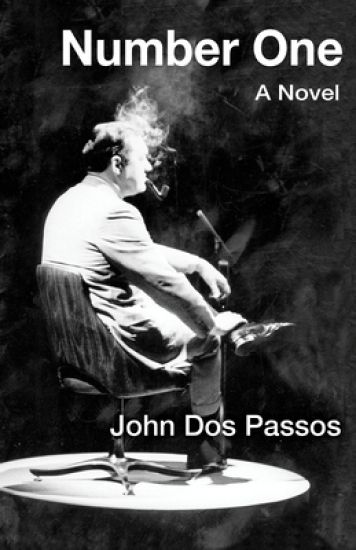
Tyler Spotswood, an alcoholic campaign manager, helps elect a corrupt Southern politician to the U.S. Senate. When his boss, Chuck Crawford aka “Number One,” pins a scandal on Spotswood, Tyler is too drunk to blow the whistle. Number One draws many comparisons to Robert Penn Warren’s All the King’s Men. Crawford reminds many of Louisiana politician Huey Long, a figure studied in person by Dos Passos.
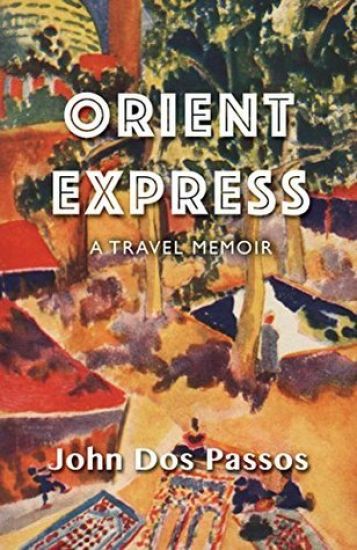
Before John Dos Passos enjoys fame as a chronicler and critic of American society, he wins recognition for command of aesthetics. Orient Express, a memoir of the author’s travels through Eastern Europe, the Near East, and the Middle East, focuses on sights, sounds, and smells rather than plot or character. Dos Passos applies his instincts as a painter to mountain ranges and grimy alleyways, finding beauty everywhere. His tour extends from Tiflis, Georgia, to Erivan, Armenia, and Marrakesh, Morocco; from Kasvin, Iran, to Baghdad, Iraq, and Damascus, Syria. He crosses the Syrian Desert, observes the aftermath of the Greek-Turkish War, climbs the Caucasus, explores Persia during the rise of Reza Kahn, and records the creation of Iraq by the British. His message is clear and relevant to contemporary travelers: holiness and happiness abounds in the East as much as the West. “With the name of Allah for all baggage,” Dos Passos writes, “you could travel from the Great Wall of China to the Niger and be fairly sure of food, and often of money, if only you were ready to touch your forehead in the dust five times a day and put away self and the glamorous West. And yet,” he adds, “the West is conquering.”
John Dos Passos’s literary response to Franklin Delano Roosevelt’s New Deal, The Grand Design critiques the gargantuan growth of bureaucracy in Washington during the Great Depression and World War II. The satiric novel conveys the author’s frustration with federal overreach and the hollow rhetoric that sells it to the people. “War is a time of Caesars,” writes Dos Passos as he laments the death of idealistic, intelligent enterprises at the desks of elitist administrators. After witnessing the Spanish Civil War claim so many well-intentioned men, he advises caution for America’s New Dealers: “Some things we have learned, but not enough; there is more to learn. Today we must learn to found again in freedom our republic.”
In a novel that closely parallels author John Dos Passos’s own ideological struggles during the Spanish Civil War, protagonist Glenn Spotswood, an American, travels to Spain to fight on the Republican side. There, Spotswood joins the Communist Party to help establish a more just society, but his idealism quickly degrades under the stress of party orthodoxy and hypocrisy.
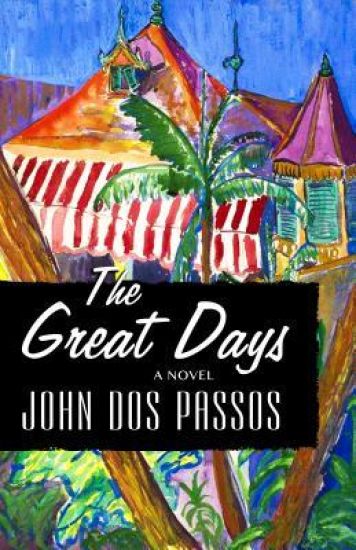
In this semi-autobiographical novel, an American named Roland Lancaster has a doomed affair with a younger woman, Elsa, in Cuba during World War II. The love story, in its happiest moments, parallels the idyllic life that author John Dos Passos had with his first wife, Katy. The Great Days plots a key concern of the author’s in the 1950s—America’s rise to global prominence during World War II, and its loss of power in the years following the peace. In preparing the novel, Dos Passos studied James V. Forrestal, Secretary of Defense from 1947 to 1949. In his notes on the novel, he quotes Forrestal: “to achieve accommodation between the power we now possess, our reluctance to use it positively, the realistic necessity for such use, and our national ideals.”
John Dos Passos' ground breaking novel Manhattan Transfer is a landmark literary achievement. The book attacks the consumerism and social indifference of contemporary American urban life, portraying a Manhattan that is merciless yet teeming with energy, restlessness, and possibilities that too few will ultimately share. Manhattan Transfer was inspired in part by James Joyce's Ulysses and T. S. Eliot's The Waste Land. In it we meet a large ensemble cast of characters who are struggling, failing, and some few succeeding in the brutally, exciting New York City of the Jazz Age. A novel of the very first importance. The dawn of a whole new school of writing. -Sinclair Lewis The best modern book about New York. -D. H. Lawrence Dos Passos] has been able to show to Europeans the America they really find when they come here. -Ernest Hemingway
John Dos Passos' ground breaking novel Manhattan Transfer is a landmark literary achievement. The book attacks the consumerism and social indifference of contemporary American urban life, portraying a Manhattan that is merciless yet teeming with energy, restlessness, and possibilities that too few will ultimately share. Manhattan Transfer was inspired in part by James Joyce's Ulysses and T. S. Eliot's The Waste Land. In it we meet a large ensemble cast of characters who are struggling, failing, and some few succeeding in the brutally, exciting New York City of the Jazz Age. A novel of the very first importance. The dawn of a whole new school of writing. -Sinclair Lewis The best modern book about New York. -D. H. Lawrence Dos Passos] has been able to show to Europeans the America they really find when they come here. -Ernest Hemingway

Rosinante to the Road Again
John Dos Passos
Createspace Independent Publishing Platform
2015
nidottu
Telemachus had wandered so far in search of his father he had quite forgotten what he was looking for. He sat on a yellow plush bench in the caf El Oro del Rhin, Plaza Santa Ana, Madrid, swabbing up with a bit of bread the last smudges of brown sauce off a plate of which the edges were piled with the dismembered skeleton of a pigeon. Opposite his plate was a similar plate his companion had already polished. Telemachus put the last piece of bread into his mouth, drank down a glass of beer at one spasmodic gulp, sighed, leaned across the table and said: