The book titled ""Public Papers Of The Presidents Of The United States Of America: John F. Kennedy"" is a collection of speeches, statements, and other public documents delivered by the 35th President of the United States, John F. Kennedy. This book is a compilation of the official writings and speeches of Kennedy during his presidency from 1961 to 1963. It includes his inaugural address, important speeches such as the Cuban Missile Crisis Address to the Nation, Civil Rights Address, and many more.The book is organized chronologically, making it easy for readers to follow the events of Kennedy's presidency and his administration's policies. It provides an insight into Kennedy's leadership style, his vision for the country, and his approach to domestic and foreign policy issues. The book also includes photographs and other illustrations that provide context and enhance the reading experience.Overall, ""Public Papers Of The Presidents Of The United States Of America: John F. Kennedy"" is an important historical document that offers a glimpse into one of the most significant presidencies in American history. It is a valuable resource for scholars, students, and anyone interested in understanding the legacy of John F. Kennedy and his impact on American politics and society.Containing The Public Messages, Speeches And Statements Of The President, January 20 To December 31, 1961.This scarce antiquarian book is a facsimile reprint of the old original and may contain some imperfections such as library marks and notations. Because we believe this work is culturally important, we have made it available as part of our commitment for protecting, preserving, and promoting the world's literature in affordable, high quality, modern editions, that are true to their original work.
Charismatic and committed, John F. Kennedy remains one of the most revered, and most disliked, of US Presidents. Dedicated to changing 'the look' of the American Presidency, Kennedy was also pledged to changing the nature of US foreign policy-making. Victory in the Cold War was possible, he said, and the greatest challenge to that victory was in the Asian/Pacific region. Success there would signal the end of the communist versus capitalist confrontation. America 'can do it', he vowed. This book describes the Kennedy administration's desperate efforts to achieve the impossible dream: an American Cold War victory throughout Asia and the Pacific.
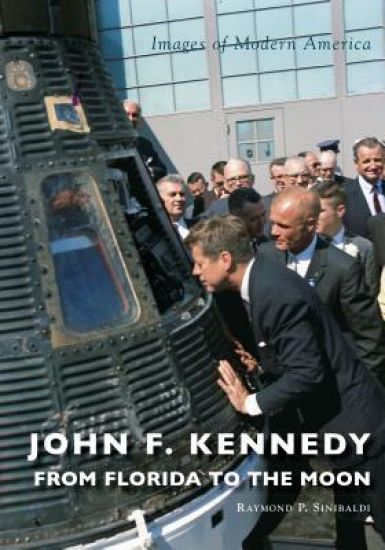
While there are many biographies of JFK and accounts of the early years of US space efforts, this book uses primary source material and interviews with key participants to provide a comprehensive account of how the actions taken by JFK's administration have shaped the course of the US space program over the last 45 years.
It was September 12, 1962, when Pres. John F. Kennedy delivered a speech at Rice University before nearly 50,000 people. By that time, America had launched but four men into space--the suborbital flights of Alan Shepard and Gus Grissom and the nearly identical three-orbit journeys of John Glenn and Scott Carpenter. Buoyed by the success of those missions and cognizant of the danger that lay ahead, the president rearticulated his vision and reissued his challenge to reach the moon before 1970. "We choose to go to the moon, in this decade and do the other things, not because they are easy, but because they are hard. Because that goal will serve to organize and measure the best of our energies and skills." The assassination of President Kennedy, in the words of flight director Gene Kranz, turned his vision into a "quest to do it and do it in the time frame he allotted." On July 20, 1969, Neil Armstrong stepped off the ladder of the lunar module known as Eagle, taking "one small step for man, one giant leap for mankind."
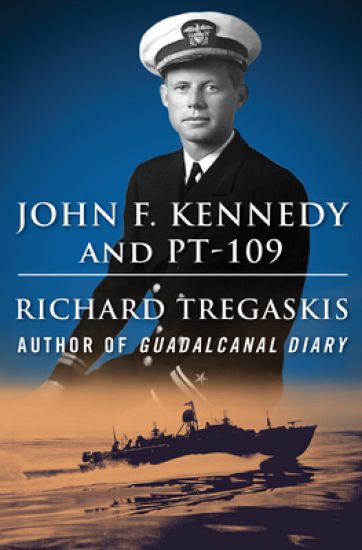
From the bestselling author of Guadalcanal Diary: The thrilling true story of the future president’s astonishing act of heroism during World War II. In the early morning hours of August 2, 1943, US Navy motor torpedo boat PT-109 patrolled the still, black waters of Blackett Strait in the Solomon Islands. Suddenly, the Japanese destroyer Amagiri loomed out of the darkness, bearing directly down on the smaller ship. There was no time to get out of the way—the destroyer crashed into PT-109, slicing the mosquito boat in two and setting the shark-infested waters aflame with burning gasoline. Ten surviving crewmembers and their young skipper clung to the wreckage, their odds of survival growing slimmer by the instant. Lt. John F. Kennedy’s first command was an unqualified disaster. Yet over the next three days, the privileged son of a Boston multimillionaire displayed extraordinary courage, stamina, and leadership as he risked his life to shepherd his crew to safety and coordinate a daring rescue mission deep in enemy territory. Lieutenant Kennedy earned a Navy and Marine Corps Medal and a Purple Heart, and the story of PT-109 captured the public’s imagination and helped propel the battle-tested veteran all the way to the White House. Acclaimed war correspondent Richard Tregaskis—who once beat out the future president for a spot on the Harvard University swim team—brings this remarkable chapter in American history to vivid life in John F. Kennedy and PT-109. From the crucial role torpedo boats played in the fight for the Solomon Islands to Kennedy’s eager return to the front lines at the helm of PT-59, Tregaskis tells the full story of this legendary incident with the same riveting style and meticulous attention to detail he brought to Guadalcanal Diary and Invasion Diary.
John F. KennedyJohn F. Kennedy is the president that everyone knows. He was a rich man's son, an athlete, a war hero, a ladies' man, an author, a president, his face rendered forever young because the last time Americans saw him, he was riding in a convertible in Dallas, his glamorous wife at his side. Then the bullets struck, and the assassinated president became a legend, the truth of his life obscured by his tragic and untimely death. But JFK had more depth to his character than the magazine covers indicated. Inside you will read about...✓ No Irish Need Apply✓ War and the Kennedys✓ Kennedy in Congress✓ Kennedy for President✓ Kennedy Women✓ The PresidencyAnd much more The rich man's son was the grandson of Irishmen who knew what it was to be denied jobs because Irish weren't welcome in Boston. The athlete suffered from poor health all his life, from a bad back to Addison's disease. The war hero whose PT-109 boat became part of his campaign legend was the son who survived; elder brother Joe, flying on a secret mission, was killed for his heroism. The ladies' man loved his wife, but fidelity was not a concept revered by the Kennedy men. The Pulitzer Prize that he was awarded for Profiles in Courage should have gone to the person who actually wrote it. In 1963, death in Dallas ended his first term as president, bringing an end to the optimism that he inaugurated when he narrowly defeated Vice President Richard Nixon in the 1960 election. But the Kennedy legend, like Camelot, lives forever.