Kirjojen hintavertailu. Mukana 12 390 323 kirjaa ja 12 kauppaa.

Kirjahaku

Etsi kirjoja tekijän nimen, kirjan nimen tai ISBN:n perusteella.

1000 tulosta hakusanalla John K Shellenberger

The Ultimate Guide To Overcoming Shopping Addiction
A Proven, Step-By-Step Method To Overcome Shopping Addiction For Life Once And For AllAddiction to Shopping is a usual behavior for many people. They unconsciously keep on buying things they don't need, I meant unconscious because at early stage we know we are buying things which are of not much value in our life but we keep on doing it and slowly this behavior becomes an habit and we unconsciously do it. Shopping addiction is one of the foremost reason for not saving enough for life and making our life cluttered with stuffs which we don't require. In the past you might have tried your best to get over this habit but were unsuccessful. You were not successful because of lack of effective strategy. This book goes into details about how to overcome this destructive habit. Once you overcome this, you will be more controlled, happy and fulfilled within.Here Is A Preview Of What You'll Learn...Chapter 1: Shopping Spree or Shopping Addiction?Chapter 2: Getting to the Root of the ProblemChapter 3: RecoveringChapter 4: Avoiding RelapseMuch, much more Purchase your copy today Take action right away to Overcome Shopping Addiction by purchasing this book "The Ultimate Guide To Overcoming Shopping Addiction: The Most Effective, Permanent Solution To Finally Control Compulsive Shopping And Buying Disorder".Tags: Shopping Addiction, compulsive shopping disorder, compulsive buying disorder, Oniomania, cbd, shopaholism, overcome cbd, overcome oniomania, overcome compulsive shopping disorder, overcome compulsive buying disorder, overcome shopaholism, control shopping addiction, How to overcome shopping addiction, how to overcome buying temptation, buying temptation, shopping temptation--
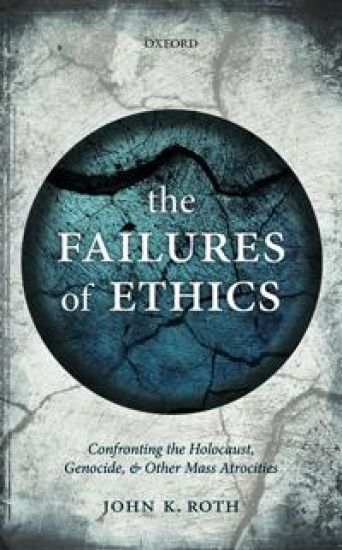
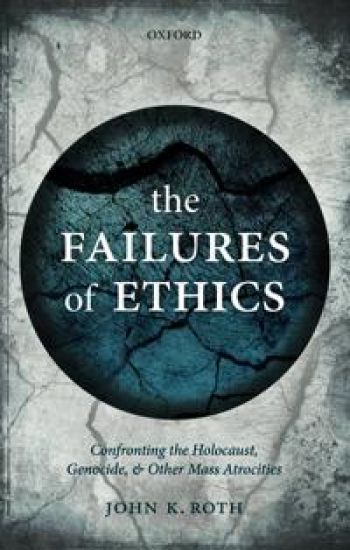
The Failures of Ethics

The Failures of Ethics

John K. Roth

Oxford University Press
2015
sidottu
Defined by deliberation about the difference between right and wrong, encouragement not to be indifferent toward that difference, resistance against what is wrong, and action in support of what is right, ethics is civilization's keystone. The Failures of Ethics concentrates on the multiple shortfalls and shortcomings of thought, decision, and action that tempt and incite us human beings to inflict incalculable harm. Absent the overriding of moral sensibilities, if not the collapse or collaboration of ethical traditions, the Holocaust, genocide, and other mass atrocities could not have happened. Although these catastrophes do not pronounce the death of ethics, they show that ethics is vulnerable, subject to misuse and perversion, and that no simple reaffirmation of ethics, as if nothing disastrous had happened, will do. Moral and religious authority has been fragmented and weakened by the accumulated ruins of history and the depersonalized advances of civilization that have taken us from a bloody twentieth century into an immensely problematic twenty-first. What nevertheless remain essential are spirited commitment and political will that embody the courage not to let go of the ethical but to persist for it in spite of humankind's self-inflicted destructiveness. Salvaging the fragmented condition of ethics, this book shows how respect and honor for those who save lives and resist atrocity, deepened attention to the dead and to death itself, and appeals for human rights and renewed spiritual sensitivity confirm that ethics contains and remains an irreplaceable safeguard against its own failures.
The Failures of Ethics

The Failures of Ethics

John K. Roth

Oxford University Press
2018
nidottu
Defined by deliberation about the difference between right and wrong, encouragement not to be indifferent toward that difference, resistance against what is wrong, and action in support of what is right, ethics is civilization's keystone. The Failures of Ethics concentrates on the multiple shortfalls and shortcomings of thought, decision, and action that tempt and incite us human beings to inflict incalculable harm. Absent the overriding of moral sensibilities, if not the collapse or collaboration of ethical traditions, the Holocaust, genocide, and other mass atrocities could not have happened. Although these catastrophes do not pronounce the death of ethics, they show that ethics is vulnerable, subject to misuse and perversion, and that no simple reaffirmation of ethics, as if nothing disastrous had happened, will do. Moral and religious authority has been fragmented and weakened by the accumulated ruins of history and the depersonalized advances of civilization that have taken us from a bloody twentieth century into an immensely problematic twenty-first. What nevertheless remain essential are spirited commitment and political will that embody the courage not to let go of the ethical but to persist for it in spite of humankind's self-inflicted destructiveness. Salvaging the fragmented condition of ethics, this book shows how respect and honor for those who save lives and resist atrocity, deepened attention to the dead and to death itself, and appeals for human rights and renewed spiritual sensitivity confirm that ethics contains and remains an irreplaceable safeguard against its own failures.
Charles Peirce's Guess at the Riddle

Charles Peirce's Guess at the Riddle

John K. Sheriff

Indiana University Press
1994
sidottu
"Sheriff's text moves the "guess" to a new level of understanding, while integrating much of Peirce's philosophy, and provokes many questions." —Society for the Advancement of American Philosophy Newletter "The purpose of Sheriff's work is to expound Peirce's unified theory of the universe—from cosmology to semiotic—and to discuss its ramifications for how we should live. He concludes that Peirce has given us a theory we can live with. The book makes an important contribution to philosophy of life and to the humanities in general." —Nathan Houser "In clear and concise prose, Sheriff describes Peirce's 'theory of everything,' a vision of cosmic and human meaning that offers a positive alternative to popular pessimistic and relativistic approaches to life and meaning." —Peirce Project Newsletter
New Methuselahs

New Methuselahs

John K. Davis

MIT Press
2018
sidottu
An examination of the ethical issues raised by the possibility of human life extension, including its desirability, unequal access, and the threat of overpopulation.Life extension-slowing or halting human aging-is now being taken seriously by many scientists. Although no techniques to slow human aging yet exist, researchers have successfully slowed aging in yeast, mice, and fruit flies, and have determined that humans share aging-related genes with these species. In New Methuselahs, John Davis offers a philosophical discussion of the ethical issues raised by the possibility of human life extension. Why consider these issues now, before human life extension is a reality? Davis points out that, even today, we are making policy and funding decisions about human life extension research that have ethical implications. With New Methuselahs, he provides a comprehensive guide to these issues, offering policy recommendations and a qualified defense of life extension.After an overview of the ethics and science of life extension, Davis considers such issues as the desirability of extended life; whether refusing extended life is a form of suicide; the Malthusian threat of overpopulation; equal access to life extension; and life extension and the right against harm. In the end, Davis sides neither with those who argue that there are no moral objections to life enhancement nor with those who argue that the moral objections are so strong that we should never develop it. Davis argues that life extension is, on balance, a good thing and that we should fund life extension research aggressively, and he proposes a feasible and just policy for preventing an overpopulation crisis.
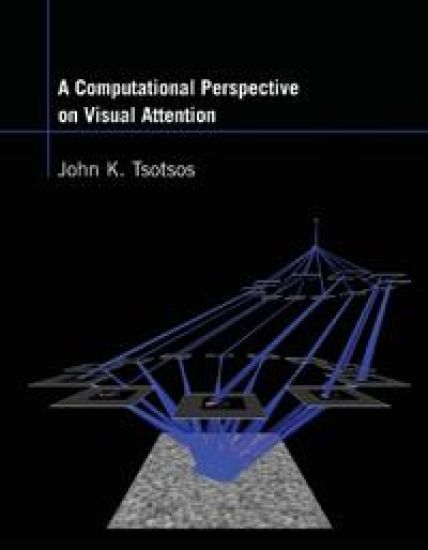
A Computational Perspective on Visual Attention
The derivation, exposition, and justification of the Selective Tuning model of vision and attention. Although William James declared in 1890, "Everyone knows what attention is," today there are many different and sometimes opposing views on the subject. This fragmented theoretical landscape may be because most of the theories and models of attention offer explanations in natural language or in a pictorial manner rather than providing a quantitative and unambiguous statement of the theory. They focus on the manifestations of attention instead of its rationale. In this book, John Tsotsos develops a formal model of visual attention with the goal of providing a theoretical explanation for why humans (and animals) must have the capacity to attend. He takes a unique approach to the theory, using the full breadth of the language of computation--rather than simply the language of mathematics--as the formal means of description. The result, the Selective Tuning model of vision and attention, explains attentive behavior in humans and provides a foundation for building computer systems that see with human-like characteristics. The overarching conclusion is that human vision is based on a general purpose processor that can be dynamically tuned to the task and the scene viewed on a moment-by-moment basis. Tsotsos offers a comprehensive, up-to-date overview of attention theories and models and a full description of the Selective Tuning model, confining the formal elements to two chapters and two appendixes. The text is accompanied by more than 100 illustrations in black and white and color; additional color illustrations and movies are available on the book's Web site.
New Methuselahs

New Methuselahs

John K. Davis

MIT PRESS LTD
2024
pokkari
An examination of the ethical issues raised by the possibility of human life extension, including its desirability, unequal access, and the threat of overpopulation. Life extension--slowing or halting human aging--is now being taken seriously by many scientists. Although no techniques to slow human aging yet exist, researchers have successfully slowed aging in yeast, mice, and fruit flies, and have determined that humans share aging-related genes with these species. In New Methuselahs, John Davis offers a philosophical discussion of the ethical issues raised by the possibility of human life extension. Why consider these issues now, before human life extension is a reality? Davis points out that, even today, we are making policy and funding decisions about human life extension research that have ethical implications. With New Methuselahs, he provides a comprehensive guide to these issues, offering policy recommendations and a qualified defense of life extension. After an overview of the ethics and science of life extension, Davis considers such issues as the desirability of extended life; whether refusing extended life is a form of suicide; the Malthusian threat of overpopulation; equal access to life extension; and life extension and the right against harm. In the end, Davis sides neither with those who argue that there are no moral objections to life enhancement nor with those who argue that the moral objections are so strong that we should never develop it. Davis argues that life extension is, on balance, a good thing and that we should fund life extension research aggressively, and he proposes a feasible and just policy for preventing an overpopulation crisis.
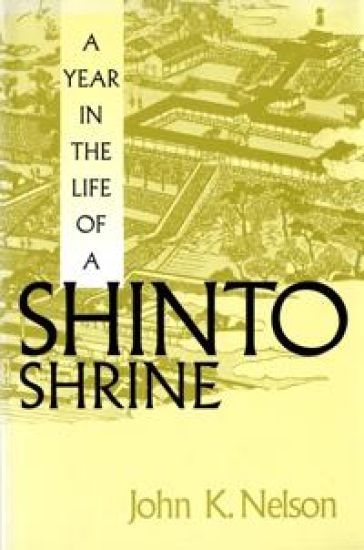
A Year in the Life of a Shinto Shrine

A Year in the Life of a Shinto Shrine

John K. Nelson

University of Washington Press
1996
sidottu
What we today call Shinto has been at the heart of Japanese culture for almost as long as there has been a political entity distinguishing itself as Japan. A Year in the Life of a Shinto Shrine describes the ritual cycle at Suwa Shrine, Nagasaki's major Shinto shrine. Conversations with priests, other shrine personnel, and people attending shrine functions supplement John K. Nelson's observations of over fifty shrine rituals and festivals. He elicits their views on the meaning and personal relevance of the religious events and the place of Shinto and Suwa Shrine in Japanese society, culture, and politics. Nelson focuses on the very human side of an ancient institution and provides a detailed look at beliefs and practices that, although grounded in natural cycles, are nonetheless meaningful in late-twentieth-century Japanese society.Nelson explains the history of Suwa Shrine, basic Shinto concepts, and the Shinto worldview, including a discussion of the Kami, supernatural forces that pervade the universe. He explores the meaning of ritual in Japanese culture and society and examines the symbols, gestures, dances, and meanings of a typical shrine ceremony. He then describes the cycle of activities at the shrine during a calendar year: the seasonal rituals and festivals and the petitionary, propitiary, and rite-of-passage ceremonies performed for individuals and specific groups. Among them are the Dolls' Day festival, in which young women participate in a procession and worship service wearing Heian period costumes; the autumn Okunchi festival, which attracts participants from all over Japan and even brings emigrants home for a visit; the ritual invoking the blessing of the Kami for young children; and the ritual sanctifying the earth before a building is constructed. The author also describes the many roles women play in Shinto and includes an interview with a female priest.Shinto has always been attentive to the protection of communities from unpredictable human and divine forces and has imbued its ritual practices with techniques and strategies to aid human life. By observing the Nagasaki shrine's traditions and rituals, the people who make it work, and their interactions with the community at large, the author shows that cosmologies from the past are still very much a part of the cultural codes utilized by the nation and its people to meet the challenges of today.
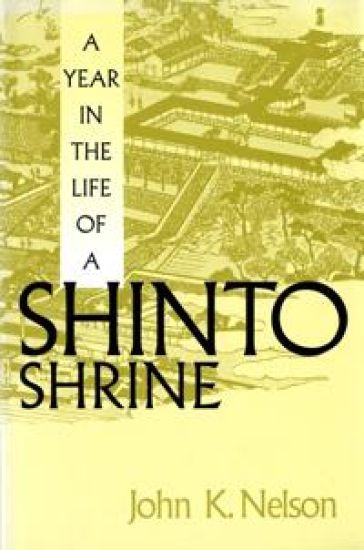
A Year in the Life of a Shinto Shrine

A Year in the Life of a Shinto Shrine

John K. Nelson

University of Washington Press
1996
pokkari
What we today call Shinto has been at the heart of Japanese culture for almost as long as there has been a political entity distinguishing itself as Japan. A Year in the Life of a Shinto Shrine describes the ritual cycle at Suwa Shrine, Nagasaki's major Shinto shrine. Conversations with priests, other shrine personnel, and people attending shrine functions supplement John K. Nelson's observations of over fifty shrine rituals and festivals. He elicits their views on the meaning and personal relevance of the religious events and the place of Shinto and Suwa Shrine in Japanese society, culture, and politics. Nelson focuses on the very human side of an ancient institution and provides a detailed look at beliefs and practices that, although grounded in natural cycles, are nonetheless meaningful in late-twentieth-century Japanese society.Nelson explains the history of Suwa Shrine, basic Shinto concepts, and the Shinto worldview, including a discussion of the Kami, supernatural forces that pervade the universe. He explores the meaning of ritual in Japanese culture and society and examines the symbols, gestures, dances, and meanings of a typical shrine ceremony. He then describes the cycle of activities at the shrine during a calendar year: the seasonal rituals and festivals and the petitionary, propitiary, and rite-of-passage ceremonies performed for individuals and specific groups. Among them are the Dolls' Day festival, in which young women participate in a procession and worship service wearing Heian period costumes; the autumn Okunchi festival, which attracts participants from all over Japan and even brings emigrants home for a visit; the ritual invoking the blessing of the Kami for young children; and the ritual sanctifying the earth before a building is constructed. The author also describes the many roles women play in Shinto and includes an interview with a female priest.Shinto has always been attentive to the protection of communities from unpredictable human and divine forces and has imbued its ritual practices with techniques and strategies to aid human life. By observing the Nagasaki shrine's traditions and rituals, the people who make it work, and their interactions with the community at large, the author shows that cosmologies from the past are still very much a part of the cultural codes utilized by the nation and its people to meet the challenges of today.
Grace to Grow

Grace to Grow

John K. Jenkins Sr.; T.D. Jakes

ZONDERVAN
2023
nidottu
Most pastors pray for a healthy and vibrant church, a prosperous organization and transformative change among those they disciple, but many find themselves frustrated because they lack direction and feel as though they are spinning their wheels. They struggle to correct unhealthy patterns or do not have fresh vision for their ministry.John K. Jenkins can relate. The first church he attended is best described as a shack with a bell and a steeple. The restroom facilities? An outhouse. When he accepted his first senior pastoral role, he ministered to 35 people on a good Sunday.Today, Pastor Jenkins welcomes more than 11,000 worshipers to Sunday services, and thousands more participate virtually. And he has learned what it takes to help an organization function wisely and efficiently, no matter its size.Grace to Grow reveals the lessons Jenkins has learned along the way. It is a guide to help pastors move their ministries from merely surviving to fully thriving, despite the challenging road ahead. He gives insight into his own journey as a young pastor and identifies biblical principles, strategies, and techniques that made the difference in the life of his church and his personal discipleship for almost four decades.
The History of Serbia

The History of Serbia

John K. Cox

Greenwood Press
2002
sidottu
With the outbreak of war in the former Yugoslavia in 1991, interest in Balkan history has increased and become emotionally charged. This balanced and engagingly written history of Serbia will help readers to understand the complex web of Serbian history, politics, society, and culture and how the Serbs have dealt with the many political, military, and socioeconomic challenges in their history. It attempts to remove the veil of stereotypes and myths obscuring the significant details and developmental processes in the history of Serbia and in its relations with its neighbors. In addition to examining the political history of Serbia in the context of Central Europe, the author, a specialist in Balkan history, shows how societal and cultural developments affected Serbian history and reflected political and economic events. A timeline of significant events in the history of Serbia and an introductory chapter on Serbia today are followed by 12 chronologically organized narrative chapters that tell the story of this land from the splendor of medieval Serbia to a new beginning after the downfall of Slobodan Milosevic. Four historical maps, brief biographies of key figures in Serbian history, a glossary of terms, and a bibliographic essay provide valuable resource material for readers. Every library should update its collection of materials on Serbia with this current history.
Writing and Personality

Writing and Personality

John K. DiTiberio; George H. Jensen

Routledge
2019
sidottu
'We cannot separate the writer from the writing. Nor should we try. Both our writing process and our writing products need to carry our unique signature, a bit of our personality.' - From Writing and Personality How you write - what works for you and what makes sense to you - depends on who you are, your personality, your preferences, y
Pan-African Education

Pan-African Education

John K. Marah

Routledge
2020
nidottu
This book makes a critical contribution to the study of pan-Africanism and the education of African people for continental African citizenship. It is a unique endeavor in that it intersects the social history of pan-Africanism and the education of African people at a 'global' level and provides reflections from a multidisciplinary perspective on the urgency for continental pan-Africanism educational system in order to produce a more renascent African for the twenty-first century.Arguing that Pan-African Education is a mass-based educational system that will ‘craft’ a pan-African African personality, John Marah calls for integrated African school systems and curriculum changes conducive to larger social integration and institutionalized pan-African educational processes. The establishments of pan-African Teachers Colleges; intensive language institutes; pan-African literature courses; the training of African military and police forces; the use of music, sports, media and other extra-curricular activities (the hidden curriculum), etc.; are viewed as essential aspects in the socialization of a pan-African character or personality.Pan-African Education is an essential read for students and scholars of Pan-Africanism, African and Africana Studies, and Black Studies.
Quality Assurance of Chemical Measurements
This definitive new book should appeal to everyone who produces, uses, or evaluates scientific data. Ensures accuracy and reliability. Dr. Taylor's book provides guidance for the development and implementation of a credible quality assurance program, plus it also provides chemists and clinical chemists, medical and chemical researchers, and all scientists and managers the ideal means to ensure accurate and reliable work. Chapters are presented in a logical progression, starting with the concept of quality assurance, principles of good measurement, principles of quality assurance, and evaluation of measurement quality. Each chapter has a degree of independence so that it may be consulted separately from the others.
Statistical Techniques for Data Analysis

Statistical Techniques for Data Analysis

John K. Taylor; Cheryl Cihon

CRC Press
2020
nidottu
Since the first edition of this book appeared, computers have come to the aid of modern experimenters and data analysts, bringing with them data analysis techniques that were once beyond the calculational reach of even professional statisticians. Today, scientists in every field have access to the techniques and technology they need to analyze statistical data. All they need is practical guidance on how to use them. Valuable to everyone who produces, uses, or evaluates scientific data, Statistical Techniques for Data Analysis, Second Edition provides straightforward discussion of basic statistical techniques and computer analysis. The purpose, structure, and general principles of the book remain the same as the first edition, but the treatment now includes updates in every chapter, additional topics, and most importantly, an introduction to use of the MINITAB Statistical Software. The presentation of each technique includes motivation and discussion of the statistical analysis, a hand-calculated example, the same example calculated using MINITAB, and discussion of the MINITAB output and conclusions. Highlights of the Second Edition: "Detailed discussion and use of MINITAB in examples complete with code and output "A new chapter addressing proportions, time to event data, and time series data in the metrology setting "Additional material on hypothesis testing "Discussion of critical values "A look at mistakes commonly made in data analysis
Disraeli

Disraeli

John K. Walton

Routledge
1990
nidottu
Aimed primarily at students of 19th-century history, this biography of Benjamin Disraeli examines the major aspects of his career and his political, institutional and ideological legacy. It asks how far his actions and policies were governed by principles and how far by expediency.
The Second Reform Act

The Second Reform Act

John K. Walton

Routledge
1987
nidottu
The Reform Act of 1867 was highly controversial at the time and has remained so. Was it an inevitable step on the road to full democracy or an irresponsible gamble by a politician desperate to win a tactical victory?
Slovenia

Slovenia

John K. Cox

Routledge
2005
sidottu
A clear and concise introduction to contemporary Slovenia. It examines the country's rapid transition from a collection of provinces in the southern part of the Habsburg Empire, to a republic within Yugoslavia, to an independent state and analyzes the major political and economic developments since 1991. The perfect introduction to one of Europe's most fascinating nations.
Constructing Worlds through Science Education
Internationally renowned and award-winning author John Gilbert has spent the last thirty years researching, thinking and writing about some of the central and enduring issues in science education. He has contributed over twenty books and 400 articles to the field and is Editor-in-Chief of the International Journal of Science Education. For the first time he brings together sixteen of his key writings in one volume.This unique book highlights important shifts in emphasis in science education research, the influence of important individuals and matters of national and international concern. All this is interwoven in the following four themes:explanation, models and modeling in science educationrelating science education and technology educationinformal education in science and technology alternative conceptions and science education.