
Kirjahaku
Etsi kirjoja tekijän nimen, kirjan nimen tai ISBN:n perusteella.
1000 tulosta hakusanalla John Kitchen
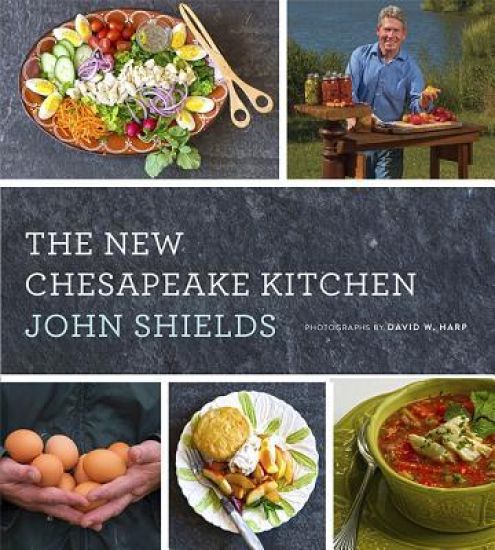
The latest cookbook by the "Culinary Ambassador of the Chesapeake" encourages us to cook in a way that is not only healthy for us but also for the Bay.Captain John Smith, upon entering the Chesapeake, wrote in his diaries that the fish were so plentiful “we attempted to catch them with a frying pan.” That method sums up classic Chesapeake cooking—fresh and simple. In The New Chesapeake Kitchen, celebrated Maryland chef John Shields takes the best of what grows, swims, or grazes in the Bay’s watershed and prepares it simply, letting the pure flavors shine through. Honoring the farmers, watermen, butchers, cheese makers, and foragers who make the food movement around the Chesapeake Bay watershed possible, along with the environmental and food organizations working to restore the Bay, the land, and food security, Shields promotes a healthy locavore diet and a holistic view of community foodways.In this scrumptious book, enhanced with beautiful full-color images by former Baltimore Sun Magazine photographer David W. Harp, Shields urges readers to choose local, seasonal ingredients. Presenting what he dubs “Bay- and body-friendly food,” he advocates for a plant-forward and sustainable diet, one that considers how food consumption affects both your health and the environment. Shields presents creative and healthy options that nourish us while protecting the Bay, including one-pot recipes for meals like Fishing Creek Seafood Chili, Old Line Veggie Creole Oyster Stew, and Spring Pea Soup with Tarragon-Truffle Oil. To round it out, this holistic cookbook includes directions for canning, preserving, and fermenting.Shields offers many vegan- and vegetarian-friendly options, as well as innovative new takes on Chesapeake classics. You’ll find recipes for dozens of delicious dishes, from Aunt Bessie’s Crab Pudding and Hutzler’s Cheese Bread to “I Can’t Believe It’s Not Crab” Cakes, Blue Cat Seafood Hash, and an array of savory soups, braised meats, luscious desserts, and green breakfast smoothies—even recipes for a locavore cocktail party!
The Misadventures of Mama Kitchen
John Walters
Createspace Independent Publishing Platform
2012
nidottu
Encyclopedia of Food: Kitchen and Culinary Terminology
John Andrew Schlederer
Createspace Independent Publishing Platform
2014
nidottu
The Magic of a Kitchen Garden - Organic Gardening for Beginners
John Davidson; Dueep Jyot Singh
Createspace Independent Publishing Platform
2015
nidottu


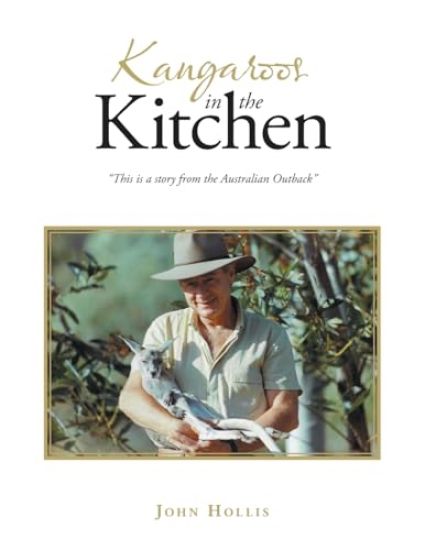
This book is about amazing people living and working in an amazing environment. The Outback of Australia has long been the source of stories of adventures, hardships and of course great successes that have built character and empires alike. There is a blend here of enterprise in the mining and cattle industries, interwoven with tourism, hospitality, humour and a love of animals all under the umbrella of adventure. It is a salute to those special people who possess that quiet soft strength and toughness so necessary for life in the Outback.
This book is about amazing people living and working in an amazing environment. The Outback of Australia has long been the source of stories of adventures, hardships and of course great successes that have built character and empires alike. There is a blend here of enterprise in the mining and cattle industries, interwoven with tourism, hospitality, humour and a love of animals all under the umbrella of adventure. It is a salute to those special people who possess that quiet soft strength and toughness so necessary for life in the Outback.
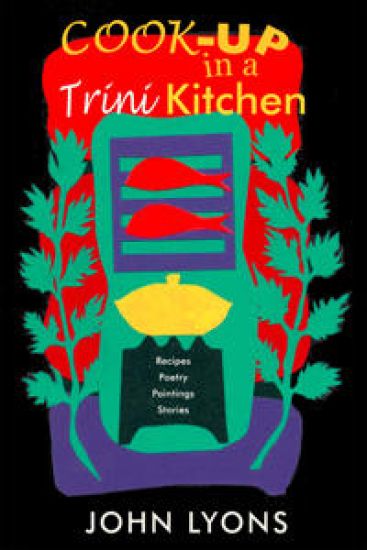
Cook-Up in a Trini Kitchen not only contains over 150 mouthwatering, Caribbean-flavoured recipes, but also beautiful watercolour paintings, drawings, poems, stories and anecdotes recounting experiences with food and cooking by the author, painter and poet, John Lyons. The culinary inspiration for this book comes from John Lyons's all-abiding love of food and cooking as an added fulfilment to his diversely creative life. The recipes reflect the cultural fusion of the many nationalities that have played a part in the history of his native Trinidad and Tobago. The dishes range from the homely, traditional fare of his mother and grandmother, through to new recipes which are the results of his experimentation. Cook-up in a Trini Kitchen is a real feast of a book, not only for those who enjoy good food and cooking, it will also delight lovers of fine art, poetry and story-telling.Contents include:Snacks and Starters, Fish, Chicken, Meat, Soups, Vegetable Dishes, Rice, Pasta, Salads, Desserts, Drinks, Marinades, Sauces, Poetry, Watercolours, Poems, Anecdotes and much more!John Lyons was born in Trinidad. An award-winning painter and poet, he now shares with you his passion for food and cooking.
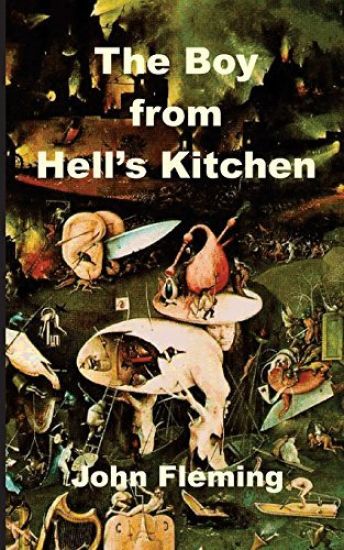
The Boy from Hell's Kitchen: Growing Up in a New York City Slum
John G. Fleming
Createspace Independent Publishing Platform
2017
nidottu
John Fleming grew up in the 1940's and '50's in Hell's Kitchen, a New York City slum, now gentrified. He wanted to show how it was at that time, since no writer he was aware of had told this story with the voice of one who had lived the experience. In this candid and often humorous memoir, Fleming shows it all. The dark side includes dirt, roaches, alcoholism, promiscuity, fighting, bullying, the embarrassment of living on welfare. But sprinkled throughout are moments of enjoyment-- frolicking in the water from a fire hydrant, playing chess on the roof with a buddy, diving off the Queen Mary's deck, discovering the enchantment of reading. John emerges at the age of 20 from the cocoon that is Hell's Kitchen as a strong adult, inured to hardship, alert to hypocrisy, ready to move to the next phase of his life. The story builds in a series of vignettes with powerful imagery and authentic dialogue. The characters speak in their own voices, and the narrator alternates between the voice of his young self as a participant and the voice of his adult self looking back. Hell's Kitchen comes alive in this unadorned portrayal of the life of its residents.

Designer's Choice Winner, The Poetry Box Chapbook Prize 2025 No Lightsabers in the Kitchen explores the humor, strangeness, and gravity of parenting, partnership, and the small, meaningful rituals of everyday life. This collection is about trying to stay present, screw up a little less, and pay attention to the moments that might matter most. It's about what happens when a dad with a soft spot for ghosts, flowering shrubs, hitchhikers, and reptiles starts writing poems instead of fixing the bathroom door. ---Review Excerpts--- "... In a world that can be confusing and difficult, Wojtowicz gives himself, his wife, his children, and you, dear reader, permission to wonder, laugh, love, explore, and imagine. You are encouraged to be followed by the moon, romance beaches, condition doorknobs, and nurse turtles, but please, no lightsabers in the kitchen- leave the ghost of you in peace." -DIMITRI REYES, author of Papi Pich n "... There may not be a Jedi in his kitchen or a Millennium Falcon in his garage, but there is so much joy in the wild domesticity of these poems, you'll want to slow down from hyperdrive to enjoy them." -PETER E. MURPHY, author of You Too Were Once on Fire "Full of humor and surprise, John Wojtowicz's No Lightsabers in the Kitchen humanizes the speaker by showing his loving side as a father, despite his struggles in other areas of life.... Ultimately, John's poetry invites us to reexamine our own relationships and listen and respond to the smaller voices in our circle who have the power to lift us up and keep us there." -SHAWN R. JONES, author of Date of Birth
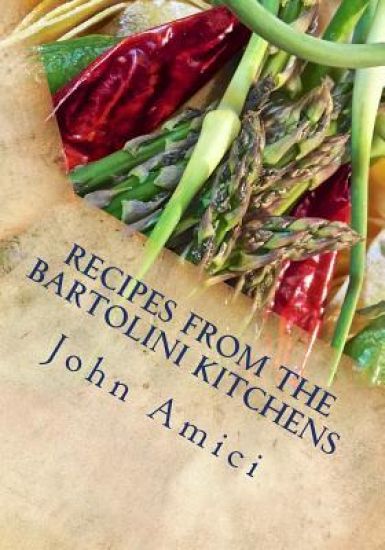
Recipes from the Bartolini Kitchens: With Memories of Life in a Two-Flat
John Amici
Createspace Independent Publishing Platform
2015
nidottu
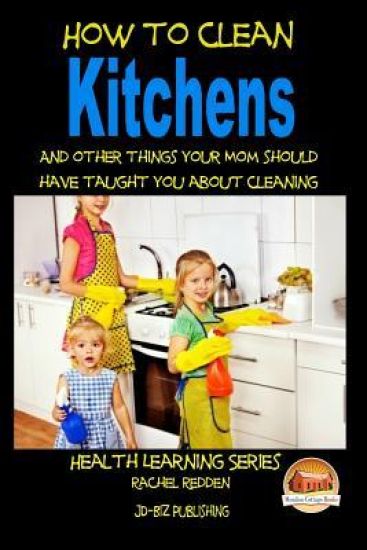
How to Clean Kitchens And other things your Mom should have taught you about Cleaning
John Davidson; Rachel Redden
Createspace Independent Publishing Platform
2015
nidottu
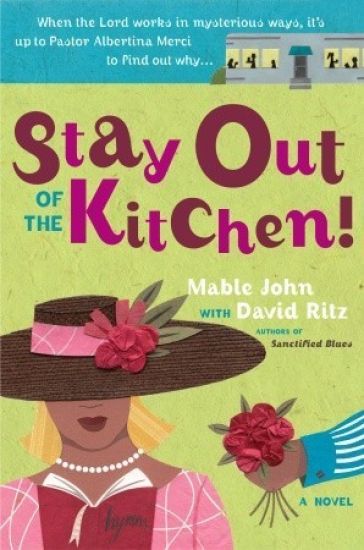
Albertina Merci is back in this delightful second book featuring everyone's favorite blues singer turned evangelist After Albertina's dear friend Mr. Mario, the owner of Mr. Mario's Downhome Caf , has a heart attack and then loses his wife to diabetes, he decides that his lifetime love of soul food is over for good. Mr. Mario vows to go healthy, both personally and professionally, and tries to get Albertina on board, but it quickly becomes clear that he may be looking for more than pastoral support. And while he is undeniably romantic, Mr. Mario believes in the power of man...not God. The only heat isn't in the kitchen, though. Clifford Bloom, a white DJ who has been a fan of Albertina's since her days as a blues singer, is now a member of her church and he always seems to be there just when Albertina needs him. Could this blossoming friendship be leading somewhere romantic? Caught between two very different men, Pastor Merci also has to battle to save her little church in the heart of Los Angeles as mega-church pastor Bishop Gold wants not only the land where her church sits, but her nephew Patrick's loyalty, as well.

Reassessing the archive of the Black Hawk War, The Corpse in the Kitchen explores relationships between the enclosure of Indigenous land, histories of resource extraction, and the literary culture of settler colonialism. While conventional histories of the Black Hawk War have long treated the conflict as gratuitous, Adam John Waterman argues that the war part of a struggle over the dispensation of mineral resources specifically, mineral lead—and the emergence of new cultures of killing and composition. The elemental basis for the fabrication of bullets, lead drawn from the mines of the upper Mississippi, contributed to the dispossession of Indigenous peoples through the consolidation of U.S. control over a vital military resource. Rendered as metallic type, Mississippian lead contributed to the expansion of print culture, providing the occasion for literary justifications of settler violence, and promulgating the fiction of Indigenous disappearance. Treating the theft and excarnation of Black Hawk's corpse as coextensive with processes of mineral extraction, Waterman explores ecologies of racial capitalism as forms of inscription, documentary traces written into the land. Reading the terrestrial in relation to more conventional literary forms, he explores the settler fetishization of Black Hawk's body, drawing out homoerotic longings that suffuse representations of the man and his comrades. Moving from print to agriculture as modes of inscription, Waterman looks to the role of commodity agriculture in composing a history of settler rapine, including literal and metaphoric legacies of anthropophagy. Traversing mouth and stomach, he concludes by contrasting forms of settler medicine with Black Hawk's account of medicine as an embodied practice, understood in relation to accounts of dreaming and mourning, processes that are unforgivably slow and that allow time for the imagination of other futures, other ways of being.

Reassessing the archive of the Black Hawk War, The Corpse in the Kitchen explores relationships between the enclosure of Indigenous land, histories of resource extraction, and the literary culture of settler colonialism. While conventional histories of the Black Hawk War have long treated the conflict as gratuitous, Adam John Waterman argues that the war part of a struggle over the dispensation of mineral resources specifically, mineral lead—and the emergence of new cultures of killing and composition. The elemental basis for the fabrication of bullets, lead drawn from the mines of the upper Mississippi, contributed to the dispossession of Indigenous peoples through the consolidation of U.S. control over a vital military resource. Rendered as metallic type, Mississippian lead contributed to the expansion of print culture, providing the occasion for literary justifications of settler violence, and promulgating the fiction of Indigenous disappearance. Treating the theft and excarnation of Black Hawk's corpse as coextensive with processes of mineral extraction, Waterman explores ecologies of racial capitalism as forms of inscription, documentary traces written into the land. Reading the terrestrial in relation to more conventional literary forms, he explores the settler fetishization of Black Hawk's body, drawing out homoerotic longings that suffuse representations of the man and his comrades. Moving from print to agriculture as modes of inscription, Waterman looks to the role of commodity agriculture in composing a history of settler rapine, including literal and metaphoric legacies of anthropophagy. Traversing mouth and stomach, he concludes by contrasting forms of settler medicine with Black Hawk's account of medicine as an embodied practice, understood in relation to accounts of dreaming and mourning, processes that are unforgivably slow and that allow time for the imagination of other futures, other ways of being.