Kirjojen hintavertailu. Mukana 11 244 527 kirjaa ja 12 kauppaa.

Kirjahaku

Etsi kirjoja tekijän nimen, kirjan nimen tai ISBN:n perusteella.

1000 tulosta hakusanalla John R. Fitzpatrick

Fulfillment Of My Great Australian Dream: Memoirs of John R. Aarons
These are the memoirs of the Melbourne born author John R. Aarons, who has spent a lifetime fulfilling his dream of travelling the world. His adventures are brought to life from the time as a child aged 3 he sneaked out the front door one Saturday afternoon to go to a cinema matinee to a very mature age author writing novels. He is married and they have two daughters, two son-in-laws and three grandsons.
Die Sprechakttheorie nach John R. Searle

Die Sprechakttheorie nach John R. Searle

Kathleen Fritzsche

Grin Publishing
2009
pokkari
Studienarbeit aus dem Jahr 2007 im Fachbereich Sprachwissenschaft / Sprachforschung (fach bergreifend), Note: 1,3, Johannes Gutenberg-Universit t Mainz, Sprache: Deutsch, Abstract: Obwohl John R. Searles Sprechakttheorie aus den sechziger und siebziger Jahren des 20. Jahrhunderts mittlerweile von Linguisten mehr oder weniger stark kritisiert wird, bildet sie dennoch eine bedeutende Grundlage f r die Linguistik. Zudem ist die Sprechakttheorie eines der wichtigsten Bestandteile der Pragmatikforschung. Searles Erkenntnisse beruhen dabei berwiegend auf den Arbeiten von Austin, wobei er diese vor allem bei der Unterteilung der illokution ren Sprechakte entscheidend ver ndert und weiterentwickelt hat. Die vorliegende Hausarbeit hat zum Ziel, einen berblick ber die Sprechakttheorie nach John R. Searle zu vermitteln. Im Folgenden werden zuerst die Grundlagen zu diesem Thema behandelt. Weiterhin werden die Unterteilung der Sprechakte und die Arten der illokution ren Sprechakte n her beleuchtet. Abschlie end wird auf die indirekten Sprechakte und deren Besonderheiten eingegangen.
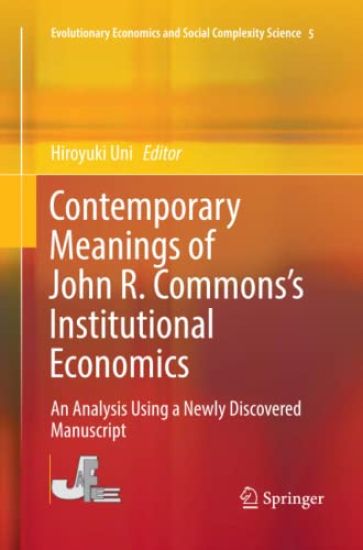
Contemporary Meanings of John R. Commons’s Institutional Economics
This book is the first to reinterpret John R. Commons's Institutional Economics with a newly discovered manuscript written in 1927 in order to find its contemporary meanings in economic theories. Commons aimed to establish institutional economics to understand capitalism in the USA of that time, when people’s collective actions were gaining importance with the emergence of powerful labor unions, oligopolistic corporations, and national judicial systems. Setting three types of transactions as his central concepts for analysis, Commons described dynamics of capitalism as multiple and cumulative causal processes of transactions, through which the final goal should be achievements of a "reasonable value". He also believed that the reasonable value could be achieved by the evolution of institutions.There is no doubt that Commons's ideas proposed in Institutional Economics such as transactions and collective actions greatly inspired later economists; however, few studies have contributed to comprehensive understanding of the origin of his masterpiece. To what extent and in what sense had Commons rejected or accepted previous classical economics or marginalism for constituting his original institutional economics? What are the meanings and limitations that reasonable value may have for contemporary political economy?Institutional Economics as attempts to resolve deep economic problems at that time. Commons's efforts create important implications for us, those who are living in an era after the global financial crisis and confronting various challenges to political economy.
Contemporary Meanings of John R. Commons’s Institutional Economics
This book is the first to reinterpret John R. Commons's Institutional Economics with a newly discovered manuscript written in 1927 in order to find its contemporary meanings in economic theories. Commons aimed to establish institutional economics to understand capitalism in the USA of that time, when people’s collective actions were gaining importance with the emergence of powerful labor unions, oligopolistic corporations, and national judicial systems. Setting three types of transactions as his central concepts for analysis, Commons described dynamics of capitalism as multiple and cumulative causal processes of transactions, through which the final goal should be achievements of a "reasonable value". He also believed that the reasonable value could be achieved by the evolution of institutions.There is no doubt that Commons's ideas proposed in Institutional Economics such as transactions and collective actions greatly inspired later economists; however, few studies have contributed to comprehensive understanding of the origin of his masterpiece. To what extent and in what sense had Commons rejected or accepted previous classical economics or marginalism for constituting his original institutional economics? What are the meanings and limitations that reasonable value may have for contemporary political economy?Institutional Economics as attempts to resolve deep economic problems at that time. Commons's efforts create important implications for us, those who are living in an era after the global financial crisis and confronting various challenges to political economy.
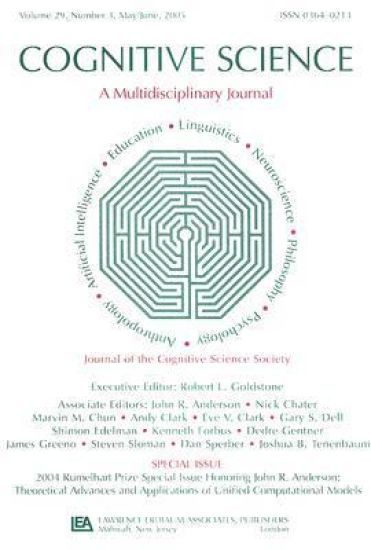
2004 Rumelhart Prize Special Issue Honoring John R. Anderson
This special issue of Cognitive Science honors the research and mentorship contributions of Dr. John R. Anderson, the 2004 David E. Rumelhart Prize recipient whose research has provided the field of cognitive psychology with comprehensive and integrative theories, and has had a practical impact on educational practice in the classroom and on student achievement in learning mathematics. The David E. Rumelhart Prize is awarded annually to an individual or collaborative team making a significant contemporary contribution to the formal analysis of human cognition. For three decades, Dr. Anderson has been engaged in a vigorous research program with the goal of developing a computational theory of mind. The diverse articles in this issue feature work by Dr. Anderson's students, colleagues, and collaborators, illustrating that it is possible to impact education with rigorous stimulation of human cognition.
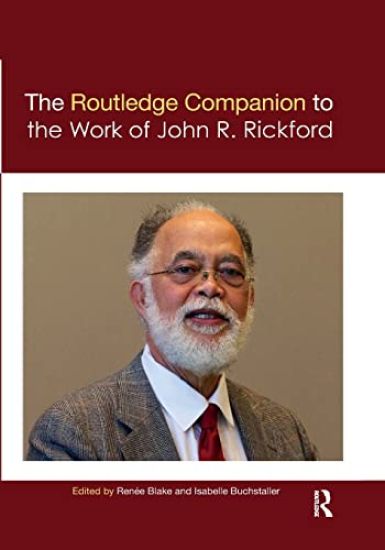
The Routledge Companion to the Work of John R. Rickford
This comprehensive collection is the first full book-length volume to bring together writing focused around and inspired by the work of John Rickford and his role in sociolinguistic research over the last four decades. Featuring contributions from more than 40 leading scholars in the field, the volume integrates both historical and current perspectives on key topics in Rickford’s body of work at the intersection of language and society, highlighting the influence of his work from diverse fields such as sociolinguistics, stylistics, creole studies, and language and education.The volume is organized around four sections, each representing one of the fundamental strands in Rickford’s scholarship over the course of his career, bookended by short vignettes that feature stories from the field to more broadly contextualize his intellectual legacy:• Language contact from a sociolinguistic and sociohistorical point of view• The political ramifications of linguistic heterogeneity• The stylistic implications of language variation and change• The educational implications of linguistic heterogeneity and social injusticeTaken together, The Routledge Companion to the Work of John R. Rickford serves as a platform to showcase Rickford’s pioneering contributions to the field and, in turn, to socially reflective linguistic research more generally, making this key reading for students and researchers in sociolinguistics, creole studies, language and style, and language and education.
The Routledge Companion to the Work of John R. Rickford
This comprehensive collection is the first full book-length volume to bring together writing focused around and inspired by the work of John Rickford and his role in sociolinguistic research over the last four decades. Featuring contributions from more than 40 leading scholars in the field, the volume integrates both historical and current perspectives on key topics in Rickford’s body of work at the intersection of language and society, highlighting the influence of his work from diverse fields such as sociolinguistics, stylistics, creole studies, and language and education.The volume is organized around four sections, each representing one of the fundamental strands in Rickford’s scholarship over the course of his career, bookended by short vignettes that feature stories from the field to more broadly contextualize his intellectual legacy:• Language contact from a sociolinguistic and sociohistorical point of view• The political ramifications of linguistic heterogeneity• The stylistic implications of language variation and change• The educational implications of linguistic heterogeneity and social injusticeTaken together, The Routledge Companion to the Work of John R. Rickford serves as a platform to showcase Rickford’s pioneering contributions to the field and, in turn, to socially reflective linguistic research more generally, making this key reading for students and researchers in sociolinguistics, creole studies, language and style, and language and education.
2004 Rumelhart Prize Special Issue Honoring John R. Anderson
This special issue of Cognitive Science honors the research and mentorship contributions of Dr. John R. Anderson, the 2004 David E. Rumelhart Prize recipient whose research has provided the field of cognitive psychology with comprehensive and integrative theories, and has had a practical impact on educational practice in the classroom and on student achievement in learning mathematics. The David E. Rumelhart Prize is awarded annually to an individual or collaborative team making a significant contemporary contribution to the formal analysis of human cognition. For three decades, Dr. Anderson has been engaged in a vigorous research program with the goal of developing a computational theory of mind. The diverse articles in this issue feature work by Dr. Anderson's students, colleagues, and collaborators, illustrating that it is possible to impact education with rigorous stimulation of human cognition.
Über die Intentionalität der Wahrnehmung in John R. Searles "Intentionalität. Eine Abhandlung zur Philosophie des Geistes"
Studienarbeit aus dem Jahr 2008 im Fachbereich Philosophie - Philosophie des 20. Jahrhunderts / Gegenwart, Georg-August-Universit t G ttingen (Philosophische Fakult t ), Veranstaltung: Seminar: Absichten / Intentionen, Sprache: Deutsch, Abstract: Was eine Theorie der Wahrnehmung spannend macht, ist, dass die Wahrnehmung eine so grundlegende Form ist, ber die unser Geist in Beziehung zur Welt steht. In einer Intentionalit tstheorie bietet die Wahrnehmungstheorie den Ausgangspunkt und die Voraussetzung f r andere Formen von Intentionalit t, sowie die der Handlung und bei Searle bis zur sprachlichen Bedeutung. Das hei t, wenn man sich mit der Intentionalit t der Wahrnehmung auseinandersetzt, dann hat man einen wichtig Schritt dahin getan, sich selbst, seinem geistigen Innenleben und dem Platz dieses Lebens in der physischen Welt, bewusst zu werden. Wenn Searle die begrifflichen Eigenschaften der Wahrnehmung schildert, dann ist das der Versuch, die Grundlagen der Struktur unseres psychischen oder mentalen Lebens nachzuzeichnen. F r John Searle ist das Problem der Wahrnehmung eines von dem er sagt: "..., da nur wenige Probleme in der Geschichte der Philosophie mehr rger gemacht haben...". In Searles Bestreben, der Wahrnehmung in einer Intentionalit tstheorie einen ihr geb hrenden Platz zu verschaffen, steckt vieles, mit dem er sich von der traditionellen Philosophie verabschieden m chte. Ich m chte vor allem erl utern, wie er das tut und dann versuchen zu schauen, inwiefern es ihm gelungen ist. Ich h tte Searles Denkmuster, die eher seine Position in der Philosophie des Geistes im Gro en und Ganzen beschreiben, gerne vollst ndig vorangeschickt. Somit w re der Rahmen gekl rt, in dem dann Searles Betrachtung der Wahrnehmung als intentionalen Erlebens im Besonderen erkl rt werden k nnte. Doch so grundlegend die Wahrnehmung f r eine Theorie ber das wichtigste Merkmal des Bewusstseins ist, soviele weitreichende Implikationen werden hier und dort unvermeidlich wieder au
Bedeutung Und Schwachen Der Sprechakttheorie Von John R. Searle
Studienarbeit aus dem Jahr 2012 im Fachbereich Sprachwissenschaft / Sprachforschung (fach bergreifend), Note: 2,0, Albert-Ludwigs-Universit t Freiburg, Veranstaltung: Pragmatik, Sprache: Deutsch, Abstract: Die Arbeit gibt einen berblick ber die wesentlichen Aussagen der Sprechakttheorie von John R. Searle. Zun chst werden die Grundbegriffe der Theorie erkl rt. Darauf aufbauend wird genau auf die Aussagen der Theorie ber indirekte Sprechakte eingegangen. Diese werden anhand von Beispielen erl utert. Abschlie end wird Searles Sprechakttheorie kritisch hinterfragt.