Kirjojen hintavertailu. Mukana 12 390 323 kirjaa ja 12 kauppaa.

Kirjahaku

Etsi kirjoja tekijän nimen, kirjan nimen tai ISBN:n perusteella.

1000 tulosta hakusanalla John Rowe Townsend

The Other Henry James

The Other Henry James

John Carlos Rowe

Duke University Press
1998
sidottu
In The Other Henry James, John Carlos Rowe offers a new vision of Henry James as a social critic whose later works can now be read as rich with homoerotic suggestiveness. Drawing from recent work in queer and feminist theory, Rowe argues that the most fruitful approach to James today is one that ignores the elitist portrait of the formalist master in favor of the writer as a vulnerable critic of his own confused and repressive historical moment.Rowe traces a particular development in James’s work, showing how in his early writings James criticized women’s rights, same-sex relations, and other social and political trends now identified with modern culture; how he ambivalently explored these aspects of modernity in his writings of the 1880s; and, later, how he increasingly identified with such modernity in his heretofore largely ignored or marginally treated fiction of the 1890s. Building on recent scholarship that has shown James to be more anxious about gender roles, more conflicted, and more marginal a figure than previously thought, Rowe argues that James-through his treatment of women, children, and gays-indicts the values and conventions of the bourgeoisie. He shows how James confronts social changes in gender roles, sexual preferences, national affiliations, and racial and ethnic identifications in such important novels as The American, The Tragic Muse, What Maisie Knew, and In the Cage, and in such neglected short fiction as “The Last of the Valerii,” “The Death of the Lion,” and “The Middle Years.”Positioning James’s work within an interpretive context that pits the social and political anxieties of his day against the imperatives of an aesthetic ideology, The Other Henry James will engage scholars, students, and teachers of American literature and culture, gay literature, and queer theory.
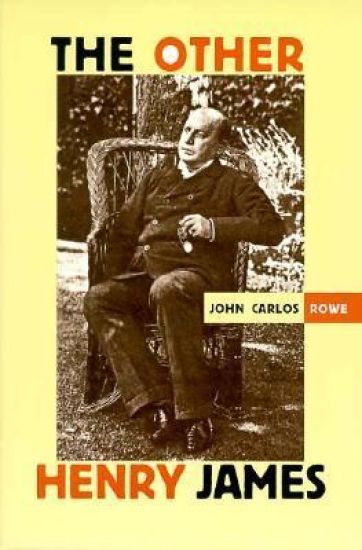
The Other Henry James

The Other Henry James

John Carlos Rowe

Duke University Press
1998
pokkari
In The Other Henry James, John Carlos Rowe offers a new vision of Henry James as a social critic whose later works can now be read as rich with homoerotic suggestiveness. Drawing from recent work in queer and feminist theory, Rowe argues that the most fruitful approach to James today is one that ignores the elitist portrait of the formalist master in favor of the writer as a vulnerable critic of his own confused and repressive historical moment.Rowe traces a particular development in James’s work, showing how in his early writings James criticized women’s rights, same-sex relations, and other social and political trends now identified with modern culture; how he ambivalently explored these aspects of modernity in his writings of the 1880s; and, later, how he increasingly identified with such modernity in his heretofore largely ignored or marginally treated fiction of the 1890s. Building on recent scholarship that has shown James to be more anxious about gender roles, more conflicted, and more marginal a figure than previously thought, Rowe argues that James-through his treatment of women, children, and gays-indicts the values and conventions of the bourgeoisie. He shows how James confronts social changes in gender roles, sexual preferences, national affiliations, and racial and ethnic identifications in such important novels as The American, The Tragic Muse, What Maisie Knew, and In the Cage, and in such neglected short fiction as “The Last of the Valerii,” “The Death of the Lion,” and “The Middle Years.”Positioning James’s work within an interpretive context that pits the social and political anxieties of his day against the imperatives of an aesthetic ideology, The Other Henry James will engage scholars, students, and teachers of American literature and culture, gay literature, and queer theory.
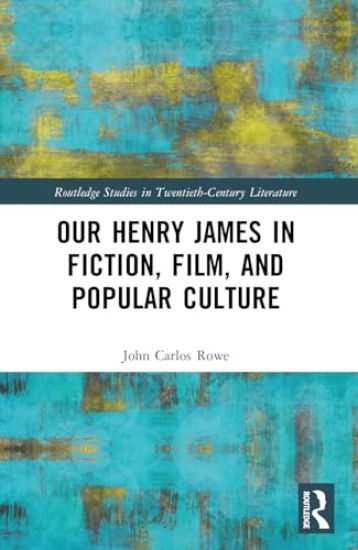
Our Henry James in Fiction, Film, and Popular Culture
Our Henry James in Fiction, Film, and Popular Culture addresses the interesting revival of Henry James’s works in Anglo-American film adaptations and contemporary fiction from the 1960s to the present. James’s fiction is generally considered difficult and part of high culture, more appropriate for classroom study than popular appreciation. However, this volume focuses on the adaptation of his novels into films, challenging us to understand James’s popular reputation today on both sides of the Atlantic.The book offers two explanations for his persistent influence: James’s literary ambiguity and his reliance on popular culture. “Part I: His Times” considers James’s reliance on sentimental literature and theatrical melodrama in Daisy Miller, Guy Domville, The Awkward Age, and several of his lesser known short stories. “Part II: Our Times” focuses on how James’s considerations of changing gender roles and sexual identities have influenced Hollywood representations of emancipated women in Hitchcock’s Rear Window and Peter Bogdanovich’s The Last Picture Show, among others. Recent fiction by authors including James Baldwin and Leslie Marmon Silko also treat Jamesian notions of gender and sexuality while considering his part in contemporary debates about globalization and cosmopolitanism.Both a study of James’s works and a broad range of contemporary film and fiction, Our Henry James in Fiction, Film, and Popular Culture demonstrates the continuing relevance of Henry James to our multimedia, interdisciplinary, globalized culture.
Our Henry James in Fiction, Film, and Popular Culture
Our Henry James in Fiction, Film, and Popular Culture addresses the interesting revival of Henry James’s works in Anglo-American film adaptations and contemporary fiction from the 1960s to the present. James’s fiction is generally considered difficult and part of high culture, more appropriate for classroom study than popular appreciation. However, this volume focuses on the adaptation of his novels into films, challenging us to understand James’s popular reputation today on both sides of the Atlantic.The book offers two explanations for his persistent influence: James’s literary ambiguity and his reliance on popular culture. “Part I: His Times” considers James’s reliance on sentimental literature and theatrical melodrama in Daisy Miller, Guy Domville, The Awkward Age, and several of his lesser known short stories. “Part II: Our Times” focuses on how James’s considerations of changing gender roles and sexual identities have influenced Hollywood representations of emancipated women in Hitchcock’s Rear Window and Peter Bogdanovich’s The Last Picture Show, among others. Recent fiction by authors including James Baldwin and Leslie Marmon Silko also treat Jamesian notions of gender and sexuality while considering his part in contemporary debates about globalization and cosmopolitanism.Both a study of James’s works and a broad range of contemporary film and fiction, Our Henry James in Fiction, Film, and Popular Culture demonstrates the continuing relevance of Henry James to our multimedia, interdisciplinary, globalized culture.
Max Uhle, 1856-1944: A Memoir of the Father of Peruvian Archaeology
""Max Uhle, 1856-1944: A Memoir Of The Father Of Peruvian Archaeology"" is a biographical account of the life and work of Max Uhle, a German archaeologist who is often credited with being the founder of Peruvian archaeology. Written by John Howland Rowe, a fellow archaeologist and colleague of Uhle, the book provides a detailed and intimate portrait of Uhle's personal and professional life.The book begins with a brief overview of Uhle's early life and education in Germany before delving into his archaeological career. Uhle first became interested in archaeology while studying anthropology and ethnology at the University of Berlin. He went on to conduct several archaeological expeditions in Europe before moving to South America in 1892.In South America, Uhle quickly became fascinated with the ancient cultures of Peru and began conducting excavations at sites such as Pachacamac and Tiahuanaco. He made many important discoveries during his time in Peru, including the Nazca Lines and the Moche civilization.The book also discusses Uhle's personal life, including his marriage to an American woman and his eventual move to the United States. Despite facing challenges such as World War I and financial difficulties, Uhle continued to work tirelessly to advance the field of Peruvian archaeology until his death in 1944.Overall, ""Max Uhle, 1856-1944: A Memoir Of The Father Of Peruvian Archaeology"" is a fascinating and informative account of the life and work of one of the most important figures in the field of archaeology. It is a must-read for anyone interested in the history of archaeology or the ancient cultures of South America.University Of California Publications In American Archaeology And Ethnology, V46, No. 1, November 15, 1954.This scarce antiquarian book is a facsimile reprint of the old original and may contain some imperfections such as library marks and notations. Because we believe this work is culturally important, we have made it available as part of our commitment for protecting, preserving, and promoting the world's literature in affordable, high quality, modern editions, that are true to their original work.
The Cultural Politics of the New American Studies

The Cultural Politics of the New American Studies

John Carlos Rowe

Michigan Publishing Services
2012
nidottu
In The Cultural Politics of the New American Studies, leading American Studies scholar John Carlos Rowe responds to two urgent questions for intellectuals. First, how did neoliberal ideology use the issues of feminism, gay rights, multiculturalism, transnationalism and globalization, class mobility, religious freedom, and freedom of speech and cultural expression to justify a new “American Exceptionalism,” designed to support U.S. economic, political, military, and cultural expansion around the world in the past two decades? Second, if neoliberalism has successfully employed various cultural media, then what are the best means of criticizing its main claims and fundamental purposes? Is it possible under these circumstances to imagine a “counter-culture” which might effectively challenge neoliberalism or is such an alternative already controlled and contained by such labels as “political correctness,” “the far left,” “radicalism,” “extremism,” even “terrorism,” which in the popular imagination refer to political and social minorities, doomed thereby to marginalization? Rowe argues that the tradition of “cultural criticism” advocated by influential public intellectuals like Edward Said can be adapted to the new circumstances demanded by the hegemony of neoliberalism and its successful command of new media. Yet rather than simply honoring important predecessors such as Said, we need to reconceive the role of the public intellectual as more than just an “interdisciplinary scholar” but also as a social critic able to negotiate the different media.
History of Reformatory Movements

History of Reformatory Movements

John F Rowe

Hansebooks
2017
pokkari
History of Reformatory Movements - Resulting in a Restoration of the Apostolic Church.... is an unchanged, high-quality reprint of the original edition of 1884. Hansebooks is editor of the literature on different topic areas such as research and science, travel and expeditions, cooking and nutrition, medicine, and other genres. As a publisher we focus on the preservation of historical literature. Many works of historical writers and scientists are available today as antiques only. Hansebooks newly publishes these books and contributes to the preservation of literature which has become rare and historical knowledge for the future.
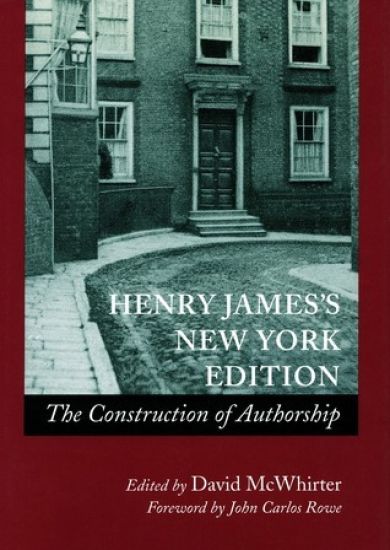
Henry James’s New York Edition

Henry James’s New York Edition

Rowe John Carlos

Stanford University Press
1998
pokkari
Toward the end of Henry James's career, Charles Scribner's Sons offered him the opportunity to publish his collected works in a single edition under the overall title The New York Edition of the Novels and Tales of Henry James (1907-1909). Rather than simply reprint his fictional oeuvre, James entered into a massive work of self-monumentalization: revising the texts extensively; writing prefaces that have become classic texts on prose aesthetics and the novelist's art; and omitting many works, among them some major novels. The thirty illustrations include all twenty-four frontispiece photographs made, under James's supervision, for the edition.
Unfair: Uriah the Hittite's Life of Service

Unfair: Uriah the Hittite's Life of Service

Jr. John Wesley Rowe

John Wesley Rowe, Jr.
2015
nidottu
Our lives are often shaped by the people and events that touch us. Many events and relationships in our lives can result in incredible physical and emotional pain. Often this pain is the results of circumstances outside our control. A drunk driver can forever deform a vibrant healthy life. A sexual affair can destroy a marriage. A terrible disease can destroy a young life. Turning a human life into a statistic steals personal identity. From a human perspective these events may often seem terribly unfair, completely unjustifiable, and totally underserved. What can be said of Uriah the Hittite? Uriah's name and his life is often overshadowed by his wife's adulterous affair with a philandering King David. Uriah the Hittite is an individual whose identity has been stolen. Many people face circumstances in life where all that they believed about themselves is stripped away. Covetousness, fornication, adultery, greed, cancer, political upheaval, untimely death and even murder tears through lives. It is simply not fair from a worldly perspective, and few men or women have been abused more by life than Uriah the Hittite. Yet few men or women have endured their trials, tribulations and tempting with greater grace than Uriah the Hittite. The author shares the personal tragedy of losing a son. He shares how that event transformed his life. It is the author's hope that in sharing what he has discovered through his commentary on Uriah the Hittite that lives will be transformed, and the personal tragedies tearing apart readers' lives will be healed. Uriah the Hittite was a refugee from genocide, a servant in the tabernacle, a husband of a trophy bride, a victim of adultery, a betrayed but fearless soldier, a witness to the carnage of war, a mocked man, an abused man and a murdered man. Unfair the world cries, but a careful examination reveals Uriah lived the life and died the death God predestined for his life. The author explores the importance of Uriah the Hittite's name. Uriah's name means "the flame of Jehovah", and the significance of God's use of flames and fire through Old and New Testament examples are explored. The genealogical heritage of Uriah's ancestral roots is unearthed. The boring Old Testament "begats" take on a new life. The faithfulness of a Godly covenant is followed as centuries unfold. Rev. Larry Briggs says, "This is excellent and inspiring work. I am confident it will educate, encourage and bring comfort to many." John Wesley Rowe, Jr. helps us comprehend the long term vision God has for our trials and tribulations. The world says a loving God would not put the trials of life on His children. Many a Christian has missed untold blessings when they have failed to be cheerful in the midst of life's greatest challenges. Visit the Brook Besor through the reading of Unfair, Uriah the Hittite's Life of Service.
William of Tyre

William of Tyre

Peter W. Edbury; John Gordon Rowe

Cambridge University Press
1991
pokkari
William, archbishop of Tyre from 1175 to c.1184, was a churchman, royal servant and scholar who lived in the Latin Kingdom of Jerusalem. Born in Jerusalem around 1130, he studied in western Europe for almost twenty years until 1165, when he returned to the East to begin his career in public life. He left to posterity a monumental history in which he described the events of the First Crusade (1095–9) and recorded the fortunes of the western rulers of the states subsequently founded in Syria and the Holy Land down to his own day. The value of his work as an example of twelfth-century historiography and as a source of information for the events described has long been recognized. In this study the authors consider William as a public figure and historian, and examine the influences which bore upon his writing and the way in which he fashioned his material. They then go on to examine what he had to say about certain topics - the monarchy in Jerusalem, the Church, the papacy, the Byzantine empire and the Crusade - and why he wrote as he did.