Kirjahaku
Etsi kirjoja tekijän nimen, kirjan nimen tai ISBN:n perusteella.
1000 tulosta hakusanalla Jon Lewis
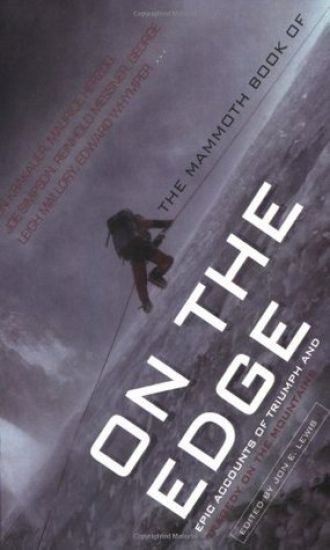
No one sees clearer than an individual whose life is hanging by the finger tips on the edge of an abyss. Probing the furthest reaches of human daring and endurance, here are 28 of the great first-hand accounts of extreme mountaineering, from legendary names. Featuring: *Heinrich Harrer - first conqueror of the notorious Eigerwand. *Robert Bates - the classic account of the ill-fated American 1953 expedition to K2. *Maurice Herzog - his unstoppable ascent of Annapurna at the cost of frostbite. *Walter Bonatti - tragedy on the Central Pillar of Freney on Mont Blanc. *George Leigh Mallory - surviving an avalanche on the 1922 Everest expedition. *Rene Desmaison - his epic story of 14 days stuck on The Grandes Jorasses in winter. *Jon Krakauer - recalling his solo ascent of The Devil's Thumb in Alaska. The price of the summit is often measured in human suffering, yet for those who succeed the rewards can be incalculable. Nerve-wracking and unputdownable.
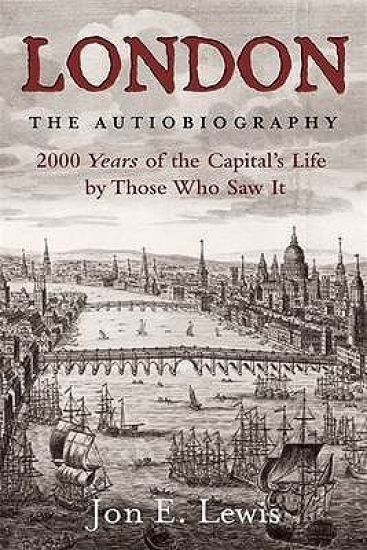
London: The Autobiography tells the story of the world's greatest city through the people who were there. From Boudicca's savage raid on Roman London in 60AD to the bombing of 7/7, London speaks for itself.
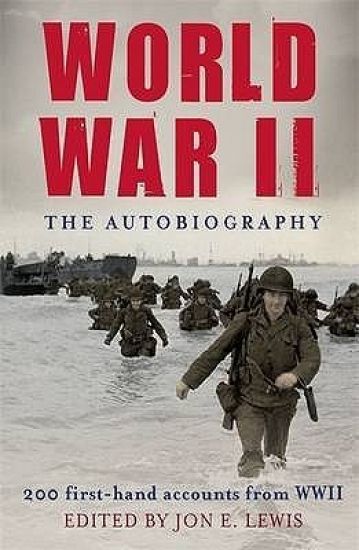
A remarkable series of over 200 eye-witness accounts taken from diaries, letters, speeches, interviews and memoirs of those who were there: pilots, sailors, generals, infantrymen, war correspondents and leaders. These include Spitfire pilot Richard Hillary's account of bailing out of his plane in the Battle of Britain; a German sailor's view of HMS Royal Oak being torpedoed at Scapa Flow; insights into Rommel's ailing health from a lieutenant in the Afrika Korps; famous war correspondent Ernie Pyle's account of GI meals during Operation Torch; Anne Frank's recollection of the rounding up of Jews in Amsterdam; the last letters home from anonymous German soldiers in Stalingrad; the view from a Japanese cockpit over Pearl Harbor on 7 December 1941; a German officer's memories of the airborne assault on Crete in May 1941; the firestorm following the bombing of Dresden in July 1943 in the words of a German woman; a lieutenant in the 1st Airborne Divsion's eyewitness account of the fighting in Arnhem; Martha Gellhorn on the aftermath of the Battle of the Bulge; a British tank officer crossing the German border on 28 February 1945; on the Kokoda Trail in New Guinea; an Allied intelligence officer being executed by the Japanese; the tunnels of Iwo Jima; and a kamikaze pilot's final letter.
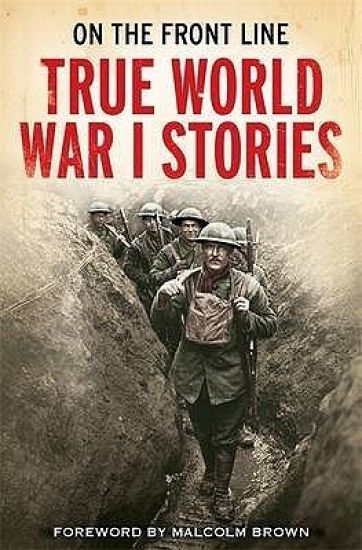
In 1930, the editor of Everyman Magazine requested entries for a new anthology of Great War accounts. The result was a revolutionary book unlike any other of the period; for as Malcolm Brown notes in his introduction 'I believe it might fairly be described as a rediscovered classic'. It was the very first collection to reveal the many dimensions of the war through the eyes of the ordinary soldier and offers heart-stopping renditions of the very first gas attack; aerial dogfights above the trenches; the moment of going over the top. Told chronologically, from the first scrambles of 1914, the drudgery of the war of attrition once the trenches had been dug, to the final joy of Armistice.
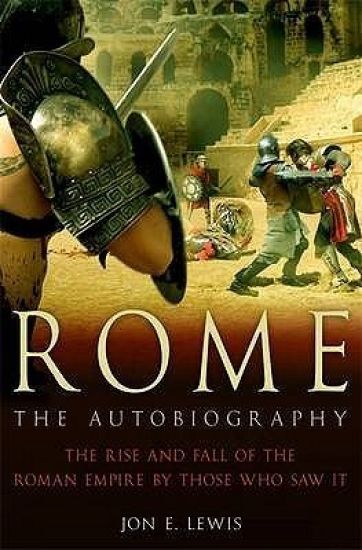
The history of Ancient Rome has been passed down to us through official accounts, personal letters, annotated words of great orators and the considered histories of powerful men. It is found on inscriptions, in private memoirs and official reports from every corner of the Empire. Over 150 pieces are collected in this autobiography of Ancient Rome, from the written accounts of Caesars and slaves, generals and poets on major battles, conspiracy and politics to the minutiae of everyday life and includes amongst them:How to keep a slave, by Cato the Elder; The Life of a Roman Gentleman by Pliny the Younger; Gang Warfare in Rome, by Cicero; a Chariot Fight, by Julius Caesar; Female Athletes and Gladiators, by Juvenal; the Eruption of Vesuivius, by Pliny the Younger; Nero Murders Britannicus, by Tacitus; On Going to bed with Cleopatra, by Mark Antony; Homosexuals in Rome, Juvenal; Alaric the Visogoth Sacks Rome,by Jordanes; The Great Fire of Rome, by Tacitus; Gladitorial Shows, by Seneca; Two Days in the Life of an Emperor's Son, Marcus Aurelius.
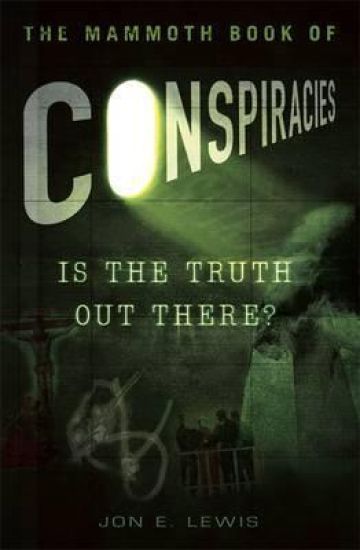
The 100 cover-ups 'they' really don't want you to know about.
A celebration of the machine and the men who took to the skies in defence of Britain. It is also the dramatic illustration of a little understood truth: the Spitfire did more than win the Battle of Britain - it won the war. It was not Stalingrad which turned the corner of the war against Hitler, it was the Spitfire in the summer of 1940 when RAF Fighter Command destroyed the myth of Nazi invincibility.Praise for his previous books:London: The Autobiography:'Fascinating ... brings the story of London to life' Good Book guideThe English Soldier: The Autobiography: 'A triumph' Saul David, author of Victoria's Army'Harrowing, funny and often unbelievable book.' Daily Express'[A] compelling tommy's eye view of war from Agincourt to Iraq' Daily Telegraph
SAS: The Autobiography is the story of the world's most famous special forces regiment by those who truly know it - the troopers and officers themselves. From the dust of the wartime desert and raids on harboured Luftwaffe aircraft to sniping al-Qaeda in the far mountains of Afghanistan, SAS: The Autobiography takes the reader on a high adrenaline history of the regiment which simultaneously lifts the shroud of mystery from the regiment's operations.Reviews for Jon E Lewis's The English Soldier: An Autobiography: 'A triumph' - Saul David, author of Victoria's Army'Harrowing, funny and often unbelievable book.' - Daily Express'[A] compelling tommy's eye view of war from Agincourt to Iraq' - Daily Telegraph
First-hand accounts of the Holocaust from the rise to power of Hitler to the Nuremberg trials.The testament to a tragedy.Voices from The Holocaust follows the whole history of the 'Shoah' from Hitler's rise to power to the Nuremburg trials, but of course the exterminations and death camps of 'The Final Solution' take centre stage. It tells the story from the perspective of the people who were there, and were witnesses - on both sides - of the horror.While some of the eye-witnesses are well-known, such as Anne Frank, Primo Levi and Heinrich Himmler, the book includes recollections of camp inmates, SS Totenkopf guards and the British soldiers who liberated Belsen. Shocking, powerful and personal, Voices from the Holocaust retells history, written by those who were there.
The Macedonian Campaign has been largely ignored by history. Such neglect is misplaced. The annals of the First World War hold few events to compare with the triumphant final offensive of the Allied Army of the East, and the whole story of the Campaign is rich, diverse, and relevant.Almost accidental in its origins the reality of a six-nation Allied army gradually took shape. The terrain fought over, from marshy river valleys to 2000 meter mountain ranges, presented special military challenges. The ambivalent position of Greece, the Romanian misadventure, the intricacy of Balkan politics, the depredations of malaria, and inter-allied tensions both in Macedonia and at Allied Government level all added further layers of complexity. But in the end the Allied Army of the East met its defensive objectives and vastly exceeded its offensive ones.The Campaign had its origins in October 1915 when a small Franco-British force disembarked at Salonica, with orders to advance into Serbia to aid the beleaguered Serbs. It was too late, but a large part of the Serbian Army escaped to the Adriatic. Reconstituted into six divisions it was subsequently shipped to Salonica to form part of an Allied force of fifteen divisions under the command of General Maurice Sarrail. By the end of 1916 the Allied Army of the East, with contingents also from Italy and Russia, had expanded into twenty divisions.Apart from tying down a substantial Germano-Bulgarian Army, the Allied Army's objectives were to prevent the Central Powers from breaking into Greece, to bring Greece and its army into the Allied camp, and, above all, to prepare for actions and advances into Bulgaria and enemy-held Serbia from the south.While the first two of these objectives were met, territorial gains in 1916 and 1917 were limited. The Serbians consolidated a strong position to the west of the Moglena mountain range, and with the French advanced into Serbia as far as Monastir. The British fought successful actions in the Struma valley but suffered costly reverses against the virtually impregnable Bulgarian defences west of Lake Doiran on two occasions.Then in 1918 a key leadership change was made with the appointment of General Franchet d'Esp rey. In September under his dynamic command French and Serbian forces finally punched their way through the Bulgarian lines in the center of the Moglena mountains, and, supported by a Franco-Italian force on their left and a British-Greek force on their right, advanced at a phenomenal pace towards the upper Vardar and Skopje, splitting the enemy forces into two. Within 15 days the Bulgarians capitulated. This was followed shortly and inevitably by an armistice with Turkey. While the First World War was won and lost on the Western Front, the defeat of Bulgaria in September 1918 and the relentless advance of the Allied Army towards the undefended Danube frontier played a critical role, recognized also by the German High Command, in bringing the war to a close before the end of the year.
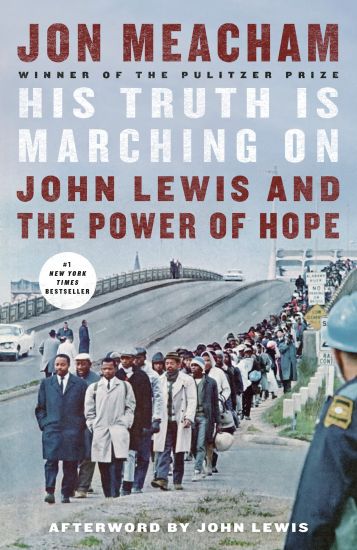
#1 NEW YORK TIMES BESTSELLER - An intimate and revealing portrait of civil rights icon and longtime U.S. congressman John Lewis, linking his life to the painful quest for justice in America from the 1950s to the present--from the Pulitzer Prize-winning author of The Soul of America NAMED ONE OF THE BEST BOOKS OF THE YEAR BY THE WASHINGTON POST AND COSMOPOLITAN John Lewis, who at age twenty-five marched in Selma, Alabama, and was beaten on the Edmund Pettus Bridge, was a visionary and a man of faith. Drawing on decades of wide-ranging interviews with Lewis, Jon Meacham writes of how this great-grandson of a slave and son of an Alabama tenant farmer was inspired by the Bible and his teachers in nonviolence, Reverend James Lawson and Martin Luther King, Jr., to put his life on the line in the service of what Abraham Lincoln called "the better angels of our nature." From an early age, Lewis learned that nonviolence was not only a tactic but a philosophy, a biblical imperative, and a transforming reality. At the age of four, Lewis, ambitious to become a minister, practiced by preaching to his family's chickens. When his mother cooked one of the chickens, the boy refused to eat it--his first act, he wryly recalled, of nonviolent protest. Integral to Lewis's commitment to bettering the nation was his faith in humanity and in God--and an unshakable belief in the power of hope. Meacham calls Lewis "as important to the founding of a modern and multiethnic twentieth- and twenty-first-century America as Thomas Jefferson and James Madison and Samuel Adams were to the initial creation of the Republic itself in the eighteenth century." A believer in the injunction that one should love one's neighbor as oneself, Lewis was arguably a saint in our time, risking limb and life to bear witness for the powerless in the face of the powerful. In many ways he brought a still-evolving nation closer to realizing its ideals, and his story offers inspiration and illumination for Americans today who are working for social and political change.
With drug information rapidly migrating to the Web, the chronically poor standards of drug information available to consumers in the developed and the developing world are being further compromised. This book offers insight into the uncharted waters of prescription drug information and promotion on the internet and suggests how it might be transformed into an unprecedented agent for good. It traces the social and political history of prescription drug information and marketing to Western consumers, offers a social and communicative profile of prescription drug Web sites, and evaluates the most widely used sources of prescription drug information, from government organizations and information companies and TV-related sites, to health service provider sites, manufacturers’ brand sites, and social media, including YouTube and Wikipedia. The focus throughout is on practical outcomes: How can information for consumer decision making be optimized and how can consumers use it responsibly?
Family Therapy Techniques briefly reviews the basic theories of marriage and family therapy. It then goes into treatment models designed to facilitate the tailoring of therapy to specific populations and the integration of techniques from what often seems like disparate theories. Based on the assumption that no single approach is the definitive approach for every situation, the book leads students through multiple perspectives. In teaching students to integrate and tailor techniques, this book asks them to take functional methods and approaches from a variety of theoretical approaches, without attempting to reiterate the theoretical issues and research covered in theories courses.
Battleground
Lewis A. Friedland; Dhavan V. Shah; Michael W. Wagner; Katherine J. Cramer; Chris Wells; Jon Pevehouse
Cambridge University Press
2022
pokkari
Battleground models Wisconsin's contentious political communication ecology: the way that politics, social life, and communication intersect and create conditions of polarization and democratic decline. Drawing from 10 years of interviews, news and social media content, and state-wide surveys, we combine qualitative and computational analysis with time-series and multi-level modeling to study this hybrid communication system – an approach that yields unique insights about nationalization, social structure, conventional discourses, and the lifeworld. We explore these concepts through case studies of immigration, healthcare, and economic development, concluding that despite nationalization, distinct state-level effects vary by issue as partisan actors exert their discursive power.
The professional code of the General Teaching Council lists eight new standards, each of them analysed here in detail using questions and activities to describe what trainee teachers need to know, understand and demonstrate as they work towards Qualified Teacher Status. Each of the eight standards cover the following issues:expectations, diversity and achievementpersonal and professional valuesvalues in the classroomvalues, rights and responsibilities in the wider communitythe community of the schoolprofessional relationshipspersonal and professional developmentprofessional responsibility.This practical and jargon-free guide features an extensive range of examples and suggestions for further reading, designed to help those in their early professional development.
A Word on Words
Andrew Maraniss; Arna Bontemps; John Egerton; John Lewis; David Halberstam; Jesse Hill Ford; Pat Conroy; Ann Patchett; Dori Sanders; Alice Randall; Nikki Giovanni; Marshall Chapman; Marty Stuart; Rodney Crowell; Waylon Jennings; Kinky Friedman; Charles Fountain; William Marshall; William Price Fox; Jon Meacham; Doris Kearns Goodwin; David Maraniss; John Michael Seigenthaler
VANDERBILT UNIVERSITY PRESS
2023
sidottu
For years the legendary John Seigenthaler hosted A Word on Words on Nashville's public television station, WNPT. During the show’s four-decade run (1972 to 2013), he interviewed some of the most interesting and most important writers of our time. These in-depth exchanges revealed much about the writers who appeared on his show and gave a glimpse into their creative processes. Seigenthaler was a deeply engaged reader and a generous interviewer, a true craftsman. Frye Gaillard and Pat Toomay have collected and transcribed some of the iconic interactions from the show. Featuring interviews with: Arna Bontemps • Marshall Chapman • Pat Conroy • Rodney Crowell • John Egerton • Jesse Hill Ford • Charles Fountain • William Price Fox • Kinky Friedman • Frye Gaillard • Nikki Giovanni • Doris Kearns Goodwin • David Halberstam • Waylon Jennings • John Lewis • David Maraniss • William Marshall • Jon Meacham • Ann Patchett • Alice Randall • Dori Sanders • John Seigenthaler Sr. • Marty Stuart • Pat Toomay
The President in the Legislative Arena
Jon R. Bond; Richard Fleisher
University of Chicago Press
1992
nidottu
In recent years, the executive branch's ability to maneuver legislation through Congress has become the measure of presidential success or failure. Although the victor of legislative battles is often readily discernible, debate is growing over how such victories are achieved. In The President in the Legislative Arena, Jon R. Bond and Richard Fleisher depart dramatically from the concern with presidential influence that has dominated research on presidential-congressional relations for the past thirty years. Of the many possible factors involved in presidential success, those beyond presidential control have long been deemed unworthy of study. Bond and Fleisher disagree. Turning to democratic theory, they insist that it is vitally important to understand the conditions under which the executive brance prevails, regardless of the source of that success. Accordingly, they provide a thorough and unprecedented analysis of presidential success on congressional roll-call votes from 1953 through 1984. Their research demonstrates that the degree of cooperation between the two branches is much more systematically linked to the partisan and ideological makeup of Congress than to the president's bargaining ability and popularity. Thus the composition of Congress "inherited" by the president is the single most significant determinant of the success or failure of the executive branch.