Kirjojen hintavertailu. Mukana 11 244 527 kirjaa ja 12 kauppaa.

Kirjahaku

Etsi kirjoja tekijän nimen, kirjan nimen tai ISBN:n perusteella.

1000 tulosta hakusanalla Jonathan Wade

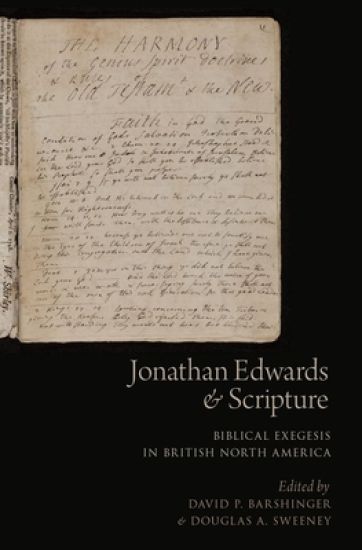
Jonathan Edwards and Scripture

Jonathan Edwards and Scripture

Oxford University Press Inc
2018
nidottu
For too long, scholars have published new research on Edwards without paying due attention to the work he took most seriously: biblical exegesis. Edwards is recognized as an innovative theologian who wielded tremendous influence on revivalism, evangelicalism, and New England theology. What is often missed is how much time he devoted to studying and understanding the Bible. He kept voluminous notebooks on Scripture and died with unrealized plans for major treatises on the Bible. More and more experts now recognize the importance of this aspect of his life; this book brings together the insights of leading Edwards scholars on this topic. The essays in Jonathan Edwards and Scripture set Edwards' engagement with Scripture in the context of seventeenth-century Protestant exegesis and eighteenth-century colonial interpretation. They provide case studies of Edwards' exegesis in varying genres of the Bible and probe his use of Scripture to develop theology. The authors also set his biblical interpretation in perspective by comparing it with that of other exegetes. This book advances our understanding of the nature and significance of Edwards' work with Scripture and opens new lines of inquiry for students of early modern Western history.
Jonathan Edwards and the American Experience
Universally recognized as a seminal figure in American intellectual history, Jonathan Edwards has been the focus of considerable scholarly attention in a variety of academic disciplines, including religion, history, literature, and philosophy. Because these disciplines discuss him in relation to different intellectual traditions, Edwards scholarship remains segmented. This volume represents the first attempt to provide a synthetic vision of Edwards and his contributions to American culture. Its fifteen previously unpublished essays present the best contemporary literary, historical, theological, and philosophical thinking on Edwards, locating him in his full historical context and demonstrating the continuity of his influence. Together, they provide the fullest account to date of his role in the development of the American consciousness. This volume is the first attempt to provide a synthetic vision of Edwards and his contribution to the development of the American consciousness. Fifteen previously unpublished essays present the best contemporary literary, historical, theological, and philosophical thinking on Edwards, locating him in his full historical context and demonstrating the continuity of his influence.
Jonathan Edwards and the Limits of Enlightenment Philosophy
Jonathan Edwards has most often been considered in the context of the Puritanism of New England. In many ways, however, he was closer to the thinkers of the European Enlightenment. In this book. Leon Chai explores that connection, analysing Edwards's thought in light of a number of the issues that preoccupied such Enlightenment figures as Locke, Descartes, Malebranche, and Leibniz. The book comprises three parts, each of which begins with a detailed analysis of a crucial passage from a classic Enlightenment text, and then turns to a major theological work of Jonathan Edwards in which the same issue is explored.
Jonathan Edwards Confronts the Gods

Jonathan Edwards Confronts the Gods

Gerald R. McDermott

Oxford University Press Inc
2000
sidottu
It has long been thought that Edwards's polemical arguments were aimed against Arminianism -- a doctrine that denied the Calvinist idea of predestination. In this book, Gerald McDermott shows that Edwards's real target was a larger and more influential one, namely deism -- the belief in a creator God who does not intervene in His Creation. To Edwards's mind, deism was the logical conclusion of most, if not all, schemes of divinity that appropriated Enlightenment tenets. McDermott argues that Edwards was an inclusivist who came to realize that salvation was open to peoples beyond the hearing of the Christian gospel.
Jonathan Swift in the Company of Women

Jonathan Swift in the Company of Women

Louise Barnett

Oxford University Press Inc
2006
sidottu
Building upon recent research on the history of women, Jonathan Swift in the Company of Women examines Swift, both as man and writer, in terms of women: women as intimates, acquaintances, subjects of satire, and those who have written about Swift. It considers women as mothers and nurses in Swift's personal life and his fictions, and it explores the issue that has persisted from the eighteenth century into our own time: the subject of misogyny in Swift's writings.
Jonathan Swift and Thomas Sheridan: The Intelligencer
In 1728-9, Jonathan Swift and his friend Thomas Sheridan anonymously published the Intelligencer. This Dublin periodical offered trenchant and often witty commentary on the Irish social and political scene in the year before A Modest Proposal. The frequently anthologized review of The Beggar's Opera (no. 3) is not only the best contemporary criticism of it but also Swift's central pronouncement on satire. Several essays lash important enemies, anger being always a great creative stimulus to both Swift and Sheridan. This is the first collected edition of the Intelligencer since 1730. It is based on the rare original Dublin pamphlets, each known copy of which has been collated. Full commentary and appendices draw upon contemporary pamphlets, broadsides, newspapers, and manuscripts to site the Intelligencer papers in the personal, social, and political controversies in which they are engaged. There is also a fresh bibliographical analysis of the Intelligencer's textual transmission.
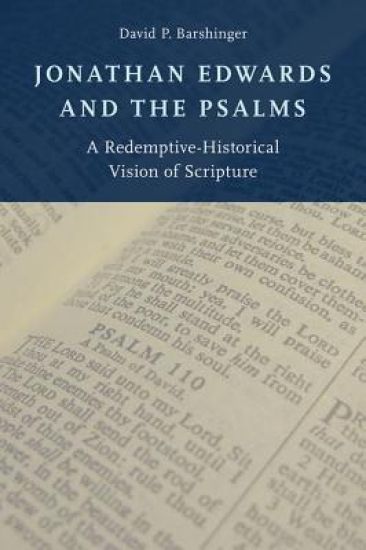
Jonathan Edwards and the Psalms

Jonathan Edwards and the Psalms

David P. Barshinger

Oxford University Press Inc
2014
sidottu
Throughout church history, the book of Psalms has enjoyed wider use and acclaim than almost any other book of the Bible. Early Christians extolled it for its fullness of Christian doctrine, monks memorized and recited it daily, lay people have prayed its words as their own, and churches have sung from it as their premier hymn book. While the past half century has seen an extraordinary resurgence of interest in the thought of American theologian Jonathan Edwards, including his writings on the Bible, no scholar has yet explored his meditations on the Psalms. David P. Barshinger addresses this gap by providing a close study of his engagement with one of the Bibles most revered books. From his youth to the final days of his presidency at the College of New Jersey, Edwards was a devout student of Scriptureas more than 1,200 extant sermons, theological treatises, and thousands of personal manuscript pages devoted to biblical reflection bear witness. Using some of his writings that have previously received little to no attention, Jonathan Edwards and the Psalms offers insights on his theological engagement with the Psalms in the context of interpretation, worship, and preaching. Barshinger shows that he appropriated the history of redemption as an organizing theological framework within which to engage the Psalms specifically, and the Bible as a whole. This original study greatly advances Edwards scholarship, shedding new and welcome light on the theologians relationship to Scripture.
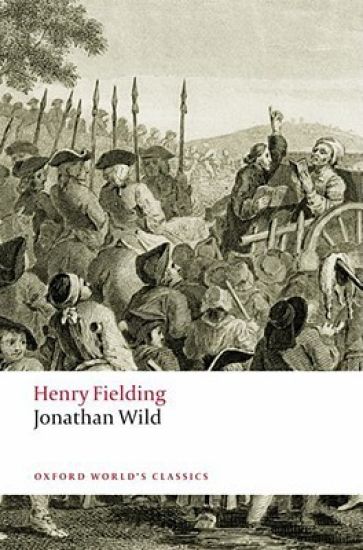
Jonathan Wild

Jonathan Wild

Henry Fielding

Oxford University Press
2008
nidottu
'he carried Good-nature to that wonderful and uncommon Height, that he never did a single Injury to Man or Woman, by which he himself did not expect to reap some Advantage' The real-life Jonathan Wild, gangland godfather and self-styled 'Thieftaker General', controlled much of the London underworld until he was executed for his crimes in 1725. Even during his lifetime his achievements attracted attention; after his death balladeers sang of his exploits, and satirists made connections between his success and the triumph of corruption in high places. Henry Fielding built on these narratives to produce one of the greatest sustained satires in the English language. Published in 1743, at a time when the modern novel had yet to establish itself as a fixed literary form, Jonathan Wild is at the same time a brilliant black comedy, an incisive political satire, and a profoundly serious exploration of human 'greatness' and 'goodness'. ABOUT THE SERIES: For over 100 years Oxford World's Classics has made available the widest range of literature from around the globe. Each affordable volume reflects Oxford's commitment to scholarship, providing the most accurate text plus a wealth of other valuable features, including expert introductions by leading authorities, helpful notes to clarify the text, up-to-date bibliographies for further study, and much more.
Jonathan Edwards on God and Creation

Jonathan Edwards on God and Creation

Oliver D. Crisp

Oxford University Press Inc
2012
sidottu
In Jonathan Edwards on God and Creation, Oliver Crisp considers two central themes in Edwards's thought, namely, his doctrine of God and his understanding of the created order, and how God and creation interrelate. Crisp argues that Edwards offers some truly original insights on these twin loci that have important implications for current theological discussion. What emerges is a picture of Edwards's understanding of God's relationship to the created order that differs in important respects from those offered by several influential recent interpreters. Crisp does not flinch from showing where Edwards made mistakes as well as where he offers fresh insights. Edwards is shown to be at once relevant to current discussion of issues like perfect being theology, panentheism, divine freedom or union with Christ, while remaining something of an idiosyncratic figure whose idealism and commitment to an uncompromising theological determinism can seem out of step with certain modern sensibilities. But, argues Crisp, even if we disagree with the conclusions Edwards reaches, which sometimes jar with our own intuitions about the divine nature or the created order, the clarity, rigor and sheer originality of his thinking offer an important set of themes and ideas with which contemporary theologians can fruitfully engage as they set about the task of constructive theology.
Jonathan Edwards and the Church

Jonathan Edwards and the Church

Rhys S. Bezzant

Oxford University Press Inc
2014
sidottu
This book seeks to shed new light on the development of the ecclesiology of Jonathan Edwards from the writings of his youth until his Stockbridge treatises, setting this within the context of Reformation and Puritan debates, and his experience of the revivals during his Northampton ministry. Bezzant contends that Edwards repristinated an ossified New England ecclesiology by acknowledging the church's dynamic relationship with the created order, history and the nations, and by advocating renewal in ecclesial life through revivals, itinerancy, Concerts of Prayer, missionary initiatives outside of the local congregation, and doctrinal clarification. Bezzant shows that Edwards accommodated the Christendom model of ecclesiology to the new philosophical, political and social realities of the mid-eighteenth-century British Atlantic world. His ecclesiology can be aptly summarized as prophetic, in as far as the church makes identification with its social context, while yet providing an alternative millennial vision for human flourishing. Edwards's Gospel is preached within a larger vision of transformed society and the glory of God, for whom the church is an orderly but not ordinary instrument to promote visible union between believers and Christ.
Jonathan Swift and Popular Culture Myth, Media and the Man
Ann Kelly's provocative book breaks the mold of Swift studies. Twentieth century Swift scholars have tended to assess Jonathan Swift as a pillar of the eighteenth-century 'republic of letter', a conservative, even reactionary voice upholding classical values against the welling tide of popularization in literature. Kelly looks at Swift instead as a practical exponent of the popular and impressario of the literary image. She argues that Swift turned his back on the elite to write for a popular audience, and that he annexed scandals to his fictionalized print alter ego, creating a continual demand for works by or about this self-mythologized figure. A fascinating look at print culture, the commodification of the author, and the history of popular culture, this book should provoke lots of discussion.
Jonathan the Magic Pony

Jonathan the Magic Pony

Stuart Heritage

Puffin
2020
nidottu
Giggle all the way to bedtime with Jonathan's bonkers, back-firing magic show!Fans of Supertato and Grumpycorn will love this super silly story about a one-trick pony whose one trick goes WRONG!Each wave of Jonathan's magic wand just makes things worse. It's Abraca-CHAOS! Is there anyone who can save the day?Join Jonathan, his long-suffering best friend Sarah, a very unwilling frog assistant and a cast of other crazy animals in this light-hearted picture book from Guardian columnist Stuart Heritage, illustrated by the brilliant Nicola Slater. A very funny book to encourage reading for pleasure.
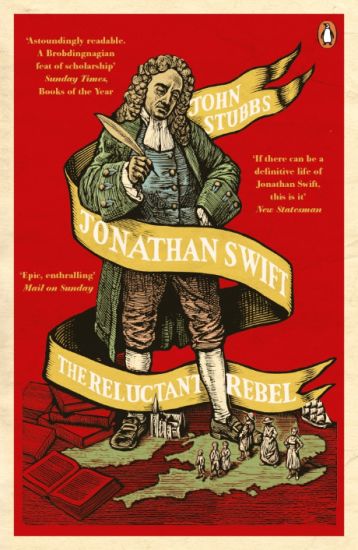
Jonathan Swift

Jonathan Swift

John Stubbs

Penguin Books Ltd
2017
pokkari
Jonathan Swift was a man of contradictions: a man who satirized the powerful but aspired to political greatness, who mocked men's vanity but held himself in high esteem, a religious moralizer famed for his malice - a man sharply aware of humanity's flaws, but no less susceptible to them.As with his acclaimed biography of John Donne, John Stubbs paints a vivid portrait of an extraordinary man and a turbulent period of English and Irish history.
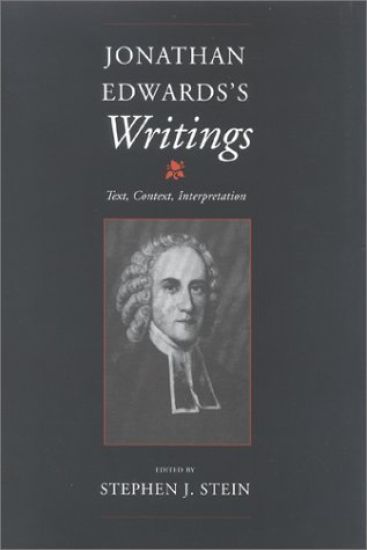
Jonathan Edwards's Writings

Jonathan Edwards's Writings

Indiana University Press
1996
sidottu
"This book will take its place in libraries next to the finest works abou;this creative thinker." —Religious Studies Review ". . . gives a fine sense of the present state and the future direction of Edwards studies . . . Recommended for upper-division undergraduate and graduate students." —Choice " . . . this volume opens up new windows, not only on previously neglected texts of Jonathan Edwards, but on the larger cultural functions and effects of those texts." —Journal of the History of the Behavioral Sciences Here is a compact survey of current Edwards scholarship. These essays present groundbreaking contemporary scholarship focusing on the writings of the 18th-century American philosopher and theologian Jonathan Edwards. They range widely across the Edwardsian canon, including his most prominent and important published texts—Religious Affections and The Nature of True Virtue—as well as unfamiliar treatises and sermons.
Jonathan Edwards and the Catholic Vision of Salvation

Jonathan Edwards and the Catholic Vision of Salvation

Morimoto Anri

Pennsylvania State University Press
1995
sidottu
Jonathan Edwards (1703–1758) has been acclaimed as the quintessential puritan of eighteenth-century America who defined not only what Puritanism was, but also what American Christianity would become. Anri Morimoto finds that Edwards's theology, once regarded as disarrayed, precarious, and dangerously unorthodox, is in fact consistent and integral to his general ontology and natural philosophy. By presenting Edwards's vision of salvation as a dynamic process of sharing God's excellence and holiness, Morimoto presents a new paradigm that is radically inclusive, yet theologically responsible.By discussing Edwards in relation to Roman Catholic traditions, Morimoto places him in the context of a broader Christian tradition rather than that of New England Puritanism. Morimoto argues that this view of salvation was not new to the Protestant tradition—in fact, this view was present in Luther, Calvin, and much of the Reformed tradition—but Edwards accented it more clearly and emphatically than anyone else. Morimoto concludes that one does not have to surrender or compromise one's theology to promote ecumenical harmony. This study will be of interest to scholars, teachers and students of theology and religion, church leaders and lay persons of all denominations, evangelical or liberal, and especially those interested in Edwards, Puritanism, and early American intellectual history.
Jonathan Edwards and the Catholic Vision of Salvation

Jonathan Edwards and the Catholic Vision of Salvation

Anri Morimoto

Pennsylvania State University Press
1995
pokkari
Jonathan Edwards (1703–1758) has been acclaimed as the quintessential puritan of eighteenth-century America who defined not only what Puritanism was, but also what American Christianity would become. Anri Morimoto finds that Edwards's theology, once regarded as disarrayed, precarious, and dangerously unorthodox, is in fact consistent and integral to his general ontology and natural philosophy. By presenting Edwards's vision of salvation as a dynamic process of sharing God's excellence and holiness, Morimoto presents a new paradigm that is radically inclusive, yet theologically responsible.By discussing Edwards in relation to Roman Catholic traditions, Morimoto places him in the context of a broader Christian tradition rather than that of New England Puritanism. Morimoto argues that this view of salvation was not new to the Protestant tradition—in fact, this view was present in Luther, Calvin, and much of the Reformed tradition—but Edwards accented it more clearly and emphatically than anyone else. Morimoto concludes that one does not have to surrender or compromise one's theology to promote ecumenical harmony. This study will be of interest to scholars, teachers and students of theology and religion, church leaders and lay persons of all denominations, evangelical or liberal, and especially those interested in Edwards, Puritanism, and early American intellectual history.
The Works of Jonathan Edwards, Vol. 8

The Works of Jonathan Edwards, Vol. 8

Jonathan Edwards; Paul Ramsey

Yale University Press
1989
sidottu
This volume contains two major works of Jonathan Edwards: an unpublished text of a series of sermons he preached in 1738, known as Charity and Its Fruits, and his Two Dissertations: I. Concerning the End for Which God Created the World and II. On the Nature of True Virtue, published posthumously in 1765. Together these writings set out the principles of Edwards’ ethical reflections. The text of the sermon series is drawn from three sources. The primary text is an early nineteenth-century transcription of Edwards’ sermon booklets now in the Andover-Newton Theological School’s collection. Passages published in Tyron Edwards’ 1852 edition, and partial transcriptions by Joseph Bellamy found in three fragments among his papers, have been used where the Andover copy is incomplete. The Bellamy fragments are reproduced in their entirety in a critical appendix, along with examples showing the editor’s use of the three sources in construing this definitive text for the Yale edition. End of Creation and True Virtue, intended by Edwards to be read together, are shown here to be closely related to Edwards’ other writings. Paul Ramsey’s introduction points out that Edwards returned again and again to these topics in his Miscellanies, where he identifies penultimate versions of both treatises and traces the development of Edwards’ ideas. Thus the reader is able to follow Edwards’ most profound reflections about God and the moral dimensions of his creations. This is one of the most wide-ranging theological and philosophical volumes projected in the Yale edition. The Editor’s Introduction gives a systematic analysis of the theological ethics to be found in these writings and of Edwards’ esteem for the splendor of common morality. Appendices exploring the “moral sense” school, “infused” virtue in Edwards and Calvin, and Edwards’ belief in the never ending increase of holiness and happiness in heaven complete the volume.
The Sermons of Jonathan Edwards

The Sermons of Jonathan Edwards

Jonathan Edwards

Yale University Press
1999
pokkari
Jonathan Edwards, widely considered America’s most important Christian thinker, was first and foremost a preacher and pastor who guided souls and interpreted religious experiences. His primary tool in achieving these goals was the sermon, out of which grew many of his famous treatises. This selection of Edwards’ sermons recognizes their crucial role in his life and art.The fifteen sermons, four of which have never been published before, reflect a life dedicated to experiencing and understanding spiritual truth. Chosen to represent a typical cycle of Edwards’ preaching, the sermons address a wide range of occasions, situations, and states, corporate as well as personal. The book also contains an introduction that discusses Edwards’ contribution to the sermon as a literary form, places his sermons within their social and cultural contexts, and considers his theological aims as a way of familiarizing the reader with the "order of salvation" as Edwards conceived of it. Together, the sermons and the editors’ introduction offer a rounded picture of Edwards the preacher, the sermon writer, and the pastoral theologian.
Jonathan Edwards

Jonathan Edwards

George M. Marsden

Yale University Press
2004
pokkari
Winner of the Bancroft Prize • Finalist for the National Book Critics Circle Award for Biography • Finalist for the American Society of Church History’s Philip Schaff Prize “The finest biography of this towering figure. . . . Marsden guides readers through Edwards’s profoundly alien world with authority and fluidity.”—Benjamin Schwarz, Atlantic Monthly A controversial theologian and the author of the famous sermon Sinners in the Hands of an Angry God, Jonathan Edwards (1703–1758) ignited the momentous Great Awakening of the eighteenth century. In this definitive and long-awaited biography, Jonathan Edwards emerges as both a great American and a brilliant Christian. George Marsden evokes the world of colonial New England in which Edwards was reared—a frontier civilization at the center of a conflict between Native Americans, French Catholics, and English Protestants. Drawing on newly available sources, Marsden demonstrates how these cultural and religious battles shaped Edwards’s life and thought. Marsden reveals Edwards as a complex thinker and human being who struggled to reconcile his Puritan heritage with the secular, modern world emerging out of the Enlightenment. In this, Edwards’s life anticipated the deep contradictions of our American culture. Meticulously researched and beautifully composed, this biography offers a compelling portrait of an eminent American.
Jonathan Edwards's "Sinners in the Hands of an Angry God"
Including the authoritative edition of the famous sermon Designed specifically for the classroom, this volume presents the accurate and definitive version of Sinners, accompanied by the tools necessary to study and teach this famous American sermon. With an introduction aimed at students and teachers and commentary that draws on fifty years of team editorial experience of Yale’s Works of Jonathan Edwards, it provides both context and interpretation, and addresses the concerns and questions of a twenty-first century audience.The book contains questions for in-class discussion, a chronology of Edwards’s life, and a glossary. In addition, curricular materials and video mini-presentations are available on a dedicated Web site. This casebook represents a innovative contribution to the art of teaching Edwards to a new generation of readers.