This open access book analyses the development problems of sub-Sahara Africa (SSA) from the eyes of a Korean diplomat with knowledge of the economic growth Korea has experienced in recent decades. The author argues that Africa's development challenges are not due to a lack of resources but a lack of management, presenting an alternative to the traditional view that Africa's problems are caused by a lack of leadership. In exploring an approach based on mind-set and nation-building, rather than unity – which tends to promote individual or party interests rather than the broader country or national interests – the author suggests new solutions for SSA's economic growth, inspired by Korea's successful economic growth model much of which is focused on industrialisation. This book will be of interest to researchers, policymakers, NGOs and governmental bodies in economics, development and politics studying Africa's economic development, and Korea's economic growth model.
HIGH SOCIETY CAN BE A KILLER. Upper East Side socialite Daisy Greenbaum is accustomed to the finer things--designer clothes, summers in the Hamptons, elite private school educations for her daughters, and a staggeringly expensive Park Avenue apartment. But Daisy finds her well-heeled lifestyle on precarious footing after her husband, master of the universe Dick Greenbaum, learns about some shady dealings that threaten his position at The Bank. Daisy refuses to allow her family to slip down the social ladder, so she devises a madcap plan: Anyone who jeopardizes her place at the top will simply have to be dispatched--six feet under. From Dick's arrogant boss to his scheming former mistress to a pair of nosy bloggers, Daisy's hit list is a who's who of big names with even bigger secrets. But with the body count rising as the Dow Jones falls, can Daisy really get away with murder?
This original study reexamines Grotowski’s work through a fresh perspective rooted in the ancient Eastern philosophy of Daoism.Moving beyond the limitations of existing scholarship, the author reveals how Daoist principles shed new light on Grotowski’s innovations. By contextualizing Daoism within the scientific and philosophical upheavals of early twentieth-century Europe, particularly quantum physics and deconstructionism, this book unearths unexpected affinities between Grotowski’s praxis and Daoist thought.Essential reading for theatre scholars, practitioners, and students seeking new insights into Grotowski’s legacy, this work also offers valuable resources for researchers and artists exploring the intersections of intercultural performance and philosophy.
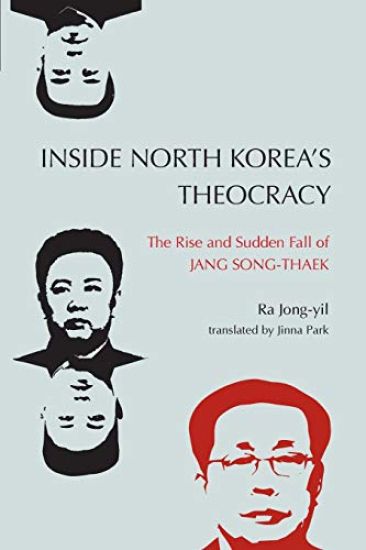
Offers biographical accounts of several of North Korea's leaders to illuminate the inner workings of its government.First published in Korean in 2016, Inside North Korea's Theocracy offers a fascinating and rare look at the lives of several of the regime's key leaders. Its primary focus is Jang Song-thaek, a talented and reform-minded member of the political ruling class who was executed in 2013. Jang was the son-in-law of North Korean founder, Kim Il-sung; brother-in-law of its second leader, Kim Jong-il; and uncle to its current leader, Kim Jong-un. The author traces Jang's life from his youth as a brilliant student in Pyongyang to his eventual marriage to Kim Kyong-hui and his rising power as a businessman to, ultimately, his untimely death. In addition to biographical sketches of Jang, his wife, and brother-in-law, Ra Jong-yil provides first-hand impressions of life in North Korea and illuminates the inner workings of its government.
Instant New York Times Bestseller "With propulsive humor and perspective on her annus horribilis, Jong-Fast achieves the memoir's transformative work of alchemy, arming us all with lines so good you won't just want to underline them, you will want to cut them out to share." --The Washington Post "This raw, intimate memoir is a stunning portrait of difficult relationships and how we survive them." --People "Molly Jong-Fast's memoir is mesmerizing, intimate, wise, unputdownable, crazily honest, heartbreaking, funny, illuminating--beautiful and painful at the same time, just like real life." --Anne Lamott From the political writer and podcaster, a ferociously honest and disarmingly funny memoir about her elusive mother's encroaching dementia and a reckoning with her complicated childhood Molly Jong-Fast is the only child of a famous woman, writer Erica Jong, whose sensational book Fear of Flying launched her into second-wave feminist stardom. She grew up yearning for a connection with her dreamy, glamorous, just out of reach mother, who always seemed to be heading somewhere that wasn't with Molly. When, in 2023, Erica was diagnosed with dementia just as Molly's husband discovered he had a rare cancer, Jong-Fast was catapulted into a transformative year. How to Lose Your Mother is a compulsively readable memoir about an intense mother-daughter relationship, a sometimes chaotic upbringing with a fame-hungry parent, and the upheavals that challenge our hard-won adulthood. A pitch-perfect balance of acceptance and rage, humor and heart, How to Lose Your Mother tells a universal story of loss alongside a singular story of a literary life. This is a memoir that will stand alongside the classics of the genre.
Eric de Jong and his wife, Jenny plunged into parenthood when they adopted three siblings from the children's dying mother. The new family set about living happily ever after in their rambling farmhouse outside Harare. But ever after proved short lived as Zimbabwe's small window of stability closed in on them quickly when Robert Mugabe unleashed a war on white farmers and opposition party members, launching an era of economic, social and political turmoil which eventually saw the family fleeing the country for fear of being killed.Eric well knew the cost of conflict, but his fierce love of his country and his principles saw him immersing himself in the dangerous opposition politics of the day where elections were rigged and fellow party members were tortured and murdered.Eric de Jon's irrepressible sense of humour bubbles throughout this absorbing, honest and deeply personal account of a growing family, of love, entrepreneurial success and failure, mental illness, political exile, and the distressing and often absurd collapse of a beautiful African country and stoicism of its people.
Much hyperbole surrounds the political regime in the Democratic People's Republic of Korea (DPRK, or North Korea). Many analysts argue that North Korea is a unique political system. What kind of regime is the DPRK, and what kind of leader does it have?A variety of labels are given to the North Korean regime. These include likening the regime to an organized crime family and to a corporatist organism. There are certainly merits to each of these approaches, but each has its limitations. Pyongyang does share some of the attributes of organized crime and certainly engages in criminal activity in a systematic and calculating manner. This pattern of illicit behavior includes the production and distribution of narcotics as well as the counterfeiting of foreign currencies, cigarettes, and pharmaceuticals. But the DPRK is more than a crime family-it possesses a massive conventional military force as well as significant strategic forces. Moreover, the regime continues to brainwash, imprison, or starve North Koreans, inflicting untold misery and death on its people. Corporatism, meanwhile, may provide insights into certain aspects of the system, but its utility is limited by the confusion that surrounds understanding of this concept.Certainly North Korea is distinct politically, but it also has significant commonalities with various regime types and authority structures. Pyongyang is a highly centralized and militarized bureaucratic regime organized around an all-powerful leader. This monograph examines the leader and the system, and identifies the regime type. The author contends that the North Korean political system is best conceived as a totalitarian regime that, although weakened, remains remarkably resilient. After analyzing the key elements of totalitarianism, he argues that the system's greatest test will probably come after the death of Kim Jong Il.While the totalitarian regime may not long survive Kim's passing, one cannot assume that the system will collapse. Rather, the end of totalitarianism may simply mean that the DPRK will enter a new "post-totalitarian" phase similar to the paths taken by other communist systems such as the Soviet Union and China. While the latter term may be a good fit to describe China's political system in the 1990s and first decade of the 21st century, it seems inaccurate to describe North Korea. North Korea has not undergone any process of "de-Kimification": Kim Il Sung remains a deity in 21st century North Korea and criticism or reappraisal is unthinkable. Moreover, no one has contemplated criticizing or challenging his legacy because, by all accounts, he remains universally revered by DPRK citizens, including defectors. Furthermore, any official reevaluation of Kim Il Sung is extremely unlikely because the regime is currently led by Kim's son. The most accurate way to characterize North Korea today is as an eroding totalitarian regime.
"Eloquent, thorough, and profound, David de Jong's brilliant debut illuminates a dark chapter of the past while also shining a stark and uncanny light onto our present, and, perhaps, our near future--showing how an insidious mix of capitalism and fascism can destroy democracy and countless lives. An absolute must-read." -- Norman Ohler, New York Times bestselling author of Blitzed: Drugs in the Third ReichA groundbreaking investigation of how the Nazis helped German tycoons make billions off the horrors of the Third Reich and World War II--and how America allowed them to get away with it.In 1946, G nther Quandt--patriarch of Germany's most iconic industrial empire, a dynasty that today controls BMW--was arrested for suspected Nazi collaboration. Quandt claimed that he had been forced to join the party by his archrival, propaganda minister Joseph Goebbels, and the courts acquitted him. But Quandt lied. And his heirs, and those of other Nazi billionaires, have only grown wealthier in the generations since, while their reckoning with this dark past remains incomplete at best. Many of billionaires continue to control swaths of the world economy, owning iconic brands whose products blanket the globe. The brutal legacy of the dynasties that dominated Daimler-Benz, cofounded Allianz, and still control Porsche, Volkswagen, and BMW has remained hidden in plain sight--until now.In this landmark work of investigative journalism, David de Jong reveals the true story of how Germany's wealthiest business dynasties amassed untold money and power by abetting the atrocities of the Third Reich. Using a wealth of previously untapped sources, de Jong shows how these tycoons seized Jewish businesses, procured slave laborers, and ramped up weapons production to equip Hitler's army as Europe burned around them. Most shocking of all, de Jong exposes how America's political expediency enabled these billionaires to get away with their crimes, covering up a bloodstain that defiles the German and global economy to this day."Meticulously researched ...compels us to confront the current-day legacy of these Nazi ties." --Wall Street Journal
"Eloquent, thorough, and profound, David de Jong's brilliant debut illuminates a dark chapter of the past while also shining a stark and uncanny light onto our present, and, perhaps, our near future--showing how an insidious mix of capitalism and fascism can destroy democracy and countless lives. An absolute must-read." -- Norman Ohler, New York Times bestselling author of Blitzed: Drugs in the Third ReichA groundbreaking investigation of how the Nazis helped German tycoons make billions off the horrors of the Third Reich and World War II--and how America allowed them to get away with it.In 1946, G nther Quandt--patriarch of Germany's most iconic industrial empire, a dynasty that today controls BMW--was arrested for suspected Nazi collaboration. Quandt claimed that he had been forced to join the party by his archrival, propaganda minister Joseph Goebbels, and the courts acquitted him. But Quandt lied. And his heirs, and those of other Nazi billionaires, have only grown wealthier in the generations since, while their reckoning with this dark past remains incomplete at best. Many of billionaires continue to control swaths of the world economy, owning iconic brands whose products blanket the globe. The brutal legacy of the dynasties that dominated Daimler-Benz, cofounded Allianz, and still control Porsche, Volkswagen, and BMW has remained hidden in plain sight--until now.In this landmark work of investigative journalism, David de Jong reveals the true story of how Germany's wealthiest business dynasties amassed untold money and power by abetting the atrocities of the Third Reich. Using a wealth of previously untapped sources, de Jong shows how these tycoons seized Jewish businesses, procured slave laborers, and ramped up weapons production to equip Hitler's army as Europe burned around them. Most shocking of all, de Jong exposes how America's political expediency enabled these billionaires to get away with their crimes, covering up a bloodstain that defiles the German and global economy to this day."Meticulously researched ...compels us to confront the current-day legacy of these Nazi ties." --Wall Street Journal
Survival Analysis Using S: Analysis of Time-to-Event Data is designed as a text for a one-semester or one-quarter course in survival analysis for upper-level or graduate students in statistics, biostatistics, and epidemiology. Prerequisites are a standard pre-calculus first course in probability and statistics, and a course in applied linear regression models. No prior knowledge of S or R is assumed. A wide choice of exercises is included, some intended for more advanced students with a first course in mathematical statistics. The authors emphasize parametric log-linear models, while also detailing nonparametric procedures along with model building and data diagnostics. Medical and public health researchers will find the discussion of cut point analysis with bootstrap validation, competing risks and the cumulative incidence estimator, and the analysis of left-truncated and right-censored data invaluable. The bootstrap procedure checks robustness of cut point analysis and determines cut point(s). In a chapter written by Stephen Portnoy, censored regression quantiles - a new nonparametric regression methodology (2003) - is developed to identify important forms of population heterogeneity and to detect departures from traditional Cox models. By generalizing the Kaplan-Meier estimator to regression models for conditional quantiles, this methods provides a valuable complement to traditional Cox proportional hazards approaches.
The relationship between the Church and the world has been a subject of debate since the Church's earliest days. Stanley Hauerwas, with his emphasis on the Church as polis, has made a significant contemporary contribution--one that has also faced strong criticism. This study examines the distinctive insights of second-generation neo-Calvinist theologian Klaas Schilder (1890-1952) on this issue. Neo-Calvinism is renowned for its development of Reformed theology, particularly in this area, and Schilder builds on this tradition with a critical eye. Engaging with the increasing secularity of the twentieth century, he carefully interacts with Karl Barth's writings while refining his own perspective. In doing so, Schilder's position comes close to the Anabaptist stance of Hauerwas, yet remains firmly rooted in the Reformed understanding of creation.
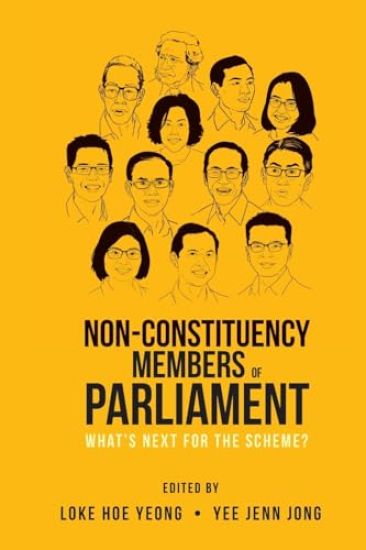
Four decades have elapsed since the Non-Constituency Member of Parliament (NCMP) scheme was introduced in 1984. It has been raised and debated at every general election since — even as Singapore's political landscape has seen major changes since the scheme was introduced, when the ruling People's Action Party (PAP) had nearly complete domination of Parliament.To its proponents, the NCMP scheme has been an extraordinary instance of the PAP government's magnanimity in allowing 'best losers' from opposition parties to enter Parliament. To cynics, the scheme was designed to stave off the challenge to the PAP by guaranteeing voters a minimum level of opposition representation, to encourage them to vote for the PAP. Regardless of the perspective taken, the innovation of the NCMP scheme has been central to the question of political representation in Singapore.This book looks at the evolution of the scheme, with contributions by the NCMPs themselves, providing a platform to discuss whether the scheme is still relevant today, and how it could be changed. It captures views from both the PAP and the opposition, as well as from political observers.
Four decades have elapsed since the Non-Constituency Member of Parliament (NCMP) scheme was introduced in 1984. It has been raised and debated at every general election since — even as Singapore's political landscape has seen major changes since the scheme was introduced, when the ruling People's Action Party (PAP) had nearly complete domination of Parliament.To its proponents, the NCMP scheme has been an extraordinary instance of the PAP government's magnanimity in allowing 'best losers' from opposition parties to enter Parliament. To cynics, the scheme was designed to stave off the challenge to the PAP by guaranteeing voters a minimum level of opposition representation, to encourage them to vote for the PAP. Regardless of the perspective taken, the innovation of the NCMP scheme has been central to the question of political representation in Singapore.This book looks at the evolution of the scheme, with contributions by the NCMPs themselves, providing a platform to discuss whether the scheme is still relevant today, and how it could be changed. It captures views from both the PAP and the opposition, as well as from political observers.
Title: Reize naar de Caribische Eilanden, in de Jaren 1780-81 door C. de J. toen ter tijd als Luitenant dienende aan boord van s'lands schip van oorlog Mars, onder bevel van den Schout bij Nacht W. Krul.Publisher: British Library, Historical Print EditionsThe British Library is the national library of the United Kingdom. It is one of the world's largest research libraries holding over 150 million items in all known languages and formats: books, journals, newspapers, sound recordings, patents, maps, stamps, prints and much more. Its collections include around 14 million books, along with substantial additional collections of manuscripts and historical items dating back as far as 300 BC.The HISTORY OF TRAVEL collection includes books from the British Library digitised by Microsoft. This collection contains personal narratives, travel guides and documentary accounts by Victorian travelers, male and female. Also included are pamphlets, travel guides, and personal narratives of trips to and around the Americas, the Indies, Europe, Africa and the Middle East. ++++The below data was compiled from various identification fields in the bibliographic record of this title. This data is provided as an additional tool in helping to insure edition identification: ++++ British Library Jong, Cornelis; 1807. 8 . 10470.d.18.