Kirjojen hintavertailu. Mukana 12 400 324 kirjaa ja 12 kauppaa.

Kirjahaku

Etsi kirjoja tekijän nimen, kirjan nimen tai ISBN:n perusteella.

1000 tulosta hakusanalla Joseph Fielding Smith

Study Guide to Joseph Andrews by Henry Fielding
A comprehensive study guide offering in-depth explanation, essay, and test prep for Henry Fielding's Joseph Andrews, one of the first novels written in the English language. As a novel of the eighteenth-century, Joseph Andrews seeks to uncover the faults and flaws of people who view themselves Christan, but are resistant to valuing the importance of charity and philanthropy. Moreover, Joseph Andrews is the first "modern" type of novel to embrace elements of theater and of episodic, and of social class, in a format that is both complex and casual. This Bright Notes Study Guide explores the context and history of Henry Fielding's classic work, helping students to thoroughly explore the reasons it has stood the literary test of time. Each Bright Notes Study Guide contains: - Introductions to the Author and the Work - Character Summaries - Plot Guides - Section and Chapter Overviews - Test Essay and Study Q&As The Bright Notes Study Guide series offers an in-depth tour of more than 275 classic works of literature, exploring characters, critical commentary, historical background, plots, and themes. This set of study guides encourages readers to dig deeper in their understanding by including essay questions and answers as well as topics for further research.
Fielding's Art of Fiction: Eleven Essays on Shamela, Joseph Andrews, Tom Jones, and Amelia
Fielding's Art of Fiction: Eleven Essays on Shamela, Joseph Andrews, Tom Jones, and Amelia is a book written by Maurice O. Johnson. This book is a collection of essays that discuss the works of Henry Fielding, a prominent English novelist and playwright of the 18th century. The book is divided into eleven chapters, each of which focuses on one of Fielding's major works, including Shamela, Joseph Andrews, Tom Jones, and Amelia.The essays in this book provide a detailed analysis of Fielding's writing style, his use of satire and humor, and his portrayal of characters. The book also explores the social and political context in which Fielding wrote, and how his works reflected the cultural and literary trends of his time.Overall, Fielding's Art of Fiction is a valuable resource for anyone interested in the works of Henry Fielding, or in the development of the English novel as a literary form. The book offers a comprehensive and insightful analysis of Fielding's writing, and sheds light on the historical and cultural context in which his works were produced.This scarce antiquarian book is a facsimile reprint of the old original and may contain some imperfections such as library marks and notations. Because we believe this work is culturally important, we have made it available as part of our commitment for protecting, preserving, and promoting the world's literature in affordable, high quality, modern editions, that are true to their original work.
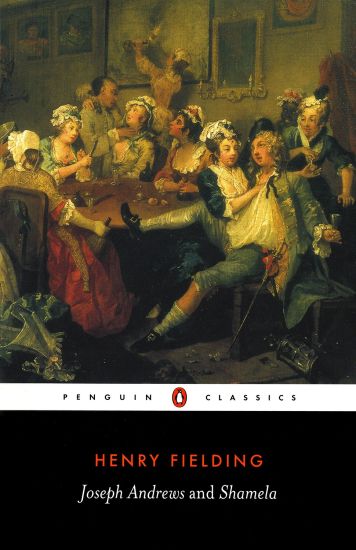
Joseph Andrews & Shamela

Joseph Andrews & Shamela

Henry Fielding

Penguin Classics
1999
isokokoinen pokkari
SHAMELA is a brilliant parody of Samuel Richardson's PAMELA, in which a virtuous servant girl long resists her master's advances and is eventually 'rewarded' with marriage. Fielding's far more spirited and sexually honest heroine, by contrast, merely uses coyness and mock modesty as techniques to catch a rich husband. JOSEPH ANDREWS, Fielding's first full-length novel, can also be seen as a response to Richardson, as the lascivious Lady Booby sets out to seduce her comically chaste servant Joseph, (himself in love with the much-put-upon Fanny Goodwill). As in Tom Jones, Fielding takes a huge cast of characters out on the road and exposes them to many colourful and often hilarious adventures.
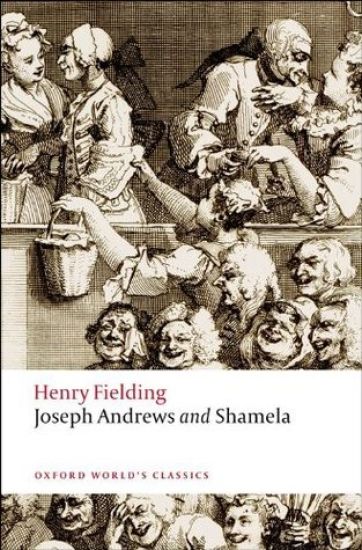
Joseph Andrews and Shamela

Joseph Andrews and Shamela

Henry Fielding

Oxford University Press
2008
nidottu
'I beg as soon as you get Fielding's Joseph Andrews, I fear in Ridicule of your Pamela and of Virtue in the Notion of Don Quixote's Manner, you would send it to me by the very first Coach.' (George Cheyne in a letter to Samuel Richardson, February 1742) Both Joseph Andrews (1742) and Shamela (1741) were prompted by the success of Richardson's Pamela (1740), of which Shamela is a splendidly bawdy parody. But in Shamela Fielding also demonstrates his concern for the corruption of contemporary society, politics, religion, morality, and taste. The same themes - together with a presentation of love as charity, as friendship, and in its sexual taste - are present in Joseph Andrews, Fielding's first novel. It is a work of considerable literary sophistication and satirical verve, but its appeal lies also in its spirit of comic affirmation, epitomized in the celebrated character of Parson Adams. This revised and expanded edition follows the text of Joseph Andrews established by Martin C. Battestin for the definitive Wesleyan Edition of Fielding's works. The text of Shamela is based on the first edition, and two substantial appendices reprint the preliminary matter from Conyers Middleton's Life of Cicero and the second edition of Richardson's Pamela (both closely parodied in Shamela). A new introduction by Thomas Keymer situates Fielding's works in their critical and historical contexts. ABOUT THE SERIES: For over 100 years Oxford World's Classics has made available the widest range of literature from around the globe. Each affordable volume reflects Oxford's commitment to scholarship, providing the most accurate text plus a wealth of other valuable features, including expert introductions by leading authorities, helpful notes to clarify the text, up-to-date bibliographies for further study, and much more.
Joseph Andrews with Shamela and Related Writings
An accurate text of Shamela (Fielding’s satire of Samuel Richardson’s Pamela, the most popular epistolary novel of the eighteenth century) as well as An Essay on the Knowledge of the Characters of Men, selections from The Champion, and the Preface to The Adventures of David Simple are also included. All of the texts are fully annotated. "Backgrounds" contains generous extracts from works that Fielding satirized—Pamela and Conyer Middleton’s Dedication to the Life of Cicero—and emulated—Gil Blas and selections from Don Quixote, the Roman Comique, and Le Paysan Parvenu. The section concludes with a general explanation of the political and religious contexts in which Joseph Andrews was written. "Criticism" offers a broad range of responses to the novel. Contemporary assessments include selected letters of Thomas Gray, William Shenstone, Samuel Richardson, and others as well as commentary from The Student, or Oxford and Cambridge Monthly Miscellany, by William Hazlitt, James Beattie, and Sarah Fielding and Jane Collier. Modern assessments are by Mark Spilka, Dick Taylor, Jr., Martin Battestin, Sheldon Sacks, Morris Golden, Brian McCrea, and Homer Goldberg. A Selected Bibliography is also included.
Joseph Andrews, Volume 2 (Esprios Classics)
Henry Fielding (22 April 1707 - 8 October 1754) was an English novelist and dramatist known for his earthy humour and satire. His comic novel Tom Jones is still widely appreciated. He and Samuel Richardson are seen as founders of the traditional English novel. He also holds a place in the history of law enforcement, having used his authority as a magistrate to found the Bow Street Runners, London's first intermittently funded, full-time police force. The Theatrical Licensing Act of 1737 is said to be a direct response to his activities in writing for the theatre. Although the play that triggered the act was the unproduced, anonymously authored The Golden Rump, Fielding's dramatic satires had set the tone.
Joseph Andrews, Volume 1 (Esprios Classics)
Henry Fielding (22 April 1707 - 8 October 1754) was an English novelist and dramatist known for his earthy humour and satire. His comic novel Tom Jones is still widely appreciated. He and Samuel Richardson are seen as founders of the traditional English novel. He also holds a place in the history of law enforcement, having used his authority as a magistrate to found the Bow Street Runners, London's first intermittently funded, full-time police force. The Theatrical Licensing Act of 1737 is said to be a direct response to his activities in writing for the theatre. Although the play that triggered the act was the unproduced, anonymously authored The Golden Rump, Fielding's dramatic satires had set the tone.
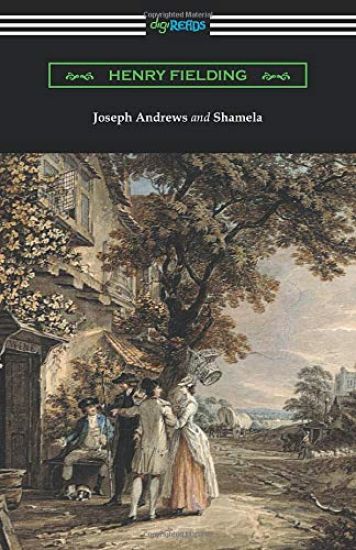
Joseph Andrews and Shamela

Joseph Andrews and Shamela

Henry Fielding

Digireads.com
2020
pokkari
The first novel of English magistrate Henry Fielding, "Joseph Andrews" was written in 1742 as a complete extension of the author's pamphlet "Shamela". The latter contains an impressively coarse parody of "Pamela", the Samuel Richardson novel that rewards a servant girl with marriage for protecting her virtue. Shamela, however, utilizes a coy and artificial modesty to procure for herself a husband of wealth. Fielding went on to write "Joseph Andrews", a work relating the adventures of a footboy after he is dismissed from his employment. He rejects the advances of the lady of the house, and his life after losing his position begins a journey filled with crime, poverty, and varying types of maliciousness, as well as uplifting comedy and love in many forms. This experimental novel, however, grows out of its original parody, for it objects as much to the mechanics as of the limited ideas of the literature of its day. "Joseph Andrews" not only reveals the corruption of Fielding's contemporary society, but it does so in a prose fiction that is as sophisticated as it is satirical. This edition is printed on premium acid-free paper.