Kirjahaku
Etsi kirjoja tekijän nimen, kirjan nimen tai ISBN:n perusteella.
1000 tulosta hakusanalla Joseph J. Stephanos; Anthony W. Addison
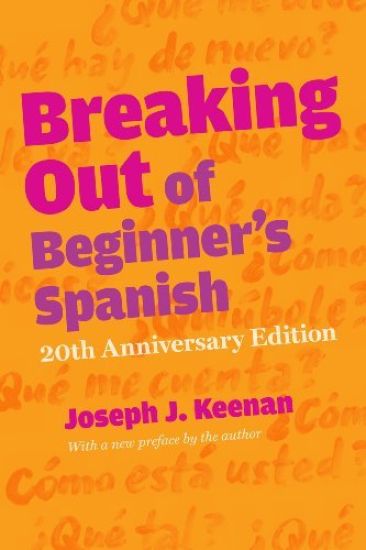
Many language books are boring-this one is not. Written by a native English speaker who learned Spanish the hard way-by trying to talk to Spanish-speaking people-it offers English speakers who have a basic knowledge of Spanish hundreds of tips for using the language more fluently and colloquially, with fewer obvious “gringo” errors.Writing with humor, common sense, and a minimum of jargon, Joseph J. Keenan covers everything from pronunciation, verb usage, and common grammatical mistakes to the subtleties of addressing other people, “trickster” words that look alike in both languages, inadvertent obscenities, and intentional swearing. He guides readers through the set phrases and idiomatic expressions that pepper the native speaker’s conversation and provides a valuable introduction to the most widely used Spanish slang.With this book, both students in school and adult learners who never want to see another classroom can rapidly improve their speaking ability. Breaking Out of Beginner’s Spanish will be an essential aid in passing the supreme language test-communicating fluently with native speakers.
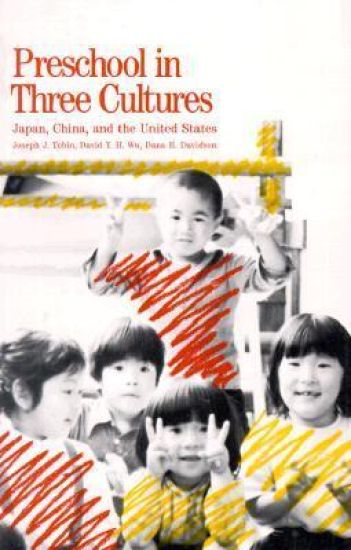
Preschool in Three Cultures
Joseph J. Tobin; David Y.H. Wu; Dana H. Davidson
Yale University Press
1991
pokkari
“This book should be required reading for professionals in early education and makes thought-provoking reading for anyone aware of his or her own cultural blinkers.”—Penelope Leach, New York Times Book Review"[An] important study of the way preschools both reflect and affect social change. . . . A must read for those who take social issues seriously."—Carole C. Kemmerer, Los Angeles TimesAs the numbers of mothers in the workforce grows, the role of the extended family diminishes, and parents feel under greater pressure to give their children an educational headstart, industrialized societies are increasingly turning to preschools to nurture, educate, and socialize young children. Drawing on their backgrounds in anthropology, human development, and education, Tobin, Wu, and Davidson present a unique comparison of the practices and philosophies of Japanese, Chinese, and American preschool education and discuss how changes in childcare both reflect and affect larger social change. The method used is innovative: the authors first videotaped a preschool in each culture, then showed the tapes to preschool staff, parents, and child development experts. Through their vivid descriptions of a day in each country's preschools, photographs made from their videotapes, and Chinese, Japanese, and American evaluations of their own and each other's schools, we are drawn into a multicultural discussion of such issues as freedom, conformity, creativity, and discipline.
Twelfth-century French poet Chrétien de Troyes was one of the most influential figures in Western literature, for his romantic poems on the legend of King Arthur gave rise to a tradition of storytelling that continues to this day. This important and fascinating book is a study of all of Chrétien’s work.Joseph J. Duggan begins with an introduction that sets Chrétien within the social and intellectual currents of his time. He then organizes the book in chapters that focus on major issues in Chrétien’s romances rather than on individual works, topics that range from the importance of kinship and genealogy to standards of secular moral responsibility and from Chrétien’s art of narration to his representation of knighthood. Duggan offers new perspectives on many of these themes: in a chapter on the influence of Celtic mythology, for example, he gives special attention to the ways Chrétien integrated portrayals of motivation with mythic themes and characters, and in discussing the Grail romance, he explores the parallels between Perceval’s and Gauvain’s adventures.
A Washington Post Notable BookA Kirkus Reviews Best Nonfiction Book of the YearThe summer months of 1776 witnessed the most consequential events in the story of our country's founding. While the thirteen colonies came together and agreed to secede from the British Empire, the British were dispatching the largest armada ever to cross the Atlantic to crush the rebellion in the cradle. The Continental Congress and the Continental Army were forced to make decisions on the run, improvising as history congealed around them. In a brilliant and seamless narrative, Ellis meticulously examines the most influential figures in this propitious moment, including George Washington, John Adams, Thomas Jefferson, Benjamin Franklin, and Britain's Admiral Lord Richard and General William Howe. He weaves together the political and military experiences as two sides of a single story, and shows how events on one front influenced outcomes on the other.
The Critical Response to Truman Capote
Joseph J. Waldmeir; John C. Waldmeir
Greenwood Press
1999
sidottu
One of the most controversial American authors of the twentieth century, Truman Capote is best known as the author of In Cold Blood (1966), a work of literary journalism that recounts the slaughter of the Clutter family in Holcomb, Kansas, in 1959. But he also wrote numerous short stories, dozens of nonfiction pieces for popular magazines, several other novels, and some works for Hollywood and Broadway. Unlike In Cold Blood, many of his earlier works were criticized for their focus on character at a time when other writers were using fiction to explore historical events and social and political positions. Since his death in 1984, scholarly interest in Capote and his works has grown considerably. Over the last few decades, the reaction to his works has been rich and varied. This volume chronicles the critical reception to Capote's writings. Included are previously published reviews and essays, along with several pieces written especially for this book. The selections are grouped in several broad sections, which examine such topics as overviews and interviews, the genres in which he wrote, and his particular works, his literary documentaries, and his relation to other writers and critics. Each section is organized chronologically and traces not only the development of Capote's talents but also the evolution of critical attitudes toward his works. Both favorable and unfavorable analyses by commentators and scholars such as Ihab Hassan, George Jean Nathan, Leslie Fiedler, Diana Trilling, Kenneth Tynan, and many others provide a balanced view of Capote's writings. A comprehensive introduction covers the materials included in the book along with many other relevant texts, and extensive bibliographic material records the present state of Capote scholarship.
Volpe's Neurology of the Newborn
Joseph J. Volpe; Terrie E. Inder; Basil T. Darras; Linda S. de Vries; Adre J du Plessis; Jeffrey Neil; Jeffrey M Perlman
Elsevier - Health Sciences Division
2017
sidottu
A clear, engaging writing style, hundreds of full-color images, and new information throughout make Volpe's Neurology of the Newborn, 6th Edition, an indispensable resource for those who provide care for neonates with neurological conditions. World authority Dr. Joseph Volpe, along with Dr. Terrie E. Inder and other distinguished editors, continue the unparalleled clarity and guidance you've come to expect from the leading reference in the field - keeping you up to date with today's latest advances in diagnosis and management, as well as the many scientific and technological advances that are revolutionizing neonatal neurology. Provides comprehensive coverage of neonatal neurology, solely written by the field's founding expert, Dr. Joseph Volpe - for a masterful, cohesive source of answers to any question that arises in your practice. Focuses on clinical evaluation and management, while also examining the many scientific and technological advances that are revolutionizing neonatal neurology. Organizes disease-focused chapters by affected body region for ease of reference. Features a brand new, full-color design with hundreds of new figures, tables, algorithms, and micrographs. Includes two entirely new chapters: Neurodevelopmental Follow-Up and Stroke in the Newborn; a new section on Neonatal Seizures; and an extensively expanded section on Hypoxic-Ischemia and Other Disorders. Showcases the experience and knowledge of a new editorial team, led by Dr. Joseph Volpe and Dr. Terrie E. Inder, Chair of the Department of Pediatric Newborn Medicine at Brigham and Women's Hospital, all of whom bring a wealth of insight to this classic text. Offers comprehensive updates from cover to cover to reflect all of the latest information regarding the development of the neural tube; prosencephalic development; congenital hydrocephalus; cerebellar hemorrhage; neuromuscular disorders and genetic testing; and much more. Uses an improved organization to enhance navigation. Expert ConsultT eBook version included with purchase. This enhanced eBook experience allows you to search all of the text, figures, Q&As, and references from the book on a variety of devices.
The advent of new methods in shaping the performance characteristics of plants, animals, and microbes dramatically expands the possibilities for advances in agriculture -- a new "Green Revolution" in the offing. This book examines the impact of such developments on agricultural institutions, agribusiness, and farmers: What happens when a fundamenta
This study examines the important political and economic developments in Vietnam, Laos, and Cambodia since the Communist victories in 1975 and analyzes the critical policy issues facing the Carter administration in dealing with these states. Summarizing the major options immediately available to U.S. policymakers who confronted the new regimes in I
Biotechnology and the New Agricultural Revolution examines the impact of the Green Revolution and biotechnological developments on agricultural institutions, agribusiness, and farmers.
This study examines the important political and economic developments in Vietnam, Laos, and Cambodia since the Communist victories in 1975 and analyzes the critical policy issues facing the Carter administration in dealing with these states. Summarizing the major options immediately available to U.S. policymakers who confronted the new regimes in I
Transferring Food Production Technology To Developing Nations
Joseph J Molnar
Routledge
2019
sidottu
This book explores the social, economic, and policy problems associated with introducing new agriculture and aquaculture technology to developing nations as a means for expanding food supplies and increasing well-being. The contributors examine three general facets of planning for technology transfer and consider methodologies that enable effective
Transferring Food Production Technology To Developing Nations
Joseph J Molnar
Routledge
2020
nidottu
This book explores the social, economic, and policy problems associated with introducing new agriculture and aquaculture technology to developing nations as a means for expanding food supplies and increasing well-being. The contributors examine three general facets of planning for technology transfer and consider methodologies that enable effective
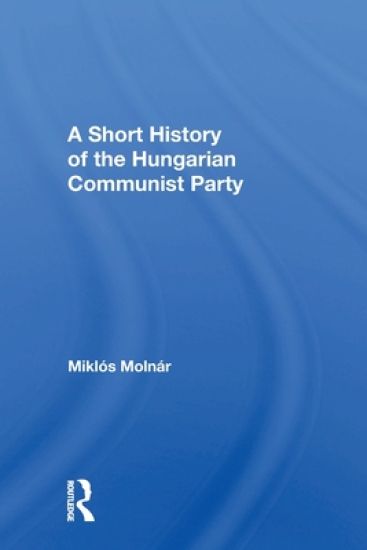
In spite of its small size, the Hungarian Communist party (HCP), founded in the fall of 1918, has played an important role both in Hungary's national history and in the international communist movement. Hungary, which was the only soviet republic other than the ephemeral Bavarian soviet republic to exist outside the USSR, lasted five months during the critical period of the Paris Peace Conference. The "veterans" of the Hungarian soviet republic, like Bela Kun, Georg Lukacs, and Eugen Varga, later held important posts in the Comintern and in the international Communist press. In the Stalinist era, the HCP distinguished itself by excessive zeal in the application of "integral Stalinism" in foreign policy (e.g., anti-Titoism), the economy, and political life (e.g., the Rajk and Kadar trials). However, the 1956 revolution was engineered by the revisionist communist intelligentsia and by such revisionist party leaders as Imre Nagy. Finally, in spite of its repressive role after the revolution, in the 1970s under Janos Kadar the HCP introduced a new system of "liberalism" and economic reform.
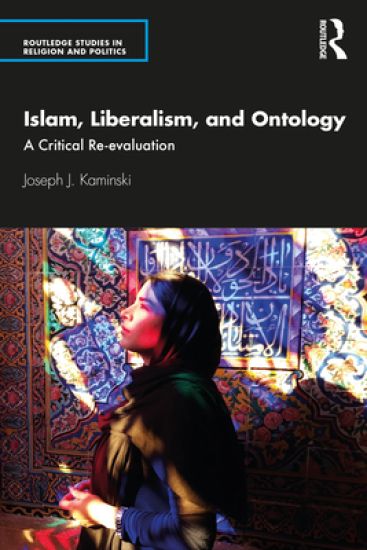
This book offers comparative ontologies of both Islam and liberalism as discourses more broadly construed.The author argues that, despite recent efforts to speak of overlapping consensuses and discursive congruence, the fundamental categories that constitute "Islam" and "Liberalism" remain very different, and that these differences should be taken seriously. Thus far, no recent scholarly works have explicitly or meticulously broken down where these differences lie. The author rigorously explores questions related to rights, moral epistemologies, the role of religion in the public sphere, and more general approaches to legal discourse, via primary and canonical sources constitutive of both Islam and liberalism. He then goes on to articulate why communitarian modes of thought are better suited for engaging with Islam and contemporary socio-political modes of organization than liberalism is.This book will be of great interest to students and scholars of politics and international relations, Islam, liberalism, and communitarianism.
Lead Poisoning discusses one of the most critical and preventable environmentally induced illnesses. The actual toll lead poisoning takes on society cannot be measured fully due to the "silent" nature of health effects, such as subtle intellectual deficits and neurological damage, caused by chronic low-level exposures. This book covers every major topic on the subject, including lead poisoning in children, sources of contamination, state-of-the-art sampling and analytical measurement methods, the newest studies on low-cost abatement methods, and much more. This reference is the most comprehensive presentation of issues currently available under one cover. The text is divided into three major parts. Part I provides insights from studies assessing lead exposures from paint, dust, soil, and lead battery recycling operations. The second part is a unique collection of strategic federal policy statements from the U.S. EPA, HUD, and HEW-CDC. It details the National Implementation Plan as well as a local government's efforts to provide low-cost effective risk communication and public outreach to the community. The next part offers seven chapters on analytical issues in the measurement of lead in blood, paint, dust, and soils. Part IV, Sampling Methods and Statistical Issues, rounds out the technical portion of the volume. The relationships among lead levels in biological and environmental media are investigated and the interpretive problems discussed. The use of multi-element analysis of environmental samples as an approach to investigate sources is described. The book finishes with its most unique feature-OPPT's Check Our Kids for Lead Program, one organization's effort to empower its employees to make a personal difference in confronting the problem of lead poisoning in children. The Program serves as a model for other government organizations (federal, state, and local), university and community organizations, and corporations to educate them and take personal and corporate responsibility for addressing this important and environmental health problem.
The Execution of Admiral John Byng as a Microhistory of Eighteenth-Century Britain
Joseph J. Krulder
Routledge
2021
sidottu
According to Voltaire's Candide, Admiral John Byng's 1757 execution went forward to 'encourage the others'. Of course, the story is more complicated. This microhistorical account upon a macro-event presents an updated, revisionist, and detailed account of a dark chapter in British naval history. Asking 'what was Britain like the moment Byng returned to Portsmouth after the Battle of Minorca (1756)?' not only returns a glimpse of mid-eighteenth century Britain but provides a deeper understanding of how a wartime admiral, the son of a peer, of some wealth, a once colonial governor, and sitting member of parliament came to be scapegoated and then executed for the failings of others. This manuscript presents a cultural, social, and political dive into Britain at the beginning of the Seven Years' War. Part 1 focuses on ballad, newspaper, and prize culture. Part 2 makes a turn towards the social where religion, morality, rioting, and disease play into the Byng saga. Admiral Byng's record during the 1755 Channel Campaign is explored, as is the Mediterranean context of the Seven Years' War, troubles elsewhere in the empire, and then the politics behind Byng's trial and execution.
The Execution of Admiral John Byng as a Microhistory of Eighteenth-Century Britain
Joseph J. Krulder
TAYLOR FRANCIS LTD
2022
nidottu
According to Voltaire's Candide, Admiral John Byng's 1757 execution went forward to 'encourage the others'. Of course, the story is more complicated. This microhistorical account upon a macro-event presents an updated, revisionist, and detailed account of a dark chapter in British naval history. Asking 'what was Britain like the moment Byng returned to Portsmouth after the Battle of Minorca (1756)?' not only returns a glimpse of mid-eighteenth century Britain but provides a deeper understanding of how a wartime admiral, the son of a peer, of some wealth, a once colonial governor, and sitting member of parliament came to be scapegoated and then executed for the failings of others. This manuscript presents a cultural, social, and political dive into Britain at the beginning of the Seven Years' War. Part 1 focuses on ballad, newspaper, and prize culture. Part 2 makes a turn towards the social where religion, morality, rioting, and disease play into the Byng saga. Admiral Byng's record during the 1755 Channel Campaign is explored, as is the Mediterranean context of the Seven Years' War, troubles elsewhere in the empire, and then the politics behind Byng's trial and execution.