Kirjojen hintavertailu. Mukana 11 342 296 kirjaa ja 12 kauppaa.

Kirjahaku

Etsi kirjoja tekijän nimen, kirjan nimen tai ISBN:n perusteella.

1000 tulosta hakusanalla Joseph Urbas

Settling the Frontier: Urban Development in America's Borderlands, 1600-1830
The Role of Indigenous People in the Founding of America's First Major Border Towns In 1811, while escorting members of John Jacob Astor's Pacific Fur Company up the Columbia River, their Chinookan guide refused to advance beyond a particular point that marked a boundary between his people and another indigenous group. Long before European contact, Native Americans created and maintained recognized borders, ranging from family hunting and fishing properties to larger tribal territories to vast river valley regions. Within the confines of these respective borders, the native population often established permanent settlements that acted as the venues for the major political, economic, and social activities that took place in virtually every part of precolonial North America. It was the location of these native settlements that played a major role in the establishment of the first European, and later, American frontier towns. In Settling the Frontier: Urban Development in America's Borderlands, 1600-1830, historian Joseph P. Alessi examines how the Pecos, Mohawk, Ohioan, and Chinook tribal communities aided Europeans and Americans in the founding of five of America's earliest border towns--Santa Fe (New Mexico), Fort Amsterdam (New York City), Fort Orange (Albany, New York), Fort Pitt (Pittsburgh, Pennsylvania), and Fort Astoria (Portland, Oregon). Filling a void in scholarship about the role of Native American communities in the settlement of North America, Alessi reveals that, although often resistant to European and American progress or abused by it, Indians played an integral role in motivating and assisting Europeans with the establishment of frontier towns. In addition to the location of these towns, the native population was often crucial to the survival of the settlers in unfamiliar and unforgiving environments. As a result, these new towns became the logistical and economic vanguards for even greater development and exploitation of North America.
Entrée Solennelle Du Pape Urbain V À Marseille, En 1365: Programme de la Fête
Entree solennelle du pape Urbain V a Marseille, en 1365: programme de la fete, dresse par le conseil de la ville, texte provencal inedit du XIVe siecle, notes historiques et pieces justificativesDate de l'edition originale: 1865Sujet de l'ouvrage: Urbain V (pape; 1310?-1370)" Entree. UrbainVpape). Marseille. 1635]"Ce livre est la reproduction fidele d'une oeuvre publiee avant 1920 et fait partie d'une collection de livres reimprimes a la demande editee par Hachette Livre, dans le cadre d'un partenariat avec la Bibliotheque nationale de France, offrant l'opportunite d'acceder a des ouvrages anciens et souvent rares issus des fonds patrimoniaux de la BnF.Les oeuvres faisant partie de cette collection ont ete numerisees par la BnF et sont presentes sur Gallica, sa bibliotheque numerique.En entreprenant de redonner vie a ces ouvrages au travers d'une collection de livres reimprimes a la demande, nous leur donnons la possibilite de rencontrer un public elargi et participons a la transmission de connaissances et de savoirs parfois difficilement accessibles.Nous avons cherche a concilier la reproduction fidele d'un livre ancien a partir de sa version numerisee avec le souci d'un confort de lecture optimal. Nous esperons que les ouvrages de cette nouvelle collection vous apporteront entiere satisfaction.Pour plus d'informations, rendez-vous sur www.hachettebnf.fr
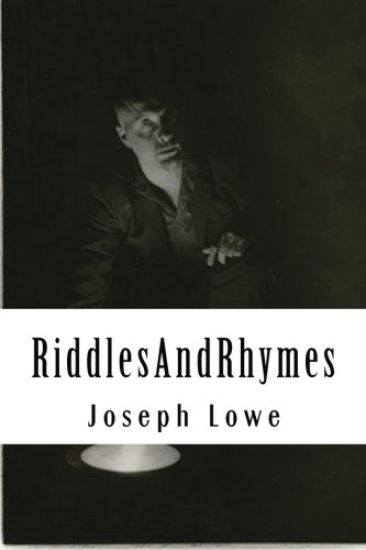
RiddlesAndRhymes: RiddlesAndRhymes: Contemporary Poetry - Underground Poetry - Urban Poetry - Anti-War Poetry - Modern Poems - Poetry Ab
Contemporary Poetry - Urban Poetry - Surreal Poetry - Underground Poems - Anti-War Poetry - Social Commentary Poems - Poetry About Life - Modern Poetry - Descriptive Poetry - Edgy Poems This contemporary poetry book perhaps has a little bit of all of the above. "RiddlesAndRhymes" is a collection of modern underground poetry, at times taking a surrealistic slant with some hard hitting poetry about life. From 'The Grizzly Grocer', 'Come to Life' through to 'PC Plod's Not Odd' and 'Testomorphasis' many of these gritty urban poems reach out to the madness of life and quite a few have an anti-war sentiment. Anti-war poetry is often written by people who have first hand experience. In this case Joseph's thoughts and remarks are based on an inner feeling that there must be other ways than war. Not all the poems touch on this subject and are just one persons views on what is around us all. We warned this is poetry about life with a hammer and a rusty nail. A recent review on Amazon sums up this collection of contemporary poems: "Full of energy and anger about the world we live in, these are strong, rhythmical poems that demand to be read aloud."
Hell's Kitchen and the Battle for Urban Space

Hell's Kitchen and the Battle for Urban Space

Joseph J. Varga

Monthly Review Press,U.S.
2013
sidottu
Hell's Kitchen is among Manhattan's most storied and studiedneighborhoods. A working-class district situated next to the WestSide's middle- and upper-class residential districts, it has long attractedthe focus of artists and urban planners, writers and reformers.Now, Joseph Varga takes us on a tour of Hell's Kitchenwith an eye toward what we usually take for granted: space, and, particularly, how urban spaces are produced, controlled, and contestedby different class and political forces.Varga examines events and locations in a crucial period in theformation of the Hell's Kitchen neighborhood, the Progressive Era, and describes how reformers sought to shape the behavior and experiencesof its inhabitants by manipulating the built environment.But those inhabitants had plans of their own, and thus ensueda struggle over the very spaces--public and private, commercialand personal--in which they lived. Varga insightfully considers theinteractions between human actors, the built environment, andthe natural landscape, and suggests how the production of andstruggle over space influence what we think and how we live. Inthe process, he raises incisive questions about the meaning ofcommunity, citizenship, and democracy itself.
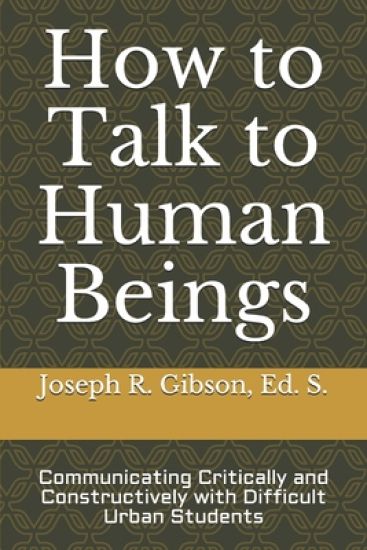
How to Talk to Human Beings: Communicating Critically and Constructively with Difficult Urban Students
Please check out more of our related titles at thePGI.org/global-press In the preface of his brilliant bestseller 48 Laws of Power, Robert Greene explained something apparently unknown to most urban teachers: "Emotions cloud reason, and if you can't see the situation clearly, you cannot prepare for and respond to it with any degree of control. Anger is the most destructive of emotional responses, for it clouds your vision the most." I would argue that frustration is the second most destructive emotional response. They both have "a ripple effect that invariably makes situations lesson controllable." Moreover, it makes teacher-student communication virtually impossible. And without communication, teaching and learning cannot actually occur. Nevertheless, go to classrooms in the non-gentrified areas of cities like Atlanta, Detroit, Baltimore, Memphis, Birmingham, and New Orleans, and guess what you'll see: a bunch of angry and frustrated teachers-and not much communication at all. You may see some yelling, some lecturing, some threatening, some preaching, some "talking to," some "taking over," some "yes I heard you," some "no I'm not sleep," even straight silence, but actual communication is ridiculously rare. There is a communication gap in today's urban classroom. I have patterned this book after Richard Carlson's phenomenal work, Don't Sweat the Small Stuff. In it are fairly simple strategies urban teachers can use to ensure critical and constructive communication with difficult students in their classrooms by maximizing their control over emotions like anger and frustration, as well as fear, alienation, disappointment, and even love. I believe that the key to effective classroom management is how you communicate with your difficult students. Honestly, most of these strategies are very simple and largely commonsensical (with a little basic psychology), but you'd be surprised how regularly common sense and simplicity are lost in the flood of anger and frustration. Teaching is hard; teaching difficult urban students is harder. To be successful, Chopra counseled that "you must find the place inside yourself where nothing is impossible." It is here where you won't have to ask whether or not a difficult student is actually unsalvageable. It is here where you'll find the patience necessary to communicate critically and constructively with difficult urban students, successfully. The following chapters are included:1. The "I (the Author) Am Not Claiming to Be Perfect" Disclaimer2. Rule #1: The only person whose behavior you can control is you.3. I know you can read, but are you emotionally illiterate? 4. Why do you care about these students? 5. How am I supposed to teach people who don't want to learn?6. Use your "inner Hulk."7. Head like a brick? 8. Sometimes we just plant seeds.9. Never jeopardize the relationship.10. Know your emotional ledge. 11. Don't sweat all the small stuff at the same time; prioritize your criticism.12. Attack the issue, not the student. 13. Offer choices and consequences, not confrontation.14. To be or not to be (sarcastic, sometimes): The risk and reward of constructive sarcasm. 15. Laugh with your students, never at them.16. Be silent, at least momentarily. 17. Inferiority should not be normal(ized). 18. Are you listening (or just talking)?19. Are you unconsciously racist? 20. Why do we to teach the poor so poorly? 21. So, what exactly did you expect? 22. Show them you really care with conscientization. 23. But can they all be saved? For more information on this title or to check author availability for professional development, please contact Zakia Gibson at 313-355-0952 or [email protected].
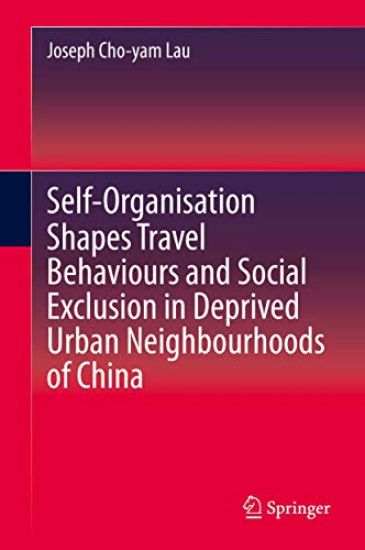
Self-Organisation Shapes Travel Behaviours and Social Exclusion in Deprived Urban Neighbourhoods of China
This book investigates the influence of self-organisation processes on the commuting of the poor workers in urban China. It suggests a new approach to investigate and measure individual access, and it argues that dynamic interactions between individual action and social structure influence individual’s access to transport, which cannot be measured using other traditional accessibility approaches.The overwhelming majority of models in transport research assume that socio-economic factors and the built-environment influence the accessibility of transport for individuals. This book provides evidence that individual decision-makings and actions are also vital factors to bring out changes in accessibility. Further, the study adopts a self-organisation process and structuration theory to illustrate that a significant proportion of travel problems of migrants are rooted in the interaction between actions and social structures. Any change in migrants’ actions orsocial structures in the self-organisation process would result in the production of complex and spontaneous travel behaviour. The self-organisation approach presented provides a new approach for urban transport planning in the future, particularly on the investigation of the accessibility of disadvantaged social groups. By using the social theories, transport research can have an effect on commuting behaviour and to improve poor workers’ quality of life.
Self-Organisation Shapes Travel Behaviours and Social Exclusion in Deprived Urban Neighbourhoods of China
This book investigates the influence of self-organisation processes on the commuting of the poor workers in urban China. It suggests a new approach to investigate and measure individual access, and it argues that dynamic interactions between individual action and social structure influence individual’s access to transport, which cannot be measured using other traditional accessibility approaches.The overwhelming majority of models in transport research assume that socio-economic factors and the built-environment influence the accessibility of transport for individuals. This book provides evidence that individual decision-makings and actions are also vital factors to bring out changes in accessibility. Further, the study adopts a self-organisation process and structuration theory to illustrate that a significant proportion of travel problems of migrants are rooted in the interaction between actions and social structures. Any change in migrants’ actions orsocial structures in the self-organisation process would result in the production of complex and spontaneous travel behaviour. The self-organisation approach presented provides a new approach for urban transport planning in the future, particularly on the investigation of the accessibility of disadvantaged social groups. By using the social theories, transport research can have an effect on commuting behaviour and to improve poor workers’ quality of life.
Hell's Kitchen and the Battle for Urban Space

Hell's Kitchen and the Battle for Urban Space

Varga Joseph J.

Monthly Review Press,U.S.
2013
nidottu
Hell's Kitchen is among Manhattan's most storied and studiedneighborhoods. A working-class district situated next to the WestSide's middle- and upper-class residential districts, it has long attractedthe focus of artists and urban planners, writers and reformers.Now, Joseph Varga takes us on a tour of Hell's Kitchenwith an eye toward what we usually take for granted: space, and, particularly, how urban spaces are produced, controlled, and contestedby different class and political forces.Varga examines events and locations in a crucial period in theformation of the Hell's Kitchen neighborhood, the Progressive Era, and describes how reformers sought to shape the behavior and experiencesof its inhabitants by manipulating the built environment.But those inhabitants had plans of their own, and thus ensueda struggle over the very spaces--public and private, commercialand personal--in which they lived. Varga insightfully considers theinteractions between human actors, the built environment, andthe natural landscape, and suggests how the production of andstruggle over space influence what we think and how we live. Inthe process, he raises incisive questions about the meaning ofcommunity, citizenship, and democracy itself.
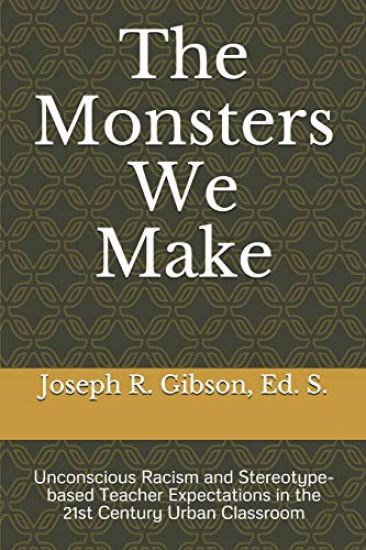
The Monsters We Make: Unconscious Racism and Stereotype-based Teacher Expectations in the 21st Century Urban Classroom
Please check out more of our related titles at thePGI.org/global-press The overwhelming majority of urban teachers in America are unconsciously racist, much like various studies have confirmed that the overwhelming majority of people in America, both Black and White, are unconsciously racist. And even if this was only fractionally true, unconscious racism in the urban classroom is arguably the most important social justice issue of our time.Unconscious racism is more prevalent in American society in general, and predictably more in the urban classroom in particular, than generally acknowledged. Sharon Begley identified that "although many white Americans consider themselves unbiased, when unconscious stereotypes are measured, some 90% implicitly link blacks with negative traits such as] evil or failure." Regrettably, Black people also tend to have unconscious, internalized stereotype-based, anti-Black biases. Although we usually "do not know enough about the Pygmalion effect to use it as a conscious and purposeful teaching tool, most teachers," wrote Tauber, "recognize that holding high or low expectations, and then acting on those expectations, can create a self-fulfilling prophecy." But what we typically don't recognize at all is the impact unconscious racism has on our expectations, especially as urban teachers. When we look into our urban classrooms, psychologically we are more inclined to see a room full of people that, for no reason other than their skin color, are particularly lazy, violent, unintelligent, bad, irresponsible, inhuman, underachieving, entertaining, athletic, dangerous, poor, menacing, hypersexual, amoral, apathetic, hostile, incarceration-prone, unqualified, problematic, attitudinal, self-destructive, uncooperative, diabolical, ugly, criminal, drug dealing or addicted, disrespectful, gang-related, excuse-dependent, complaint-oriented, failure, affected by some undesirable condition, and generally inferior.These almost exclusively negative stereotypes have collectively demonized African-Americans for centuries and continue to do so. The most urgent problem is that now this demonization is discreetly occurring in most urban classrooms across America. When most urban teachers look into our classrooms, we see monsters that we (or more specifically, our hidden brain) made.
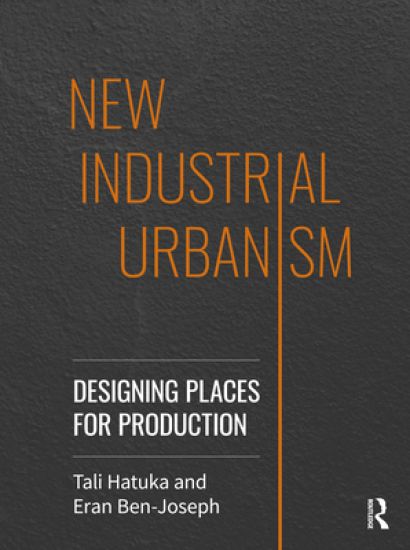
New Industrial Urbanism

New Industrial Urbanism

Tali Hatuka; Eran Ben-Joseph

TAYLOR FRANCIS LTD
2022
nidottu
Since the Industrial Revolution, cities and industry have grown together; towns and metropolitan regions have evolved around factories and expanding industries. New Industrial Urbanism explores the evolving and future relationships between cities and places of production, focusing on the spatial implications and physical design of integrating contemporary manufacturing into the city. The book examines recent developments that have led to dramatic shifts in the manufacturing sector – from large-scale mass production methods to small-scale distributed systems; from polluting and consumptive production methods to a cleaner and more sustainable process; from broad demand for unskilled labor to a growing need for a more educated and specialized workforce – to show how cities see new investment and increased employment opportunities. Looking ahead to the quest to make cities more competitive and resilient, New Industrial Urbanism provides lessons from cases around the world and suggests adopting New Industrial Urbanism as an action framework that reconnects what has been separated: people, places, and production. Moving the conversation beyond the reflexively-negative characterizations of industry, more than two centuries after the start of the Industrial Revolution, this book calls to re-consider the ways in which industry creates places, sustains jobs, and supports environmental sustainability in our cities.This book is available as Open Acess through https://www.taylorfrancis.com/.
New Industrial Urbanism

New Industrial Urbanism

Tali Hatuka; Eran Ben-Joseph

TAYLOR FRANCIS LTD
2022
sidottu
Since the Industrial Revolution, cities and industry have grown together; towns and metropolitan regions have evolved around factories and expanding industries. New Industrial Urbanism explores the evolving and future relationships between cities and places of production, focusing on the spatial implications and physical design of integrating contemporary manufacturing into the city. The book examines recent developments that have led to dramatic shifts in the manufacturing sector – from large-scale mass production methods to small-scale distributed systems; from polluting and consumptive production methods to a cleaner and more sustainable process; from broad demand for unskilled labor to a growing need for a more educated and specialized workforce – to show how cities see new investment and increased employment opportunities. Looking ahead to the quest to make cities more competitive and resilient, New Industrial Urbanism provides lessons from cases around the world and suggests adopting New Industrial Urbanism as an action framework that reconnects what has been separated: people, places, and production. Moving the conversation beyond the reflexively-negative characterizations of industry, more than two centuries after the start of the Industrial Revolution, this book calls to re-consider the ways in which industry creates places, sustains jobs, and supports environmental sustainability in our cities.This book is available as Open Acess through https://www.taylorfrancis.com/.
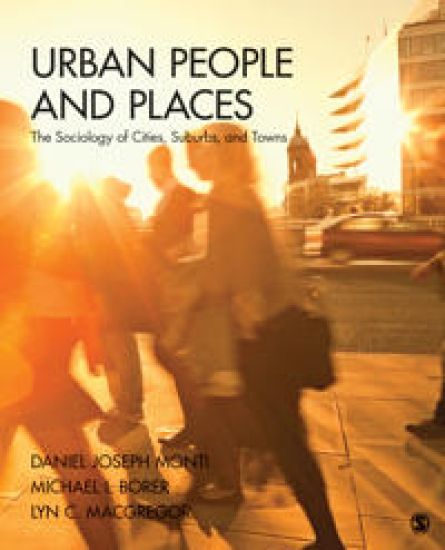
Urban People and Places

Urban People and Places

Daniel J. (Joseph) Monti; Michael Ian Borer; Lyn C. Macgregor

SAGE Publications Inc
2014
nidottu
Providing a thorough and comprehensive survey of the contemporary urban world that is accessible to students, Urban People and Places: The Sociology of Cities, Suburbs, and Towns will give balanced treatment to both the process by which cities are built (i.e., urbanization) and the ways of life practiced by people that live and work in more urban places (i.e., urbanism) unlike most core texts in this area. Whereas most texts focus on the socio-economic causes of urbanization, this text analyses the cultural component: how the physical construction of places is, in part, a product of cultural beliefs, ideas, and practices and also how the culture of those who live, work, and play in various places is shaped, structured, and controlled by the built environment. Inasmuch as the primary focus will be on the United States, global discussion is composed with an eye toward showing how U.S. cities, suburbs, and towns are different and alike from their counterparts in Africa, Asia, and Central and South America