Kirjojen hintavertailu. Mukana 11 717 486 kirjaa ja 12 kauppaa.

Kirjahaku

Etsi kirjoja tekijän nimen, kirjan nimen tai ISBN:n perusteella.

1000 tulosta hakusanalla Josephine Herrlinger

Josephine Baker's Cinematic Prism

Josephine Baker's Cinematic Prism

Terri Simone Francis

Indiana University Press
2021
pokkari
Josephine Baker, the first Black woman to star in a major motion picture, was both liberated and delightfully undignified, playfully vacillating between allure and colonialist stereotyping. Nicknamed the "Black Venus," "Black Pearl," and "Creole Goddess," Baker blended the sensual and the comedic when taking 1920s Europe by storm. Back home in the United States, Baker's film career brought hope to the Black press that a new cinema centered on Black glamour would come to fruition. In Josephine Baker's Cinematic Prism, Terri Simone Francis examines how Baker fashioned her celebrity through cinematic reflexivity, an authorial strategy in which she placed herself, her persona, and her character into visual dialogue. Francis contends that though Baker was an African American actress who lived and worked in France exclusively with a white film company, white costars, white writers, and white directors, she holds monumental significance for African American cinema as the first truly global Black woman film star. Francis also examines the double-talk between Baker and her characters in Le Pompier de Folies Bergère, La Sirène des Tropiques, Zou Zou, Princesse Tam Tam, and The French Way, whose narratives seem to undermine the very stardom they offered. In doing so, Francis artfully illuminates the most resonant links between emergent African American cinephilia, the diverse opinions of Baker in the popular press, and African Americans' broader aspirations for progress toward racial equality. Examining an unexplored aspect of Baker's career, Josephine Baker's Cinematic Prism deepens the ongoing conversation about race, gender, and performance in the African diaspora.
Josephine Baker's Cinematic Prism

Josephine Baker's Cinematic Prism

Terri Simone Francis

Indiana University Press
2021
sidottu
Josephine Baker, the first Black woman to star in a major motion picture, was both liberated and delightfully undignified, playfully vacillating between allure and colonialist stereotyping. Nicknamed the "Black Venus," "Black Pearl," and "Creole Goddess," Baker blended the sensual and the comedic when taking 1920s Europe by storm. Back home in the United States, Baker's film career brought hope to the Black press that a new cinema centered on Black glamour would come to fruition. In Josephine Baker's Cinematic Prism, Terri Simone Francis examines how Baker fashioned her celebrity through cinematic reflexivity, an authorial strategy in which she placed herself, her persona, and her character into visual dialogue. Francis contends that though Baker was an African American actress who lived and worked in France exclusively with a white film company, white costars, white writers, and white directors, she holds monumental significance for African American cinema as the first truly global Black woman film star. Francis also examines the double-talk between Baker and her characters in Le Pompier de Folies Bergère, La Sirène des Tropiques, Zou Zou, Princesse Tam Tam, and The French Way, whose narratives seem to undermine the very stardom they offered. In doing so, Francis artfully illuminates the most resonant links between emergent African American cinephilia, the diverse opinions of Baker in the popular press, and African Americans' broader aspirations for progress toward racial equality. Examining an unexplored aspect of Baker's career, Josephine Baker's Cinematic Prism deepens the ongoing conversation about race, gender, and performance in the African diaspora.
Josephine Butler

Josephine Butler

Jane Robinson

SPCK Publishing
2020
sidottu
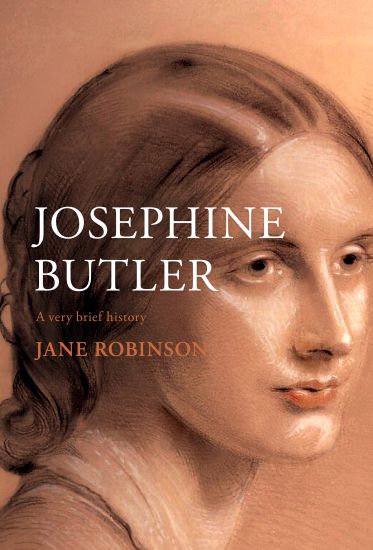
When Josephine Butler died in 1906, she was declared by Millicent Fawcett to have been 'the most distinguished Englishwoman of the nineteenth century'. With impassioned speeches and fiery writing, Butler's campaigns for women's rights shook Victorian society to its core and became a force for change that has shaped modern Britain. As well as campaigning for women's suffrage and for married women's property rights she was a tireless advocate of women's access to higher education and of equality in the workplace. Her greatest achievement was to change social attitudes to women and children forced into prostitution, and to expose the sex-trafficking business - both of which resulted in new, more humane legislation. But how did the physically frail wife of a schoolmaster become a leading social reformer? In this brief introduction Jane Robinson explores Butler's fascinating life and describes how her progressive politics, her anger at injustice and her passionate Christianity combined to create a vibrant legacy that lasts to this day.
Josephine Baker's Secret War

Josephine Baker's Secret War

Hanna Diamond

YALE UNIVERSITY PRESS
2025
sidottu
The full story of Josephine Baker’s wartime and intelligence work in France and North Africa Before the Second World War, Josephine Baker (1906–1975) was one of the most famous performers in the world. She made her name dancing on the Parisian stage, but when war broke out she decided not to return to America. Instead, Baker turned spy for the French Secret Services. In this engaging, deeply researched study, Hanna Diamond tells the full story of Baker’s actions for the French and Allied powers in World War Two. Drawing on previously unseen material, Diamond reveals the vital role Baker played throughout the war, from counterintelligence work for the Allied landings in North Africa to serving in the French Air Force in 1944–45. A woman of colour operating in a white male environment, Baker exploited her celebrity to enable her war work across France, Spain, Portugal, North Africa, and the Middle East. This groundbreaking account is the first to reveal the full significance of Baker’s wartime contribution.
Josephine: A Life of the Empress

Josephine: A Life of the Empress

Carolly Erickson

St. Martin's Griffin
2000
nidottu
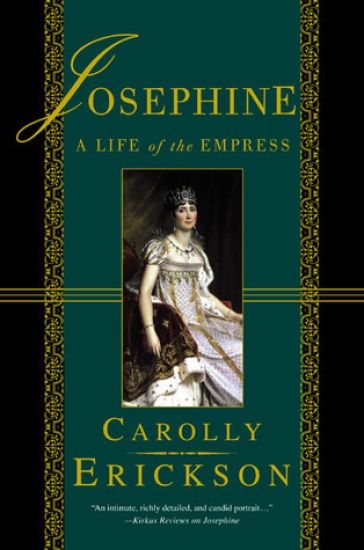
In 1804, when Josephine Bonaparte knelt before her husband, Napoleon, to receive the imperial diadem, few in the vast crowd of onlookers were aware of the dark secrets hidden behind the imperial fa ade. To her subjects, she appeared to vet hew most favored woman in France: alluring, wealthy, and with the devoted love of a remarkable husband who was the conqueror of Europe. In actuality, Josephine's life was far darker, for her celebrated allure was fading, her wealth was compromised by massive debt, and her marriage was corroded by infidelity and abuse. Josephine's life story was as turbulent as the age-an era of revolution and social upheaval, of the guillotine, and of frenzied hedonism. With telling psychological depth and compelling literary grace, Carolly Erickson brings the complex, charming, ever-resilient Josephine to life in this memorable portrait, one that carries the reader along every twist and turn of the empress's often thorny path, from the sensual richness of her childhood in the tropics to her final lonely days at Malmaison.
Josephine Butler and the Prostitution Campaigns
This five volume set deals in detail with Josephine Butler's campaign for the repeal of the Contagious Diseases Acts in Britain and the Colonies. At present, access to Butler's work is restricted as a number of relevant anthologies are out of print. The bulk of these can only be read in specialist libraries and the original copies are becoming increasingly fragile after a century of use. This edited collection makes her writing accessible once again, setting it in an appropriate historical context.In addition to Butler's own work, the thematically ordered volumes include related texts which are important for understanding her campaign. This allows the reader to position Josephine Butler in relation to her opponents and to follow the response to her activities. All the texts are complete and reproduced in facsimile - there are pamphlets, books, media responses to Butler's activities, letters to The Times, articles from The Lancet, Pall Mall Gazette, The Shield and The Dawn as well as private letters both to and from Butler. The set is introduced through a substantial essay by Jane Jordan, one of the leading international scholars on Butler's life and works, and each volume contains a short introduction by the editors which contextualises the selections.Butler writes clearly and vividly, combining impeccable logic with passionate commitment. She does not soften her message to protect the sensibilities of her audience. She is uncompromising in her analysis, determined to 'set a floodlight on your doings' as she told a stunned royal commission in 1871. Josephine Butler and the Prostitution Campaigns demonstrates the great importance of this fascinating campaigner's work.
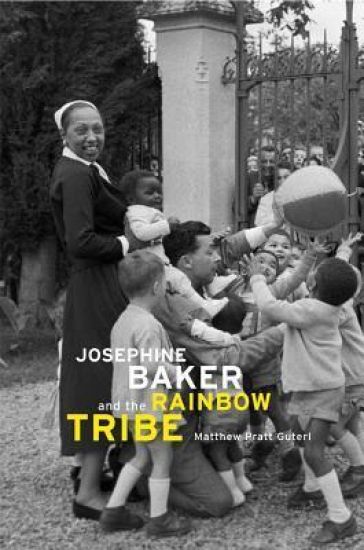
Josephine Baker and the Rainbow Tribe

Josephine Baker and the Rainbow Tribe

Matthew Pratt Guterl

The Belknap Press
2014
sidottu
Creating a sensation with her risqué nightclub act and strolls down the Champs Elysées, pet cheetah in tow, Josephine Baker lives on in popular memory as the banana-skirted siren of Jazz Age Paris. In Josephine Baker and the Rainbow Tribe, Matthew Pratt Guterl brings out a little known side of the celebrated personality, showing how her ambitions of later years were even more daring and subversive than the youthful exploits that made her the first African American superstar.Her performing days numbered, Baker settled down in a sixteenth-century chateau she named Les Milandes, in the south of France. Then, in 1953, she did something completely unexpected and, in the context of racially sensitive times, outrageous. Adopting twelve children from around the globe, she transformed her estate into a theme park, complete with rides, hotels, a collective farm, and singing and dancing. The main attraction was her Rainbow Tribe, the family of the future, which showcased children of all skin colors, nations, and religions living together in harmony. Les Milandes attracted an adoring public eager to spend money on a utopian vision, and to worship at the feet of Josephine, mother of the world.Alerting readers to some of the contradictions at the heart of the Rainbow Tribe project—its undertow of child exploitation and megalomania in particular—Guterl concludes that Baker was a serious and determined activist who believed she could make a positive difference by creating a family out of the troublesome material of race.
Josephine and the Sheep of Dreams

Josephine and the Sheep of Dreams

Caroline Louise Altman

Lyricabella Productions
2015
nidottu
When Josephine lost her mother she also lost a vivacious storytelling friend. Faced with a world that seems lonely and dull, she is told to "get her head out of the clouds". One night she embarks on an ultimate dream journey, encountering a flock of sheep, a lost elf, the Sandman, the Tooth Fairy, a boy who is convinced he is Peter Pan, the Nightmare spiders, the menacing Dream Thief, and her mother. Forced to make a choice between her whimsical stories and realism, Josephine ultimately learns the tender life lessons of love, family, and friendship while fostering true belief in herself. Based upon the popular musical of the same title.
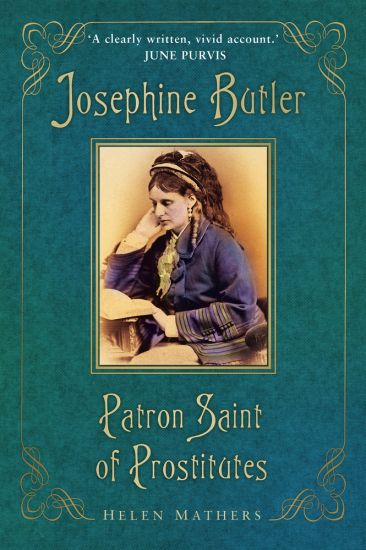
Josephine Butler

Josephine Butler

Helen Mathers

The History Press Ltd
2021
nidottu
The ‘steel rape’ of women is a scandal that is almost forgotten today.In Victorian England, police forces were granted powers to force any woman they suspected of being a ‘common prostitute’ to undergo compulsory and invasive medical examinations, while women who refused to submit willingly could be arrested and incarcerated. This scandal was exposed by Josephine Butler, an Evangelical campaigner who did not rest until she had ended the violation and helped repeal the Act that governed it. She went on to campaign against child prostitution, the trafficking of girls from Britain to Europe, and government-sponsored brothels in India. In addition, Josephine was instrumental in raising the age of consent from 13 to 16.Josephine Butler is the poignant tale of a nineteenth-century woman who challenged taboos and conventions in order to campaign for the rights of her gender. Her story is compelling – and unforgettable.
Josephine: I Can Help

Josephine: I Can Help

Sol Regwan

SCHIFFER PUBLISHING LTD
2026
pahvisivuinen
A tenacious toddler learns ways she and other young children can help take care of our planet in this adorable board book. Josephine is a small child with big dreams, and she's turning her attention to saving the earth! Young children can join Josephine in learning about the three Rs and why they are important to keeping our amazing planet healthy and clean. Key Features: • Introduces the concepts of reducing, reusing, and recycling in a simple way that is approachable for young children. • Offers an entry point for parents, caregivers, and teachers to discuss environmental conservation with children. • Encourages toddlers to dream big! Join this dedicated toddler as she reduces, reuses, and recycles and teaches us all some simple tips on how to love our amazing planet Earth! ?? Also in the Gizmo Girl: Toddler Dreamers series: I Could Be Books in the award-winning Gizmo Girl companion series: Geraldine and the Most Spectacular Science Project Geraldine and the Space Bees Geraldine and the Anti-Bullying Shield Geraldine and the Rainbow Machine
The Collected Essays of Josephine J. Turpin Washington

The Collected Essays of Josephine J. Turpin Washington

Josephine Turpin Washington

University of Virginia Press
2019
sidottu
Newspaper journalist, teacher, and social reformer, Josephine J. Turpin Washington led a life of intense engagement with the issues facing African American society in the post-Reconstruction era. This volume recovers numerous essays, many of them unavailable to the general public until now, and reveals the major contributions to the emerging black press made by this Virginia-born, Howard University-educated woman who clerked for Frederick Douglass and went on to become a writer with an important and unique voice.Written between 1880 and 1918, the work collected here is significant in the ways in which it disrupts the nineteenth-century African American literary canon, which has traditionally prioritized slave narratives. It paves the way for the treatment of race and gender in later nineteenth-century African American novels, and engages Biblical scriptures and European and American literatures to support racial uplift ideology. It also articulates shrewdly the aesthetic needs and responsibilities necessary for the black press to establish a reputable literary sphere.Part of a vibrant movement in recent scholarship to reclaim writings of nineteenth-century African American women writers, this expertly edited and annotated collection represents not only a valuable scholarly resource but a powerful example of the determination of a southern black woman to inspire others to improve their own lives and those of all African Americans.
Josephine Foard and the Glazed Pottery of Laguna Pueblo

Josephine Foard and the Glazed Pottery of Laguna Pueblo

Dwight P. Lanmon; Lorraine Welling Lanmon; Dominique Coulet Du Gard

University of New Mexico Press
2007
sidottu
In 1899, at the age of fifty-six, Josephine Jefferson Foard moved from the East Coast to Laguna Pueblo in New Mexico, where she built her own house and a kiln for firing pottery. Her intent was to show Pueblo potters how to strengthen their pottery by using better firing methods and by glazing it on the interior to make it waterproof. She also aimed to assist potters by marketing their products in the East, not just as decorative items but as functional additions to Anglo households. Through collecting and studying historic pueblo pottery and with access to Foard's correspondence with family and the Commissioners of Indian Affairs, the authors of this book provide a rare glimpse into the life of a remarkable woman who ventured to the Southwest as an artist, potter, and entrepreneur. Foard's letters, included in the appendices, describe at length her experience at Laguna Pueblo and offer insights into her life and work and also the lives of people of Laguna Pueblo and others in New Mexico.