
Kirjahaku
Etsi kirjoja tekijän nimen, kirjan nimen tai ISBN:n perusteella.
1000 tulosta hakusanalla Josiah Bateman
The Trial of Josiah Phillips for a Libel on the Duke of Cumberland; and the Proceedings Previous Thereto, Arising Out of the Suicide of Sellis in 1810
Josiah Phillips; Ernest Augustus
Kessinger Pub
2007
pokkari

Josiah Allen's Wife As A P.A. And P.I., Samantha At The Centennial 1878
Marietta Holley
Kessinger Pub
2007
pokkari
Josiah Allen's Wife As A P.A. And P.I.; Samantha At The Centennial (1878)
Marietta Holley
KESSINGER PUBLISHING, LLC
2008
sidottu
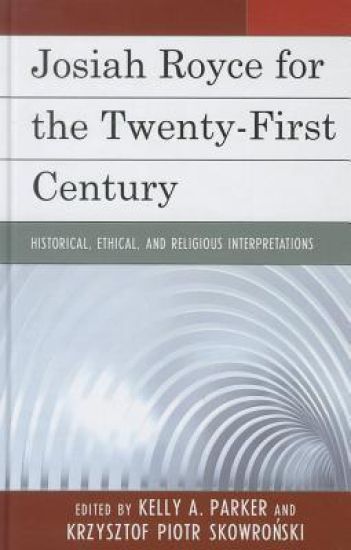
Josiah Royce for the Twenty-first Century
Lexington Books
2012
sidottu
The sixteen chapters of Josiah Royce for the Twenty-first Century are papers from the Fourth Annual Conference on American and European Values / International Conference on Josiah Royce, held at the Institute of Philosophy, University of Opole, Poland in June 2008. The presentation of diverse perspectives, and the development of many distinctive, promising strands of inquiry from the spring of Royce’s work, establish that Royce offers significant resources for a number of areas of contemporary philosophy. The book is organized into four parts: (I) Historical Reinterpretations, (II) Ethics: Interpretations of Loyalty, (III) Religious Philosophy, and (IV) Contemporary Implications. Section I considers Royce’s position in the history if ideas, with papers on his account of individuation, his expansion on a key idea from Kant, his use and contribution to mathematical and philosophical conceptions of the infinite and the absolute, and his adaptation of Peircean semiotics. Sections II and III consist of focused readings of Royce’s work regarding ethics and religious philosophy, respectively. Section IV is the most diverse in the topics covered, with papers that bring Royce into contemporary discussions of psychology, of the problem of reference, of Rortyan neo-pragmatism, and of literary aesthetics. The purpose of the Opole conference was to elicit fresh perspectives on the work of Josiah Royce from an international group of contributors. This collection achieves that aim by presenting new approaches to relatively familiar writings, by drawing out promising implications of Roycean themes, and by making genuinely new applications of his ideas. Josiah Royce for the Twenty-first Century presents a rich interaction among a diverse mix of commentators, who retrieve and construct promising new insights from the work of one of America's greatest thinkers.

Josiah Wedgewood
Southern Illinois Univ Pr
1967
pokkari

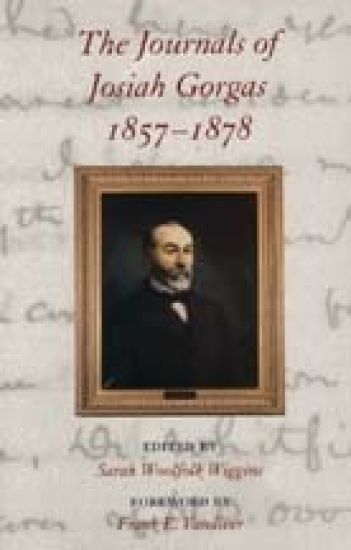
The Journals of Josiah Gorgas, 1857-1878
Josiah Gorgas; Frank E. Vandiver
The University of Alabama Press
1995
sidottu
This collection of Gorgas journals covers three important decades of the 19th-century South - the antebellum period, Civil War years and the postbellum period. It provides information on Victorian family life, military events, and the political and economic conditions faced by many Southerners.
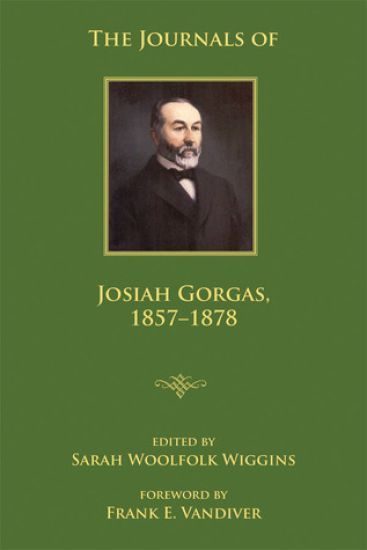
The Journals of Josiah Gorgas, 1857-1878
Josiah Gorgas; Frank Vandiver
The University of Alabama Press
1995
nidottu
Josiah Gorgas was best known as the highly regarded Chief of Confederate Ordnance. Born in 1818, he attended West Point, served in the U.S. Army, and later, after marrying Amelia Gayle, daughter of a former Alabama governor, joined the Confederacy. After the Civil War he served as president of The University of Alabama until ill health forced him to resign. His journals, maintained between 1857 and 1878, reflect the family's economic successes and failures, detail the course of the South through the Civil War, and describe the ordeal of Reconstruction. Few journals cover such a sweep of history. An added dimension is the view of Victorian family life as Gorgas explored his feelings about aspects of parental responsibility and transmission of values to children--a rarely documented account from the male perspective. His son, called Willie in the journals, was William Crawford Gorgas (1854-1920), who was noted for his fight to control yellow fever and who became surgeon general of the United States. In his foreword to the volume, Frank E. Vandiver states: ""Wiggins has done much more than present a well-edited version of Gorgas's diaries and journals; she has interpreted them in full Gorgas family context and in perspective of the times they cover. . . . Wiggins informs with the sort of editorial notes expected of a careful scholar, but she enlightens with wide knowledge of American and southern history. . . . Josiah Gorgas [was] an unusually observant, passionate man, a 'galvanized Rebel' who deserves rank among the true geniuses of American logistics.
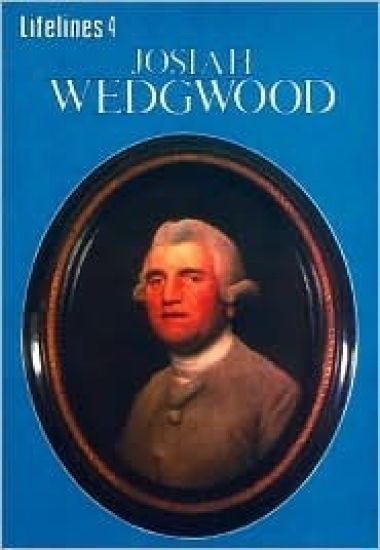
Josiah Wedgwood not only transformed the manufacture of pottery and the methods of its distribution but also revolutionised industry generally. He originated mass-production to increase efficiency and reduce waste, thus providing a product that more people could afford, and pioneered techniques of salesmanship, attracting the custom of royalty and maintaining the same high standard in all his ware. He treated his employees with benevolence, introducing unprecedented methods of management. Despite having a leg amputated at the prime of life, Wedgwood nonetheless continued to devote his attention to his diverse interests and to the industry of which he was the founding father. About the authorRichard Tames is the originator of the Lifelines series. He read history at Cambridge, took a Master's degree in politics at London and teaches for Syracuse University. He is the author of more than sixty titles, and is a qualified 'Blue Badge' tourist guide. Other titles for Shire by this author are: William Morris (see above)Isambard Kingdom Brunel (see above)The Victorian Public House

Josiah McElheny: The Past Was A Mirage I'd Left Far Behind
Daniel F. Herrmann
Whitechapel Gallery
2012
nidottu
This publication provides a comprehensive document of Josiah McElheny’s site-specific Bloomberg Commission exhibiting at the Whitechapel Gallery. Reflection, light and transparency are defining themes of Modernism and provide a leitmotif for the American sculptor Josiah McElheny’s 2011 Bloomberg Commission, The Past Was A Mirage I’d Left Far Behind. Seven mirrored, sculptural screens double, triple and refract the projections of reconfigured abstract films, proposing a new history of abstraction as a fragmented, sensory experience. New York-based artist Josiah McElheny is a sculptor, performance artist, writer and filmmaker, best known for his use of glass with other materials. For his Bloomberg Commission he uses light and mirrors to transform the Whitechapel Gallery into a Hall of Mirrors. This book provides an introduction to the artist, a record of his new work, and locates both within the history of art. Lisa Le Feuvre, Head of Sculpture Studies at the Henry Moore Institute, introduces the work of McElheny as an observer of history. Daniel F. Herrmann, Eisler Curator and Head of Curatorial Studies at the Whitechapel Gallery presents an in-depth account of the commission. Tamara Trodd, Lecturer for Twentieth Century and Contemporary Art at Edinburgh University, joins the artist and the curator for a conversation about the ideas and interests behind this major new commission.
Josiah Tucker (17131799) was one of the foremost thinkers of eighteenth-century England in the fields of economics, international relations, political theory, and imperialism. He shared the opinion, prevalent in his day, that Great Britain was underpopulated and observed with regret the immigration to America, believing that the colonies brought Britain no benefits. He thought instead that colonies were too costly to be beneficial, and, as early as 1749, he asserted that the American colonies would seek independence as soon as they no longer needed Great Britains assistance. He is one of the few men in England who consistently wrote and preached that the separation of the colonies would spell the ruin of England. Born of Welsh peasant stock in Laugharne, Carmarthenshire, Tucker was educated at St. Johns College, Oxford, and became a curate and rector successively at St. Stephens Church in Bristol. This led him to take considerable interest in politics and trade, as Bristol was second only to London in commerce in Great Britain during Tuckers years of residence there. During the greater portion of a long life, he poured out a succession of pamphlets on these matters. He was appointed dean of Gloucester in 1758. He died in 1799 and was buried in Gloucester Cathedral. This edition (originally published by Columbia University Press in 1931) contains seven of Tuckers writings, two of which are of special economic interest: The Elements of Commerce and Theory of Taxes and Instructions for Travelers. In the former selection, Tucker denounces monopoly in all its forms, yet he occupies an intermediate position between the rigid exclusiveness of mercantilism and the freedom of trade of Adam Smith. While he departs from Smith in some ways, it is often said that Tuckers work anticipates the classic doctrines of the Wealth of Nations, which was written twenty years later. Other writings in the volume include a remarkable tract on war, which illustrates progressive, pacifistic thought; and a treatise on civil government, written to refute the contract theory of the state. Tucker disposed of the fallacy that one nation could thrive only at the expense of another and condemned going to war for the sake of trade advantages. The original introduction, by Columbia history professor Robert Livingston Schuyler, places Tuckers writings in their historical and biographical setting and emphasises what seems most significant in his thought as an economist, a pacifist, an anti-imperialist, and a political theorist. Throughout the writings in this book, Tucker reveals with striking clearness the process of internal disintegration of the mercantilist doctrine during the eighteenth century, even before Hume and Smith had provided an acceptable substitute.
Josiah Tucker (17131799) was one of the foremost thinkers of eighteenth-century England in the fields of economics, international relations, political theory, and imperialism. He shared the opinion, prevalent in his day, that Great Britain was underpopulated and observed with regret the immigration to America, believing that the colonies brought Britain no benefits. He thought instead that colonies were too costly to be beneficial, and, as early as 1749, he asserted that the American colonies would seek independence as soon as they no longer needed Great Britains assistance. He is one of the few men in England who consistently wrote and preached that the separation of the colonies would spell the ruin of England. Born of Welsh peasant stock in Laugharne, Carmarthenshire, Tucker was educated at St. Johns College, Oxford, and became a curate and rector successively at St. Stephens Church in Bristol. This led him to take considerable interest in politics and trade, as Bristol was second only to London in commerce in Great Britain during Tuckers years of residence there. During the greater portion of a long life, he poured out a succession of pamphlets on these matters. He was appointed dean of Gloucester in 1758. He died in 1799 and was buried in Gloucester Cathedral. This edition (originally published by Columbia University Press in 1931) contains seven of Tuckers writings, two of which are of special economic interest: The Elements of Commerce and Theory of Taxes and Instructions for Travelers. In the former selection, Tucker denounces monopoly in all its forms, yet he occupies an intermediate position between the rigid exclusiveness of mercantilism and the freedom of trade of Adam Smith. While he departs from Smith in some ways, it is often said that Tuckers work anticipates the classic doctrines of the Wealth of Nations, which was written twenty years later. Other writings in the volume include a remarkable tract on war, which illustrates progressive, pacifistic thought; and a treatise on civil government, written to refute the contract theory of the state. Tucker disposed of the fallacy that one nation could thrive only at the expense of another and condemned going to war for the sake of trade advantages. The original introduction, by Columbia history professor Robert Livingston Schuyler, places Tuckers writings in their historical and biographical setting and emphasizes what seems most significant in his thought as an economist, a pacifist, an anti-imperialist, and a political theorist. Throughout the writings in this book, Tucker reveals with striking clearness the process of internal disintegration of the mercantilist doctrine during the eighteenth century, even before Hume and Smith had provided an acceptable substitute.
"There's nothing available that I know of that comes as close to representing the range of Royce's works. . . . " -- John H Lavely