Kirjojen hintavertailu. Mukana 12 390 323 kirjaa ja 12 kauppaa.

Kirjahaku

Etsi kirjoja tekijän nimen, kirjan nimen tai ISBN:n perusteella.

1000 tulosta hakusanalla Joyce Murray

Joyce, Bakhtin, and the Literary Tradition

Joyce, Bakhtin, and the Literary Tradition

Booker M. Keith

THE UNIVERSITY OF MICHIGAN PRESS
1997
nidottu
Literary studies of James Joyce, perhaps more so than those of any other author, have been enriched by important developments in literary theory in the last twenty-five years. Noting a curious gap in this scholarship, M. Keith Booker brings the work of Mikhail Bakhtin, unquestionably one of the most important literary theorists of this century, to bear on Joyce's relationship to six of his literary predecessors. In clear and readable prose, Booker explores Joyce's dialogues not only with Homer, Dante, and Shakespeare, his three most obvious predecessors, but with Rabelais, Goethe, and Dostoevsky, three literary figures important in Bakhtin's theoretical work.These six writers provide the opportunity to examine Joyce's work with regard to several of Bakhtin's most important concepts. If Homer represents the authority of epic, Rabelais represents for Bakhtin the subversive multivocal energies of carnivalesque genres. As opposed to his description of Dante's attempts to escape from historicity, Bakhtin figures Goethe as the epitome of engagement with the temporality of everyday history. And Bakhtin's generic denial of polyphony in the works of Shakespeare contrasts with Bakhtin's identification of Dostoevsky as the most polyphonic writer in all the world of literature.Together, Booker's comparative readings suggest a Joyce whose works are politically committed, historically engaged, and socially relevant. In short, they suggest a Joyce whose work differs radically from conventional notions of modernist literature as culturally elitist, historically detached, and more interested in individual psychology than in social reality.M. Keith Booker is Professor of English, University of Arkansas.
Joyce/Foucault

Joyce/Foucault

Wolfgang Streit

The University of Michigan Press
2004
sidottu
Sheds new light on James Joyce's use of sexual motifs as cultural raw material for Ulysses and other worksJoyce/Foucault: Sexual Confessions examines instances of sexual confession in works of James Joyce, with a special emphasis on Portrait of the Artist as a Young Man and Ulysses. Using Michel Foucault's historical analysis of Western sexuality as its theoretical underpinning, the book foregrounds the role of the Jesuit order in the spread of a confessional force, and finds this influence inscribed into Joyce's major texts. Wolfgang Streit goes on to argue that the tension between the texts' erotic passages and Joyce's criticism of even his own sexual writing energizes Joyce's narratives-and enables Joyce to develop the radical skepticism of power revealed in his work.Wolfgang Streit is Lecturer, Ludwig Maximilians University, Munich.
Joyce Annotated

Joyce Annotated

Don Gifford

University of California Press
1981
pokkari
In James Joyce's early work, as in "Ulysses" and "Finnegans Wake", meanings are often concealed in obscure allusions and details of veiled suggestive power. Consistent recognition of these hidden significances in "Dubliners" and "A Portrait of the Artist as a Young Man" would require an encyclopedic knowledge of life in nineteenth- and twentieth-century Dublin such as few readers possess. Now this substantially revised and expanded edition of Don Gifford's "Notes to Joyce: 'Dubliners' and 'A Portrait of the Artist as a Young Man'" puts the requisite knowledge at the disposal of scholars, students, and general readers. An ample introductory essay supplies the historical, biographical, and geographical background for "Dubliners" and "Portrait". The annotations that follow gloss place names, define slang terms, recount relevant gossip, give capsule histories of institutions and political and cultural movements and figures, supply bits of local and Irish legend and lore, explain religious nomenclature and practices, and illuminate cryptic allusions to literature, theology, philosophy, science and the arts. Professor Gifford's labors in gathering these data into a single volume have resulted in an invaluable source-book for all students of Joyce's art.
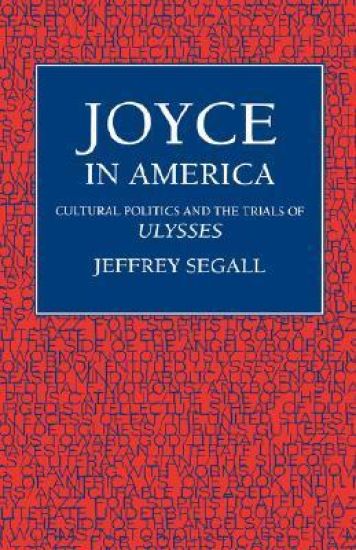
Joyce in America

Joyce in America

Jeffrey Segall

University of California Press
1993
sidottu
When James Joyce's Ulysses was first published in America, it quickly became a dynamic symbol of both modern art and the modern age. Jeffrey Segall skillfully demonstrates how various political, ideological, and religious allegiances influenced the critical reception and eventual canonization of what is perhaps the twentieth century's greatest novel. In re-creating the polemical debates that erupted, Segall provides a dramatic reminder of just how challenging and controversial Ulysses was--and is. Seventy years after Ulysses was first banned, the novel remains at the center of contemporary debates among feminist, neo-Marxist, and poststructuralist critics. Segall allows us the opportunity to view Ulysses from the perspective of its early readers, and he also elucidates key moments in recent American cultural history.
Joyce in Nighttown

Joyce in Nighttown

Mark Shechner

University of California Press
2022
pokkari
This title is part of UC Press's Voices Revived program, which commemorates University of California Press’s mission to seek out and cultivate the brightest minds and give them voice, reach, and impact. Drawing on a backlist dating to 1893, Voices Revived makes high-quality, peer-reviewed scholarship accessible once again using print-on-demand technology. This title was originally published in 1974.
Joyce's Benefictions

Joyce's Benefictions

Helmut Bonheim

University of California Press
2021
pokkari
This title is part of UC Press's Voices Revived program, which commemorates University of California Press’s mission to seek out and cultivate the brightest minds and give them voice, reach, and impact. Drawing on a backlist dating to 1893, Voices Revived makes high-quality, peer-reviewed scholarship accessible once again using print-on-demand technology. This title was originally published in 1964.
Joyce in Nighttown

Joyce in Nighttown

Mark Shechner

University of California Press
2022
sidottu
This title is part of UC Press's Voices Revived program, which commemorates University of California Press’s mission to seek out and cultivate the brightest minds and give them voice, reach, and impact. Drawing on a backlist dating to 1893, Voices Revived makes high-quality, peer-reviewed scholarship accessible once again using print-on-demand technology. This title was originally published in 1974.
Joyce's Benefictions

Joyce's Benefictions

Helmut Bonheim

University of California Press
2021
sidottu
This title is part of UC Press's Voices Revived program, which commemorates University of California Press’s mission to seek out and cultivate the brightest minds and give them voice, reach, and impact. Drawing on a backlist dating to 1893, Voices Revived makes high-quality, peer-reviewed scholarship accessible once again using print-on-demand technology. This title was originally published in 1964.
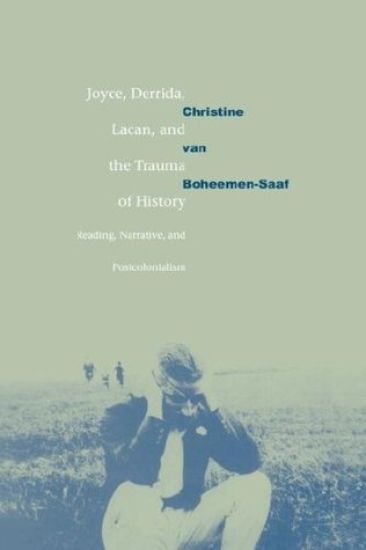
Joyce, Derrida, Lacan and the Trauma of History

Joyce, Derrida, Lacan and the Trauma of History

Boheemen Christine van

Cambridge University Press
2006
pokkari
In Joyce, Derrida, Lacan and the Trauma of History, Christine van Boheemen-Saaf examines the relationship between Joyce's postmodern textuality and the traumatic history of colonialism in Ireland. Joyce's influence on Lacanian psychoanalysis and Derrida's philosophy, Van Boheemen-Saaf suggests, ought to be viewed from a postcolonial perspective. She situates Joyce's writing as a practice of indirect 'witnessing' to a history that remains unspeakable. The loss of a natural relationship to language in Joyce calls for a new ethical dimension in the process of reading. The practice of reading becomes an act of empathy to what the text cannot express in words. In this way, she argues, Joyce's work functions as a material location for the inner voice of Irish cultural memory. This book engages with a wide range of contemporary critical theory and brings Joyce's work into dialogue with thinkers such as Zizek, Adorno, Lyotard, as well as feminism and postcolonial theory.
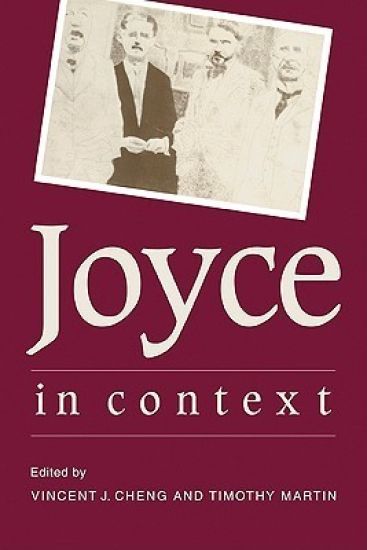
Joyce in Context

Joyce in Context

Cambridge University Press
2009
pokkari
This challenging collection of essays by an international group of scholars aims, through the critical concept of 'context', to put the work of James Joyce in its 'place'. The four sections explore a range of contexts, offering significant perspectives - historical, theoretical, feminist, cultural and linguistic - on Joyce's writing. Essays on the modernist context place Joyce alongside contemporaries, like Woolf, Ford, and Freud, re-evaluating accepted notions of literary relationship and ideology. The context of the 'other' is invoked in essays drawing on recent developments in feminist, post-structuralist, and psychoanalytic literary theory, and taking Joyce's work as a site for provocative investigations into the nature of sexual, national, ethnic and cultural marginality. Some original re-readings of Joyce's relationship to particular writers, critics and cultural traditions draw him into proximity with Homer, Lacan, the comic strip and Irish popular literature. Finally, in essays that examine aspects and evolutions of his distinctive style, Joyce is considered within the parameters of his own oeuvre.
Joyce and Wagner

Joyce and Wagner

Timothy Peter Martin

Cambridge University Press
2009
pokkari
In correspondence and conversation, James Joyce kept himself aloof from his age, and denigrated recent art and thought at almost every opportunity. 'In the last two hundred years,' he declared, 'we haven't had a great thinker.' This book reveals that in spite of his protestations Joyce was profoundly influenced by one of the major figures of nineteenth-century culture, the composer Richard Wagner. Timothy Martin documents Joyce's exposure to Wagner's operas, and defines a pervasive Wagnerian presence in his work, identifying scores of allusions. Wagner emerges as an important source in the development of literary modernism, and - alongside Flaubert and Ibsen - as one of Joyce's most important influences from the previous century. The revisionary impact of this empirical study in cultural history was to present Joyce as far more a child of the nineteenth century than he wished to acknowledge, much more than Joyce's students historically recognised.
Joyce, Race and 'Finnegans Wake'

Joyce, Race and 'Finnegans Wake'

Platt Len

Cambridge University Press
2009
pokkari
Len Platt charts a fresh approach through one of the great masterpieces of twentieth-century literature. Using original archival research and detailed close readings, he outlines Joyce's literary response to the racial discourse of twentieth-century politics. Platt's account is the first to position Finnegans Wake in precise historical conditions and to explore Joyce's engagement with European fascism. Race, Platt claims, is a central theme for Joyce, both in terms of the colonial and post-colonial conflicts between the Irish and the British, and in terms of its use by the extreme right. It is in this context that Joyce's engagement with race, while certainly a product of colonial relations, also figures as a wider disputation with rationalism, capitalism and modernity.
Joyce, Dante, and the Poetics of Literary Relations

Joyce, Dante, and the Poetics of Literary Relations

Boldrini Lucia

Cambridge University Press
2009
pokkari
Lucia Boldrini's study examines how the literary and linguistic theories of Dante's Divine Comedy helped shape the radical narrative techniques of Joyce's last novel, Finnegans Wake. Through detailed parallel readings, she explores a range of connections: issues such as the question of Babel, literary creation as excrement, the complex relations between literary, geometrical and female forms. Boldrini places Joyce's work in the wider context of other modernist writing's relation to Dante, thereby identifying the distinctness of Joyce's own project. She considers how theories of influence and intertextuality help or limit the understanding of the relation. Boldrini shows how, through an untiring confrontation with his predecessors, constantly thematised within his writing, Joyce develops a 'poetics in progress' that informs not only his final work but his entire oeuvre. This book will appeal to scholars and students interested in Joyce, Dante, and questions of literary relations.
Joyce and the Invention of Irish History

Joyce and the Invention of Irish History

Thomas C. Hofheinz

Cambridge University Press
2010
pokkari
This incisive study of James Joyce's work examines Finnegans Wake as a narrative response to acute problems of historical experience, especially issues of modern Irish identity implicit in historical writing about Ireland. Thomas C. Hofheinz shows how Joyce's narrative simulations of such problems enabled him to form startling linkages between public and private, objective and subjective Irish history. Hofheinz investigates Joyce's illumination of a wide range of issues - social, cultural, familial, psychological - by comparing Finnegans Wake with traditions of modern Irish historicism and historiography, including Ireland's place in the Catholic providential history of Vico's New Science; and he trenchantly challenges cultural-material methods of interpreting Joyce's historical 'subject', countering them with a reader-response philosophy owing much to the hermeneutics of Gadamer, Iser, and Ricoeur.
Joyce and the Invention of Irish History

Joyce and the Invention of Irish History

Thomas C. Hofheinz

Cambridge University Press
1995
sidottu
This incisive and original study of James Joyce’s work examines Finnegans Wake as a narrative response to acute problems of historical experience, especially issues of modern Irish identity implicit in historical writing about Ireland. Thomas C. Hofheinz shows how Joyce’s narrative simulations of such problems enabled him to form startling linkages between public and private, objective and subjective Irish history. Hofheinz investigates Joyce’s illumination of a wide range of issues - social, cultural, familial, psychological - by comparing Finnegans Wake with traditions of modern Irish historicism and historiography, including Ireland’s place in the Catholic providential history of Vico’s New Science; and he trenchantly challenges cultural-material methods of interpreting Joyce’s historical ‘subject’, countering them with a reader-response philosophy owing much to the hermeneutics of Gadamer, Iser, and Ricoeur.
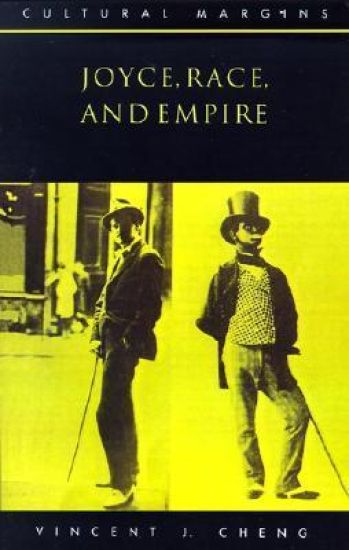
Joyce, Race, and Empire

Joyce, Race, and Empire

Vincent J. Cheng; Derek Attridge

Cambridge University Press
1995
pokkari
In this first full-length study of race and colonialism in the works of James Joyce, Vincent J. Cheng argues that Joyce wrote insistently from the perspective of a colonial subject of an oppressive empire, and that Joyce’s representations of ‘race’ in its relationship to imperialism constitute a trenchant and significant political commentary, not only on British imperialism in Ireland, but on colonial discourses and imperial ideologies in general. Exploring the interdisciplinary space afforded by postcolonial theory, minority discourse, and cultural studies, and articulating his own cross-cultural perspective on racial and cultural liminality, Professor Cheng offers a ground-breaking study of the century’s most internationally influential fiction writer, and of his suggestive and powerful representations of the cultural dynamics of race, power, and empire.
Joyce: 'Ulysses'

Joyce: 'Ulysses'

Vincent Sherry

Cambridge University Press
2004
pokkari
In this engaging introduction, Vincent Sherry combines a close reading of Ulysses with new critical arguments. He provides a useful guide to the episodic sequence of Joyce’s novel. In addition, he presents a searching interpretation of this masterwork, freshly addressing the major issues in Ulysses criticism. He shows how Joyce’s modernist epic remodels Homer’s Odyssey; he examines and explains Joyce’s extraordinary verbal experiments; and he reads anew the most challenging language of the text, the words through which the characters reveal their secret lives. He also reclaims the landmark status of Joyce’s monumental novel, situating it in the relevant contexts of literary tradition and political history. This book is essential reading for all students of Joyce, whether they are approaching Ulysses for the first time or returning to the text.
Joyce, Derrida, Lacan and the Trauma of History

Joyce, Derrida, Lacan and the Trauma of History

Christine van Boheemen

Cambridge University Press
1999
sidottu
In Joyce, Derrida, Lacan and the Trauma of History, Christine van Boheemen-Saaf examines the relationship between Joyce’s postmodern textuality and the traumatic history of colonialism in Ireland. Joyce’s influence on Lacanian psychoanalysis and Derrida’s philosophy, Van Boheemen-Saaf suggests, ought to be viewed from a postcolonial perspective. She situates Joyce’s writing as a practice of indirect ‘witnessing’ to a history that remains unspeakable. The loss of a natural relationship to language in Joyce calls for a new ethical dimension in the process of reading. The practice of reading becomes an act of empathy to what the text cannot express in words. In this way, she argues, Joyce’s work functions as a material location for the inner voice of Irish cultural memory. This book engages with a wide range of contemporary critical theory and brings Joyce’s work into dialogue with thinkers such as Zizek, Adorno, Lyotard, as well as feminism and postcolonial theory.
Joyce Effects

Joyce Effects

Derek Attridge

Cambridge University Press
2000
sidottu
Joyce Effects is a series of connected essays by one of today’s leading commentators on James Joyce. Joyce’s books, Derek Attridge argues, go off like fireworks, and one of this book’s aims is to enhance the reader’s enjoyment of these special effects. He also examines another sort of effect: the way Joyce’s writing challenges and transforms our understanding of language, literature, and history. Attridge’s exploration of these transforming effects represents fifteen years of close engagement with Joyce, and reflects the changing course of Joyce criticism during this period. Each of Joyce’s four major books is addressed in depth, while several shorter chapters take up particular theoretical topics such as character, chance and coincidence, historical writing and narrative as they are staged and scrutinized in Joyce’s writing. Through lively and accessible discussion, this book advances a mode of reading open to both the pleasures and the surprises of the literary work.