Kirjojen hintavertailu. Mukana 11 244 527 kirjaa ja 12 kauppaa.

Kirjahaku

Etsi kirjoja tekijän nimen, kirjan nimen tai ISBN:n perusteella.

1000 tulosta hakusanalla Joyce Rodgers

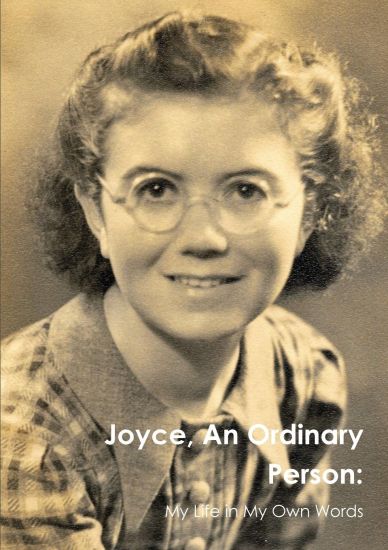
Joyce, An Ordinary Person

Joyce, An Ordinary Person

Paul & Patti Quant

Lulu.com
2017
pokkari
This is an autobiography of a hard-working mother of twelve children (eleven who survived to adulthood) who was born at the end of the First World War and met and married her husband during the Second. They enjoyed over 60 years together before she was widowed. In her story, this amazingly strong woman, who died in her ninety-ninth year, recounts the hardships and pleasures of 'an ordinary life'.
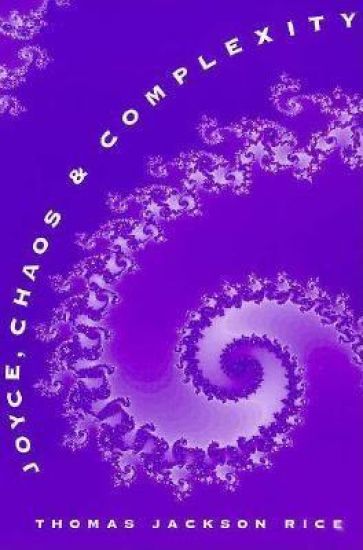
Joyce, Chaos, and Complexity

Joyce, Chaos, and Complexity

Thomas Rice

University of Illinois Press
1997
nidottu
Thomas Rice compellingly argues that James Joyce's work resists postmodernist approaches of ambiguity: Joyce never abandoned his conviction that reality exists, regardless of the human ability to represent it. Placing Joyce in his cultural context, Rice first traces the influence of Euclidean and non-Euclidean geometries on Dubliners and A Portrait of the Artist as a Young Man. He then demonstrates that, when later innovations in science transformed entire worldviews, Joyce recognized conventional literary modes of representation as offering only arbitrary constructions of this reality. Joyce responded in Ulysses by experimenting with perspective, embedding design, and affirming the existence of reality. Rice contends that Ulysses presages the multiple tensions of chaos theory; likewise, chaos theory can serve as a model for understanding Ulysses. In Finnegans Wake Joyce consummates his vision and anticipates the theories of complexity science through a dynamic approximation of reality.
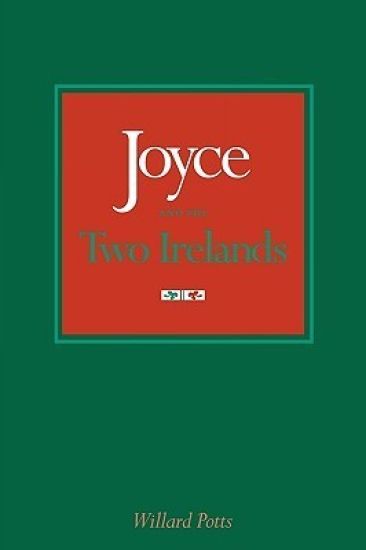
Joyce and the Two Irelands

Joyce and the Two Irelands

Willard Potts

University of Texas Press
2001
pokkari
Uniting Catholic Ireland and Protestant Ireland was a central idea of the "Irish Revival," a literary and cultural manifestation of Irish nationalism that began in the 1890s and continued into the early twentieth century. Yet many of the Revival's Protestant leaders, including W. B. Yeats, Lady Gregory, and John Synge, failed to address the profound cultural differences that made uniting the two Irelands so problematic, while Catholic leaders of the Revival, particularly the journalist D. P. Moran, turned the movement into a struggle for greater Catholic power. This book fully explores James Joyce's complex response to the Irish Revival and his extensive treatment of the relationship between the "two Irelands" in his letters, essays, book reviews, and fiction up to Finnegans Wake. Willard Potts skillfully demonstrates that, despite his pretense of being an aloof onlooker, Joyce was very much a part of the Revival. He shows how deeply Joyce was steeped in his whole Catholic culture and how, regardless of the harsh way he treats the Catholic characters in his works, he almost always portrays them as superior to any Protestants with whom they appear. This research recovers the historical and cultural roots of a writer who is too often studied in isolation from the Irish world that formed him.
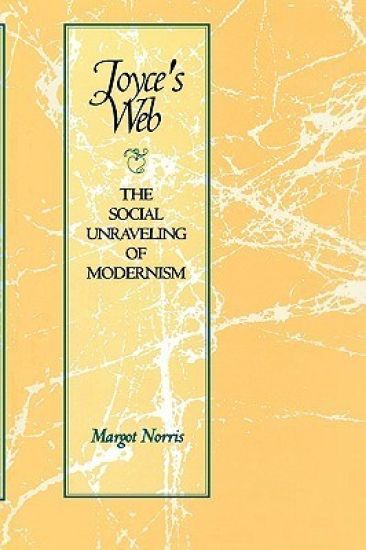
Joyce's Web

Joyce's Web

Margot Norris

University of Texas Press
2009
pokkari
James Joyce has long been viewed as a literary modernist who helped define and uphold modernism's fundamental concepts of the artist as martyr to bourgeois sensibilities and of an idealistic faith in artistic freedom. In this revolutionary work, however, Margot Norris proposes that Joyce's art actually critiques these modernist tenets by revealing an awareness of the artist's connections to and constraints within bourgeois society.In sections organized around three mythologized and aestheticized figures in Joyce's works-artist, woman, and child-Norris' readings "unravel the web" of Joyce's early and late stories, novels, and experimental texts. She shows how Joyce's texts employ multiple mechanisms to expose their own distortions, silences, and lies and reveal connections between art and politics, and art and society.This ambitious new reading not only repositions Joyce within contemporary debates about the ideological assumptions behind modernism and postmodernism, but also urges reconsideration of the phenomenon of modernism itself. It will be of interest and importance to all literary scholars.
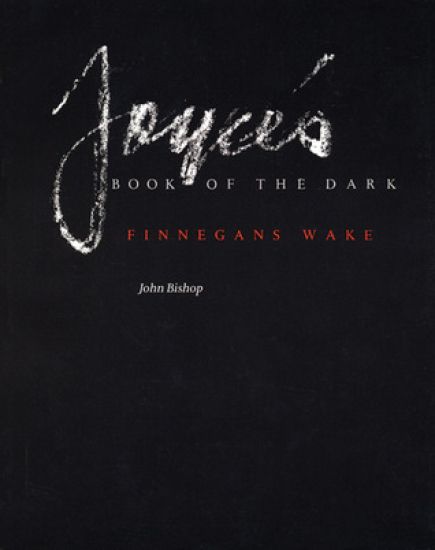
Joyce's Book of the Dark

Joyce's Book of the Dark

John Bishop

University of Wisconsin Press
1993
nidottu
The author examines "Finnegans Wake" and attempts to unravel what he feels are Joyce's wilful obscurities. This book aims to demonstrate how Joyce's creative imagination solved the problems involved in writing a representation of the night.
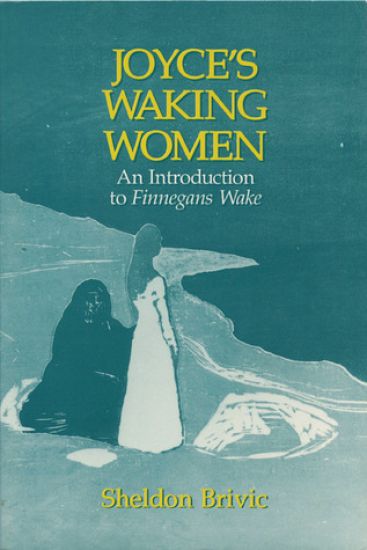
Joyce's Waking Women

Joyce's Waking Women

Brivic Sheldon R.

University of Wisconsin Press
1995
nidottu
This feminist study of James Joyce's "Finnegans Wake" is inspired by the work of such French theorists as Luce Irigaray and Jacques Lacan. It is a suitable introduction for students and others just getting their feet wet in the riverrun of Joyce's language. Helping newcomers gain the sensibility and skills essential to reading any part of the book, the author focuses on its many strands of feminine narrative, especially the two remarkably beautiful sections that highlight Anna Livia Plurabelle. Anna Livia, Brivic argues, embodies a radical vision of how women are entrapped and how they will free themselves. He sees her speech as the first - and last - testament of a multiracial heroine whose dreams for the future merge with a determination to reject male authority.
Joyce's Critics

Joyce's Critics

University of Wisconsin Press
2004
nidottu
Joseph Brooker's synthesis lucidly summarizes more than seventy years of Joyce criticism. This is the first broad study of how James Joyce's work was received in the Anglophone world, accessibly written for both academic and lay readers. Brooker shows how the reading of Joyce's work has moved through different critical paradigms, periods, and places, and how Joyce's writing has given generations of readers a way to discuss the major issues of the modern world.
Joyce J. Scott

Joyce J. Scott

YALE UNIVERSITY PRESS
2024
sidottu
An insightful retrospective of the genre-defying contemporary artist and MacArthur Fellow Joyce J. Scott, showcasing contributions from an extraordinary group of artists and scholars This essential new volume serves as a critical resource and details the richness and complexity of the work of Joyce J. Scott (b. 1948), beginning with an overview of the artist’s 50-year career—an interconnected, community-generating practice that embraces performance art, beaded necklaces and sculptures, wall hangings, and prints. Interviews with the artist by Leslie King Hammond and Valerie Cassel Oliver focus on Scott’s matrilineage and womanist ethos and on the genre-defying choreography of her career across disciplines. Six thematic essays by established and emerging scholars discuss the ancient and global reach of beads, including Yorùbá traditions; consider the utility of satire and performance in connection with the work of emerging Black artists; and explore the significance of geography, history, and place. Excerpts from foundational out-of-print texts and an illustrated chronology annotated by Scott appear alongside contributions by artists Sonya Clark, Oletha DeVane, Jeffrey Gibson, Kay Lawal-Muhammad, Malcolm Peacock, and William C. Rhodes III. Scott makes difficult subjects intimately felt, confronting histories of trauma through wearable art and exquisite sculpture. With humor and pathos, she twists menacing stereotypes into grotesque and tender retorts that spur conversation, making art a vehicle for learning, reflection, and healing. Distributed for the Seattle Art Museum and Baltimore Museum of ArtExhibition Schedule: Baltimore Museum of Art (March 24–July 14, 2024) Seattle Art Museum (October 17, 2024–January 20, 2025)
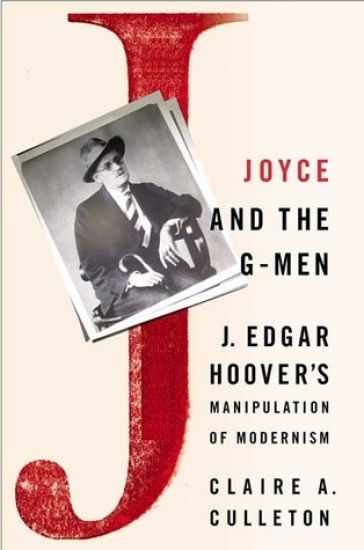
Joyce and the G-Men

Joyce and the G-Men

C. Culleton

Palgrave Macmillan
2004
sidottu
Several years ago on a whim, Culleton requested James Joyce's FBI file. Hoover had Joyce under surveillance as a suspected Communist, and the chain of cross-references that Culleton followed from Joyce's file lead her to obscenity trials and, less obviously, to a plot to assassinate Irish labour leader James Larkin. Hoover devoted a great deal of energy to keeping watch on intellectuals and considered literature to be dangerous on a number of levels. Joyce and the G-Men explores how these linkages are indicative of the culture of the FBI under Hoover, and the resurgence of American anti-intellectualism.
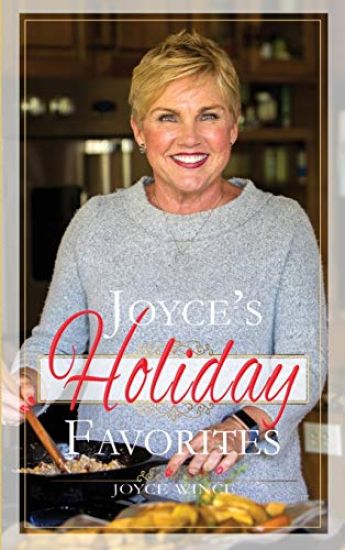
Joyce's Holiday Favorites

Joyce's Holiday Favorites

Joyce Wince

Joyce Wince
2019
sidottu
Featuring more than 150 recipes perfect for any holiday bash.A complete guide to managing the holidays and making memories with your loved ones. Invite your family into the kitchen to prepare holiday meals and host a celebration with dishes that will be handed down through generations.Joyce offers both the staples--like Fried Chicken and Waffles, Mouthwatering BBQ Chicken, Nana's Baked Beans, Beef Tenderloin, Roasted Turkey, and the Perfect Pie Crust--and new instant classics, like--Roasted Garlic Mashed Potatoes, Lemon Ricotta Pancakes, Hot Crab Dip, Lavender Sugar Cookies, Strawberry-Basil Frozen Yogurt, Over the River Stew, Sweet Potato and Apple Casserole, and Goat Cheese Envelopes.Featuring over 115 full-color pictures, family anecdotes, and special tips to make cooking and clean up easier Learn: -Why you should buy crafts for the kids.-Why a food processor is good for sauces and dips.-How cake rounds are great time savers. Gather around the table with Joyce's Holiday Favorites.
Joyce and the Perverse Ideal

Joyce and the Perverse Ideal

David Cotter

Routledge
2013
nidottu
Representations of masochism--both overt and oblique--permeate the work of James Joyce. While a number of criticshave noted this, to date there has been no sustained and focused analysis of this trope in his writings. David Cotter argues that such an examination is key to understanding the meanings and messages of Joyce's work. Adding dimension to moral, political, and aesthetic considerations in the novels and stories--particularly Ulysses--this book provides a comprehensive account of masochistic elements in the oeuvre of the twentieth century's most revered author. Cotter draws upon psychoanalytic theory and social history to illustrate the subversive power of perversity in the literature of the modern period.
Joyce and the Perverse Ideal

Joyce and the Perverse Ideal

David Cotter

Routledge
2003
sidottu
Representations of masochism - both overt and oblique - permeate the work of James Joyce. While a number of critics have noted this, to date there has been no sustained and focused analysis of this trope in his writings. David Cotter argues that such an examination is key to understanding the meanings and messages of Joyce's work. Adding further dimensions to moral, political and aesthetic considerations in the novels and stories - particularly Ulysses - this book provides a comprehensive account of masochistic elements in James Joyce's work. Cotter draws upon psychoanalytic theory and social history to illustrate the subversive power of perversity in the literature of the modern period. This edition first Published in 2003. Routledge is an imprint of Taylor & Francis, an informa company.
Joyce, Bakhtin, and the Literary Tradition

Joyce, Bakhtin, and the Literary Tradition

Booker M. Keith

THE UNIVERSITY OF MICHIGAN PRESS
1997
nidottu
Literary studies of James Joyce, perhaps more so than those of any other author, have been enriched by important developments in literary theory in the last twenty-five years. Noting a curious gap in this scholarship, M. Keith Booker brings the work of Mikhail Bakhtin, unquestionably one of the most important literary theorists of this century, to bear on Joyce's relationship to six of his literary predecessors. In clear and readable prose, Booker explores Joyce's dialogues not only with Homer, Dante, and Shakespeare, his three most obvious predecessors, but with Rabelais, Goethe, and Dostoevsky, three literary figures important in Bakhtin's theoretical work.These six writers provide the opportunity to examine Joyce's work with regard to several of Bakhtin's most important concepts. If Homer represents the authority of epic, Rabelais represents for Bakhtin the subversive multivocal energies of carnivalesque genres. As opposed to his description of Dante's attempts to escape from historicity, Bakhtin figures Goethe as the epitome of engagement with the temporality of everyday history. And Bakhtin's generic denial of polyphony in the works of Shakespeare contrasts with Bakhtin's identification of Dostoevsky as the most polyphonic writer in all the world of literature.Together, Booker's comparative readings suggest a Joyce whose works are politically committed, historically engaged, and socially relevant. In short, they suggest a Joyce whose work differs radically from conventional notions of modernist literature as culturally elitist, historically detached, and more interested in individual psychology than in social reality.M. Keith Booker is Professor of English, University of Arkansas.
Joyce/Foucault

Joyce/Foucault

Wolfgang Streit

The University of Michigan Press
2004
sidottu
Sheds new light on James Joyce's use of sexual motifs as cultural raw material for Ulysses and other worksJoyce/Foucault: Sexual Confessions examines instances of sexual confession in works of James Joyce, with a special emphasis on Portrait of the Artist as a Young Man and Ulysses. Using Michel Foucault's historical analysis of Western sexuality as its theoretical underpinning, the book foregrounds the role of the Jesuit order in the spread of a confessional force, and finds this influence inscribed into Joyce's major texts. Wolfgang Streit goes on to argue that the tension between the texts' erotic passages and Joyce's criticism of even his own sexual writing energizes Joyce's narratives-and enables Joyce to develop the radical skepticism of power revealed in his work.Wolfgang Streit is Lecturer, Ludwig Maximilians University, Munich.
Joyce Annotated

Joyce Annotated

Don Gifford

University of California Press
1981
pokkari
In James Joyce's early work, as in "Ulysses" and "Finnegans Wake", meanings are often concealed in obscure allusions and details of veiled suggestive power. Consistent recognition of these hidden significances in "Dubliners" and "A Portrait of the Artist as a Young Man" would require an encyclopedic knowledge of life in nineteenth- and twentieth-century Dublin such as few readers possess. Now this substantially revised and expanded edition of Don Gifford's "Notes to Joyce: 'Dubliners' and 'A Portrait of the Artist as a Young Man'" puts the requisite knowledge at the disposal of scholars, students, and general readers. An ample introductory essay supplies the historical, biographical, and geographical background for "Dubliners" and "Portrait". The annotations that follow gloss place names, define slang terms, recount relevant gossip, give capsule histories of institutions and political and cultural movements and figures, supply bits of local and Irish legend and lore, explain religious nomenclature and practices, and illuminate cryptic allusions to literature, theology, philosophy, science and the arts. Professor Gifford's labors in gathering these data into a single volume have resulted in an invaluable source-book for all students of Joyce's art.
Joyce in America

Joyce in America

Jeffrey Segall

University of California Press
1993
sidottu
When James Joyce's Ulysses was first published in America, it quickly became a dynamic symbol of both modern art and the modern age. Jeffrey Segall skillfully demonstrates how various political, ideological, and religious allegiances influenced the critical reception and eventual canonization of what is perhaps the twentieth century's greatest novel. In re-creating the polemical debates that erupted, Segall provides a dramatic reminder of just how challenging and controversial Ulysses was--and is. Seventy years after Ulysses was first banned, the novel remains at the center of contemporary debates among feminist, neo-Marxist, and poststructuralist critics. Segall allows us the opportunity to view Ulysses from the perspective of its early readers, and he also elucidates key moments in recent American cultural history.