Kirjojen hintavertailu. Mukana 11 244 527 kirjaa ja 12 kauppaa.

Kirjahaku

Etsi kirjoja tekijän nimen, kirjan nimen tai ISBN:n perusteella.

1000 tulosta hakusanalla Juan Leniz

Juan and Eva Peron

Juan and Eva Peron

Clive Foss

The History Press Ltd
2006
nidottu
Juan and Eva Peron formed a charismatic partnership, arousing passionate emotions in Argentina during the 1940s and '50s. Juan Peron's rise to power began in 1943 when he helped organise the successful coup of pro-Axis army officers. Eva, a former actress and subject of scandal, became increasingly influential, securing the vote for women.
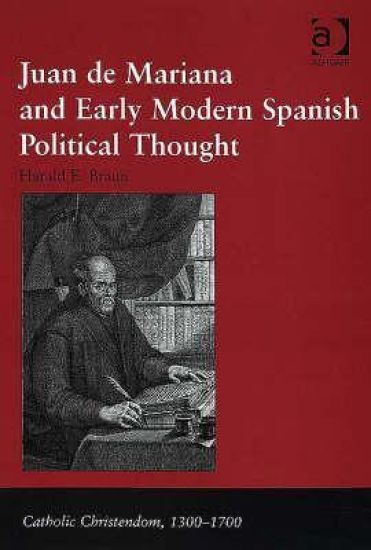
Juan de Mariana and Early Modern Spanish Political Thought

Juan de Mariana and Early Modern Spanish Political Thought

Harald E. Braun

Ashgate Publishing Limited
2007
sidottu
The Jesuit Juan de Mariana (1535-1624) is one of the most misunderstood authors in the history of political thought. His treatise De rege et regis institutione libri tres (1599) is dedicated to Philip III of Spain. It was to present the principles of statecraft by which the young king was to abide. Yet soon after its publication, Catholic and Calvinist politiques in France started branding Mariana a regicide. De rege was said to empower the private individual to kill a legitimate king. Its 'pernicious doctrines' were blamed for the murder of Henry IV in 1610, and it was burned at the order of the parlement of Paris. Modern historians have tended to build on this interpretation and consider De rege a stepping stone towards modern pluralist and democratic thought. Nothing could be further from the truth. The notion of Mariana as an uncompromising theorist of resistance is in fact based on the distorted reading of a few select sentences from the first book of the treatise. This study offers a radical departure from the old view of Mariana as an early modern constitutionalist thinker and advocate of regicide. Thorough analysis of the text as a whole reveals him to be a shrewd and creative operator of political language as well as a champion of the church and bishops of Castile. The argument as a whole is informed by a Catholic-Augustinian view of human nature. Mariana's bleak, at times downright cynical view of man imparts focus and coherence to a text that challenges well established terminological boundaries and political discourses. In the first instance, his deeply pessimistic appraisal of human virtue justifies his disregard of positive law. He is thus able to mould diverse elements extracted from Roman and canon law, scholastic theology and humanist literature into a deliberately equivocal discourse of reason of state. Finally, this secular interpretation of the world of politics is cleverly yoked to a thoroughly clerical agenda of reform. In fact, reason of state is made to propagate an episcopal monarchy. De rege is exceptional in that it strings together a curious scholastic theory of the origins of society, a conservative ideology of absolute monarchy and a breathtakingly radical vision of theocratic renewal of Spanish government and society. Juan de Mariana and Early Modern Political Thought elucidates the differentiated nature of political debate in Habsburg Spain. It confirms the complexity of Spanish political life in the later sixteenth and early seventeenth century. Complementing recent work on Catholic political thought, the European reception of Machiavelli, and Spanish Habsburg government, this study offers a more complete and holistic picture of early modern Spanish political culture.
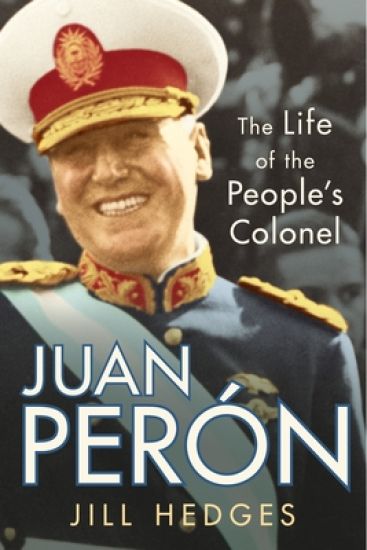
Juan Perón

Juan Perón

Jill Hedges

I.B. Tauris
2021
sidottu
Within Argentina, Juan Domingo Perón continues to be the subject of exaggerated and diametrically opposed views. A dictator, a great leader, the hero of the working classes and Argentina’s “first worker”; a weak and spineless man dependent on his strongerwilled wife; a Latin American visionary; a traitor, responsible for dragging Argentina into a modern, socially just 20th century society or, conversely, destroying for all time a prosperous nation and fomenting class war and unreasonable aspirations among his client base.Outside Argentina, Perón remains overshadowed by his second wife, Evita. The life of this fascinating and unusual man, whose charisma, political influence and controversial nature continue to generate interest, remains somewhat of a mystery to the rest of the world. Perón remains a key figure in Argentine politics, still able to occupy so much of the political spectrum as to constrain the development of viable alternatives. Jill Hedges explores the life and personality of Perón and asks why he remains a political icon despite the ‘negatives’ associated with his extreme personalism.
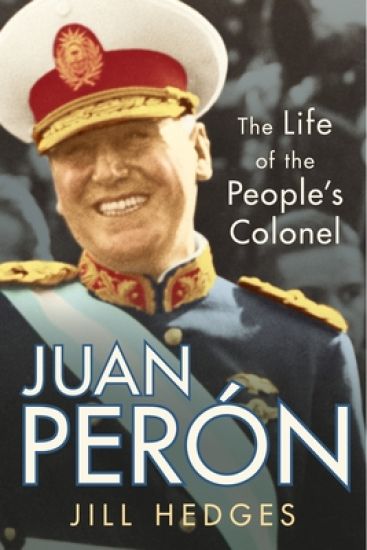
Juan Perón

Juan Perón

Jill Hedges

I.B. Tauris
2021
nidottu
Within Argentina, Juan Domingo Perón continues to be the subject of exaggerated and diametrically opposed views. A dictator, a great leader, the hero of the working classes and Argentina’s “first worker”; a weak and spineless man dependent on his strongerwilled wife; a Latin American visionary; a traitor, responsible for dragging Argentina into a modern, socially just 20th century society or, conversely, destroying for all time a prosperous nation and fomenting class war and unreasonable aspirations among his client base.Outside Argentina, Perón remains overshadowed by his second wife, Evita. The life of this fascinating and unusual man, whose charisma, political influence and controversial nature continue to generate interest, remains somewhat of a mystery to the rest of the world. Perón remains a key figure in Argentine politics, still able to occupy so much of the political spectrum as to constrain the development of viable alternatives. Jill Hedges explores the life and personality of Perón and asks why he remains a political icon despite the ‘negatives’ associated with his extreme personalism.
Juan Diego: El Humilde Mensajero de Maria
Esta es la historia de San Juan Diego, a quien Nuestra Se ora de Guadalupe se le apareci y milagrosamente dej atr s su imagen en la tilma de Juan Diego. La historia es contada v vidamente contada con colorido, a toda p gina ilustraciones y texto emocionante para ni os de 4 a 9 a os. Autor y educadora elemental Barbara Yoffie ayuda a los lectores j venes a desarrollar su comprensi n de los santos como h roes de la vida real y hero nas que viven alrededor de nosotros y nos inspiran a ser m s como Cristo. San Juan Diego es uno de los 6 santos en el conjunto de los Santos de Norteam rica, parte de los Santos y Yo serie. The story of Saint Juan Diego, to whom Our Lady of Guadalupe appeared and miraculously left behind her image on his tilma, is vividly told with colorful, full-page Illustrations and exciting text for children ages 4 through 9. Emphasizing Saint Juan's special virtue of perseverance in faith, author and longtime elementary educator Barbara Yoffie helps young readers develop their understanding of saints as real-life heroes and heroines who live all around us and inspire us to become more like Christ. Saint Juan Diego is one of 6 saints in the Saints of North America set, part of the Saints and Me series.
Juan de Ovando

Juan de Ovando

Stafford Poole

University of Oklahoma Press
2011
nidottu
Philip II is a fascinating and enigmatic figure in Spanish history, but it was his letrados--professional bureaucrats and ministers trained in law--who made his vast castilian empire possible. In Juan de Ovando, Stafford Poole traces the life and career of a key minister in the king's government to explore the role that letrados played in Spanish society as they sought to displace the higher nobility in the administration through a system based upon merit.Juan de Ovando was an industrious, discerning, and loyal servant, yet, like all letrados, he owed his position to royal favor. Ovando began his career as an ecclesiastical judge and inquisitor in Seville. From there, at the king's order, he undertook the reform of the University of Alcalá de Henares, one of his most enduring achievements. Appointed then to the supreme council of the Spanish Inquisition, Ovando was commissioned to investigate the Council of the Indies, over which he eventually presided. In this role, Ovando began codifying laws and collecting information about Spain's overseas possessions through the famed Relaciones geográficas--wide-ranging surveys of daily life in the New World. He devised long-term and forward-looking colonial policies for New Spain while, also serving as president of the Council of Finance, he sought to bring order to Spain's chaotic financial situation.Poole's biography of Juan de Ovando provides an intimate view of the day-to-day influence letrados wielded over the Spanish colonial machine.
Juan Bautista de Anza

Juan Bautista de Anza

Carlos R. Herrera

University of Oklahoma Press
2018
nidottu
Juan Bautista de Anza arrived in Santa Fe at a time when New Mexico, like Spain's other North American colonies, faced heightened threats from Indians and international rivals. As governor of New Mexico from 1778 to 1788, Anza enacted a series of changes in the colony's governance that helped preserve it as a Spanish territory and strengthen the larger empire to which it belonged. Although Anza is best known for his travels to California as a young man, this book, the first comprehensive biography of Anza, shows his greater historical importance as a soldier and administrator in the history of North America. Historian Carlos R. Herrera argues that Anza's formative years in Sonora, Mexico, contributed to his success as a colonial administrator. Having grown up in New Spain's northern territory, Anza knew the daily challenges that the various ethnic groups encountered in this region of limited resources, and he saw both the advantages and the pitfalls of the region's strong Franciscan presence. Anza's knowledge of frontier terrains and peoples helped make him a more effective military and political leader. When raiding tribes threatened the colony during his tenure as governor, Anza rode into battle, killing the great Comanche war chief Cuerno Verde in 1779 and later engineering a peace treaty formally concluded in 1786. As the colonial overseer of the imperial policies known as the Bourbon Reforms, he also implemented a series of changes in the colony's bureaucratic, judicial, and religious institutions. Charged with militarizing New Mexico so that it could contribute to the maintenance of the empire, Anza curtailed the social, political, and economic power the Franciscans had long enjoyed and increased Spain's authority in the region. By combining administrative history with narrative biography, Herrera shows that Juan Bautista de Anza was more than an explorer. Devoted equally to the Spanish empire and to the North American region he knew intimately, Governor Anza shaped the history of New Mexico at a critical juncture.
Juan Felipe Herrera

Juan Felipe Herrera

University of Arizona Press
2023
nidottu
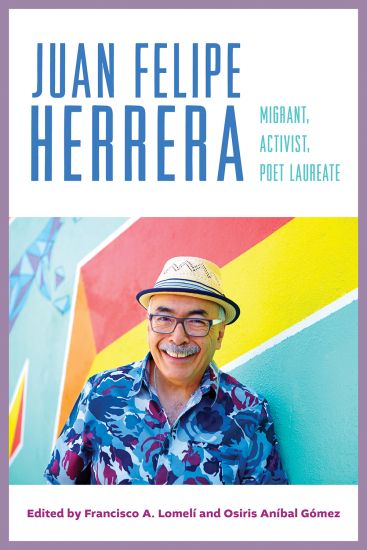
For the first time, this book presents the distinguished, prolific, and highly experimental writer Juan Felipe Herrera. This wide-ranging collection of essays by leading experts offers critical approaches on Herrera, who transcends ethnic and mainstream poetics. It expertly demonstrates Herrera’s versatility, resourcefulness, innovations, and infinite creativity. As a poet Herrera has had an enormous impact within and beyond Chicano poetics. He embodies much of the advancements and innovations found in American and Latin American poetry from the early l970s to the present. His writings have no limits or boundaries, indulging in the quotidian as well as the overarching topics of his era at different periods of his life. Both Herrera and his work are far from being unidimensional. His poetics are eclectic, incessantly diverse, transnational, unorthodox, and distinctive. Reading Herrera is an act of having to rearrange your perceptions about things, events, historical or intra-historical happenings, and people. The essays in this work delve deeply into Juan Felipe Herrera’s oeuvre and provide critical perspectives on his body of work. They include discussion of Chicanx indigeneity, social justice, environmental imaginaries, Herrera’s knack for challenging theory and poetics, transborder experiences, transgeneric constructions, and children’s and young adult literature. This book includes an extensive interview with the poet and a voluminous bibliography on everything by, about, and on the author. The chapters in this book offer a deep dive into the life and work of an internationally beloved poet who, along with serving as the poet laureate of California and the U.S. poet laureate, creates work that fosters a deep understanding of and appreciation for people’s humanity. Contributors: Trevor Boffone Marina Bernardo-FlÓrez Manuel de JesÚs HernÁndez-G. Whitney DeVos Michael Dowdy Osiris AnÍbal GÓmez Carmen GonzÁlez Ramos Cristina Herrera MarÍa Herrera-Sobek Francisco A. LomelÍ Tom Lutz Manuel M. MartÍn-RodrÍguez Marzia Milazzo Maria AntÒnia Oliver-Rotger Rafael PÉrez-Torres Renato Rosaldo Donaldo W. Urioste Luis Alberto Urrea Santiago Vaquera-VÁsquez
Juan Felipe Herrera

Juan Felipe Herrera

University of Arizona Press
2023
sidottu
For the first time, this book presents the distinguished, prolific, and highly experimental writer Juan Felipe Herrera. This wide-ranging collection of essays by leading experts offers critical approaches on Herrera, who transcends ethnic and mainstream poetics. It expertly demonstrates Herrera’s versatility, resourcefulness, innovations, and infinite creativity. As a poet Herrera has had an enormous impact within and beyond Chicano poetics. He embodies much of the advancements and innovations found in American and Latin American poetry from the early l970s to the present. His writings have no limits or boundaries, indulging in the quotidian as well as the overarching topics of his era at different periods of his life. Both Herrera and his work are far from being unidimensional. His poetics are eclectic, incessantly diverse, transnational, unorthodox, and distinctive. Reading Herrera is an act of having to rearrange your perceptions about things, events, historical or intra-historical happenings, and people. The essays in this work delve deeply into Juan Felipe Herrera’s oeuvre and provide critical perspectives on his body of work. They include discussion of Chicanx indigeneity, social justice, environmental imaginaries, Herrera’s knack for challenging theory and poetics, transborder experiences, transgeneric constructions, and children’s and young adult literature. This book includes an extensive interview with the poet and a voluminous bibliography on everything by, about, and on the author. The chapters in this book offer a deep dive into the life and work of an internationally beloved poet who, along with serving as the poet laureate of California and the U.S. poet laureate, creates work that fosters a deep understanding of and appreciation for people’s humanity. Contributors: Trevor Boffone Marina Bernardo-FlÓrez Manuel de JesÚs HernÁndez-G. Whitney DeVos Michael Dowdy Osiris AnÍbal GÓmez Carmen GonzÁlez Ramos Cristina Herrera MarÍa Herrera-Sobek Francisco A. LomelÍ Tom Lutz Manuel M. MartÍn-RodrÍguez Marzia Milazzo Maria AntÒnia Oliver-Rotger Rafael PÉrez-Torres Renato Rosaldo Donaldo W. Urioste Luis Alberto Urrea Santiago Vaquera-VÁsquez
Juan Jose Millas

Juan Jose Millas

Dale Knickerbocker

Peter Lang Publishing Inc
2003
sidottu
The five novels written by Juan Jos Mill s between 1988 and 1998 (El desorden de tu nombre; La soledad era esto, Volver a casa; Tonto, muerto, bastardo e invisible; and El orden alfab tico) display an increasing preoccupation with a limited number of themes, principally identity and social criticism. They also demonstrate the constant reiteration of a specific group of motifs, an increasing use of metafictional devices, and the use of bizarre or mentally disturbed protagonists. Mill s presents writing as the compulsive expression of obsessive thought. This book explains Mill s's literary signs as corresponding to the clinical symptoms of obsessive-compulsive disorder. Using Fredric Jameson's concept of the political unconscious, the obsessive-compulsive aesthetic is found to constitute Mill s's individual manifestation or working-through of an anxiety present in the collective unconscious of Spain and provoked by the rapid political, social, economic, and cultural changes experienced during those years.
Juan Soldado

Juan Soldado

Paul J Vanderwood

Duke University Press
2004
sidottu
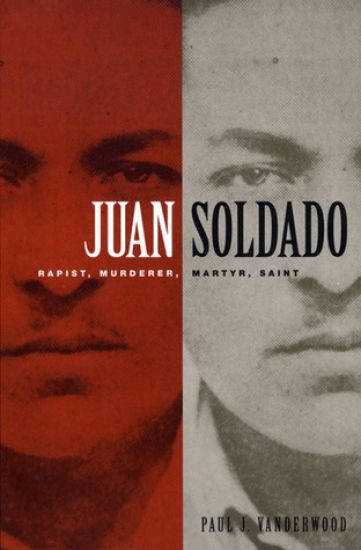
Paul J. Vanderwood offers a fascinating look at the events, beliefs, and circumstances that have motivated popular devotion to Juan Soldado, a Mexican folk saint. In his mortal incarnation, Juan Soldado was Juan Castillo Morales, a twenty-four-year-old soldier convicted of and quickly executed for the rape and murder of eight-year-old Olga Camacho in Tijuana in 1938. Immediately after Morales’s death, many people began to doubt the evidence of his guilt, or at least the justice of his brutal execution. People reported seeing blood seeping from his grave and hearing his soul cry out protesting his innocence. Soon the “martyred” Morales was known as Juan Soldado, or John the Soldier. Believing that those who have died unjustly sit closest to God, people began visiting Morales’s grave asking for favors. Within months of his death, the young soldier had become a popular saint. He is not recognized by the Catholic Church, yet thousands of people have made pilgrimages to his gravesite. While Juan Soldado is well known in Tijuana, southern California’s Mexican American community, and beyond, this book is the first to situate his story within a broader exploration of how and why popular canonizations such as his take root and flourish.In addition to conducting extensive archival research, Vanderwood interviewed central actors in the events of 1938, including Olga Camacho’s mother, citizens who rioted to demand Morales’s release to a lynch mob, those who witnessed his execution, and some of the earliest believers in his miraculous powers. Vanderwood also interviewed many present-day visitors to the shrine at Morales’s grave. He describes them, their petitions-for favors such as health, a good marriage, or safe passage into the United States-and how they reconcile their belief in Juan Soldado with their Catholicism. Vanderwood puts the events of 1938 within the context of Depression-era Tijuana and he locates people’s devotion, then and now, within the history of extra-institutional religious activity. In Juan Soldado, a gripping true-crime mystery opens up into a much larger and more elusive mystery of faith and belief.
Juan Soldado

Juan Soldado

Paul J Vanderwood

Duke University Press
2004
pokkari
Paul J. Vanderwood offers a fascinating look at the events, beliefs, and circumstances that have motivated popular devotion to Juan Soldado, a Mexican folk saint. In his mortal incarnation, Juan Soldado was Juan Castillo Morales, a twenty-four-year-old soldier convicted of and quickly executed for the rape and murder of eight-year-old Olga Camacho in Tijuana in 1938. Immediately after Morales’s death, many people began to doubt the evidence of his guilt, or at least the justice of his brutal execution. People reported seeing blood seeping from his grave and hearing his soul cry out protesting his innocence. Soon the “martyred” Morales was known as Juan Soldado, or John the Soldier. Believing that those who have died unjustly sit closest to God, people began visiting Morales’s grave asking for favors. Within months of his death, the young soldier had become a popular saint. He is not recognized by the Catholic Church, yet thousands of people have made pilgrimages to his gravesite. While Juan Soldado is well known in Tijuana, southern California’s Mexican American community, and beyond, this book is the first to situate his story within a broader exploration of how and why popular canonizations such as his take root and flourish.In addition to conducting extensive archival research, Vanderwood interviewed central actors in the events of 1938, including Olga Camacho’s mother, citizens who rioted to demand Morales’s release to a lynch mob, those who witnessed his execution, and some of the earliest believers in his miraculous powers. Vanderwood also interviewed many present-day visitors to the shrine at Morales’s grave. He describes them, their petitions-for favors such as health, a good marriage, or safe passage into the United States-and how they reconcile their belief in Juan Soldado with their Catholicism. Vanderwood puts the events of 1938 within the context of Depression-era Tijuana and he locates people’s devotion, then and now, within the history of extra-institutional religious activity. In Juan Soldado, a gripping true-crime mystery opens up into a much larger and more elusive mystery of faith and belief.
Juan Gregorio Palechor

Juan Gregorio Palechor

Myriam Jimeno

Duke University Press
2014
sidottu
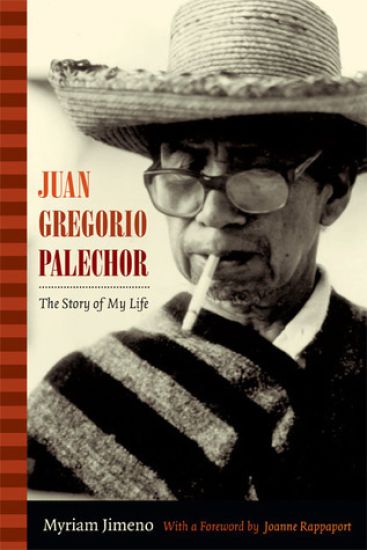
The Colombian activist Juan Gregorio Palechor (1923–1992) dedicated his life to championing indigenous rights in Cauca, a department in the southwest of Colombia, where he helped found the Regional Indigenous Council of Cauca. Recounting his life story in collaboration with the Colombian anthropologist Myriam Jimeno, Palechor traces his political awakening, his experiences in national politics, the disillusionment that resulted, and his turn to a more radical activism aimed at confronting ethnic discrimination and fighting for indigenous territorial and political sovereignty.Palechor's lively memoir is complemented by Jimeno's reflections on autobiography as an anthropological tool and on the oppressive social and political conditions faced by Colombia's indigenous peoples. A faithful and fluent transcription of Palechor's life story, this work is a uniquely valuable resource for understanding the contemporary indigenous rights movements in Colombia.
Juan Gregorio Palechor

Juan Gregorio Palechor

Myriam Jimeno

Duke University Press
2014
pokkari
The Colombian activist Juan Gregorio Palechor (1923–1992) dedicated his life to championing indigenous rights in Cauca, a department in the southwest of Colombia, where he helped found the Regional Indigenous Council of Cauca. Recounting his life story in collaboration with the Colombian anthropologist Myriam Jimeno, Palechor traces his political awakening, his experiences in national politics, the disillusionment that resulted, and his turn to a more radical activism aimed at confronting ethnic discrimination and fighting for indigenous territorial and political sovereignty.Palechor's lively memoir is complemented by Jimeno's reflections on autobiography as an anthropological tool and on the oppressive social and political conditions faced by Colombia's indigenous peoples. A faithful and fluent transcription of Palechor's life story, this work is a uniquely valuable resource for understanding the contemporary indigenous rights movements in Colombia.
Juan Peron and the Reshaping of Argentina

Juan Peron and the Reshaping of Argentina

University of Pittsburgh Press
1983
nidottu
Although Juan Peron changed the course of modern Argentine history, scholars have often interpreted him in terms of their own ideologies and interests, rather than seeing the effect of this man and his movement had on the Argentine people. The essays in this volume seek to uncover the man behind the myth, to define the true nature of Peronism. Several chapters view Per\u00f3n's rise to power, his deposition and eighteen-year exile, and his dramatic return in 1973. Others examine: opposing forces in modern Argentina, including the church and its role in politics; the conflict between landed stancieros and urban industrialists, terrorist activities and their populist support base; Peronism and the labor movement; and Evita Per\u00f3n's role in advancing the political rights of women.
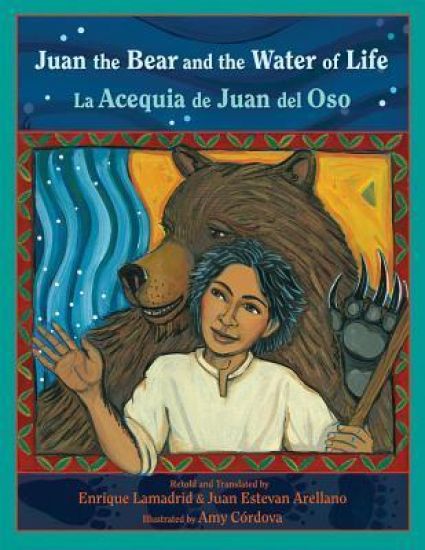
Juan the Bear and the Water of Life

Juan the Bear and the Water of Life

Enrique Lamadrid; Juan Arellano; Amy Córdova

University of New Mexico Press
2013
nidottu
La Acequia del Rito y la Sierra in the Mora Valley is the highest and most famous traditional irrigation system in New Mexico. It carries water up and over a mountain ridge and across a sub-continental divide, from the tributaries of the Río Grande to the immense watershed of the Mora, Canadian, Arkansas, and Mississippi Rivers. The names and stories of those who created this acequia to sustain their communities have mostly been lost and replaced by myths and legends. Now, when children ask, some parents attribute the task of moving mountains and changing the course of rivers to Juan del Oso, the stouthearted man whose father was a bear. From the mountains of northern Spain to the Andes in South America, Spanish-speaking people have told ancient legends of Juan del Oso and his friends. In this children's tale, agriculturalist Juan Estevan Arellano and folklorist Enrique Lamadrid share a unique version of a celebrated story that has been told in northern New Mexico for centuries.
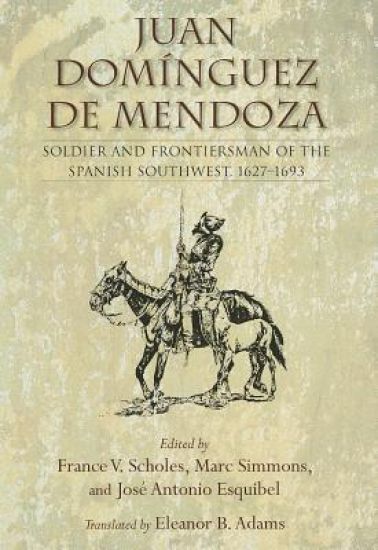
Juan Domínguez de Mendoza

Juan Domínguez de Mendoza

University of New Mexico Press
2012
sidottu
Studies of seventeenth-century New Mexico have largely overlooked the soldiers and frontier settlers who formed the backbone of the colony and laid the foundations of European society in a distant outpost of Spain's North American empire. This book, the final volume in the Coronado Historical Series, recognizes the career of Juan Domínguez de Mendoza, a soldier-colonist who was as instrumental as any governor or friar in shaping Hispano-Indian society in New Mexico. Domínguez de Mendoza served in New Mexico from age thirteen to fifty-eight as a stalwart defender of Spain's interests during the troubled decades before the 1680 Pueblo Revolt. Because of his successful career, the archives of Mexico and Spain provide extensive information on his activities. The documents translated in this volume reveal more cooperative relations between Spaniards and Pueblo Indians than previously understood.
Juan Domínguez De Mendoza

Juan Domínguez De Mendoza

UNIVERSITY OF NEW MEXICO PRESS
2023
pokkari
Studies of seventeenth-century New Mexico have largely overlooked the soldiers and frontier settlers who formed the backbone of the colony and laid the foundations of European society in a distant outpost of Spain's North American empire. This book, the final volume in the Coronado Historical Series, recognizes the career of Juan Domínguez de Mendoza, a soldier-colonist who was as instrumental as any governor or friar in shaping Hispano-Indian society in New Mexico. Domínguez de Mendoza served in New Mexico from age thirteen to fifty-eight as a stalwart defender of Spain's interests during the troubled decades before the 1680 Pueblo Revolt. Because of his successful career, the archives of Mexico and Spain provide extensive information on his activities. The documents translated in this volume reveal more cooperative relations between Spaniards and Pueblo Indians than previously understood.