Kirjojen hintavertailu. Mukana 11 342 296 kirjaa ja 12 kauppaa.

Kirjahaku

Etsi kirjoja tekijän nimen, kirjan nimen tai ISBN:n perusteella.

1000 tulosta hakusanalla Judith M. Buddenbaum

Angels Are for Real – Inspiring, True Stories and Biblical Answers

Angels Are for Real – Inspiring, True Stories and Biblical Answers

Judith M.a. Macnutt; Francis MacNutt

Chosen Books, a division of Baker Publishing Group
2012
nidottu
Leading Expert Demystifies Angels and How They Interact with PeopleAngels have a vital role in the Kingdom of God--and in the lives of believers. Yet many Christians treat the existence of angels lightly or fail to consider them at all. In Angels Are Real Judith MacNutt pulls back the curtain on this intriguing topic, recounting inspiring, true-life stories and miraculous interactions, revealing what the Bible says about these heavenly beings, and offering insight into the spiritual realm. She draws on solid scriptural support to explore· what angels look like· what they do· why they are important in believers' lives· the heavenly hierarchy· what fallen angels are· and more.Angels Are Real is an accessible, comprehensive, encouraging guide for Christians. When believers grasp the importance of angels to God--and themselves--they will better understand God's power and his extraordinary love.
Encountering Angels – True Stories of How They Touch Our Lives Every Day

Encountering Angels – True Stories of How They Touch Our Lives Every Day

Judith M.a. Macnutt

Chosen Books, a division of Baker Publishing Group
2016
nidottu
Angels have long fascinated humanity. From books to movies, from TV shows to video games, angels are portrayed in inconsistent and sometimes imaginative ways. What is biblical and really true about these heavenly beings.In this follow-up to her bestselling Angels Are for Real, author Judith MacNutt helps you separate fact from fiction. With warmth and insight, she shows you· the scriptural foundation for angels· their purposes here and in heaven· their role as protectors of children· how they comfort, protect, and worship with us· their role in spiritual warfareThis book is full of amazing encounters and inspiring stories. You will come away encouraged and awed by God's provision for us through angels!
The Hunt in Ancient Greece

The Hunt in Ancient Greece

Judith M. Barringer

Johns Hopkins University Press
2002
sidottu
Hunting and its imagery continued to play a significant role in archaic and classical Greece long after hunting had ceased being a necessity for survival in everyday life. Drawing on vase paintings, sculpture, inscriptions, and other literary evidence, Judith Barringer reexamines the theme of the hunt and shows how the tradition it depicts helped maintain the dominance of the ruling social groups. Along with athletics and battle, hunting was a defining activity of the masculine aristocracy and was crucial to the efforts of the Athenian elite to control the social agenda, even as their political power declined. The Hunt in Ancient Greece examines descriptions of hunting in initiation rituals as well as the ideals of masculinity and adulthood such rites of passage promoted. Barringer argues that depictions of the hunt in literature and art also served as striking metaphors for the intricacies of courtship, shedding light on sexuality and gender roles. Through an exploration of various representations of the hunt, Barringer provides extraordinary insight into Athenian society.
The Meskwaki and Anthropologists

The Meskwaki and Anthropologists

Judith M. Daubenmier

University of Nebraska Press
2008
sidottu
The Meskwaki and Anthropologists illuminates how the University of Chicago's innovative Action Anthropology program of ethnographic fieldwork affected the Meskwaki Indians of Iowa. From 1948 to 1958, the Meskwaki community near Tama, Iowa, became effectively a testing ground for a new method of practicing anthropology proposed by anthropologists and graduate students at the University of Chicago in response to pressure from the Meskwaki. Action Anthropology, as the program was called, attempted to more evenly distribute the benefits of anthropology by way of anthropologists helping the Native communities they studied. The legacy of Action Anthropology has received limited attention, but even less is known about how the Meskwakis participated in creating it and shaping the way it functioned. Drawing on interviews and extensive archival records, Judith M. Daubenmier tells the story from the viewpoint of the Meskwaki themselves. The Meskwaki alternatively cooperated with, befriended, ignored, prodded, and collided with their scholarly visitors in trying to get them to understand that the values of reciprocity within Meskwaki culture required people to give something if they expected to get something. Daubenmier sheds light on the economic and political impact of the program on the community and how some Meskwaki manipulated the anthropologists and students through their own expectations of reciprocity and gender roles. Giving weight to the opinions, actions, and motivations of the Meskwaki, Daubenmier assesses more fully and appropriately the impact of Action Anthropology on the Meskwaki settlement and explores its legacy outside the settlement's confines. In so doing, she also encourages further consideration of the ongoing relationships between scholars and Indigenous peoples today.
Procedure Checklists for Fundamentals of Nursing

Procedure Checklists for Fundamentals of Nursing

Judith M. Wilkinson; Leslie S. Treas; Karen L. Barnett; Mable H. Smith

F.A. Davis Company
2019
nidottu
All of the must-know procedures…all in one place!Assess your progress. Checklists for over 165 common nursing procedures that follow the procedures presented in Fundamentals of Nursing, 4th Edition and Basic Nursing, 2nd Edition.Begin with the principle-based checklist that you’ll use with all the procedures. Then, for each individual procedure, you’ll follow and check off all of the steps in the order that they must be performed to ensure the safety of both the patient and the nurse.Put your knowledge to work and use these checklists to practice your skills or to participate in peer check-offs.
Visions of Loveliness

Visions of Loveliness

Judith M. Taylor

Swallow Press
2014
sidottu
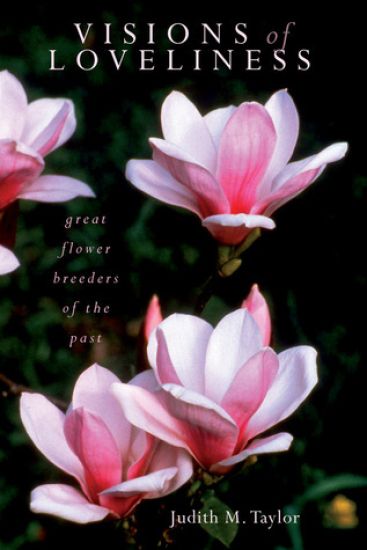
Gardeners of today take for granted the many varieties of geraniums, narcissi, marigolds, roses, and other beloved flowers for their gardens. Few give any thought at all to how this incredible abundance came to be or to the people who spent a good part of their lives creating it. These breeders once had prosperous businesses and were important figures in their communities but are only memories now. They also could be cranky and quirky. In the eighteenth and nineteenth centuries, new and exotic species were arriving in Europe and the United States from all over the world, and these plants often captured the imaginations of the unlikeliest of men, from aristocratic collectors to gruff gardeners who hardly thought of themselves as artists. But whatever their backgrounds, they all shared a quality of mind that led them to ask “What if?” and to use their imagination and skills to answer that question themselves. The newest rose from China was small and light pink, but what if it were larger and came in more colors? Lilac was very nice in its way, but what if its blossoms were double and frilly? While there are many books about plant collectors and explorers, there are none about plant breeders. Drawing from libraries, archives, and the recollections of family members, horticultural historian Judith M. Taylor traces the lives of prominent cultivators in the context of the scientific discoveries and changing tastes of their times. Visions of Loveliness is international in scope, profiling plant breeders from many countries—for example, China and the former East Germany—whose work may be unknown to the Anglophone reader. In addition to chronicling the lives of breeders, the author also includes chapters on the history behind the plants by genus, from shrubs and flowering trees to herbaceous plants.
Visions of Loveliness

Visions of Loveliness

Judith M. Taylor

Swallow Press
2014
pokkari
Gardeners of today take for granted the many varieties of geraniums, narcissi, marigolds, roses, and other beloved flowers for their gardens. Few give any thought at all to how this incredible abundance came to be or to the people who spent a good part of their lives creating it. These breeders once had prosperous businesses and were important figures in their communities but are only memories now. They also could be cranky and quirky. In the eighteenth and nineteenth centuries, new and exotic species were arriving in Europe and the United States from all over the world, and these plants often captured the imaginations of the unlikeliest of men, from aristocratic collectors to gruff gardeners who hardly thought of themselves as artists. But whatever their backgrounds, they all shared a quality of mind that led them to ask "What if?" and to use their imagination and skills to answer that question themselves. The newest rose from China was small and light pink, but what if it were larger and came in more colors? Lilac was very nice in its way, but what if its blossoms were double and frilly? While there are many books about plant collectors and explorers, there are none about plant breeders. Drawing from libraries, archives, and the recollections of family members, horticultural historian Judith M. Taylor traces the lives of prominent cultivators in the context of the scientific discoveries and changing tastes of their times. Visions of Loveliness is international in scope, profiling plant breeders from many countries—for example, China and the former East Germany—whose work may be unknown to the Anglophone reader. In addition to chronicling the lives of breeders, the author also includes chapters on the history behind the plants by genus, from shrubs and flowering trees to herbaceous plants.
An Abundance of Flowers

An Abundance of Flowers

Judith M. Taylor

Swallow Press
2018
sidottu
Walk into any nursery, florist, or supermarket, and you'll encounter displays of dozens of gorgeous flowers, from chrysanthemums to orchids. At one time these fanciful blooms were the rare trophies of the rich and influential—even the carnation, today thought of as one of the humblest cut flowers. Every blossom we take for granted now is the product of painstaking and imaginative planning, breeding, horticultural ingenuity, and sometimes chance. The personalities of the breeders, from an Indiana farmer to Admiral Lord Gambier's gardener, were as various and compelling as the beauty they conjured from skilled hybridization. In Visions of Loveliness: Great Flower Breeders of the Past, Judith Taylor wrote engagingly about the vivid history and characters behind eighteen types of popular flowers. In this companion volume she uncovers information about another eight familiar flowers: poinsettias, chrysanthemums, gladioli, pansies, carnations, water lilies, clematis, and penstemons. Taylor has tapped into an enormous trove of stories about extraordinary people with vision and skill who added to our enjoyment piece by piece, starting about 150 years ago. This beautifully illustrated book will please flower enthusiasts, gardeners, and history buffs alike.
An Abundance of Flowers

An Abundance of Flowers

Judith M. Taylor

Swallow Press
2018
pokkari
Walk into any nursery, florist, or supermarket, and you'll encounter displays of dozens of gorgeous flowers, from chrysanthemums to orchids. At one time these fanciful blooms were the rare trophies of the rich and influential—even the carnation, today thought of as one of the humblest cut flowers. Every blossom we take for granted now is the product of painstaking and imaginative planning, breeding, horticultural ingenuity, and sometimes chance. The personalities of the breeders, from an Indiana farmer to Admiral Lord Gambier's gardener, were as various and compelling as the beauty they conjured from skilled hybridization. In Visions of Loveliness: Great Flower Breeders of the Past, Judith Taylor wrote engagingly about the vivid history and characters behind eighteen types of popular flowers. In this companion volume she uncovers information about another eight familiar flowers: poinsettias, chrysanthemums, gladioli, pansies, carnations, water lilies, clematis, and penstemons. Taylor has tapped into an enormous trove of stories about extraordinary people with vision and skill who added to our enjoyment piece by piece, starting about 150 years ago. This beautifully illustrated book will please flower enthusiasts, gardeners, and history buffs alike.
History Matters

History Matters

Judith M. Bennett

UNIVERSITY OF PENNSYLVANIA PRESS
2007
pokkari
Written for everyone interested in women's and gender history, History Matters reaffirms the importance to feminist theory and activism of long-term historical perspectives. Judith M. Bennett, who has been commenting on developments in women's and gender history since the 1980s, argues that the achievement of a more feminist future relies on a rich, plausible, and well-informed knowledge of the past, and she asks her readers to consider what sorts of feminist history can best advance the struggles of the twenty-first century. Bennett takes as her central problem the growing chasm between feminism and history. Closely allied in the 1970s, each has now moved away from the other. Seeking to narrow this gap, Bennett proposes that feminist historians turn their attention to the intellectual challenges posed by the persistence of patriarchy. She posits a "patriarchal equilibrium" whereby, despite many changes in women's experiences over past centuries, women's status vis-À-vis that of men has remained remarkably unchanged. Although, for example, women today find employment in occupations unimaginable to medieval women, medieval and modern women have both encountered the same wage gap, earning on average only three-fourths of the wages earned by men. Bennett argues that the theoretical challenge posed by this patriarchal equilibrium will be best met by long-term historical perspectives that reach back well before the modern era. In chapters focused on women's work and lesbian sexuality, Bennett demonstrates the contemporary relevance of the distant past to feminist theory and politics. She concludes with a chapter that adds a new twist-the challenges of textbooks and classrooms-to viewing women's history from a distance and with feminist intent. A new manifesto, History Matters engages forthrightly with the challenges faced by feminist historians today. It argues for the radical potential of a history that is focused on feminist issues, aware of the distant past, attentive to continuities over time, and alert to the workings of patriarchal power.
A Medieval Life

A Medieval Life

Judith M. Bennett

University of Pennsylvania Press
2020
pokkari
A Medieval Life offers a biography of one woman, a portrait of her world, and an introduction to historical method. A Medieval Life offers a biography of one woman, a portrait of her world, and an introduction to historical method. Written in a clear and accessible style, it reworks a well-loved book to provide an entirely new resource for students, teachers, and general readers. Like Cecilia Penifader, most people in the Middle Ages were peasants, humble people living socially below the knights, bishops, and kings who figure so large in history books. Judith M. Bennett shows that peasants, too, made history. She explores how peasant lives were closely entangled with the lives and interests of those more privileged, looking at manors as well as villages; parishes, faith, and ritual practices; royal taxes and justice; economy and trade; famine and disease. By moving out from Cecilia's perspective, the book explores the ties and tensions that bound all medieval people-poor as well as rich-into a medieval society. The book also provides a primer on the fact-finding and interpretative debates that are at the heart of the historian's craft. Each chapter includes a new section on how medievalists today are studying such topics as puberty, morals, courtship, and climate change. The illustrations, taken from the famous Luttrell Psalter, provide a coherent, rich, and interpretatively complex visual program. And the final chapter explores some of the different ways in which historians, for better and for worse, have understood medieval society.
Danger in the Comfort Zone

Danger in the Comfort Zone

Judith M. BARDWICK

Amacom
1995
nidottu
An examination of the phenomenon of "entitlement" mentalities in the American workforce -- people's preoccupation with their rewards rather than their responsibilities.Author Judith M. Bardwick points out that although the "fear" element has undoubtedly grown in the last few years, the entitlement attitude is still firmly entrenched at all levels.Danger in the Comfort Zone describes three basic mindsets and shows the effect of each on individuals and their organizations:Entitlement -- people feel entitled to rewards and lethargic about having to earn them; motivation and job satisfaction are lowFear -- people are paralyzed; the threat of layoffs makes them focus on protecting their jobs rather than doing them wellEarning -- people are energized by challenge; they know their accomplishments will be noticed -- and rewardedThis landmark work has been updated and expanded -- with five all-new chapters -- to meet today's continuing challenges to the nation's productivity and morale. Bardwick offers additional findings with new, specific techniques for pulling people out of the quagmire of fear and complacency, and igniting them with the energy of true earnings.
Paying Calls in Shangri-La

Paying Calls in Shangri-La

Judith M. Heimann

Ohio University Press
2016
sidottu
Judith M. Heimann entered the diplomatic life in 1958 to join her husband, John, in Jakarta, Indonesia, at his American Embassy post. This, her first time out of the United States, would set her on a path across the continents as she mastered the fine points of diplomatic culture. She did so first as a spouse, then as a diplomat herself, thus becoming part of one of the Foreign Service's first tandem couples. Heimann's lively recollections of her life in Africa, Asia, and Europe show us that when it comes to reconciling our government's requirements with the other government's wants, shuttle diplomacy, Skype, and email cannot match on-the-ground interaction. The ability to gauge and finesse gesture, tone of voice, and unspoken assumptions became her stock-in-trade as she navigated, time and again, remarkably delicate situations. This insightful and witty memoir gives us a behind-the-scenes look at a rarely explored experience: that of one of the very first married female diplomats, who played an unsung but significant role in some of the important international events of the past fifty years. To those who know something of today's world of diplomacy, Paying Calls in Shangri-La will be an enlightening tour through the way it used to be—and for aspiring Foreign Service officers and students, it will be an inspiration. Published in association with ADST-DACOR Diplomats and Diplomacy Series
Paying Calls in Shangri-La

Paying Calls in Shangri-La

Judith M. Heimann

Ohio University Press
2016
pokkari
Judith M. Heimann entered the diplomatic life in 1958 to join her husband, John, in Jakarta, Indonesia, at his American Embassy post. This, her first time out of the United States, would set her on a path across the continents as she mastered the fine points of diplomatic culture. She did so first as a spouse, then as a diplomat herself, thus becoming part of one of the Foreign Service's first tandem couples. Heimann's lively recollections of her life in Africa, Asia, and Europe show us that when it comes to reconciling our government's requirements with the other government's wants, shuttle diplomacy, Skype, and email cannot match on-the-ground interaction. The ability to gauge and finesse gesture, tone of voice, and unspoken assumptions became her stock-in-trade as she navigated, time and again, remarkably delicate situations. This insightful and witty memoir gives us a behind-the-scenes look at a rarely explored experience: that of one of the very first married female diplomats, who played an unsung but significant role in some of the important international events of the past fifty years. To those who know something of today's world of diplomacy, Paying Calls in Shangri-La will be an enlightening tour through the way it used to be—and for aspiring Foreign Service officers and students, it will be an inspiration. Published in association with ADST-DACOR Diplomats and Diplomacy Series
Women and Gardens

Women and Gardens

Judith M. Taylor

UNIVERSITY OF NEW MEXICO PRESS
2025
nidottu
Judith M. Taylor's Women and Gardens highlights the depth and breadth of women's influence on gardens and landscapes in the last two hundred years and profiles many unknown or intentionally ignored facts concerning the roles of women in gardening and their contributions to horticultural science. Divided into eight chapters, Taylor explores the history of women in horticulture, landscape design, and ornamental plant breeding from the Victorian to today.
The Presence of Christ in the Gathered Assembly

The Presence of Christ in the Gathered Assembly

Judith M. Kubicki

Continuum International Publishing Group Ltd.
2007
nidottu
The Dogmatic Constitution on the Sacred Liturgy of Vatican II reiterates the church's traditional teaching on the manifold presence of Christ in his church, especially in liturgical celebrations: in the priest, the consecrated bread and wine, the sacraments, and when the gathered church prays and sings. Nevertheless, there continues to exist in both scholarly writing and popular piety an almost exclusive focus on the presence of Christ in the eucharistic species. The purpose of this book is to examine the most elusive mode of the manifold presence of Christ mentioned above, that is, as it is symbolized within the assembly that gathers for worship. Using the resources of several contemporary philosophical aproaches, including semiotics, phenomenology, personalism, and existentialism, the book draws attention to the forgotten or or less understood aspects of the belief in the presence of Christ in the gathered assembly and explores the implications of this belief for participating in the liturgy and living the Christian life. While the book is scholarly in tone, it has extremely practical ramifications for the ways in which the mass should be celebrated in millions of Catholic parishes around the world.
Deep Democracy

Deep Democracy

Judith M. Green

Rowman Littlefield
1999
sidottu
Deeply understood, democracy is more than a "formal" institutional framework for which America provides the model, acting as a preferable alternative to the modern totalitarian regimes that have distorted social life around the world. At its core, as John Dewey understood, democracy is a realistic ideal, a desired and desirable future possibility that is yet-to-be. In this period of global crises in differing cultures, a shared environment, and an increasingly globalized political economy, this book provides a clear contemporary articulation of deep democracy that can guide an evolutionary deepening of democratic institutions, of habits of the heart, and of the processes of education and social inquiry that support them.
Deep Democracy

Deep Democracy

Judith M. Green

Rowman Littlefield
1999
nidottu
Deeply understood, democracy is more than a 'formal' institutional framework for which America provides the model, acting as a preferable alternative to the modern totalitarian regimes that have distorted social life around the world. At its core, as John Dewey understood, democracy is a realistic ideal, a desired and desirable future possibility that is yet-to-be. In this period of global crises in differing cultures, a shared environment, and an increasingly globalized political economy, this book provides a clear contemporary articulation of deep democracy that can guide an evolutionary deepening of democratic institutions, of habits of the heart, and of the processes of education and social inquiry that support them.