Kirjahaku
Etsi kirjoja tekijän nimen, kirjan nimen tai ISBN:n perusteella.
1000 tulosta hakusanalla Judith Simpson
Martin Opitz: Judith. Drama in drei Akten Erstdruck: Breslau (Georg Baumann), 1635. Neuausgabe mit einer Biographie des Autors. Herausgegeben von Karl-Maria Guth. Berlin 2019. Textgrundlage ist die Ausgabe: Judith-Dramen des 16./17. Jahrhunderts. Herausgegeben von Dr. Martin Sommerfeld, Berlin: Junker und D nnhaupt Verlag, 1933. Die Paginierung obiger Ausgabe wird in dieser Neuausgabe als Marginalie zeilengenau mitgef hrt. Dieses Buch folgt in Rechtschreibung und Zeichensetzung obiger Textgrundlage. Umschlaggestaltung von Thomas Schultz-Overhage unter Verwendung des Bildes: Valentin de Boulogne, Judith, 1626/28. Gesetzt aus der Minion Pro, 11 pt.
"1990er Jahre: Die 16-j hrige Judith zieht nach einer unerwarteten Erbschaft mit ihrer Mutter Marianne nach Norddeutschland. Doch Judiths Aufbruch in ein neues Leben wird zu einer Reise in die Vergangenheit, denn das NS-Regime wirft in dem kleinen Dorf auch noch 60 Jahre sp ter seine Schatten. Auch Ungereimtheiten in ihrer Familiengeschichte werfen Fragen auf. Judith wird schnell klar, dass sie erst alle Fragen kl ren muss, bevor sie sich hier heimisch f hlen kann. Warum enterbte der Sonderling Karl seine Familie und hinterlie alles Marianne? Und welche Rolle spielt die polnische Landarbeiterin Marysia Dariusz? Auf der Suche nach Antworten macht Judith eine verh ngnisvolle Entdeckung."
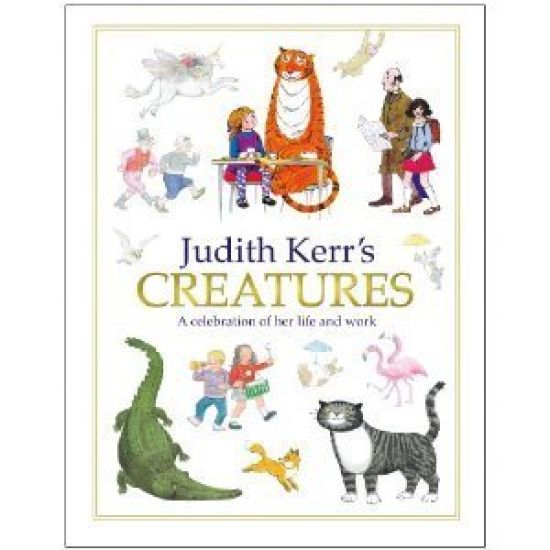
A lavishly illustrated retrospective in celebration of 100 years since Judith Kerr’s birth, author of The Tiger Who Came to Tea and many other iconic books. Judith Kerr was one of the best-loved authors and illustrators to ever put pencil to paper. The books she created, including The Tiger Who Came to Tea, Mog the Forgetful Cat, When Hitler Stole Pink Rabbit and many many more, have become classics of children’s literature, loved by generations of readers. But what of the life behind the iconic characters? Judith’s own story is riveting, from her early childhood in Berlin, dramatically cut short by the family having to flee the rising Nazi Party, to her time at the BBC in the 1950s and her long and happy marriage to the celebrated screenwriter Nigel Kneale, creator of British television’s first major hit, The Quatermass Experiment. The joy of this very special book is in hearing this story from Judith herself, accompanied by a treasure trove of illustrations and memorabilia. All combine to give an unforgettable insight into the creative process behind these beloved stories. This book was published in 2013, but Judith continued to work up until her death in 2019. While she may have gone, her creatures live on. They are much-loved characters who spring to life from the pages of her books, but they are also those who have played a part in her inspirational life. They are to be found here, in a book to cherish and return to again and again. In 2023 we celebrate 100 years since Judith’s birth and in this updated edition, her final working years have been wonderfully evoked in a new chapter written by Judith’s son, the author, Matthew Kneale.
Share in the magic with five classic stories from Judith Kerr, the creator of the iconic The Tiger Who Came to Tea and Mog the Forgetful Cat.
Selected Writings of Judith Sargent Murray
Judith Sargent Murray
Oxford University Press Inc
1996
sidottu
BLIncludes selections from The Gleaner, her major work, and other publications As a novelist, essayist, dramatist, and poet, Judith Sargent Murray candidly and often humorously asserted her opinions about the social and political conditions of women in late eighteenth-century America. As a committed feminist, she urged American women to enter a `new era in female history', yet published her own writings under a man's name in the hopes of more widely disseminating her ideas.
Selected Writings of Judith Sargent Murray
Judith Sargent Murray
Oxford University Press Inc
1996
nidottu
As a novelist, essayist, dramatist, and poet, Judith Sargent Murray candidly and often humorously asserted her opinions about the social and political conditions of women in late eighteenth-century America. As a committed feminist, she urged American women to enter a "new era in female history", yet published her own writings under a man's name in the hopes of more widely disseminating her ideas. This volume includes selections from The Gleaner, her major work, and other publications.
Die junge JYdin Judith Trachtenberg lebt in einem Ghetto im damals ssterreichischen Galizien in SYdpolen. Auf einem Ball lernt sie den Graf Agenor Baranowski kennen. Sie verlieben sich...
The Old Testament story of the widow Judith—the irresistible siren who lured her people’s deadly enemy, Holofernes, to his death, beheading him in his own bed to save Jerusalem—is an enduring cultural myth in Western society. In this original and provocative book, Margarita Stocker explores the Western fascination with the image of Judith and the abundance of interpretations that have surrounded her at different times between the early Middle Ages and the present day. The myth of Judith provides an important key to modern society’s view of women and power, the book argues. In dealing with the threatening image of a powerful femme fatale who is also a saint, the vested interests of Western culture have deliberately, often deviously, subverted images of sex and death as a way of marginalizing women and protecting traditional notions of masculinity. The book investigates the periodic resurgence of the Judith legend and how the myth and history become confused. An ambiguous figure, Judith has served symbolic purposes for such diverse groups as Protestant partisans during the Wars of Religion and their Catholic counterparts, aristocratic women supporters of the Protestant Reformation, opponents of the French Revolution, Nazi myth- makers, filmmakers obsessed with gun-toting girls, freedom fighters, partisans in the former Yugoslavia, and many others. Judith’s various guises illuminate central issues of Western consciousness—sex, death, violence, politics, beliefs, identity, psychology, and perversion. In exploring the theme of Judith, an alternative history of Western attitudes emerges. Judith is not so much a killer as a liberating figure challenging our thinking about women and power and showing ways to break free from unconscious attitudes that imprison us.