Kirjojen hintavertailu. Mukana 11 627 373 kirjaa ja 12 kauppaa.

Kirjahaku

Etsi kirjoja tekijän nimen, kirjan nimen tai ISBN:n perusteella.

1000 tulosta hakusanalla Juhan Habicht

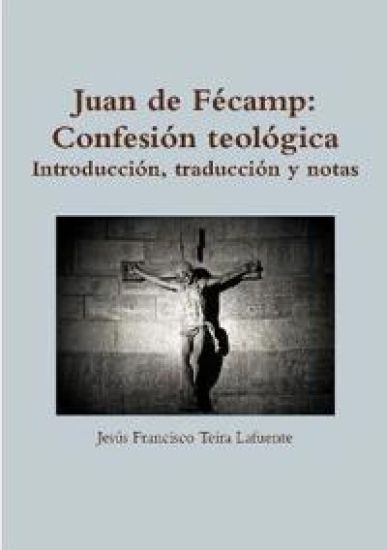
Juan de Fécamp

Juan de Fécamp

Jesús Francisco Teira Lafuente

Lulu.com
2017
pokkari
La obra ofrece la primera traducci-n a nuestra lengua de la Confesi-n teol-gica de Juan de FZcamp, exponente de la espiritualidad del siglo XI. La edici-n bilingYe que presentamos, en lat'n y castellano, est+ acompa-ada de una introducci-n que gira sobre los conceptos aristotZlicos de materia y forma y se basa en las disciplinas del trivium. En fin, lo que hemos buscado con la introducci-n y con la edici-n bilingYe es dar a conocer en lengua espa-ola la obra de Juan de FZcamp, que no deja de ser la forma de la materia que es su alma.
Juan White-Black

Juan White-Black

Roberto Pérez Infante

Lulu.com
2018
pokkari
Aventuras de un conde ingl s de otros tiempos en tierras espa olas.Su flema encaja perfectamente con la vida del campo y fue en otros tiempos emprendedor empresario y gigol apuesto.Los sucesos le van poniendo d a a d a en su lugar y su cuento de hadas acaba en el altar.
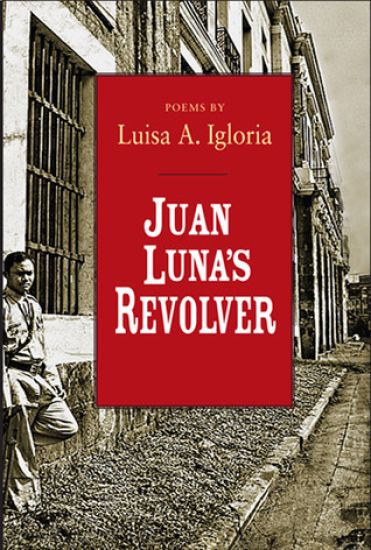
Juan Luna's Revolver

Juan Luna's Revolver

Luisa Igloria

University of Notre Dame Press
2009
nidottu
The poems in Juan Luna' s Revolver both address history and attempt to transcend it through their exploration of the complexity of diaspora. Attending to the legacy of colonial and postcolonial encounters, Luisa A. Igloria has crafted poems that create links of sympathetic human understanding, even as they revisit difficult histories and pose necessary questions about place, power, displacement, nostalgia, beauty, and human resilience in conditions of alienation and duress. Igloria traces journeys made by Filipinos in the global diaspora that began since the encounter with European and American colonial power. Her poems allude to historical figures such as the Filipino painter Juan Luna and the novelist and national hero Jose Rizal, as well as the eleven hundred indigenous Filipinos brought to serve as live exhibits in the 1904 Missouri World's Fair. The image of the revolver fired by Juan Luna reverberates throughout the collection, raising to high relief how separation and exile have shaped concepts of identity, nationality, and possibility. Suffused with gorgeous imagery and nuanced emotion, Igloria's poetry achieves an intimacy fostered by gem-like phrases set within a politically-charged context speaking both to the personal and the collective.
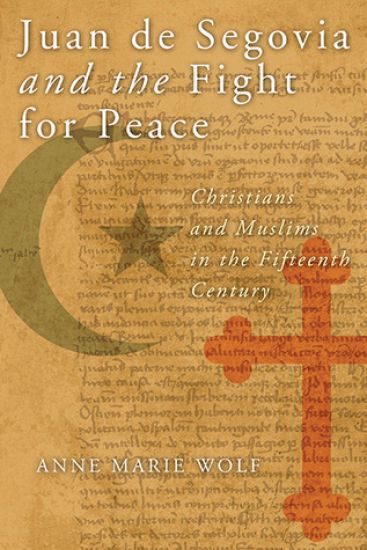
Juan De Segovia and the Fight for Peace

Juan De Segovia and the Fight for Peace

Anne Marie Wolf

University of Notre Dame Press
2014
nidottu
Juan de Segovia (d. 1458), theologian, translator of the Qur'an, and lifelong advocate for the forging of peaceful relations between Christians and Muslims, was one of Europe's leading intellectuals. Today, however, few scholars are familiar with this important fifteenth-century figure. In this well-documented study, Anne Marie Wolf presents a clear, chronological narrative that follows the thought and career of Segovia, who taught at the University of Salamanca, represented the university at the Council of Basel (1431–1449), and spent his final years arguing vigorously that Europe should eschew war with the ascendant Ottoman Turks and instead strive to convert them peacefully to Christianity. What could make a prominent thinker, especially one who moved in circles of power, depart so markedly from the dominant views of his day and advance arguments that he knew would subject him to criticism and even ridicule? Although some historians have suggested that the multifaith heritage of his native Spain accounts for his unconventional belief that peaceful dialogue with Muslims was possible, Wolf argues that other aspects of his life and thought were equally important. For example, his experiences at the Council of Basel, where his defense of conciliarism in the face of opposition contributed to his ability to defend an unpopular position and where his insistence on conversion through peaceful means was bolstered by discussions about the proper way to deal with the Hussites, refined his arguments that peaceful conversion was prefereable to war. Ultimately Wolf demonstrates that Segovia's thought on Islam and the proper Christian stance toward the Muslim world was consistent with his approach to other endeavors and with cultural and intellectual movements at play throughout his career.
Juan Luna's Revolver

Juan Luna's Revolver

Luisa Igloria

UNIVERSITY OF NOTRE DAME PRESS
2022
sidottu
The poems in Juan Luna' s Revolver both address history and attempt to transcend it through their exploration of the complexity of diaspora. Attending to the legacy of colonial and postcolonial encounters, Luisa A. Igloria has crafted poems that create links of sympathetic human understanding, even as they revisit difficult histories and pose necessary questions about place, power, displacement, nostalgia, beauty, and human resilience in conditions of alienation and duress. Igloria traces journeys made by Filipinos in the global diaspora that began since the encounter with European and American colonial power. Her poems allude to historical figures such as the Filipino painter Juan Luna and the novelist and national hero Jose Rizal, as well as the eleven hundred indigenous Filipinos brought to serve as live exhibits in the 1904 Missouri World's Fair. The image of the revolver fired by Juan Luna reverberates throughout the collection, raising to high relief how separation and exile have shaped concepts of identity, nationality, and possibility. Suffused with gorgeous imagery and nuanced emotion, Igloria's poetry achieves an intimacy fostered by gem-like phrases set within a politically-charged context speaking both to the personal and the collective.
Johan Zoffany, R.A.

Johan Zoffany, R.A.

Mary Webster

Yale University Press
2011
sidottu
Universally recognized as a brilliant and gifted 18th-century artist, Johan Zoffany (1733-1810) was regarded by Horace Walpole as one of the three greatest painters in England, along with his friends Reynolds and Gainsborough. Yet he has remained without a detailed study of his life and works, owing to the fascinating and complex vicissitudes of his career, now established from widely scattered sources. From being a late-baroque painter at a German princely court to working under the royal patronage of George III and Queen Charlotte, from his serious interest in Indian life and landscape, developed while living near Calcutta, to his attacks on the bloody progress of the French Revolution, Zoffany created pictures that document with incomparable liveliness the worlds and people among whom he moved.Published for the Paul Mellon Centre for Studies in British Art
Juan Muñoz at the Clark

Juan Muñoz at the Clark

Yale University Press
2011
pokkari
The celebrated Spanish sculptor Juan Muñoz (1953-2001) died at the height of his powers, when he was considered "one of the most complex and individual artists working today" (Guardian). His challenging, enigmatic works almost inexorably draw in viewers. "The spectator," Muñoz said about his installations, "becomes very much like the object to be looked at, and perhaps the viewer has become the one who is on view." This handsome book, distinguished by more than 30 stunning photographs, documents a group of Muñoz installations at the Sterling and Francine Clark Art Institute. Representing the full range of Muñoz's sculptures—from First Banister (1987), which reflects the artist's early use of architectural language, to Conversation Piece (2001), a work that shows his later interest in the human figure—the book demonstrates how Muñoz invented a mode of storytelling through objects that spoke to space, memory, and displacement. David Breslin contributes a reflection on notions of interiority and exteriority, and of perception and absorption, as expressed in Muñoz's work.Distributed for the Sterling and Francine Clark Art Institute
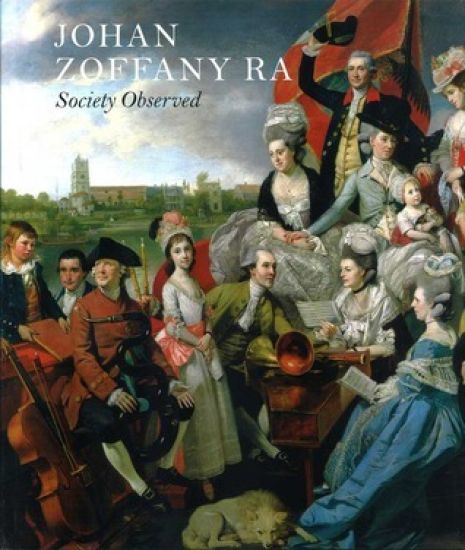
Johan Zoffany RA

Johan Zoffany RA

Martin Postle

Yale University Press
2011
sidottu
The 18th-century painter Johan Zoffany (1733–1810) was an astute observer of the many social circles in which he functioned as an artist over the course of his long career. This catalogue investigates his sharp wit, shrewd political appraisal, and perceptive social commentary (including subtle allusions to illicit relationships)—all achieved while presenting his subjects as delightful and sophisticated members of polite society. A skilled networker, Zoffany established himself at the court of George III and Queen Charlotte soon after his arrival in England from his native Germany. At the same time, he befriended the leading actor David Garrick and through him became the foremost portrayer of Georgian theater. His brilliant effects and deft style were well suited to theatricality of all sorts, enabling him to secure patronage in England and on the continent. Following a prolonged visit to Italy he travelled to India, where he quickly became a popular and established member within the circle of Warren Hastings, the governor-general. Zoffany's Indian paintings are among his most spectacular and allowed him to return to England enriched and warmly welcomed. This volume provides a sparkling overview of his finest works.Published for the Yale Center for British Art and the Royal AcademyExhibition Schedule:Yale Center for British Art(10/27/11-02/12/12)Royal Academy(03/10/12-06/10/12)
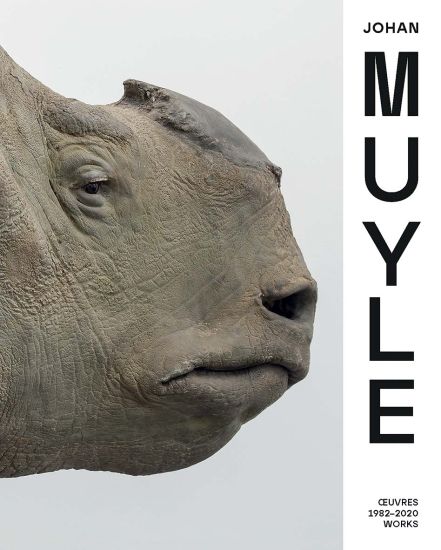
Johan Muyle

Johan Muyle

Denis Gielen

Yale University Press
2021
sidottu
A sweeping overview of the work of a prominent Belgian visual artist This handsome volume traces the work and career of Belgian visual artist Johan Muyle (b. 1956) from his early assemblages of found materials to his monumental paintings and recent motorized sculptures. Considered one of the most significant Belgian artists of his generation, Muyle’s work has been exhibited internationally since the 1980s. In this book, a series of thematic chapters situate Muyle’s oeuvre within the political and artistic context of the past thirty years and analyze the prolific artist’s critical responses to concerns including religious extremism and the disappearance of collective utopias.Distributed for MercatorfondsExhibition Schedule:MAC’s Grand Hornu, MONS, Belgium November 29, 2020–April 18, 2021
Selected Works of Juan Donoso Cortés

Selected Works of Juan Donoso Cortés

Juan Donoso Cortés

Praeger Publishers Inc
2000
sidottu
Growing interest in the ideas of the German legal and political theorist Carl Schmitt have sparked an interest in the thinkers and ideas that influenced him. Chief among those influences stands the 19th-century Spanish and conservative thinker Juan Donoso Cortés (1809-1853). Donoso stands in a unique place in the ideological trajectory of conservative, counter-revolutionary thought that started with the reaction of Joseph de Maistre and Louis de Bonald against the French Revolution and culminated in the rise of fascism in the early twentieth century. As the philosophical successor of de Maistre, Donoso kept de Maistre's ideas on authority and infallibility alive in the midst of the ideological and political controversies and the revolutionary tumult of Europe in the mid-19th century. Donoso's theories on infallibility played a crucial role in the definition of papal infallibility during the First Vatican Council in 1870. His theory on dictatorship changed the focus of continental conservative thought away from emphasizing the restoration of a hierarchically ordered civilization through the restoration of the monarchical ancient regime to the establishment of order and hierarchy by any necessary and effective means. This theory and his critique of parliamentarianism were especially reflected in the Franco regime in Spain and in the political and legal theories of Carl Schmitt. All the speeches and writings of Cortés that influenced Schmitt are contained in this volume. These major theoretical works appear in English for the first time. Only the Speech on Dictatorship has appeared in English to date. Johnson's Introduction provides extensive commentary on the works and theories developed in them by showing the historical and philosophical context from which they emerged and by pointing out their significance in the development of the counter-revolutionary ideological trajectory leading from de Maistre to fascism. Until now, Donoso has been studied by a small group of mostly conservative and Catholic scholars. This translation makes his ideas more readily available for study by students and scholars of political theory.
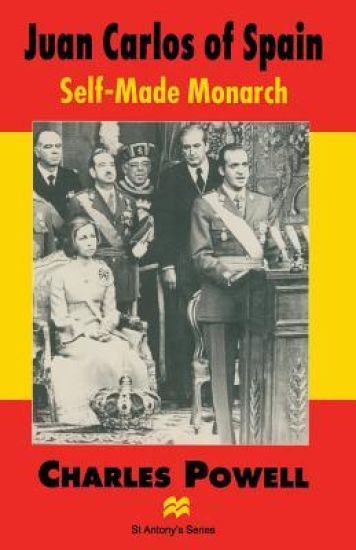
Juan Carlos of Spain

Juan Carlos of Spain

Charles Powell

Palgrave Macmillan
1996
sidottu
Widely acknowledged as a key figure in Spain's remarkable transition to democracy following General Franco's death in 1975, King Juan Carlos consolidated his reputation as a champion of democracy by aborting the attempted military coup of 23 February 1981. This political biography of the Spanish monarch sheds new light on his childhood, the process whereby he became Franco's successor in 1969, his subsequent contribution to his nation's democratization, and his role as constitutional monarch since 1978, both at home and abroad.
Juan Carlos of Spain

Juan Carlos of Spain

Charles Powell

Palgrave Macmillan
1996
nidottu
Widely acknowledged as a key figure in Spain's remarkable transition to democracy following General Franco's death in 1975, King Juan Carlos consolidated his reputation as a champion of democracy by aborting the attempted military coup of 23 February 1981. This political biography of the Spanish monarch sheds new light on his childhood, the process whereby he became Franco's successor in 1969, his subsequent contribution to his nation's democratization, and his role as constitutional monarch since 1978, both at home and abroad.
Juan Domingo Peron

Juan Domingo Peron

Robert J. Alexander

Routledge
2019
sidottu
This book presents a tentative assessment of the Argentine leader, Juan Domingo Peron's overall importance in his own country and in the American Hemisphere. It is based largely on the observations of the author on the evolution of Argentina over almost a third of a century.
Juan Domingo Peron: A History

Juan Domingo Peron: A History

Robert J. Alexander

Routledge
2020
nidottu
This book presents a tentative assessment of the Argentine leader, Juan Domingo Peron's overall importance in his own country and in the American Hemisphere. It is based largely on the observations of the author on the evolution of Argentina over almost a third of a century.
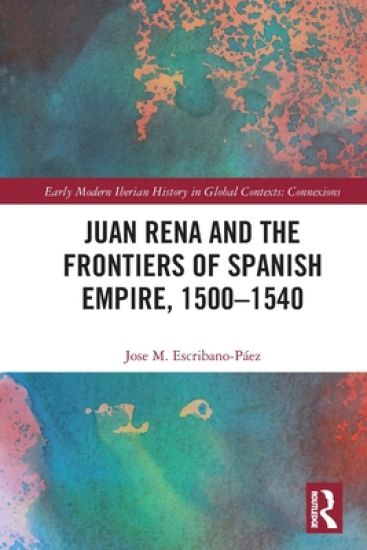
Juan Rena and the Frontiers of Spanish Empire, 1500–1540
This book explores the political construction of imperial frontiers during the reigns of Ferdinand the Catholic and Charles V in the Iberian Peninsula and the Mediterranean. Contrary to many studies on this topic, this book neither focuses on a specific frontier nor attempts to provide an overview of all the imperial frontiers. Instead, it focuses on a specific individual: Juan Rena (1480–1539). This Venetian clergyman spent 40 years serving the king in several capacities while travelling from the Maghreb to northern Spain, from the Pyrenees to the western fringes of the Ottoman Empire. By focusing on his activities, the book offers an account of the Spanish Empire’s frontiers as a vibrant political space where a multiplicity of figures interacted to shape power relations from below. Furthermore, it describes how merchants, military officers, nobles, local elites and royal agents forged a specific political culture in the empire’s liminal spaces. Through their negotiations and cooperation, but also through their competition and clashes, they created practices and norms in areas like cross-cultural diplomacy, the making of the social fabric, the definition of new jurisdictions, and the mobilization of resources for war.
Juan Rena and the Frontiers of Spanish Empire, 1500–1540

Juan Rena and the Frontiers of Spanish Empire, 1500–1540

Jose M. Escribano-Páez

TAYLOR FRANCIS LTD
2022
nidottu
This book explores the political construction of imperial frontiers during the reigns of Ferdinand the Catholic and Charles V in the Iberian Peninsula and the Mediterranean. Contrary to many studies on this topic, this book neither focuses on a specific frontier nor attempts to provide an overview of all the imperial frontiers. Instead, it focuses on a specific individual: Juan Rena (1480–1539). This Venetian clergyman spent 40 years serving the king in several capacities while travelling from the Maghreb to northern Spain, from the Pyrenees to the western fringes of the Ottoman Empire. By focusing on his activities, the book offers an account of the Spanish Empire’s frontiers as a vibrant political space where a multiplicity of figures interacted to shape power relations from below. Furthermore, it describes how merchants, military officers, nobles, local elites and royal agents forged a specific political culture in the empire’s liminal spaces. Through their negotiations and cooperation, but also through their competition and clashes, they created practices and norms in areas like cross-cultural diplomacy, the making of the social fabric, the definition of new jurisdictions, and the mobilization of resources for war.