This is a story of Lightning bug named Jules. The story follows Jules thru various adventures during his quest to make his tail more bright and shinier. He learns to seek help and learns about patience. His travels also teach him that all good things can be achieved thru hard work and patience.
Jules Verne--Voila!--a name that resonates with visions of fantastic adventures and images of exotic exploits. In his voyages extraordinaires, the noted French author fuses his encyclopedic knowledge of science and geography with his ability to tell fascinating tales, taking his readers on unprecedented journeys across the globe, into the earth, and out into space. This revered writer, who with his boundless imagination had hoped to contribute substantially to the world of letters, has surpassed that expectation to become coincidentally a significant influence on film. Jules Verne on Film is both a penetrating analytical overview of Verne's epic novels and a comprehensive filmography of the numerous films inspired by his stories and characters. There are the obvious adaptations that come directly from the pages of Verne's writings, films such as In Search of the Castaways and Mysterious Island. However, looking closely at the plots, characters, and themes of many other films--science fiction and otherwise--one discovers that the incomparable Verne has had a far wider influence on filmmakers than one might have thought. For instance, most of us are familiar with Disney's 20,000 Leagues Under the Sea (1954) and some of us may have even seen the two 1997 television productions. But Verne's classic undersea adventure also provides the underpinnings for such entertaining movies as Fantastic Voyage (1966) and Innerspace (1987). Structurally, Jules Verne on Film begins with a biographical sketch and contains 23 chapters arranged alphabetically according to book title, starting with The Adventures of Captain Hatteras and ending with Voyage Across the Impossible. Each chapter includes a summary and analysis of Verne's story, followed by a chronological treatment of the cinematic adaptations compared to their respective written work. Production credits appear in the film entries, along with plot synopses and thorough critical commentaries.
This is the first English language study of Jules Dassin (1911-2008), who began as a contract director at MGM in 1941 and earned his reputation with the films noirs Brute Force (1947), The Naked City (1948), Thieves' Highway (1949), and Night and the City (1950). Exiled to Europe after being unofficially blacklisted by the House Un-American Activities Committee, Dassin re-surfaced to direct such popular hits as Rififi (1955), Never on Sunday (1960; he married Melina Mercouri), and Topkapi (1964). After a brief biographical chapter that also covers Dassin's work for the theatre, each of the director's 25 films is given its own chapter analysis, with cast and crew credits, synopsis, release information and reviews.
Mari Sandoz immortalized her irascible father in Old Jules. Now her brother, Jules Sandoz, Jr. fills out the story of their family life, dominated by Papa, in western Nebraska in the early l900s. A frail boy who clung to the skirts of his German grandmother, Jules Jr. had to learn lessons of survival early. He was beaten up by his schoolmates and did not speak English well, but with his brother James he helped feed the family by hunting and trapping. Eventually he found the strength to stand up to his father. Son of Old Jules offers fresh glimpses of other family members, most memorably of Mary, his hardworking and stoical mother and of Mari, who de-clared her independence by becoming a schoolteacher and marrying and then divorcing a local swain. Some of the Sandhillers who figured in Mari's books appear here too, including a succession of immigrants whom Papa Jules recruited as settlers. By the early twenties, when these memoirs end, Jules Jr., newly married, had gone into farming for himselfCorroborating and fleshing out the story of the family told by Mari Sandoz, Son of Old Jules was written "to give a more balanced view of the settler period." Jules Sandoz, Jr. recorded his memories in the last years of his life, and after his death in 1980 they were edited and organized into book form by his youngest sister, Caroline Sandoz Pifer.
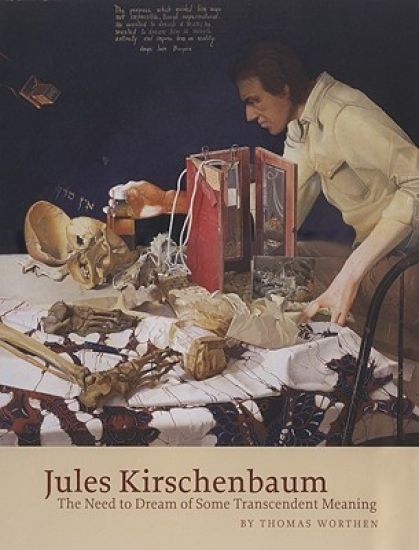
The art of Jules Kirschenbaum, with its very apparent reflection of the artist's struggle to find meaning in life, is a search for truth in odd bits of studio debris, in strange or imagined objects, or in his own visage.Drawing on existential themes from philosophy, literature, and religion, the artist deals with issues of mortality and the spirit. In an age which reveled in abstraction and images of the banal, Kirschenbaum's work was steeped in the Western tradition of representation.In his mature work, images of people and objects become metaphors for a deep examination of the nature of being and the human spirit. A Professor of Art at Drake University for over 30 years, Kirschenbaum is an undiscovered master.
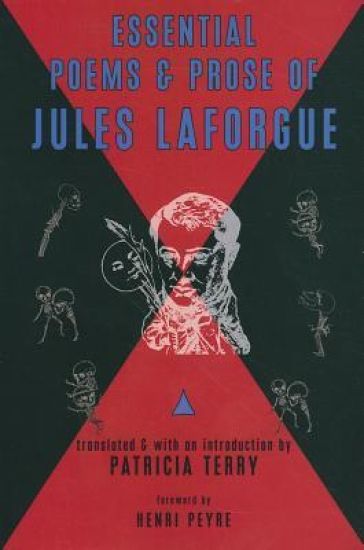
Poet Jules Laforgue (1860-1887) is considered one of the creators of modernism: part-symbolist, part post-impressionist, he was one of the first poets to write in free verse. He heavily influenced such modern poets as T.S. Eliot and Ezra Pound. This is a completely revised and greatly augmented version of Patricia Terry's now classic 1958 edition of this work. Fully bilingual edition (French-English) Terry fully captures Laforgues intricate word play, puns, and rhythm in a way lacking in many modern translations. Great introduction to this poet."
This work has been selected by scholars as being culturally important and is part of the knowledge base of civilization as we know it.This work is in the public domain in the United States of America, and possibly other nations. Within the United States, you may freely copy and distribute this work, as no entity (individual or corporate) has a copyright on the body of the work.Scholars believe, and we concur, that this work is important enough to be preserved, reproduced, and made generally available to the public. To ensure a quality reading experience, this work has been proofread and republished using a format that seamlessly blends the original graphical elements with text in an easy-to-read typeface.We appreciate your support of the preservation process, and thank you for being an important part of keeping this knowledge alive and relevant.
This work has been selected by scholars as being culturally important and is part of the knowledge base of civilization as we know it.This work is in the public domain in the United States of America, and possibly other nations. Within the United States, you may freely copy and distribute this work, as no entity (individual or corporate) has a copyright on the body of the work.Scholars believe, and we concur, that this work is important enough to be preserved, reproduced, and made generally available to the public. To ensure a quality reading experience, this work has been proofread and republished using a format that seamlessly blends the original graphical elements with text in an easy-to-read typeface.We appreciate your support of the preservation process, and thank you for being an important part of keeping this knowledge alive and relevant.