
Kirjahaku
Etsi kirjoja tekijän nimen, kirjan nimen tai ISBN:n perusteella.
1000 tulosta hakusanalla Julian Sharp



College rule (also known as medium ruled paper) is the most common lined paper in use in the United States. It is generally used in middle school through to college and is also popular with adults. This is a good choice for teen or adult notebooks and composition books (known as exercise books outside the US).

Fleur och Julian ville gifta sig i alla 22 länder där samkönade äktenskap var tillåtna. Efter fyra bröllop dog Julian.Under en middag berättar konstnärsparet Fleur Pierets och Julian P. Boom för sina överraskade grannar att de inte får gifta sig i 172 av världens 194 länder. Morgonen efter har de fått idén till 22, ett positivt protestverk döpt efter antalet länder där samkönade äktenskap är tillåtna. Tänk om de skulle gifta sig i var och ett av länderna, funderar de, och tänk om fler länder skulle tillkomma i takt med att projektet håller på.2017 vigs de första gången, i New York. Medier över hela världen vill intervjua dem om projektet. En designer erbjuder sig att sy deras bröllopskläder och en dokumentär planeras. De gifter sig i Amsterdam, Antwerpen och Paris. Då insjuknar Julian plötsligt.I den kritikerrosade Julian skriver Fleur Pierets om 22 och tiden före och efter sin frus hastiga död. Till sin hjälp tar hon allt hon läst och hört om sorg och överlevnad, från Joan Didion och Nick Cave till de kulturskapare hon intervjuat för den internationella tidskrift, Et alors?, som hon och Julian tillsammans grundade för att lyfta fram HBTQ+-skapare inom kulturvärlden. Julian är en både tårdrypande och märkligt upplyftande berättelse om den stora kärleken, om konst och aktivism, och om hur minnet av någon kan hålla en vid liv. "Julian är underbar, vilket jag vet är konstigt att säga om någons sorg, men den är kvick, lätt och gripande." Siri Hustvedt"Som en av de första böckerna om lesbisk kärlek och sorg fyller Julian (äntligen) ett hål i vårt medvetande. Väldigt vacker och klokt skriven. Måsteläsning." ZIZO Magazine



The Roman emperor Julian (r. 361-363 CE) was a man of action and of letters, which he employed in an effort to return the Empire to the light of the pagan gods, and reverse the Christianization of the empire advanced by his uncle Constantine and the sons of Constantine. This enterprise was inspired and guided by his conversion to the Neoplatonic philosophy and radical pagan Hellenism of Iamblichus and his disciples, and promoted by his production of Greek orations, letters, and satires. These works present a coherent vision of the providentially guided history and destiny of Rome as a series of foundations and refoundations enacted by rulers such as Romulus, Numa, and Caesar Augustus. As this book demonstrates, Julian offers an Iamblichean approach to the exegesis of the legends of Rome's founding, the allegories of Plato's dialogues, and myths of his own creation in order to articulate his own role in the refounding of the Empire. Furthermore, argues Jeremy Swist, approaching the wider examination of Julian's imperial self-image on these terms ends up nuancing and challenging common assumptions influenced by the rhetoric of his contemporary proponents. In his reverence for the gods and for philosophy, the emperor's self-construction embraces the identities of a statesman and soldier more than of a philosopher, of a Roman more than a Greek, and of a mere human rather than a semi-divine being. While distancing himself from the ideal models of philosophical virtue and imperial founding that inspire his own actions, he adopts a different set of exemplary figures as mirrors of himself.
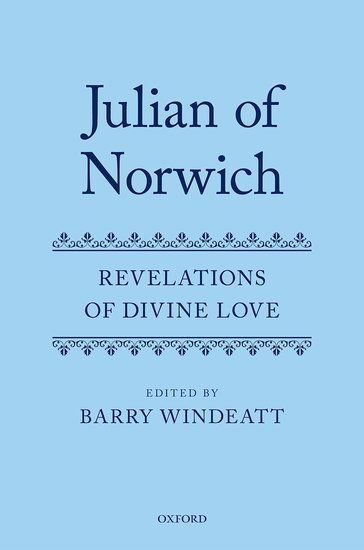
Julian of Norwich
Oxford University Press
2016
sidottu
Julian of Norwich (1342-c.1416) is the earliest author writing in English who can be identified as a woman. She is also esteemed as one of the subtlest writers and profoundest thinkers of the period for her account of the revelations that she experienced in 1373. This edition presents both the shorter and longer versions of her book about her revelations, setting them in parallel for ease of comparison, with comprehensive explanatory and textual commentaries, and also with a glossary. Barry Windeatt provides a text that is likely to be closest to Julian's own language. A substantial introduction provides up-to-date information about Julian's circumstances, Julian's Norwich, her revelations, the relationship between her two texts, the theological background to her principal themes (including Christ as our mother), and a survey of the reception history of her work up to the present. A textual introduction and full apparatus guide the reader through the complex textual issues behind Julian's writing.
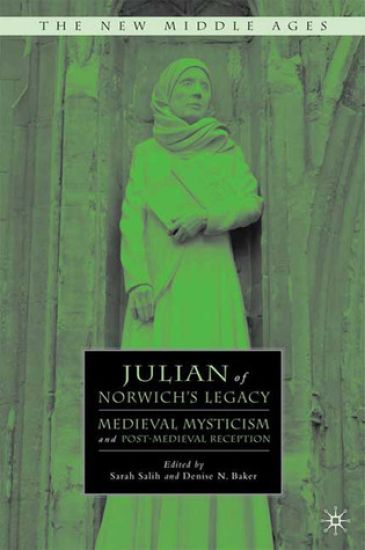
Julian of Norwich's Legacy
Palgrave Macmillan
2009
sidottu
Julian of Norwich the best-known of the medieval mystics today. The text of her Revelation has circulated continually since the fifteenth century, but the twentieth century saw a massive expansion of her popularity. Theological or literary-historical studies of Julian may remark in passing on her popularity, but none have attempted a detailed study of her reception. This collection fills that gap: it outlines the full reception history from the extant manuscripts to the present day, looking at Julian in devotional cultures, in modernist poetry and present-day popular literature, and in her iconography in Norwich, both as a pilgrimage site and a tourist attraction.


Julian Hawthorne (1846-1934), Nathaniel Hawthorne's only son, lived a long and influential life marked by bad circumstances and worse choices. Raised among luminaries such as Thoreau, Emerson, and the Beecher family, Julian became a promising novelist in his twenties, but his writing soon devolved into mediocrity. What talent the young Hawthorne had was spent chasing across the changing literary and publishing landscapes of the period in search of a paycheck, writing everything from potboilers to ad copy. Julian was consistently short of funds because--as biographer Gary Scharnhorst is the first to reveal--he was supporting two households: his wife in one and a longtime mistress in the other. The younger Hawthorne's name and work ethic gave him influence in spite of his haphazard writing. Julian helped to found Cosmopolitan and Collier's Weekly. As a Hearst stringer, he covered some of the era's most important events: McKinley's assassination, the Galveston hurricane, and the Spanish-American War, among others. When Julian died at age 87, he had written millions of words and more than 3,000 pieces, out-publishing his father by a ratio of twenty to one. Gary Scharnhorst, after his own long career including works on Mark Twain, Oscar Wilde, and other famous writers, became fascinated by the leaps and falls of Julian Hawthorne. This biography shows why.

Julian of Norwich and the Mystical Body Politic of Christ
Bauerschmidt Frederick Christian
University of Notre Dame Press
1999
sidottu
Julian of Norwich wrote ""A Revelation of Love"", a short text which shows the immediacy of her experience, and a long text which shows 20 years of reflection. This book offers a reading of these texts and addresses the relationship between the understanding of God and her vision of human community.

In May 1373, the English mystic Julian of Norwich was healed of a serious illness after experiencing a series of visions of the Blessed Virgin and of Christ's suffering. Her account, A Revelation of Love, is considered one of the most remarkable documents of medieval religious experience. In Julian of Norwich and the Mystical Body Politic of Christ, Frederick Bauerschmidt provides a close and historically sensitive reading of Julian's Revelation of Love that addresses the relationship between our understanding of God and our vision of human community. By locating Julian's images of Christ's body within the context of late medieval debates over the nature and extent of divine power, Bauerschmidt argues that Julian presents an alternative account of divine power in which the crucified body of Christ becomes the locus and shape of divine omnipotence. For Julian, divine power serves as the norm of all human exercise of power, rendering the possibility of the "mystical body politic of Christ"as the exemplary form of human community. In this reading, the theological is irreducibly political and the political is irreducibly theological. As such, Bauerschmidt shows Julian to be both a theologian of the first rank and one who "imagines the political."
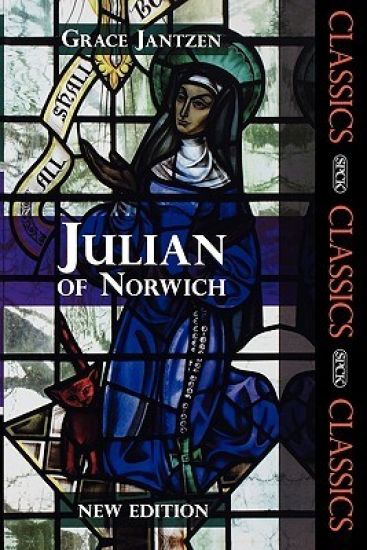
Julian of Norwich, an anchoress of the fourteenth century has captured the imagination of our time in a remarkable way. She shares with her readers the deepest and most intimate experiences of her life through her writings, which are sustained reflections on the visions which appeared to her during a severe illness. Yet of her life and her world we know virtually nothing, not even how she came to be an anchoress. This detailed study of Julian attempts not only to penetrate her theological ideas but also bring to life her world and her life as an anchoress. This is a book not only for those who have a scholarly interest in Julian, but for anyone drawn to Christian mysticism and the place of women within that tradition. In the new introduction to this edition, Grace Jantzen explores what it might mean to be an anchoress in postmodernity, and how reflections on Julian of Norwich and her desire for God can enable us to become the space of divine transformation.
Over six hundred years ago a woman known as Julian of Norwich wrote what is now regarded as one of the greatest works of literature in English. Based on a sequence of mystical visions she received in 1373, her book is called Revelations of Divine Love. Julian lived through an age of political and religious turmoil, as well as through the misery of the Black Death, and her writing engages with timeless questions about life, love and the meaning of suffering. But who was Julian of Norwich? And what can she teach us today? Medievalist and TV historian Janina Ramirez invites you to join her in exploring Julian's remarkable life and times, offering insights into how and why her writing has survived, and what we can learn from this fourteenth-century mystic whose work lay hidden in the shadows of her male contemporaries for far too long.
Over six hundred years ago a woman known as Julian of Norwich wrote what is now regarded as one of the greatest works of literature in English. Based on a sequence of mystical visions she received in 1373, her book is called Revelations of Divine Love. Julian lived through an age of political and religious turmoil, as well as through the misery of the Black Death, and her writing engages with timeless questions about life, love and the meaning of suffering. But who was Julian of Norwich? And what can she teach us today? Medievalist and TV historian Janina Ramirez invites you to join her in exploring Julian’s remarkable life and times, offering insights into how and why her writing has survived, and what we can learn from this fourteenth-century mystic whose work lay hidden in the shadows of her male contemporaries for far too long.

Written in a time of plague and persecution, Julian of Norwich's Revelation of Love grapples with the problem of evil and the challenge it presents to those who wish to believe in a loving God. Julian's sixteen revelations about sin and redemption are some of the first theological works written in English. While her reassuring wisdom has gained in popularity over time, her struggles to reconcile her inner questioning with the teachings she had received through the church and through her mystical visions will also ring true to many readers today. In this new version, Elisabeth Dutton preserves the beauty and ambiguity in the original language, while rendering this classic accessible to modern readers. Dutton's introduction provides essential background information on Julian of Norwich, explores her role as a woman in church, and sheds light on how her ideas relate to modern issues.
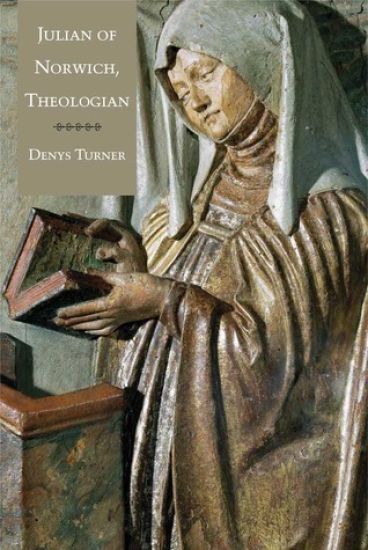
For centuries readers have comfortably accepted Julian of Norwich as simply a mystic. In this astute book, Denys Turner offers a new interpretation of Julian and the significance of her work. Turner argues that this fourteenth-century thinker's sophisticated approach to theological questions places her legitimately within the pantheon of other great medieval theologians, including Thomas Aquinas, Bernard of Clairvaux, and Bonaventure. Julian wrote but one work in two versions, a Short Text recording the series of visions of Jesus Christ she experienced while suffering a near-fatal illness, and a much expanded Long Text exploring the theological meaning of the "showings" some twenty years later. Turner addresses the apparent conflict between the two sources of Julian's theology: on the one hand, her personal revelation of God's omnipotent love, and on the other, the Church's teachings on and her own witnessing of evil in the world that deserves punishment, even eternal punishment. Offering a fresh and elegant account of Julian's response to this conflict—one that reveals its nuances, systematic character, and originality—this book marks a new stage in the century-long rediscovery of one of the English language's greatest theological thinkers.