Kirjojen hintavertailu. Mukana 11 699 587 kirjaa ja 12 kauppaa.

Kirjahaku

Etsi kirjoja tekijän nimen, kirjan nimen tai ISBN:n perusteella.

1000 tulosta hakusanalla K C Samota

The Life of Sir Anthony Panizzi, K.C.B. 2 Volume Set
Anthony Panizzi (1797–1879), born in Brescello, Italy, qualified as a lawyer, but fled to Switzerland in 1823 to avoid arrest for his political activities in support of Italian unification. He then moved to England, where he became a naturalised British subject. The patronage of Lord Brougham, the Lord Chancellor, got him a post in the British Museum Library, where he remained for thirty-five years. He was responsible for the great expansion of the library, the building of the famous round Reading Room, and the compilation of cataloguing rules which remain influential today. Panizzi was knighted for services to librarianship, and is commemorated by the annual Panizzi lectures at the British Library. His continuing support of Italian independence was recognised by his appointment to the Italian senate. This two-volume biography by his colleague Louis Fagan (1845–1903) was published in 1880.
Life of Admiral Sir Leopold McClintock, K.C.B., D.C.L., L.L.D., F.R.S., V.P.R.G.S.
This biography of polar explorer Sir Leopold McClintock (his name is also spelled M'Clintock) was published in 1909 by his 'old messmate' Sir Clements Markham (1830–1916), later more famous as a historian. (Several works by both men have been reissued in the Cambridge Library Collection.) McClintock (1819–1907) gained experience of Arctic voyages on the expeditions of James Clark Ross and Edward Belcher, during which he undertook several arduous sledge journeys over the ice. In 1854, he took leave from the navy to command the Fox, a ship paid for by Lady Franklin to investigate the fate of her husband's expedition. He found the memorandum, written by his second-in-command, which confirmed Franklin's death in June 1847. McClintock was knighted for his services on his return, and he stayed in the navy, serving on different stations around the world, until his retirement with the rank of admiral in 1884.
Memoirs of Admiral Sir Sidney Smith, K.C.B., &c.; Volume 2
This work has been selected by scholars as being culturally important, and is part of the knowledge base of civilization as we know it. This work was reproduced from the original artifact, and remains as true to the original work as possible. Therefore, you will see the original copyright references, library stamps (as most of these works have been housed in our most important libraries around the world), and other notations in the work.This work is in the public domain in the United States of America, and possibly other nations. Within the United States, you may freely copy and distribute this work, as no entity (individual or corporate) has a copyright on the body of the work.As a reproduction of a historical artifact, this work may contain missing or blurred pages, poor pictures, errant marks, etc. Scholars believe, and we concur, that this work is important enough to be preserved, reproduced, and made generally available to the public. We appreciate your support of the preservation process, and thank you for being an important part of keeping this knowledge alive and relevant.
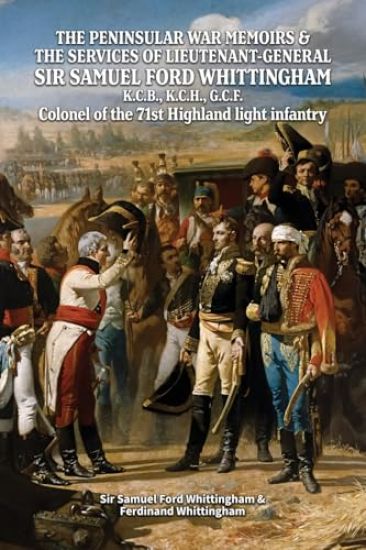
THE PENINSULAR WAR MEMOIRS & THE SERVICES OF LIEUTENANT-GENERAL SIR SAMUEL FORD WHITTINGHAM K.C.B., K.C.H., G.C.F. Colonel of the 71st Highland light infantry
Whittingham took part under La Pe a on 18 July 1808 in the victorious battle of Baylen, and for his services was made a colonel of cavalry in the Spanish army on 20 July. In February 1809 he joined the army corps of the Duke of Alburquerque in La Mancha, where he took part in several cavalry affairs with such distinction that he was promoted to be brigadier-general in the Spanish army. He was present at the battle of Medellin on 28 March, when the Spanish general Cuesta was defeated by the French general Victor-Perrin. On this occasion Whittingham re-formed the routed cavalry and led them against the enemy. A short time previous to Wellesley's advance into Spain Whittingham joined the British headquarters on the frontier of Portugal. On 28 July at the battle of Talavera he was severely wounded when gallantly bringing up two Spanish battalions to the attack and was mentioned in Sir Arthur Wellesley's despatch of 29 July 1809. He was given the command of the Spanish cavalry, which he remodelled upon British lines.Whittingham served in command of a force of Spanish cavalry and infantry under La Pe a at the battle of Barrosa, on 5 March 1811, and kept in check a French corps of cavalry and infantry which attempted to turn the Barossa heights by the seaward side. He was engaged on the 7th of the month in the affair of Xegona, and on the 15th in the affair of Concentay a was wounded by a musket-ball in the right cheek, and was on both occasions most favourably mentioned by Sir John Murray in despatches. On 13 April he took part in the victorious battle of Castalla and was again mentioned in despatches. When Murray invested Tarragona on 3 June Whittingham's division occupied the left. On Suchet's advance to relieve the place Whittingham vainly suggested to Murray that a corps of observation should be left before Tarragona, and that Murray should move to meet Suchet with all his force. The siege was raised. Murray was relieved in command of the army by Lord William Bentinck, and Whittingham covered the retreat, checking and repulsing the French column in pursuit, and joining the main army again at Cambrils.In March 1814 Whittingham escorted King Ferdinand VII in his progress to Madrid, who on 16 June 1814 promoted him to be lieutenant-general in the Spanish army. On 4 June Wellington wrote from Madrid to the Duke of York, in anticipation of Whittingham's return home: "He has served most zealously and gallantly from the commencement of the war in the peninsula, and I have had every reason to be satisfied with his conduct in every situation in which he has been placed."Whittingham reached Calcutta on 2 November 1822. He was busy in 1824 with the preparations for the expedition to Ava, and in November of that year with the Barrackpur Mutiny. He took part in the siege of Bhartpur, was slightly wounded on 13 January 1826, but was present at the capture on the 18th
THE PENINSULAR WAR MEMOIRS & THE SERVICES OF LIEUTENANT-GENERAL SIR SAMUEL FORD WHITTINGHAM K.C.B., K.C.H., G.C.F. Colonel of the 71st Highland light infantry
Whittingham took part under La Pe a on 18 July 1808 in the victorious battle of Baylen, and for his services was made a colonel of cavalry in the Spanish army on 20 July. In February 1809 he joined the army corps of the Duke of Alburquerque in La Mancha, where he took part in several cavalry affairs with such distinction that he was promoted to be brigadier-general in the Spanish army. He was present at the battle of Medellin on 28 March, when the Spanish general Cuesta was defeated by the French general Victor-Perrin. On this occasion Whittingham re-formed the routed cavalry and led them against the enemy. A short time previous to Wellesley's advance into Spain Whittingham joined the British headquarters on the frontier of Portugal. On 28 July at the battle of Talavera he was severely wounded when gallantly bringing up two Spanish battalions to the attack and was mentioned in Sir Arthur Wellesley's despatch of 29 July 1809. He was given the command of the Spanish cavalry, which he remodelled upon British lines.Whittingham served in command of a force of Spanish cavalry and infantry under La Pe a at the battle of Barrosa, on 5 March 1811, and kept in check a French corps of cavalry and infantry which attempted to turn the Barossa heights by the seaward side. He was engaged on the 7th of the month in the affair of Xegona, and on the 15th in the affair of Concentay a was wounded by a musket-ball in the right cheek, and was on both occasions most favourably mentioned by Sir John Murray in despatches. On 13 April he took part in the victorious battle of Castalla and was again mentioned in despatches. When Murray invested Tarragona on 3 June Whittingham's division occupied the left. On Suchet's advance to relieve the place Whittingham vainly suggested to Murray that a corps of observation should be left before Tarragona, and that Murray should move to meet Suchet with all his force. The siege was raised. Murray was relieved in command of the army by Lord William Bentinck, and Whittingham covered the retreat, checking and repulsing the French column in pursuit, and joining the main army again at Cambrils.In March 1814 Whittingham escorted King Ferdinand VII in his progress to Madrid, who on 16 June 1814 promoted him to be lieutenant-general in the Spanish army. On 4 June Wellington wrote from Madrid to the Duke of York, in anticipation of Whittingham's return home: "He has served most zealously and gallantly from the commencement of the war in the peninsula, and I have had every reason to be satisfied with his conduct in every situation in which he has been placed."Whittingham reached Calcutta on 2 November 1822. He was busy in 1824 with the preparations for the expedition to Ava, and in November of that year with the Barrackpur Mutiny. He took part in the siege of Bhartpur, was slightly wounded on 13 January 1826, but was present at the capture on the 18th
The Honourable Sir Charles Murray, K.C.B.
The Honourable Sir Charles Murray, K.C.B. - A memoir is an unchanged, high-quality reprint of the original edition of 1898. Hansebooks is editor of the literature on different topic areas such as research and science, travel and expeditions, cooking and nutrition, medicine, and other genres. As a publisher we focus on the preservation of historical literature. Many works of historical writers and scientists are available today as antiques only. Hansebooks newly publishes these books and contributes to the preservation of literature which has become rare and historical knowledge for the future.
Autobiography Of Sir George Biddell Airy, K.C.B.
Autobiography Of Sir George Biddell Airy, K.C.B.: Edited By Wilfrid Airy This book is a result of an effort made by us towards making a contribution to the preservation and repair of original classic literature. In an attempt to preserve, improve and recreate the original content, we have worked towards: 1. Type-setting & Reformatting: The complete work has been re-designed via professional layout, formatting and type-setting tools to re-create the same edition with rich typography, graphics, high quality images, and table elements, giving our readers the feel of holding a 'fresh and newly' reprinted and/or revised edition, as opposed to other scanned & printed (Optical Character Recognition - OCR) reproductions. 2. Correction of imperfections: As the work was re-created from the scratch, therefore, it was vetted to rectify certain conventional norms with regard to typographical mistakes, hyphenations, punctuations, blurred images, missing content/pages, and/or other related subject matters, upon our consideration. Every attempt was made to rectify the imperfections related to omitted constructs in the original edition via other references. However, a few of such imperfections which could not be rectified due to intentional\unintentional omission of content in the original edition, were inherited and preserved from the original work to maintain the authenticity and construct, relevant to the work. We believe that this work holds historical, cultural and/or intellectual importance in the literary works community, therefore despite the oddities, we accounted the work for print as a part of our continuing effort towards preservation of literary work and our contribution towards the development of the society as a whole, driven by our beliefs. We are grateful to our readers for putting their faith in us and accepting our imperfections with regard to preservation of the historical content. HAPPY READING
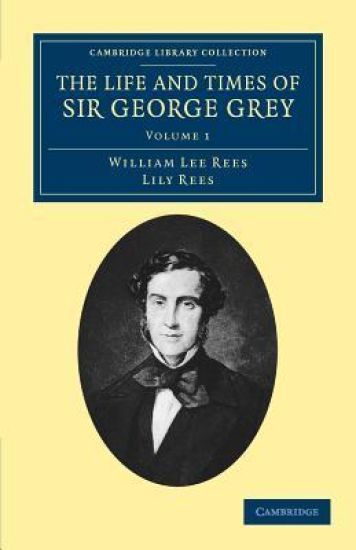
The Life and Times of Sir George Grey, K.C.B.

The Life and Times of Sir George Grey, K.C.B.

William Lee Rees; Lily Rees

Cambridge University Press
2011
pokkari
Published in 1892, this two-volume biography chronicles the remarkable life and career of Sir George Grey (1812–98), the 11th premier of New Zealand. William Lee Rees (1836–1912), lawyer, politician and well-known supporter of Grey, co-wrote this work with his daughter Lily, and the books outline how Grey became arguably the most influential figure during the European settlement of New Zealand in the nineteenth century. The volumes proceed chronologically and are organised by the main events in Grey's life. Volume 1 begins with Grey's upbringing and early years, and describes his first voyage to Western Australia, his first government of New Zealand and his time as governor of Cape Colony. In addition to recounting the incidents, adventures and achievements of Grey's life, Rees also conveys Grey's personal principles and aspirations, giving the reader an insight into the character of this colonial governor and servant of the empire.