

Kirjahaku
Etsi kirjoja tekijän nimen, kirjan nimen tai ISBN:n perusteella.
1000 tulosta hakusanalla Karl Altendorf
Neal Riemer presents, analyzes, and criticizes Marx's guiding values, his social scientific criticism of the existing 19th century order, his theory of revolutionary action, and his views of the future of economics, politics, society, and culture.

There is growing interest in Europe and the United States in the work of the major German social-political philosopher Karl Korsch. Korsch participated in the turbulent struggles in Weimar Germany and while in exile continually reflected on history and politics. His work affords one of the most important interpretations of the role of Marxism in twentieth-century revolutionary movements, while developing an ongoing critical interrogation of Marxism. His thought provides an illuminating perspective on the process of revolution and counterrevolution in recent history. Karl Korsch: Revolutionary Theory is the first English anthology of his most important writings. This collection presents Korsch's essays on a wide range of subjects, including Marxism and socialization, Lenin and the Soviet Union, the crisis of Marxism, models of revolutionary practice, fascism and counterrevolution, and Korsch's final evaluation of Marxism. Much of this work is translated into English for the first time, and many unknown essays first published in radical journals which are no longer available appear here. The volume includes Korsch's major essays written during the 1920s and 1930s as well as some of his later work. Douglas Kellner's detailed introduction, "Korsch's Revolutionary Marxism," contains the first comprehensive critical interpretation of Korsch's work to appear in English. It provides a historical-theoretical reconstruction of Korsch's life and thought and roots his political theory in the sociopolitical context in which it evolved. The introduction has been described by Korsch scholars as a "first-class piece of exposition and interpretation" and a "serious, first-rate contribution likely to preempt the field in the English language." The editor's introduction along with the representative selection of essays provide firm grounding in the ideas and historical significance of Karl Korsch.
The Selected Correspondence of Karl A. Menninger
Karl A. Menninger
Yale University Press
1989
sidottu
Dr. Karl A. Menninger was one of the earliest supporters of psychoanalysis in America and, together with his father, Dr. C.F. Menninger, founded the internationally famous Menninger Clinic. Dr. Menninger is also a prolific letter writer who has carried on a lively correspondence with his fellow analysts and other notables all over the world. This selection of Dr. Menninger’s correspondence begins in 1919, when he opened his first practice in Topeka, and covers the period in which he began the Menninger Clinic and published three major books. Dr. Menninger’s growing prominence during these years was paralleled by the development of the American psychoanalytic community. The letters chart this development through Dr. Menninger’s exchanges with such distinguished figures in American psychiatry as E.E. Southard, Adolf Meyer, Abraham Myerson, William Alanson White, Smith Ely Jelliffe, and Franz Alexander. Through his letters, Dr. Menninger is revealed as a keen observer of American society, a formidable combatant in psychiatric disputes, and a witty commentator on current events. His correspondence provides a vivid picture of the early years of American psychoanalysis and of a pivotal figure in this movement.
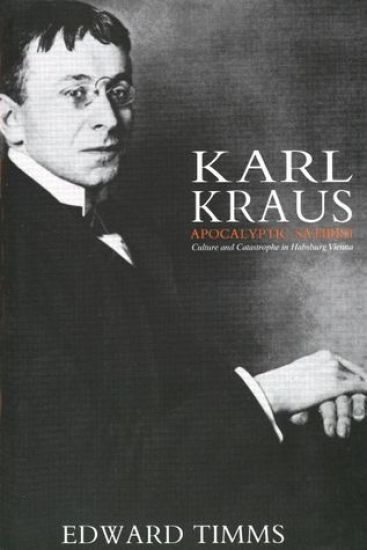
A fascinating study of the life and work of Karl Kraus, the Austrian satirist whose critiques of the mass media, the military-industrial complex, and technology running out of control have earned him a following fifty years after his death. Drawing on unfamiliar sources, Edward Timms analyzes Kraus's involvement in fundamental ideological issues of his time, such as psychoanalysis, social morality, design and architecture, the role of the artist, Zionism, anti-semitism, and war, and shows that Kraus' political position—caught between traditional Habsburg loyalties and new democratic commitments—was far more complex than has previously been suspected. "Dr. Timms' book is a major landmark in Kraus' studies, and an important contribution to our understanding of the culture of the early 20th century. It abounds in discoveries and insights."—W.E. Yeats, Times Literary Supplement "Timm's lucid prose, his masterly organization of the voluminous material he treats, his excellent translations of the documents he cites and his broad, readable portrayal of Viennese fin-de-siecle culture make this study accessible to the average reader and a pleasure for the literary professional. . . . An example of German studies at its best."—James Knowlton, European Studies Journal "Timms successfully weaves a colorful, and thoroughly researched and documented, account of essential cultural currents in Habsburg Vienna around his central figure. Copious illustrations and photographs enhance a most enjoyable text, making this an ideal introduction to Kraus and his work."—Choice

In this second volume of Karl Kraus: Apocalyptic Satirist, Edward Timms takes up Kraus’s story in November 1918, when the satirist responded to the creation of the new republics with a defiant hope, invoking international law against the dual threat of reactionary politics and irresponsible media. While contemporaries like Walter Benjamin regarded Kraus as heroically isolated, this book places him within a dynamic field of cultural production. Timms highlights the court cases Kraus pursued with his lawyer Oskar Samek and the theatrical projects that earned him Brecht’s friendship.In the final section of the book, the author refutes the legend that Kraus responded with stunned silence to Hitler’s seizure of power. His career culminated in Third Walpurgis Night, an analysis of Nazi ideology that has proved enduringly influential. Timms concludes that Kraus’s lifelong critique of the media, combining Orwell’s political radicalism with Joyce’s linguistic playfulness, incisively anticipates the propaganda techniques of our own age.
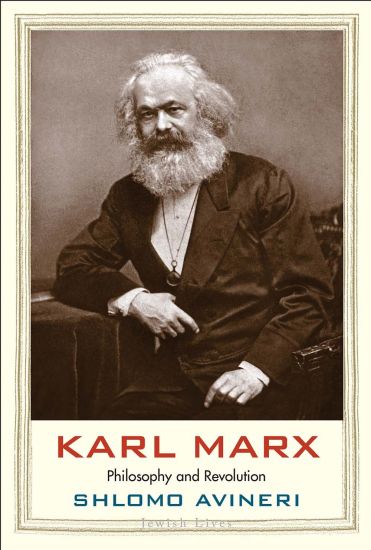
From the prizewinning Jewish Lives series, a new exploration of Karl Marx's life through his intellectual contributions to modern thought"A perceptive and fair-minded corrective to superficial treatments of the man."—Jonathan Rose, Wall Street Journal Karl Marx (1818–1883)—philosopher, historian, sociologist, economist, current affairs journalist, and editor—was one of the most influential and revolutionary thinkers of modern history, but he is rarely thought of as a Jewish thinker, and his Jewish background is either overlooked or misrepresented. Here, distinguished scholar Shlomo Avineri argues that Marx’s Jewish origins did leave a significant impression on his work. Marx was born in Trier, then part of Prussia, and his family had enjoyed equal rights and emancipation under earlier French control of the area. But then its annexation to Prussia deprived the Jewish population of its equal rights. These developments led to the reluctant conversion of Marx’s father, and similar tribulations radicalized many young intellectuals of that time who came from a Jewish background. Avineri puts Marx’s Jewish background in its proper and balanced perspective, and traces Marx’s intellectual development in light of the historical, intellectual, and political contexts in which he lived.About Jewish Lives: Jewish Lives is a prizewinning series of interpretative biography designed to explore the many facets of Jewish identity. Individual volumes illuminate the imprint of Jewish figures upon literature, religion, philosophy, politics, cultural and economic life, and the arts and sciences. Subjects are paired with authors to elicit lively, deeply informed books that explore the range and depth of the Jewish experience from antiquity to the present. In 2014, the Jewish Book Council named Jewish Lives the winner of its Jewish Book of the Year Award, the first series ever to receive this award.More praise for Jewish Lives: “Excellent.” – New York times “Exemplary.” – Wall St. Journal “Distinguished.” – New Yorker “Superb.” – The Guardian
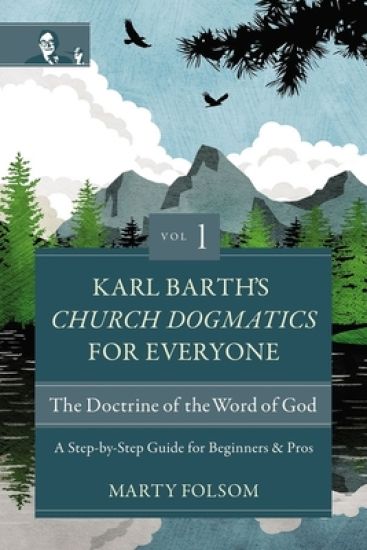
Karl Barth's Church Dogmatics for Everyone, Volume 1---The Doctrine of the Word of God
Marty Folsom
ZONDERVAN
2022
nidottu
A Guided Tour of One of the Greatest Theological Works of the Twentieth CenturyKarl Barth's Church Dogmatics is considered by many to be the most important theological work of the twentieth century and for many people reading it, or at least understanding its contents and arguments, is a lifelong goal. Yet its enormous size, at over 12,000 pages (in English translations) and enough print volumes to fill an entire shelf, make reading it a daunting prospect for seasoned theologians and novices alike.Karl Barth's Church Dogmatics for Everyone, Volume 1--The Doctrine of the Word of God helps bridge the gap for would-be Karl Barth readers from beginners to professionals by offering an introduction to Barth's theology and thought like no other. User-friendly and creative, this guide helps readers get the gist, significance, and relevance of what Barth intended for the church... to restore the focus of theology and revitalize the practices of the church.Each section contains insights for pastors, new theologians, professionals, and ordinary people including:Summaries of the sectionContextual considerationsAnd other visually informative features that reinforce the main points of the Barth's thoughtIn addition, each volume features the voices of authors from different academic disciplines who contribute brief reflections on the value of Church Dogmatics for creative discovery in their disciplines. Volume 1 reflections include:Douglas Campbell (biblical studies)Myk Habets (systematic theology)Richard Keith (pastors)Julie Canlis (ordinary people)James Chaousis (mental health)John Vissers (spiritual formation)Whether you are just discovering Barth or want a fresh look at his magnum opus, this series invites you to an enjoyable and insightful journey into the Church Dogmatics.

Karl Barth's Church Dogmatics for Everyone, Volume 2---The Doctrine of God
Marty Folsom
ZONDERVAN
2023
nidottu
A Guided Tour of One of the Greatest Theological Works of the Twentieth CenturyKarl Barth's?Church Dogmatics?is considered by many to be the most important theological work of the twentieth century. For many people, reading it and understanding its arguments is a lifelong goal. Its enormous size, at over 12,000 pages (in English translations) and enough print volumes to fill an entire shelf, make reading it a daunting prospect.Karl Barth's Church Dogmatics for Everyone, Volume 2--The Doctrine of God helps bridge the gap for Karl Barth readers from beginners to professionals by offering an introduction to Barth's theology and thought like no other. User-friendly and creative, this guide helps readers get the gist, significance, and relevance of what Barth intended for the church... to restore the focus of theology and revitalize the practices of the church.Each section contains insights for pastors, new theologians, professionals, and ordinary people including:Summaries of the sectionContextual considerationsAnd other visually informative features that reinforce the main points of the Barth's thought In addition, each volume features the voices of authors from different academic disciplines who contribute brief reflections on the value of Church Dogmatics for creative discovery in their disciplines. Volume 2 reflections include:Chris Tilling (biblical studies)David Guretzki (systematic theology)Earl Palmer (pastors)Wyatt Houtz (ordinary people)Andrew Howie (mental health)James Houston (spiritual formation)Ross Hastings (science)Jeremy Begbie (the arts)Whether you are just discovering Barth or want a fresh look at his magnum opus, this series invites you to an enjoyable and insightful journey into the Church Dogmatics.
Karl Barth's Church Dogmatics for Everyone, Volume 3---The Doctrine of Creation
Marty Folsom
ZONDERVAN
2025
nidottu
Karl Barth's?Church Dogmatics?is considered by many to be the most important theological work of the twentieth century. For many people reading it, or at least understanding its contents and arguments, is a lifelong goal. Yet its enormous size, at over 12,000 pages (in English translations) and enough print volumes to fill an entire shelf, make reading it a daunting prospect for seasoned theologians and novices alike.Karl Barth's Church Dogmatics for Everyone, Volume 3 - The Doctrine of Creation?helps bridge the learning gap for would-be Karl Barth readers from beginners to professionals by offering an introduction to Barth's theology and thought like no other. User-friendly and creative, this guide helps readers get the gist, significance, and relevance of what Barth intended for the church - to restore the focus of theology and revitalize the practices of the church.Each section contains insights for pastors, new theologians, professionals, and ordinary people including:Summaries of the sectionContextual considerationsAnd other visually informative features that reinforce the main points of the Barth's thoughtIn addition, each volume features the voices of authors from different academic disciplines who contribute brief reflections on the value of?Church Dogmatics?for creative discovery in their disciplines. Volume 3 reflections include:Samuel Adams (Biblical Studies)Gary Deddo (Systematic Theology)Cherith Fee Nordling (Embodied Theology)Will Willimon (Pastors)Jeff McSwain (Ordinary People)Daniel J. Price (Mental Health)Geordie Ziegler (Spiritual Formation)Ross Lockhart (Missions)David McNutt (The Arts)Jonathan Lett (Science)Whether you are just discovering Barth or want a fresh look at his magnum opus, this series invites you to an enjoyable and insightful journey into the Church Dogmatics.
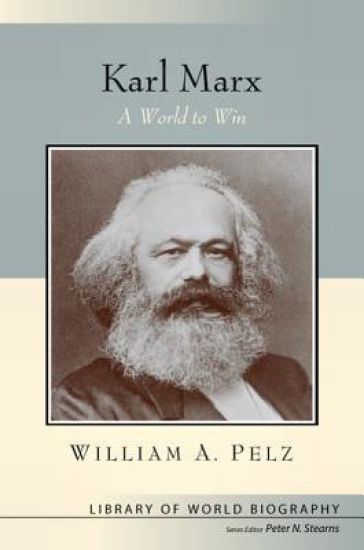
Karl Marx, part of the Library of World Biography Series, explores the Industrial Revolution by detailing the life and work of Karl Marx. The text is aimed primarily at undergraduates with little or no background knowledge of Marx or his theories. This book covers the important aspects of his life and the major theoretical arguments of his work. It also explores the Industrial Revolution through the lens of Marx's view of socialism, not simply as an ethical idea but also as a way of framing the industrial system and its impact on workers. Each interpretive biography in the Library of World Biography Series focuses on a person whose actions and ideas either significantly influenced world events or whose life reflects important themes and developments in global history.
Karl Marx and the Intellectual Origins of Dialectical Materialism
J. White
Palgrave Macmillan
1996
nidottu
The book provides a genealogy of 'dialectical materialism' by tracing the development of Marxist ideas from their origins in German philosophical thought to the ideology of the social-democratic groups in Russia in the 1890s, from which Lenin and the revolutionary generation emerged. It reconstructs Marx's original conceptions and examines the modifications that were made to them by himself and by his Russian followers, which eventually gave rise to the doctrine of 'dialectical materialism', first expounded by Plekhanov.
The authorized biography of the most important Protestant theologian of the twentieth century.

Karl Von Raumer's Leben Von Ihm Selbst Erzählt.
Karl Von Raumer
Creative Media Partners, LLC
2018
pokkari

Karl Der Grosse Und Die Sachsen.
Christian Oberlehrer Ritter; Emperor Charlemagne
Creative Media Partners, LLC
2019
sidottu
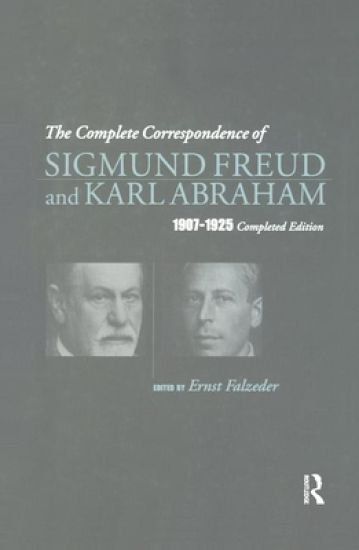
The Complete Correspondence of Sigmund Freud and Karl Abraham 1907-1925
Karl Abraham; Sigmund Freud
Routledge
2019
nidottu
The author was an important and influential early member of Freud's inner circle of trusted colleagues. As such, he played a significant part in the establishment of psychoanalysis as a recognised and respected discipline.
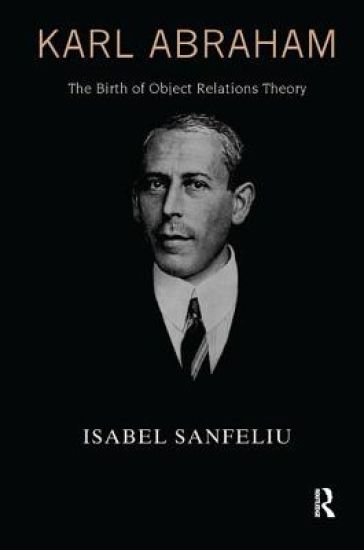
This book provides an in-depth analysis of the major milestones in Karl Abraham's career, and highlights his interest in mythology and his permanent focus on the libido. It explores his development of two different forms of early object relations: incorporation and destruction.
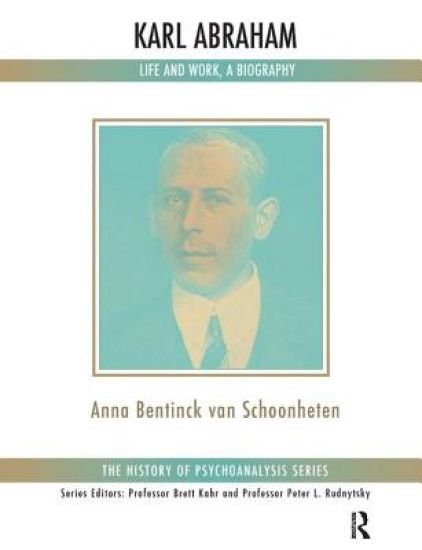
This book provides the reader with rich evidence of the very contemporaneity of Karl Abraham, reminding the reader of his unique clinical contributions to such diverse areas of concentration as the psychoses, depression, and the pre-oedipal.
Karl Marx is the most important modern philosopher. His work has radically changed the course of world history, continental philosophy, political theory, literary criticism, and cultural studies. The sheer range of his achievements, and the depth of his critical insights, continue to speak to our present moment. This book places Marx’s writings in their historical context, providing a clear guide to his key ideas and intellectual legacy. Written for both students and scholars, it illustrates Marx’s ideas with examples drawn from William Shakespeare, Herman Melville, Leo Tolstoy, Bertolt Brecht, Theodor Dreiser, Thomas Pynchon, Toni Morrison, Sally Rooney, Claude McKay, Tennessee Williams, Mad Men, and Margin Call.Key ideas discussed in this guide include: Tracing historical contexts and developments in Marx’s work over his lifetime Focusing on Marxism as an interpretative strategy, paying special attention to its impact on literary criticism and cultural studies Examining recent developments in Marxist theory, such as a stronger focus on the environment, climate crisis, and world ecology Exploring the continued relevance of Marx and Marxism today.This Routledge Critical Thinkers guide will enable readers to critically assess and interpret Marx’s major works, while also introducing his methods of critical analysis. Preparing readers to approach his original texts, this guide ensures that readers of all levels will find Marx accessible, challenging, and of continued relevance.Andrew Rowcroft offers a comprehensive introduction to Marx’s revolutionary ideas, examining the influence Marx had on literary studies, cultural studies, modernism, and philosophy.