Kirjojen hintavertailu. Mukana 11 627 373 kirjaa ja 12 kauppaa.

Kirjahaku

Etsi kirjoja tekijän nimen, kirjan nimen tai ISBN:n perusteella.

1000 tulosta hakusanalla Kathrin Schwarz

Von der Entfremdung der Arbeit in Kathrin Rögglas Roman "Wir schlafen nicht"
Studienarbeit aus dem Jahr 2010 im Fachbereich Germanistik - Neuere Deutsche Literatur, Note: 1,0, Universit t Mannheim (Philosophische Fakult t), Veranstaltung: Neue Arbeit und alte Arbeit in der Gegenwartsliteratur, Sprache: Deutsch, Abstract: 1. Einleitung " ...] bleib in Bewegung, geh keine Bindungen ein und bring keine Opfer." So res miert Richard Sennett, englischer Soziologe, die Prinzipien der "flexiblen Gesellschaft." Die ersten beiden Anforderungen die sich der Mensch des sp ten 20. und 21. Jahrhunderts stellt, treffen nach Betrachtung des neuen Arbeitsbegriffs augenscheinlich zu. Liest man die aktuellen Berichte aus den Zeitungen bringen die meisten Menschen Opfer im physischen als auch psychischen Sinne: "Eines Tages konnten sie es nicht mehr l nger mit ansehen. Die Arbeitskollegen schickten Bernd Tillmann nach Hause. Monatelang hatte der damals 33-j hrige Bankangestellte gegen den drohenden Zusammenbruch angek mpft; hat ignoniert, dass ihm die Arbeit immer weniger Freude bereitet. Dann ...] verlie en ihn die Kr fte." Der suggerierte profitorientierte Wesenszug, der "Zwang zum Verkauf immer fragw rdigerer Produkte," durch die Bank bei welcher genannter Bernd Tillmann arbeitete, trieb diesen psychisch so weit bis die Arbeit zur Belastung wurde und Tillmann in ihrer ganzen Wucht berrollte und ihn einfach ausschaltete. Die Folge: "Anpassungsst rungen" so sein Arzt nach der Diagnose - "Burn-out" so Tillmann es mittlerweile r ckblickend erkennt. "Burn-out" - ausgebrannt von der Arbeit. Wie tiefgreifend ist das Ph nomen Arbeit geworden? Welche Gestalt hat diese angenommen, das nichts mehr im Sinne einer "Frei-zeit" als Freiraum, sichtbar getrennt von der Arbeit bestehen kann? Lebt der Mensch nur noch von der Arbeit? Oder lebt die Gesellschaft vielmehr vom Ergebnis vieler Opferbringungen nach Erwirtschaftung des Kapitals? So schreibt Gilles Deleuze in einem Aufsatz: "Der Mensch ist nicht mehr der eingeschlossene, sondern der verschuldete Men
Collective Memory in International Relations

Collective Memory in International Relations

Kathrin Bachleitner

Oxford University Press
2021
sidottu
Collective memory carries the past into the present. This book traces the influence of collective memory in international relations (IR). It locates the origins of a country's memory within the international environment and inquires how memory guides states through time in world politics. Collective memory, as such, not only shapes countries and their international interactions, but the international sphere also plays an essential role in how countries approach the past. Through in-depth examinations of both domestic and international landscapes in empirical cases, the book explores four ways in which collective memory can manifest in IR: as a country's political strategy; as its public identity; as its international state behaviour; and finally, as a source for its national values. A comparative case study of (West) Germany and Austria illustrates how significantly differing interpretations of the Nazi legacy impacted their respective international policies over time. Taken together, this book investigates whether collective memory influences global outcomes and how and why it matters for IR.
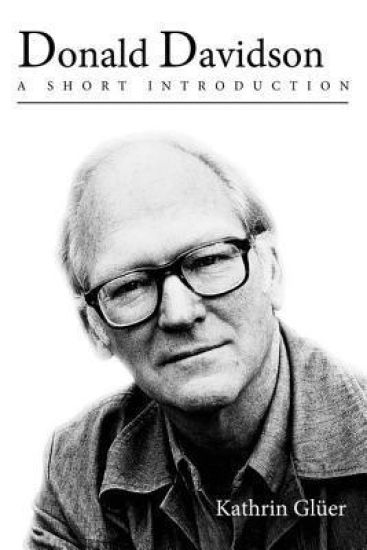
Donald Davidson

Donald Davidson

Kathrin Gl¨ uer

Oxford University Press Inc
2011
nidottu
Donald Davidson was one of the 20th Century's deepest analytic thinkers. He developed a systematic picture of the human mind and its relation to the world, an original and sustained vision that exerted a shaping influence well beyond analytic philosophy of mind and language. At its center is an idea of minded creatures as essentially rational animals: Rational animals can be interpreted, their behavior can be understood, and the contents of their thoughts are, in principle, open to others. The combination of a rigorous analytic stance with aspects of humanism so distinctive of Davidsonian thought finds its maybe most characteristic expression when this central idea is brought to bear on the relation of the mental to the physical: Davidson defended the irreducibility of its rational nature while acknowledging that the mental is ultimately determined by the physical. Davidson made contributions of lasting importance to a wide range of topics -- from general theory of meaning and content over formal semantics, the theories of truth, explanation, and action, to metaphysics and epistemology. His writings almost entirely consist of short, elegant, and often witty papers. These dense and thematically tightly interwoven essays present a profound challenge to the reader. This book provides a concise, systematic introduction to all the main elements of Davidson's philosophy. It places the theory of meaning and content at the very center of his thought. By using interpretation, and the interpreter, as key ideas it clearly brings out the underlying structure and unified nature of Davidson's work. Kathrin Glüer carefully outlines his principal claims and arguments, and discusses them in some detail. The book thus makes Davidson's thought accessible in its genuine depth, and acquaints the reader with the main lines of discussion surrounding it.
Donald Davidson

Donald Davidson

Kathrin Gl¨ uer

Oxford University Press Inc
2011
sidottu
Donald Davidson was one of the 20th Century's deepest analytic thinkers. He developed a systematic picture of the human mind and its relation to the world, an original and sustained vision that exerted a shaping influence well beyond analytic philosophy of mind and language. At its center is an idea of minded creatures as essentially rational animals: Rational animals can be interpreted, their behavior can be understood, and the contents of their thoughts are, in principle, open to others. The combination of a rigorous analytic stance with aspects of humanism so distinctive of Davidsonian thought finds its maybe most characteristic expression when this central idea is brought to bear on the relation of the mental to the physical: Davidson defended the irreducibility of its rational nature while acknowledging that the mental is ultimately determined by the physical. Davidson made contributions of lasting importance to a wide range of topics -- from general theory of meaning and content over formal semantics, the theories of truth, explanation, and action, to metaphysics and epistemology. His writings almost entirely consist of short, elegant, and often witty papers. These dense and thematically tightly interwoven essays present a profound challenge to the reader. This book provides a concise, systematic introduction to all the main elements of Davidson's philosophy. It places the theory of meaning and content at the very center of his thought. By using interpretation, and the interpreter, as key ideas it clearly brings out the underlying structure and unified nature of Davidson's work. Kathrin Gl¨ uer carefully outlines his principal claims and arguments, and discusses them in some detail. The book thus makes Davidson's thought accessible in its genuine depth, and acquaints the reader with the main lines of discussion surrounding it.
Form, Matter, Substance

Form, Matter, Substance

Kathrin Koslicki

Oxford University Press
2018
sidottu
In Form, Matter, Substance, Kathrin Koslicki develops a contemporary defense of the Aristotelian doctrine of hylomorphism. According to this approach, objects are compounds of matter (hule) and form (morphe or eidos) and a living organism is not exhausted by the body, cells, organs, tissue and the like that compose it. Koslicki argues that a hylomorphic analysis of concrete particular objects is well equipped to compete with alternative approaches when measured against a wide range of criteria of success. However, a plausible application of the doctrine of hylomorphism to the special case of concrete particular objects hinges on how hylomorphists conceive of the matter composing a concrete particular object, its form, and the hylomorphic relations which hold between a matter-form compound, its matter and its form. Koslicki offers detailed answers these questions surrounding a hylomorphic approach to the metaphysics of concrete particular objects. As a result, matter-form compounds emerge as occupying the privileged ontological status traditionally associated with substances due to their high degree of unity.
Form, Matter, Substance

Form, Matter, Substance

Kathrin Koslicki

Oxford University Press
2023
nidottu
In Form, Matter, Substance, Kathrin Koslicki develops a contemporary defence of the Aristotelian doctrine of hylomorphism. According to this approach, objects are compounds of matter (hule) and form (morphe or eidos) and a living organism is not exhausted by the body, cells, organs, tissue, and the like that compose it. Koslicki argues that a hylomorphic analysis of concrete particular objects is well equipped to compete with alternative approaches when measured against a wide range of criteria of success. However, a plausible application of the doctrine of hylomorphism to the special case of concrete particular objects hinges on how hylomorphists conceive of the matter composing a concrete particular object, its form, and the hylomorphic relations which hold between a matter-form compound, its matter and its form. Koslicki offers detailed answers to the questions surrounding this approach to the metaphysics of concrete particular objects. As a result, matter-form compounds emerge as occupying the privileged ontological status traditionally associated with substances, despite their metaphysical complexity, due to their high degree of unity.