Kirjojen hintavertailu. Mukana 11 244 527 kirjaa ja 12 kauppaa.

Kirjahaku

Etsi kirjoja tekijän nimen, kirjan nimen tai ISBN:n perusteella.

1000 tulosta hakusanalla Katrin Horowitz

The EU's Human Rights Dialogue with China
The European Union uses a confidential, institutionalized Dialogue to raise human rights concerns with China, but little is publicly known about its set-up, its substance, its development over time and its impact.This book provides the first detailed reconstruction and assessment of the EU’s responses to human rights violations in China from 1995 to the present day. Using classified documents in the EU’s historical archives and interviews with diplomats, officials and human rights experts in Europe, China and the United States, Kinzelbach lifts the veil of secrecy on the EU-China Human Rights Dialogue and provides a rare insight into how the European Union and China conduct quiet diplomacy on human rights. The book reconstructs the evolution of the Dialogue and the EU’s internal debate on the merits of quiet diplomacy, and draws comparisons with the approach of other actors, notably that of the United States. In doing so, the EU’s relative impact is concluded to be tenuous if not counter-productive. The book also chronicles and analyzes numerous human rights concerns that were raised in the period, ranging from structural issues to individual cases.This ground-breaking, in-depth case study will be of interest to students and scholars of international politics, human rights, international law, EU politics, especially the EU’s Common Foreign and Security Policy, and Chinese politics.
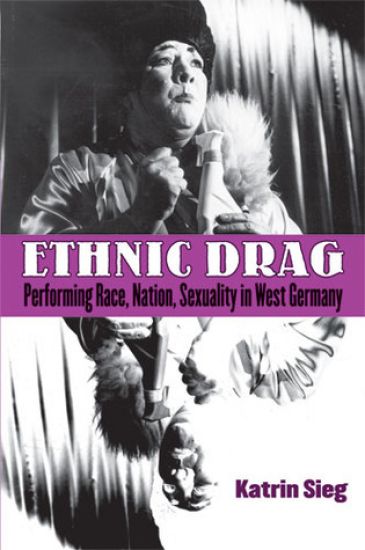
Ethnic Drag

Ethnic Drag

Katrin Sieg

The University of Michigan Press
2009
nidottu
The Holocaust is considered a singularly atrocious event in human history, and many people have studied its causes. Yet few questions have been asked about the ways in which West Germans have "forgotten," unlearned, or reconstructed the racial beliefs at the core of the Nazi state in order to build a democratic society. This study looks at ethnic drag (Ethnomaskerade) as one particular kind of performance that reveals how postwar Germans lived, disavowed, and contested "Germanness" in its complex racial, national, and sexual dimensions. Using engaging case studies, Ethnic Drag traces the classical and travestied traditions of Jewish impersonation from the eighteenth century onward to construct a pre-history of postwar ethnic drag. It examines how, shortly after World War II, mass culture and popular practices facilitated the repression and refashioning of Nazi racial precepts. During a time when American occupation authorities insisted on remembrance and redress for the Holocaust, the Wild West emerged as a displaced theater of the racial imagination, where the roles of victim, avenger, and perpetrator of genocide were reassigned. Ethnic Drag is an accessible and sophisticated, critical and entertaining book that examines the phenomenon of cultural masquerade in order to examine racial feeling, thought, and behavior in postwar German culture. Contributing to considerations of drag in postcolonial, feminist, and queer scholarships, this book will be of interest to people in German studies, theater performance, ethnic studies, and women's/queer studies. Katrin Sieg is Associate Professor, Department of German and Center for German and European Studies, Georgetown University.
Decolonizing German and European History at the Museum

Decolonizing German and European History at the Museum

Katrin Sieg

The University of Michigan Press
2021
nidottu
Decolonizing German and European History at the Museum examines efforts by European museums to investigate colonialism as part of an unprocessed past, confront its presence, and urge repair. A flurry of exhibitions and the overhaul of numerous large museums in the last decade signal that an emergent colonial memory culture is now reaching broader publics. Exhibitions pose the question of what Europeans owe to those they colonized.Decolonizing German and European History at the Museum shows how museums can help visitors mourn historic violence and identify the contemporary agents, beneficiaries, victims, survivors, and resisters of colonial presence. At the same time, the book treats the museum as part of the racialized power relations that activists, academics, and artists have long protested against. This book asks whether museums have made the dream of activists, academics, and artists to build equitable futures more acceptable and more durable—or whether in packaging that dream for general audiences they curtail it. Confronting colonial violence, this book argues, pushes Europeans to face the histories of racism and urges them to envision antiracism at the global scale.
Decolonizing German and European History at the Museum

Decolonizing German and European History at the Museum

Katrin Sieg

The University of Michigan Press
2021
sidottu
Decolonizing German and European History at the Museum examines efforts by European museums to investigate colonialism as part of an unprocessed past, confront its presence, and urge repair. A flurry of exhibitions and the overhaul of numerous large museums in the last decade signal that an emergent colonial memory culture is now reaching broader publics. Exhibitions pose the question of what Europeans owe to those they colonized.Decolonizing German and European History at the Museum shows how museums can help visitors mourn historic violence and identify the contemporary agents, beneficiaries, victims, survivors, and resisters of colonial presence. At the same time, the book treats the museum as part of the racialized power relations that activists, academics, and artists have long protested against. This book asks whether museums have made the dream of activists, academics, and artists to build equitable futures more acceptable and more durable—or whether in packaging that dream for general audiences they curtail it. Confronting colonial violence, this book argues, pushes Europeans to face the histories of racism and urges them to envision antiracism at the global scale.
Kant and Modern Political Philosophy

Kant and Modern Political Philosophy

Katrin Flikschuh

Cambridge University Press
2008
pokkari
In this book Katrin Flikschuh examines the relevance of Kant's political thought to major issues and problems in contemporary political philosophy. She advances and defends two principal claims: that Kant's philosophy of Right endorses the role of metaphysics in political thinking, in contrast to its generally hostile reception in the field today, and that his account of political obligation is cosmopolitan in its inception, assigning priority to the global rather than the domestic context. She shows how Kant's metaphysics of freedom as a shared idea of practical reason underlies the cosmopolitan scope of his theory of justice, and she concludes that despite the revival of 'Kantianism' in contemporary thinking, his account of justice is in many respects very different from dominant approaches in contemporary liberal theory. Her study will be of interest to political philosophers, political theorists, and historians of ideas.
Kant and Modern Political Philosophy

Kant and Modern Political Philosophy

Katrin Flikschuh

Cambridge University Press
2000
sidottu
In this book Katrin Flikschuh examines the relevance of Kant's political thought to major issues and problems in contemporary political philosophy. She advances and defends two principal claims: that Kant's philosophy of Right endorses the role of metaphysics in political thinking, in contrast to its generally hostile reception in the field today, and that his account of political obligation is cosmopolitan in its inception, assigning priority to the global rather than the domestic context. She shows how Kant's metaphysics of freedom as a shared idea of practical reason underlies the cosmopolitan scope of his theory of justice, and she concludes that despite the revival of 'Kantianism' in contemporary thinking, his account of justice is in many respects very different from dominant approaches in contemporary liberal theory. Her study will be of interest to political philosophers, political theorists, and historians of ideas.
A Course in Model Theory

A Course in Model Theory

Katrin Tent; Martin Ziegler

Cambridge University Press
2012
sidottu
This concise introduction to model theory begins with standard notions and takes the reader through to more advanced topics such as stability, simplicity and Hrushovski constructions. The authors introduce the classic results, as well as more recent developments in this vibrant area of mathematical logic. Concrete mathematical examples are included throughout to make the concepts easier to follow. The book also contains over 200 exercises, many with solutions, making the book a useful resource for graduate students as well as researchers.
Bodies and Souls

Bodies and Souls

Katrin Schultheiss

Harvard University Press
2001
sidottu
In the French Third Republic, nursing was an occupation caught in the crosscurrents of conflicting notions about the role of women. This deft political history shows how the turmoil and transformation of nursing during this period reflected the political and cultural tensions at work in the nation, including critical conflicts over the role of the Church in society, the professionalization of medicine, the organization and growing militancy of the working classes, and the emancipation of women.Bodies and Souls describes a time when nursing evolved from a vocation dominated by Catholic orders to a feminine profession that included increasing numbers of lay women. As she pursues this story from the founding of the first full-time professional nursing school in Lyons through the changes wrought by World War I, Katrin Schultheiss reveals how the debates over what nurses were to be, know, and do were deeply enmeshed in issues of class, definitions of femininity, the nature of women's work, and the gendered character of social and national service. Her fine study maps the intersection of these debates with political forces, their impact on hospital nursing and nursing education, and on the shaping of a feminine version of citizenship in France.
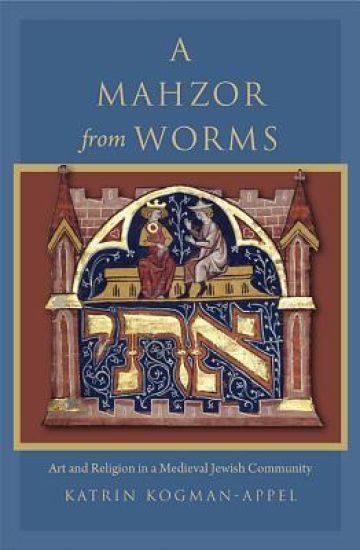
A Mahzor from Worms

A Mahzor from Worms

Katrin Kogman-Appel

Harvard University Press
2012
sidottu
The Leipzig Mahzor is one of the most lavish Hebrew illuminated manuscripts of all time. A prayer book used during Jewish holidays, it was produced in the Middle Ages for the Jewish community of Worms in the German Rhineland. Though Worms was a vibrant center of Judaism in the eleventh and twelfth centuries and drew celebrated rabbis, little is known about the city’s Jews in the later Middle Ages. In the pages of its famous book, Katrin Kogman-Appel discovers a portal into the life of this fourteenth-century community.Medieval mahzorim were used only for special services in the synagogue and “belonged” to the whole congregation, so their visual imagery reflected the local cultural associations and beliefs. The Leipzig Mahzor pays homage to one of Worms’s most illustrious scholars, Eleazar ben Judah. Its imagery reveals how his Ashkenazi Pietist worldview and involvement in mysticism shaped the community’s religious practice. Kogman-Appel draws attention to the Mahzor’s innovations, including its strategy for avoiding visual representation of God and its depiction of customs such as the washing of dishes before Passover, something less common in other mahzorim. In addition to decoding its iconography, Kogman-Appel approaches the manuscript as a ritual object that preserved a sense of identity and cohesion within a community facing a wide range of threats to its stability and security.This book was published with the support of the Israel Science Foundation.
Rousseau and Nietzsche

Rousseau and Nietzsche

Katrin Froese

Lexington Books
2002
sidottu
Rousseau and Nietzsche: Toward an Aesthetic Morality offers a vivid depiction of the problems and potential of modernity through the words of two of its most poignant voices. The book focuses upon the modern self's desire to individuate while facing the ethical responsibility to integrate into the world. Katrin Froese elegantly juxtaposes Nietzsche's drive for extraordinary individualism with Rousseau's call for the dependable citizen, demonstrating that where Nietzsche's aestheticism embraces the limitless and irreconcilable longings of a divided being, Rousseau's approach emphasizes the imposition of limits to ensure that harmony and contentment prevail. Going beyond conventional scholarship, the work emphasizes the similarities at the heart of Rousseau's notion of morality and Nietzsche's aestheticism: the moral vision that underlies Nietzsche's notion of art and the aesthetic understanding prevalent in Rousseau's moral system. This stunning new work of political philosophy will be of great use to scholars of political thought and readers seeking to understand what made Rousseau and Nietzsche's thought so decidedly modern.
Rousseau and Nietzsche

Rousseau and Nietzsche

Katrin Froese

Lexington Books
2002
nidottu
Rousseau and Nietzsche: Toward an Aesthetic Morality offers a vivid depiction of the problems and potential of modernity through the words of two of its most poignant voices. The book focuses upon the modern self's desire to individuate while facing the ethical responsibility to integrate into the world. Katrin Froese elegantly juxtaposes Nietzsche's drive for extraordinary individualism with Rousseau's call for the dependable citizen, demonstrating that where Nietzsche's aestheticism embraces the limitless and irreconcilable longings of a divided being, Rousseau's approach emphasizes the imposition of limits to ensure that harmony and contentment prevail. Going beyond conventional scholarship, the work emphasizes the similarities at the heart of Rousseau's notion of morality and Nietzsche's aestheticism: the moral vision that underlies Nietzsche's notion of art and the aesthetic understanding prevalent in Rousseau's moral system. This stunning new work of political philosophy will be of great use to scholars of political thought and readers seeking to understand what made Rousseau and Nietzsche's thought so decidedly modern.
Freedom

Freedom

Katrin Flikschuh

Polity Press
2007
sidottu
In this engaging new book, Katrin Flikschuh offers an accessible introduction to divergent conceptions of freedom in contemporary liberal political philosophy. Beginning with a discussion of Isaiah Berlin's seminal distinction between negative and positive liberty, the book goes on to consider Gerald MacCallums alternative proposal of freedom as a triadic concept. The abiding influence of Berlin's argument on the writings of contemporary liberal philosophers such as Robert Nozick, Hillel Steiner, Ronald Dworkin and Joseph Raz, is fully explored in subsequent chapters. Flikschuh shows that, instead of just one negative and one positive freedom tradition, contemporary liberal thinkers articulate the meaning and significance of liberal freedom in many different and often conflicting ways. What should we make of such diversity and disagreement? Should it undermine our confidence in the coherence of liberal freedom? Should we strive towards greater conceptual and normative unity? Flikschuh argues that moral and political disagreement about freedom can often be traced back to differences in underlying metaphysical presuppositions and commitments. Yet these differences do not show liberal freedom debates to be confused or incoherent. On the contrary, they demonstrate the centrality of this philosophically elusive idea to the continued vitality of liberal political thinking.
Freedom

Freedom

Katrin Flikschuh

Polity Press
2007
nidottu
In this engaging new book, Katrin Flikschuh offers an accessible introduction to divergent conceptions of freedom in contemporary liberal political philosophy. Beginning with a discussion of Isaiah Berlin's seminal distinction between negative and positive liberty, the book goes on to consider Gerald MacCallums alternative proposal of freedom as a triadic concept. The abiding influence of Berlin's argument on the writings of contemporary liberal philosophers such as Robert Nozick, Hillel Steiner, Ronald Dworkin and Joseph Raz, is fully explored in subsequent chapters. Flikschuh shows that, instead of just one negative and one positive freedom tradition, contemporary liberal thinkers articulate the meaning and significance of liberal freedom in many different and often conflicting ways. What should we make of such diversity and disagreement? Should it undermine our confidence in the coherence of liberal freedom? Should we strive towards greater conceptual and normative unity? Flikschuh argues that moral and political disagreement about freedom can often be traced back to differences in underlying metaphysical presuppositions and commitments. Yet these differences do not show liberal freedom debates to be confused or incoherent. On the contrary, they demonstrate the centrality of this philosophically elusive idea to the continued vitality of liberal political thinking.
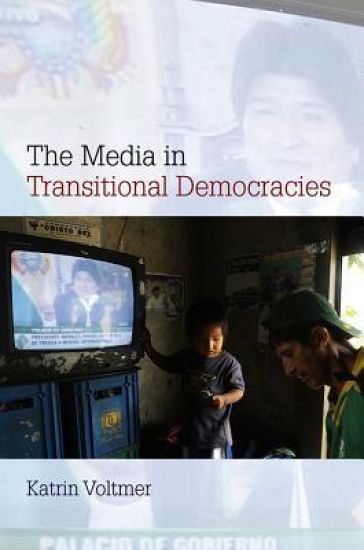
The Media in Transitional Democracies

The Media in Transitional Democracies

Katrin Voltmer

Polity Press
2013
sidottu
The last quarter of a century has seen an unprecedented wave of democratization around the globe. In these transitions from authoritarian rule to a more democratic order, the media have played a key role both by facilitating, but frequently also inhibiting, democratic practices to take root. This book provides an accessible and systematic introduction to the media in transitional democracies. It analyses the problems that occur when transforming the media into independent institutions that are able to inform citizens and hold governments to account. The book covers the following topics: normative conceptions of media and democracy;the role of the past in the transition process;the internet as a new space for democratic change;the persistence of political interference in emerging democracies;the interlocking power of media markets and political ownership;the challenges to journalistic professionalism in post-authoritarian contexts;the role of the media in divided societies; The book takes a global view by exploring the interplay of political and media transitions in different pathways of democratization that have taken place in Eastern Europe, Latin America, Africa and Asia. It will be of interest to advanced students and scholars who want a better understanding of the media outside established Western democracies. The book will also be of great value to policymakers and activists who are involved in strengthening the media in transitional democracies.
The Media in Transitional Democracies

The Media in Transitional Democracies

Katrin Voltmer

Polity Press
2013
nidottu
The last quarter of a century has seen an unprecedented wave of democratization around the globe. In these transitions from authoritarian rule to a more democratic order, the media have played a key role both by facilitating, but frequently also inhibiting, democratic practices to take root. This book provides an accessible and systematic introduction to the media in transitional democracies. It analyses the problems that occur when transforming the media into independent institutions that are able to inform citizens and hold governments to account. The book covers the following topics: normative conceptions of media and democracy;the role of the past in the transition process;the internet as a new space for democratic change;the persistence of political interference in emerging democracies;the interlocking power of media markets and political ownership;the challenges to journalistic professionalism in post-authoritarian contexts;the role of the media in divided societies; The book takes a global view by exploring the interplay of political and media transitions in different pathways of democratization that have taken place in Eastern Europe, Latin America, Africa and Asia. It will be of interest to advanced students and scholars who want a better understanding of the media outside established Western democracies. The book will also be of great value to policymakers and activists who are involved in strengthening the media in transitional democracies.
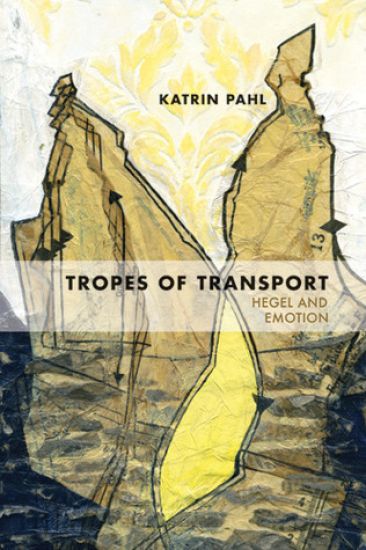
Tropes of Transport

Tropes of Transport

Katrin Pahl

Northwestern University Press
2012
nidottu
Intervening in the multidisciplinary debate on emotion, Tropes of Transport offers a fresh analysis of Hegel's work that becomes an important resource for Pahl's cutting-edge theory of emotionality. If it is usually assumed that the sincerity of emotions and the force of affects depend on their immediacy, Pahl explores to what extent mediation--and therefore a certain degree of manipulation but also of sympathy--is constitutive of emotionality. Hegel serves as a particularly helpful interlocutor not only because he offers a sophisticated analysis of mediation, but also because, rather than locating emotion in the heart, he introduces impersonal tropes of transport, such as trembling, release, and shattering.
Tropes of Transport

Tropes of Transport

Katrin Pahl

Northwestern University Press
2012
sidottu
Intervening in the multidisciplinary debate on emotion, Tropes of Transport offers a fresh analysis of Hegel's work that becomes an important resource for Pahl's cutting-edge theory of emotionality. If it is usually assumed that the sincerity of emotions and the force of affects depend on their immediacy, Pahl explores to what extent mediation--and therefore a certain degree of manipulation but also of sympathy--is constitutive of emotionality. Hegel serves as a particularly helpful interlocutor not only because he offers a sophisticated analysis of mediation, but also because, rather than locating emotion in the heart, he introduces impersonal tropes of transport, such as trembling, release, and shattering.
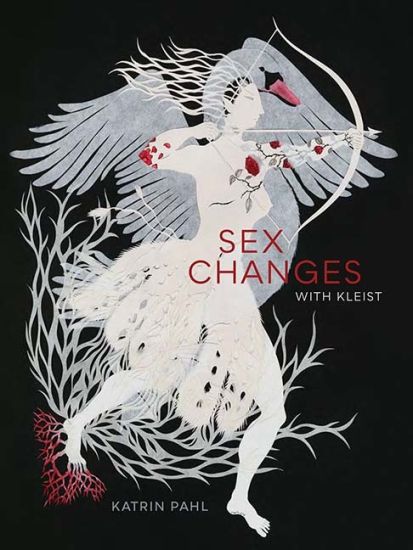
Sex Changes with Kleist

Sex Changes with Kleist

Katrin Pahl

Northwestern University Press
2019
nidottu
Sex Changes with Kleist analyzes how the dramatist and poet Heinrich von Kleist (1777–1811) responded to a change in the conception of sex and gender that occurred between 1790 and 1810. Specifically, Katrin Pahl shows that Kleist resisted the shift from a one-sex to the two-sex and complementary gender system that is still prevalent today. With creative close readings engaging all eight of his plays, Pahl probes Kleist’s appreciation for incoherence, his experimentation with alternative symbolic orders, his provocative understanding of emotion, and his camp humor. Pahl demonstrates that rather than preparing modern homosexuality, Kleist puts an end to modern gender norms even before they take hold and refuses the oppositional organization of sexual desire into homosexual and heterosexual that sprouts from these norms.Focusing on the theatricality of Kleist’s interventions in the performance of gender, sexuality, and emotion and examining how his dramatic texts unhinge major tenets of classical European theater, Sex Changes with Kleist is vital reading for anyone interested in queer studies, feminist studies, performance studies, literary studies, or emotion studies. This book changes our understanding of Kleist and breathes new life into queer thought.