Kirjojen hintavertailu. Mukana 11 244 527 kirjaa ja 12 kauppaa.

Kirjahaku

Etsi kirjoja tekijän nimen, kirjan nimen tai ISBN:n perusteella.

1000 tulosta hakusanalla Kenneth A Kidd

Writing Reaction Mechanisms in Organic Chemistry

Writing Reaction Mechanisms in Organic Chemistry

Kenneth A. Savin

Academic Press Inc
2014
nidottu
Writing Reaction Mechanisms in Organic Chemistry, Third Edition, is a guide to understanding the movements of atoms and electrons in the reactions of organic molecules. Expanding on the successful book by Miller and Solomon, this new edition further enhances your understanding of reaction mechanisms in organic chemistry and shows that writing mechanisms is a practical method of applying knowledge of previously encountered reactions and reaction conditions to new reactions. The book has been extensively revised with new material including a completely new chapter on oxidation and reduction reactions including stereochemical reactions. It is also now illustrated with hundreds of colorful chemical structures to help you understand reaction processes more easily. The book also features new and extended problem sets and answers to help you understand the general principles and how to apply these to real applications. In addition, there are new information boxes throughout the text to provide useful background to reactions and the people behind the discovery of a reaction. This new edition will be of interest to students and research chemists who want to learn how to organize what may seem an overwhelming quantity of information into a set of simple general principles and guidelines for determining and describing organic reaction mechanisms.
Thirty Readings in Introductory Sociology

Thirty Readings in Introductory Sociology

Kenneth A. Gould; Tammy L. Lewis

Oxford University Press
2016
nidottu
Thirty Readings in Introductory Sociology, Second Edition, introduces students to the field of sociology in an engaging, accessible manner. Designed to be used alone or with its companion, Ten Lessons in Introductory Sociology, the book is organized around four themes commonly examined in introductory courses: Why sociology? What unites society? What divides society? and How do societies change? Rather than provide encyclopedic responses to such questions, Thirty Readings in Introductory Sociology engages students in critical thinking while presenting key concepts and methods in sociology. Edited by Kenneth A. Gould and Tammy L. Lewis, the text raises sociological questions, applies a sociological lens, illustrates how data are used, and presents core topics in a way that is easy for students to grasp. Each section begins with an introduction by Gould and Lewis, followed by three readings: one classical, one that uses qualitative data, and a third that uses quantitative data.
No Small Hope

No Small Hope

Kenneth A. Reinert

Oxford University Press Inc
2018
sidottu
With headlines focused on human suffering-civil wars, refugee flows, the spread of disease due to hunger and poor sanitation, population growth, climate change-it is easy to dive into despair. What is needed, instead, is a radical rethinking of global policy to realize the potential for improving the human condition. This book help provides hope by examining the basic needs for a fundamental shift in thinking about development and human security for both practical and ethical reasons. Kenneth A. Reinert calls for a basic goods approach that focuses on the provision of nutritious food, clean water, sanitation, health services, education services, housing, electricity, and human security services. This approach bridges two perspectives: that of standard growth, which emphasizes increasing GDP per capita, and that of capabilities/human development, which puts priority on the realization of human potential. Reinert argues that only when growth leads to an increase in the broad-based provision of basic goods and services will the hoped-for expansion of human capabilities and development be achieved. In short, basic goods and services are a critical link between growth and human development. No Small Hope: Towards the Universal Provision of Basic Goods places the basic goods approach on the firm foundation of objective human needs and subsistence rights. It offers a practical agenda for making real progress towards human development by focusing on the real determinants of human well-being in an ethical system of moral minimalism. In a world of climate change, increased risk of natural disasters and increased refugee flows, the basic goods approach promises to help alleviate ongoing suffering and address vast deprivations in basic needs fulfillment.
Referring to the World

Referring to the World

Kenneth A. Taylor

Oxford University Press Inc
2021
sidottu
Our words and ideas refer to objects and properties in the external world; this phenomenon is central to thought, language, communication, and science. But great works of fiction are full of names that don't seem to refer to anything! In this book Kenneth A. Taylor explores the myriad of problems that surround the phenomenon of reference. How can words in language and perturbations in our brains come to stand for external objects? Reference is essential to truth, but which is more basic: reference or truth? How can fictional characters play such an important role in imagination and literature, and how does this use of language connect with more mundane uses? Taylor develops a framework for understanding reference, and the theories that other thinkers-past and present-have developed about it. But Taylor doesn't simply tell us what others thought; the book is full of new ideas and analyses, making for a vital final contribution from a seminal philosopher.
Ten Lessons in Introductory Sociology

Ten Lessons in Introductory Sociology

Kenneth A. Gould; Tammy L. Lewis

OXFORD UNIVERSITY PRESS INC
2022
nidottu
Designed to introduce students to key concepts and methods in sociology and to engage them in critical thinking, Ten Lessons in Introductory Sociology provides a brief and valuable overview to four major questions that guide the discipline: * Why sociology? * What unites us? * What divides us? * How do societies change? Deftly balancing breadth and depth, the book makes the study of sociology accessible, relevant, and meaningful. Contextualizing the most important issues, Ten Lessons helps students discover "the sociological imagination" and what it means to be part of an engaged public discourse.
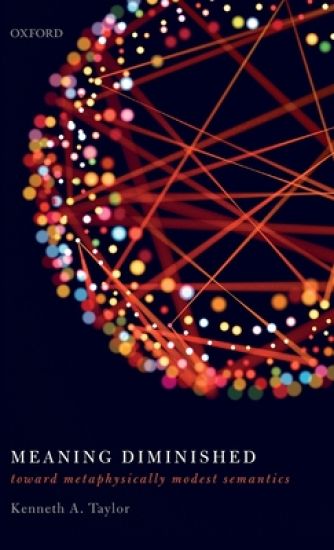
Meaning Diminished

Meaning Diminished

Kenneth A. Taylor

Oxford University Press
2019
sidottu
Meaning Diminished examines the complex relationship between semantic analysis and metaphysical inquiry. Kenneth A. Taylor argues that we should expect linguistic and conceptual analysis of natural language to yield far less metaphysical insight into what there is - and the nature of what there is - than many philosophers have imagined. Taking a strong stand against the so-called linguistic turn in philosophy, Taylor contends that philosophers as diverse as Kant, with his Transcendental Idealism, Frege, with his aspirational Platonism, Carnap with his distinction between internal and external questions, and Strawson, with his descriptive metaphysics, have placed too much confidence in the ability of linguistic and conceptual analysis to achieve deep insight into matters of ultimate metaphysics. He urges philosophers who seek such insight to turn away from the interrogation of language and concepts and back to the more direct interrogation of reality itself. In doing so, he maps out the way forward toward a metaphysically modest semantics, in which semantics carries less weighty metaphysical burdens, and toward a revisionary and naturalistic metaphysics, untethered to the a priori analysis of ordinary language.
Governing Social Inclusion

Governing Social Inclusion

Kenneth A. Armstrong

Oxford University Press
2010
sidottu
The pursuit of social solidarity and social justice has typically occurred within the boundaries of nation states. Yet in 2000, EU Member States committed themselves to make a decisive impact on the eradication of poverty and agreed to coordinate their activities within the framework of a novel governance process: the Open Method of Coordination (OMC). This book analyzes the emerging governance of social inclusion in the EU and the use of the OMC as a mechanism of Europeanization of domestic social policy. Armstrong's exploration of EU interventions to combat poverty and social exclusion addresses the changing constitutional, policy and governance context in which these interventions have occurred. It traces the impact of debates surrounding the Lisbon Treaty and the Lisbon Strategy in framing the possibilities and limits of EU action. Drawing on primary documentary material, on interviews with key actors and on a wide range of academic literature, this study offers a socio-legal account of the successes and failures of a decade of EU policy coordination. Utilizing the conceptual and theoretical tools associated with institutionalist analysis and experimental governance to develop the discussion of Europeanization, the book will be of value not only to scholars working on EU policymaking but also to those interested in changing patterns of public authority in the social sphere more generally.
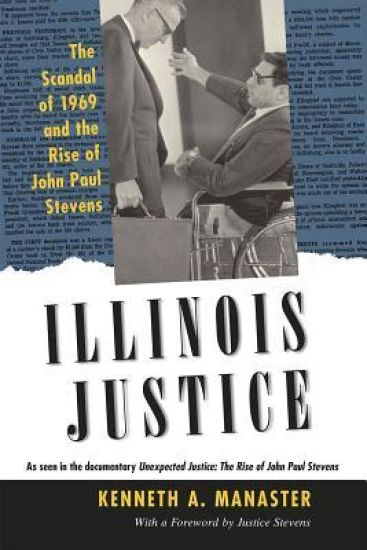
Illinois Justice

Illinois Justice

Kenneth A. Manaster; John Paul Stevens

University of Chicago Press
2015
nidottu
Illinois political scandals reached new depths in the 1960s and ’70s. In Illinois Justice, Kenneth Manaster takes us behind the scenes of one of the most spectacular. The so-called Scandal of 1969 not only ended an Illinois Supreme Court justice’s aspirations to the US Supreme Court, but also marked the beginning of little-known lawyer John Paul Stevens’s rise to the high court. In 1969, citizen gadfly Sherman Skolnick accused two Illinois Supreme Court justices of accepting valuable bank stock from an influential Chicago lawyer in exchange for deciding an important case in the lawyer’s favor. The resulting feverish media coverage prompted the state supreme court to appoint a special commission to investigate. Within six weeks and on a shoestring budget, the commission mobilized a small volunteer staff to reveal the facts. Stevens, then a relatively unknown Chicago lawyer, served as chief counsel. His work on this investigation would launch him into the public spotlight and onto the bench. Manaster, who served on the commission, tells the real story of the investigation, detailing the dead ends, tactics, and triumphs. Manaster expertly traces Stevens’s masterful courtroom strategies and vividly portrays the high-profile personalities involved, as well as the subtleties of judicial corruption. A reflective foreword by Justice Stevens himself looks back at the case and how it influenced his career. Now the subject of the documentary Unexpected Justice: The Rise of John Paul Stevens, this fascinating chapter of political history offers a revealing portrait of the early career of a Supreme Court justice.
Rule Breaking and Political Imagination

Rule Breaking and Political Imagination

Kenneth A. Shepsle

University of Chicago Press
2017
sidottu
Imagination may be thought of as a 'work-around.' It is a resourceful tactic to 'undo' a rule by creating a path around it without necessarily defying it...Transgression, on the other hand, is rule breaking. There is no pretense of reinterpretation; it is defiance pure and simple. Whether imagination or disobedience is the source, constraints need not constrain, ties need not bind. So writes Kenneth A. Shepsle in his introduction to Rule Breaking and Political Imagination. Institutions are thought to channel the choices of individual actors. But what about when they do not? Throughout history, leaders and politicians have used imagination and transgression to break with constraints upon their agency. Shepsle ranges from ancient Rome to the United States Senate, and from Lyndon B. Johnson to the British House of Commons. He also explores rule breaking in less formal contexts, such as vigilantism in the Old West and the CIA's actions in the wake of 9/11. Entertaining and thought-provoking, Rule Breaking and Political Imagination will prompt a reassessment of the nature of institutions and remind us of the critical role of political mavericks.
Rule Breaking and Political Imagination

Rule Breaking and Political Imagination

Kenneth A. Shepsle

University of Chicago Press
2017
nidottu
Imagination may be thought of as a 'work-around.' It is a resourceful tactic to 'undo' a rule by creating a path around it without necessarily defying it...Transgression, on the other hand, is rule breaking. There is no pretense of reinterpretation; it is defiance pure and simple. Whether imagination or disobedience is the source, constraints need not constrain, ties need not bind. So writes Kenneth A. Shepsle in his introduction to Rule Breaking and Political Imagination. Institutions are thought to channel the choices of individual actors. But what about when they do not? Throughout history, leaders and politicians have used imagination and transgression to break with constraints upon their agency. Shepsle ranges from ancient Rome to the United States Senate, and from Lyndon B. Johnson to the British House of Commons. He also explores rule breaking in less formal contexts, such as vigilantism in the Old West and the CIA's actions in the wake of 9/11. Entertaining and thought-provoking, Rule Breaking and Political Imagination will prompt a reassessment of the nature of institutions and remind us of the critical role of political mavericks.
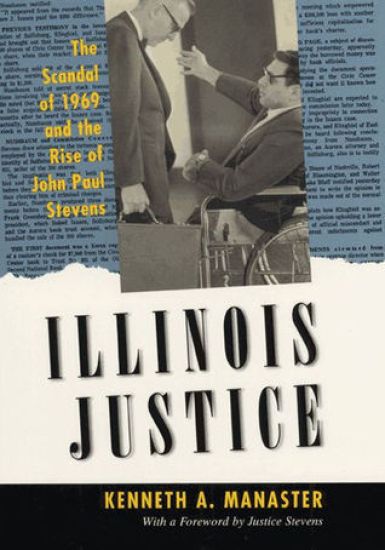
Illinois Justice

Illinois Justice

Kenneth A. Manaster; John Paul Stevens

University of Chicago Press
2001
sidottu
This title takes the reader behind the scenes of the so-called "Scandal of 1969", an event which spelled the end of an Illinois Supreme Court justice's aspirations to the US Supreme Court, but also marked the beginning of little-known lawyer John Paul Steven's rise to the high court. In 1969, citizen gadfly Sherman Skolnick accused the chief justice and another Illinois Supreme Court Justice of accepting valuable bank stock from an influential Chicago lawyer in exchange for deciding an important case in the lawyer's favour. The feverish media coverage that resulted - a scandalous story in its own right, as Kennth A. Manaster reveals - prompted the state supreme court to appoint a special commission to investigate. Within six weeks and on a shoestring budget, the commission gathered a small volunteer staff and revealed the true facts. Stevens, then a relatively unknown Chicago lawyer, served as chief counsel. His work on the investigation would launch him into the public spotlight and onto the bench. Manaster, who served on the commission, tells the real story of the investgation, detailing the dead ends, tactics and triumphs. At the heart of the book is a tense courtroom drama that unfolded in July 1969. Manaster traces Steven's courtroom strategies, and portrays the high-profile personalities involved (almost every member of the Illinois Supreme Court took the stand), as well as the subtleties of judicial corruption.
An Introduction to Buddhist Psychology

An Introduction to Buddhist Psychology

Kenneth A Loparo

Palgrave Macmillan
2005
sidottu
An Introduction to Buddhist Psychology is a lucid, intelligible and authentic introduction to the foundations of Buddhist psychology. It provides comprehensive coverage of the basic concepts and issues in the psychology of Buddhism and thus it deals with the nature of psychological inquiry, concepts of mind, consciousness and behaviour, motivation, emotions, perception, and the therapeutic structure of Buddhist psychology. For the fourth edition, a new chapter on 'emotional intelligence' and its relationship with Buddhism has been added.
Privacy on the Ground

Privacy on the Ground

Kenneth A. Bamberger; Deirdre K. Mulligan

MIT Press
2015
sidottu
An examination of corporate privacy management in the United States, Germany, Spain, France, and the United Kingdom, identifying international best practices and making policy recommendations.Barely a week goes by without a new privacy revelation or scandal. Whether by hackers or spy agencies or social networks, violations of our personal information have shaken entire industries, corroded relations among nations, and bred distrust between democratic governments and their citizens. Polls reflect this concern, and show majorities for more, broader, and stricter regulation-to put more laws "on the books." But there was scant evidence of how well tighter regulation actually worked "on the ground" in changing corporate (or government) behavior-until now. This intensive five-nation study goes inside corporations to examine how the people charged with protecting privacy actually do their work, and what kinds of regulation effectively shape their behavior. And the research yields a surprising result. The countries with more ambiguous regulation-Germany and the United States-had the strongest corporate privacy management practices, despite very different cultural and legal environments. The more rule-bound countries-like France and Spain-trended instead toward compliance processes, not embedded privacy practices. At a crucial time, when Big Data and the Internet of Things are snowballing, Privacy on the Ground helpfully searches out the best practices by corporations, provides guidance to policymakers, and offers important lessons for everyone concerned with privacy, now and in the future.
Evolutionary Computation

Evolutionary Computation

Kenneth A. De Jong

Bradford Books
2016
pokkari
Evolutionary computation, the use of evolutionary systems as computational processes for solving complex problems, is a tool used by computer scientists and engineers who want to harness the power of evolution to build useful new artifacts, by biologists interested in developing and testing better models of natural evolutionary systems, and by artificial life scientists for designing and implementing new artificial evolutionary worlds. In this clear and comprehensive introduction to the field, Kenneth De Jong presents an integrated view of the state of the art in evolutionary computation. Although other books have described such particular areas of the field as genetic algorithms, genetic programming, evolution strategies, and evolutionary programming, Evolutionary Computation is noteworthy for considering these systems as specific instances of a more general class of evolutionary algorithms. This useful overview of a fragmented field is suitable for classroom use or as a reference for computer scientists and engineers.
Color

Color

Kenneth A. McClane

University of Notre Dame Press
2009
nidottu
In 1991, acclaimed poet Kenneth A. McClane published Walls: Essays, 1985-1990, a volume of essays dealing with life in Harlem, the death of his alcoholic brother, and the complexities of being black and middle-class in America. Now, in Color: Essays on Race, Family, and History, McClane contributes further to his self-described "autobiographical sojourn" with a second collection of interconnected essays. In McClane's words, "All concern race, although they, like the human spirit, wildly sweep and yaw." A timely installment in our national narrative, Color is a chronicle of the black middle class, a group rarely written about with sensitivity and charity. In evocative, trenchant, and poetic prose, McClane employs the art of the memoirist to explore the political and the personal. He details the poignant narrative of racial progress as witnessed by his family during the 1950s, '60s, and '70s. We learn of his parents' difficult upbringing in Boston, where they confronted much racism; of the struggles they and McClane encountered as they became the first blacks to enter previously all-white institutions, including the oldest independent school in the United States; and of the part his parents played in the civil rights movement, working with Dr. King and others. The book ends with a tender account of his parents in the throes of Alzheimer's disease, which claimed both their lives.
Walls

Walls

Kenneth A. McClane

University of Notre Dame Press
2010
nidottu
Walls: Essays, 1985-1990, Kenneth McClane's first book of autobiographical essays (originally published in 1991), is closely related to his second collection, Color, published by the University of Notre Dame Press in 2009. Walls is a powerful and deeply moving meditation on relationships. It begins with an essay on the death of McClane's brother, Paul, which "changed everything. Time, my work, everything found a new calculus." His brother's life and death are present in some way in all the essays that follow "A Death in the Family," as McClane tells us about giving a poetry reading in a maximum-security prison; his experience of being one of the first two African American students to attend America's oldest private school; teaching creative writing; his sister, Adrienne; a divestment protest at Cornell; and his encounters with James Baldwin. McClane has written a new preface to this paperback edition of Walls, in which he reminds us that we are inevitably interconnected: we are each other's witness.