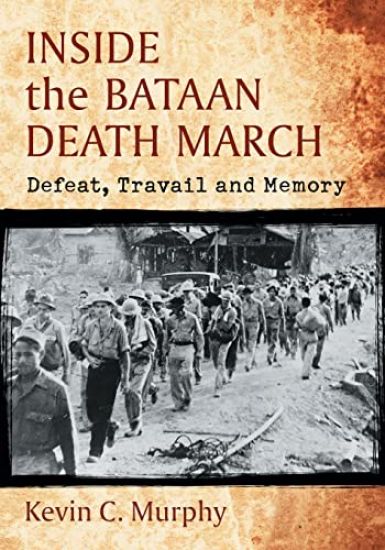
For two weeks during the spring of 1942, the Bataan Death March--one of the most widely condemned atrocities of World War II--unfolded. The prevailing interpretation of this event is simple: American prisoners of war suffered cruel treatment at the hands of their Japanese captors while Filipinos, sympathetic to the Americans, looked on. Most survivors of the march wrote about their experiences decades after the war and a number of factors distorted their accounts. The crucial aspect of memory is central to this study--how it is constructed, by whom and for what purpose. This book questions the prevailing interpretation, reconsiders the actions of all three groups in their cultural contexts and suggests a far greater complexity. Among the conclusions is that violence on the march was largely the result of a clash of cultures--undisciplined, individualistic Americans encountered Japanese who valued order and form, while Filipinos were active, even ambitious, participants in the drama.
SHOULD U.S. COMICS BE BANNED?"SATANIC" HARRY POTTER BOOKS BURNTPLAYGROUNDS POSE THREAT TO CHILDRENTEXT-MAD YOUTH LOSING WRITING ABILITIESCHILD SUSPENDED FOR BRANDISHING CHICKENSOCIAL WEBSITES HARM CHILDREN'S BRAINSSTUDENT ARRESTED FOR "PASSING GAS" AT SCHOOLThese are all real headlines screaming about the terrible stuff that's out there . . . stuff that's supposed to be BAD FOR YOU. But, honestly is it? "Bad for You" asks this question and many more and not just about the things that modern parents fear like violent video games, social media, and dirty hands. Stuff in this book goes back centuries all the way to Plato (yeah, that one) and his worries over the new "technology" of his time: the written word Kevin C. Pyle and Scott Cunningham cleverly expose the long-standing CAMPAIGN AGAINST FUN for what it really is: a bunch of anxious adults grasping at straws, ignoring scientific data, and blindly yearning for the good old days that never were. "Bad for You" presents the facts, figures, and a whole lot more in eye-grabbing graphics to debunk these myths and give kids the power to prove there's nothing wrong with having fun . . . or with being young."
The process of making decisions is integral to life. We make decisions every day, from what to have for breakfast to critical issues of life and business. When two or more people are involved in making those decisions, the process often involves "compromise" and can be complicated by the basic give-and-take and trade-offs that are associated with this approach. Webster's New Twentieth Century Dictionary of the English Language defines compromise in this way: A settlement in which each side gives up some demands or makes concessions An adjustment of opposing principles, systems, etc., in which part of each is given up The result of such an adjustment or settlement Something midway between different things A laying open to danger, suspicion, or disrepute, as a compromise of one's good name, or; to surrender or give up (one's interest, principles, etc.) Compromise necessarily, then, leads to a result that has the great risk of being suboptimal because the concessions made can easily preclude consideration of alternatives and important viewpoints. One of the factors that those who promote compromise as a means of making decisions use as justification is that each side gives up something they want, and thus each side can "live with" the result. In reality, neither side will give up something critically important to them while expecting the other to do just that. The end result is often that either no decision or agreement can be reached or one or both of the parties is unhappy with the result. Too frequently, the ultimate result is failure because one or both parties do not fully support the agreement, which becomes more likely if one party feels it gave more than the other or had to give up something related to its principles or best interest. In an increasingly complex world, compromise is not the best way to reach decisions. An approach that fully and objectively examines all points of view and ideas is needed to arrive at workable solutions to problems and issues as diverse as those we see in the world today. Anyone who has worked inside any company, large or small, knows that it is often very challenging to make decisions. Different personalities, diverse interactions, company politics, and even social, political, and economic philosophies present barriers to agreement. Add to that the basic competitive nature of human beings and the result can be a bubbling stewpot of rancor, foxhole-digging, foot-dragging, backbiting, criticism, individual conflict, and an attitude of an "I win, you lose" zero-sum game that leads to, at best, nonoptimal decisions and at worst, paralysis and no decisions at all. This description applies to virtually any type of organization, not just the corporate setting. It can be seen in organizations, nonprofits, politics, families, churches, schools, and any other setting in which a group of people, whether it be two or many, must meet and make decisions on any topic. All of us have seen the results of committee deliberations aimed at making decisions in a number of these seemingly different settings. Quite often, when we watch the process, we understand the saying that "A committee is a cul-de-sac down which ideas are lured and then quietly strangled." The three authors have worked in a variety of different companies and noncorporate settings, including small local companies (fewer than 10 employees) to very large multinational corporations; they have been a part of boards of directors and trustees of nonprofits, school and church groups, neighborhood organizations, and others. They have all had the (mis)fortune of serving on committees charged with making decisions ranging from purchasing equipment to basic corporate strategy for international product development.
The world of personal finance is too confusing, overwhelming, and jargon-filled to successfully navigate alone, and now you don't have to This easy-to-read book combines expert guidance with real-life experiences to produce a step-by-step roadmap for building wealth. Kevin C. Feig, a CERTIFIED FINANCIAL PLANNER(TM), a Certified Public Accountant, and a Personal Financial Specialist, has created an honest, authentic, and simple approach to personal finance in this first book, Walk You To Wealth. Kevin will guide you through how to tackle debt, save, spend, and invest. Most importantly, Kevin provides you with practical, actionable, and SIMPLE steps that you can take towards a wealthier life This book is for anyone who wants to change their relationship with money and take control of their financial life. Order your copy today and start walking towards wealth
Oceanic islands are storehouses for unique creatures. Zoologists have long been fascinated by island animals because they break all the rules. Speedy, nervous, little birds repeatedly evolve to become plump, tame and flightless on islands. Equally strange and wonderful plants have evolved on islands. However, plants are very poorly understood relative to animals. Do plants repeatedly evolve similar patterns in dispersal ability, size and defence on islands? This volume answers this question for the first time using a modern quantitative approach. It not only reviews the literature on differences in defence, loss of dispersal, changes in size, alterations to breeding systems and the loss of fire adaptations, but also brings new data into focus to fill gaps in current understanding. By firmly establishing what is currently known about repeated patterns in the evolution of island plants, this book provides a roadmap for future research.
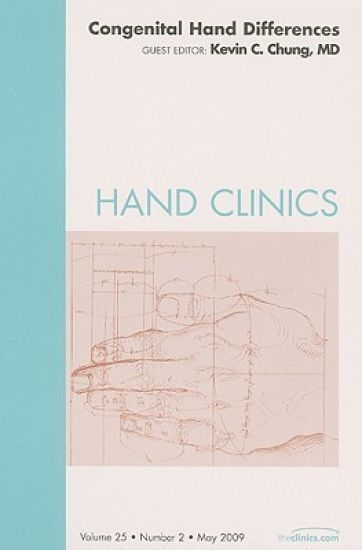
In the issue of the Hand Clinics on "Congenital Hand Differences? the Guest Editor, Dr. Kevin C. Chung, invited world-renowned experts on congenital hand problems to share their insights regarding the treatments and outcomes of a variety of common and uncommon conditions. This volume will present a concise, yet practical guide in understanding and managing the diversity of presentations in these diseases. The illustrations are meticulously presented and the key points are highlighted by the "masters? of the field. This Hand Clinics volume will be an invaluable resource for those interested in advancing their knowledge regarding this intriguing field in hand surgery.
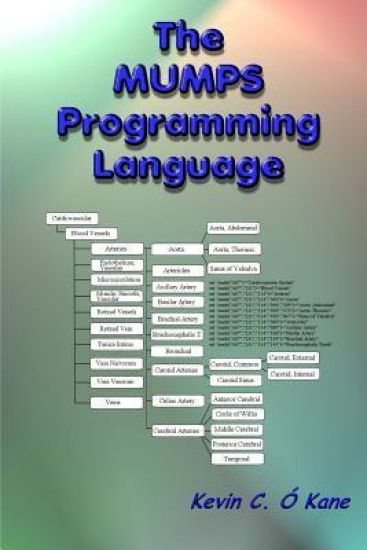
An introduction to the Mumps Programming Language including programming examples.Mumps (Massachusetts General Hospital Utility Multi-programming System) is a general purpose programming language environment that provides ACID (Atomic, Consistent, Isolated, and Durable) database access by means of program level subscripted arrays and variables. The Mumps database allows schema-less, key-value access to disk resident data organized as trees that may also be viewed as sparse multi-dimensional arrays.Beginning in 1966, Mumps (also referred to as M), was developed at the Massachusetts General Hospital (MGH) on a PDP-7, the same architecture on which Unix was being implemented at approximately the same time. Because of its simplicity, low cost and ease of use, Mumps quickly became popular and established itself as the basis for many medical applications. COSTAR (COmputer-STored Ambulatory Record), for example, was a medical record, fiscal management and reporting system, developed in the mid-1970s for use in ambulatory care settings and it was widely used worldwide.Today, Mumps programs are employed extensively in financial and clinical applications. If you've been to a doctor, been seen at a hospital, or used an ATM machine, your data has probably been processed by a Mumps program.Mumps programs are the basis of the U.S. Veterans Administration's computerized medical record system VistA (Veterans Health Information Systems and Technology Architecture), the largest of its kind in the world. VistA is a collection of 80 different software subsystems that support the largest medical records system in the United States. It supports the medical records of over 8 million veterans, is used by 180,000 medical staff at 163 hospitals, more than 800 clinics, and 135 nursing homes.Mumps is used by many health care organizations including Allscripts, Epic, Coventry Healthcare, EMIS, Partners HealthCare (including Massachusetts General Hospital), MEDITECH, GE Healthcare (formerly IDX Systems and Centricity), Sunquest Information Systems, DASA, Quest Diagnostics, and Dynacare, among others. Some of the largest and most well known hospitals use Mumps based electronic health records systems. These include Kaiser Permanente, Cleveland Clinic, Johns Hopkins Medicine Hospitals, UCLA Health, Texas Health Resources, Massachusetts General Hospital, Mount Sinai Health System in New York City and the Duke University Health System. Among financial institutions, it is used by Ameritrade, the Bank of England, and Barclays Bank, as well as others.The main features: (1) Mumps supports a hierarchical and multi-dimensional database model. When viewed as a tree, database nodes can be addressed as path descriptions in a manner which is easy for a novice programmer to master in a relatively short time. Alternatively, the database can be viewed as sparse, n-dimensional matrices of effectively unlimited size; (2) Mumps includes an extensive library of built-in string manipulation operators and functions; (3) Mumps runs on inexpensive, commodity servers and is easily scaled as demand grows; (4) Mumps can handle Big Data quantities of information that are beyond the capabilities of many RDBMS systems with very high levels of performance and throughput; (5) Mumps is easily managed without the need for database administrators; (6) Mumps databases are ACID (Atomicity, Consistency, Isolation, Durability) Compliant.
From Benjamin Franklin’s campaign to combat pollution at the Philadelphia’s docks in the 1750s to the movement against climate change today, American environmentalists have sought to protect the natural world and promote a healthy human society. In This Green and Growing Land, historian Kevin Armitage shows how the story of American environmentalism—part philosophy, part social movement--is in no small way a story of America itself, of the way citizens have self-organized, have thought of their communities and their government, and have used their power to protect and enrich the land. Armitage skillfully analyzes the economic and social forces begetting environmental change and emphasizes the responses of a variety of ordinary Americans—as well as a few well-known leaders—to these complex issues. This concise and engaging survey of more than 250 years of activism tells the story of a magnificent American achievement—and the ongoing problems that environmentalism faces.
The publication of Bronchoalveolar Mast Cells and Asthma marks the emergence of The Bloomsbury Series in Clinical Science, an important and novel series that will highlight, review and record major areas of research, development and practice in the field of clinical science. A number of other monographs are now in an advanced state of preparation and their release will establish not only their individual significance but that of the series as a whole. My thanks are due to the Editorial Board who have provided the ideas and selected the authors and whose continuing enthu siasm is so vital to the success of the series. Michael Jackson of Springer-Verlag merits special thanks for initially realising the potential of such a series and then guiding us all through to the time of its launch. Marianne Williams has supported us all and has provided the important link between Editorial Board and pub lisher. The author of this first publication, Kevin Flint, was tragically killed during its preparation, and we hope that the book will serve as a tribute to the memory of Kevin for all who were lucky enough to know him. Barry Hudspith has been of enormous help in finalising the work and in shaping the form of the book.