Kirjojen hintavertailu. Mukana 11 627 378 kirjaa ja 12 kauppaa.

Kirjahaku

Etsi kirjoja tekijän nimen, kirjan nimen tai ISBN:n perusteella.

1000 tulosta hakusanalla Kevin a Fox

The South African Intelligence Services
This book is the first full history of South African intelligence and provides a detailed examination of the various stages in the evolution of South Africa’s intelligence organizations and structures.Covering the apartheid period of 1948-90, the transition from apartheid to democracy of 1990-94, and the post-apartheid period of new intelligence dispensation from 1994-2005, this book examines not only the apartheid government’s intelligence dispensation and operations, but also those of the African National Congress, and its partner, the South African Communist Party (ANC/SACP) – as well as those of other liberation movements and the ‘independent homelands’ under the apartheid system. Examining the civilian, military and police intelligence structures and operations in all periods, as well as the extraordinarily complicated apartheid government’s security bureaucracy (or 'securocracy') and its structures and units, the book discusses how South Africa’s Cold War ‘position’ influenced its relationships with various other world powers, especially where intelligence co-operation came to bear. It outlines South Africa’s regional relationships and concerns – the foremost being its activities in South-West Africa (Namibia) and its relationship with Rhodesia through 1980.Finally, it examines the various legislative and other governance bases for the existence and operations of South Africa’s intelligence structures – in all periods – and the influences that such activities as the Rivonia Trial (at one end of the history) or the Truth and Reconciliation Commission (at the other end) had on the evolution of these intelligence questions throughout South Africa’s modern history.This book will be of great interest to all students of South African politics, intelligence studies and international politics in general.
Choosing Nonviolence

Choosing Nonviolence

Kevin A. Fall; Shareen Howard; Steven M. Vestal

Routledge
2014
sidottu
As mental-health professionals see increasing numbers of women arrested for domestic violence, the need for effective resources also increases. Choosing Nonviolence fills this void, providing an interactive and comprehensive treatment tool.If you are a group leader, Choosing Nonviolence will provide materials to deepen your current group curriculum. Interactive lessons and exercises cover important topics such as trust, respect, parenting, substance abuse, safety planning, and achieving nonviolence. Each chapter contains stories from actual group members to illuminate important dynamics as well as "tool" exercises designed to provide an opportunity for your group members to learn vital skills.If you are a group member, you will find this book to be an important supplement to the work you are doing in group. The personal stories from women who have been in group will show you how they have stumbled and succeeded on their path to change. You will get to learn from these experiences and will see how you can integrate the lessons into your own life. The exercises will enhance your participation in group, and the homework assignments will deepen your growth outside your counseling time.
Choosing Nonviolence

Choosing Nonviolence

Kevin A. Fall; Shareen Howard; Steven M. Vestal

Routledge
2014
nidottu
As mental-health professionals see increasing numbers of women arrested for domestic violence, the need for effective resources also increases. Choosing Nonviolence fills this void, providing an interactive and comprehensive treatment tool.If you are a group leader, Choosing Nonviolence will provide materials to deepen your current group curriculum. Interactive lessons and exercises cover important topics such as trust, respect, parenting, substance abuse, safety planning, and achieving nonviolence. Each chapter contains stories from actual group members to illuminate important dynamics as well as "tool" exercises designed to provide an opportunity for your group members to learn vital skills.If you are a group member, you will find this book to be an important supplement to the work you are doing in group. The personal stories from women who have been in group will show you how they have stumbled and succeeded on their path to change. You will get to learn from these experiences and will see how you can integrate the lessons into your own life. The exercises will enhance your participation in group, and the homework assignments will deepen your growth outside your counseling time.
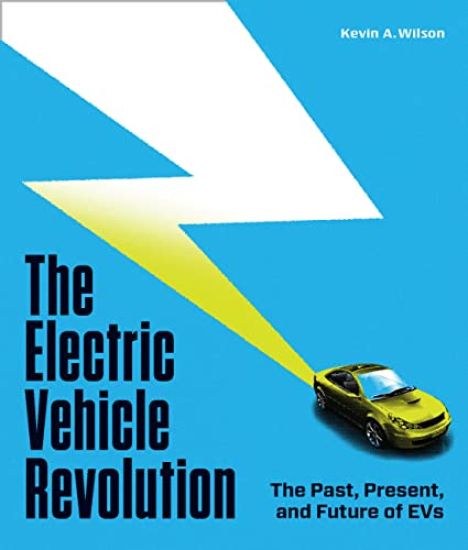
The Electric Vehicle Revolution

The Electric Vehicle Revolution

Kevin A. Wilson

Quarto Publishing Group USA Inc
2023
sidottu
Explore the fascinating, evolving world of electric vehicles, from the first EVs in the Victorian era to their rapid expansion today—and beyond.In The Electric Vehicle Revolution, automotive journalist Kevin Wilson provides a thorough, engaging overview of where EV technology is today, how it got there, and where it’s going. Since the turn of the twenty-first century, EVs have gone from wonky who-cares vehicles like GM’s EV1 and early Teslas to every manufacturer's must-have future.Electric propulsion preceded fossil-fuel cars by decades and even vied for prominence in the early twentieth century auto industry against both steam power and internal combustion engines. From Electrobat (an early New York taxi fleet) through Columbia—which had built 1,000 electric cars before either Henry Ford or Ransom Olds had built a single gasoline car—viable business start-ups in the early auto age were as competitive and innovative as those in early twenty-first century Silicon Valley. But it was not to be for electric cars in the early days of the 1900s, as the auto industry evolved to favor gasoline cars, thanks in part to the influence of the oil industry and the build-out of infrastructure to supply fuel across the country. Gas-powered cars may have won the day, but post-WWII experiments with electric cars continued both within the established auto industry and from outside firms and visionaries, including cars developed by General Electric, Sears, and the Henney Kilowatt, alongside Ford and GM experimentals. Rapidly evolving electronic technology beginning in the 1960s, along with growing concerns about emissions and pollution, set the stage for renewed interest in electric cars. Improved batteries for cellphones/laptops, electronic controls, computing, and beyond provided the impetus for a wave of more sophisticated and feasible electric vehicles, including GM’s EV1 and the first Teslas.Elon Musk’s Tesla Motors proves the auto industry disruptor and sets the stage for responses by the mainstream auto industry, including Nissan’s Leaf, Chevrolet’s Bolt, and a host of high-end EVs from company’s like Audi, Jaguar, and the like. Rival start-ups step in as well and government incentives, subsidies, and regulatory demands all drive unprecedented development. Today, the rush to electrify has nations and companies competing to see who can declare the earliest end to internal combustion engines, but this radical transition won’t be as easy as throwing a switch. The Electric Vehicle Revolution thoroughly explores the challenges of infrastructure, battery and vehicle tech, and the cost to consumers, as well as the long phase-in as EVs are set to replace existing gas cars over decades.Whether you embrace EVs or have gasoline in your veins, The Electric Vehicle Revolution provides a fascinating, engaging, and stunningly illustrated overview of where the car world is today and where it’s headed for the future.
Canada, the Congo Crisis, and UN Peacekeeping, 1960-64

Canada, the Congo Crisis, and UN Peacekeeping, 1960-64

Kevin A. Spooner

University of British Columbia Press
2009
sidottu
In 1960 the Republic of Congo teetered near collapse as its first government struggled to cope with civil unrest and mutinous armed forces. When the UN established what would become the largest peacekeeping operation of the Cold War, the Canadian government faced a difficult decision. Should it support the intervention? As Kevin Spooner demonstrates, Canada's involvement in the mission was not preordained. The Diefenbaker government became enmeshed in a complex web of foreign and defence policy determinants that caused it to have immediate and ongoing reservations – reservations that challenge cherished notions of Canada's commitment to the UN and it status as a peacekeeper.This book offers one of the first detailed accounts of Canada's involvement in UN peacekeeping. It will appeal to those interested in Canadian foreign policy and relations with Africa in particular and the Congo crisis and United Nations peacekeeping more generally.
Canada, the Congo Crisis, and UN Peacekeeping, 1960-64

Canada, the Congo Crisis, and UN Peacekeeping, 1960-64

Kevin A. Spooner

University of British Columbia Press
2010
pokkari
In 1960 the Republic of Congo teetered near collapse as its first government struggled to cope with civil unrest and mutinous armed forces. When the UN established what would become the largest peacekeeping operation of the Cold War, the Canadian government faced a difficult decision. Should it support the intervention? As Kevin Spooner demonstrates, Canada's involvement in the mission was not preordained. The Diefenbaker government became enmeshed in a complex web of foreign and defence policy determinants that caused it to have immediate and ongoing reservations – reservations that challenge cherished notions of Canada's commitment to the UN and it status as a peacekeeper.This book offers one of the first detailed accounts of Canada's involvement in UN peacekeeping. It will appeal to those interested in Canadian foreign policy and relations with Africa in particular and the Congo crisis and United Nations peacekeeping more generally.
Friends, Partners, and Lovers – What It Takes to Make Your Marriage Work
Great marriages don't just happen--they're made, intentionally, day by day. Yet most of us enter the covenant of marriage thinking that the role of spouse will be easy, natural, effortless. Rarely is this true. In fact, the number one cause of divorce isn't adultery or finances or disagreements. It's apathy--a lack of intentional emotional, physical, and mental investment in the relationship. With engaging stories and clear, simple language, pastor Kevin A. Thompson explains the three critical roles of a spouse--friend, partner, and lover--and shows how to nurture those roles in order to keep a marriage healthy and strong. Using solid biblical principles, he helps couples understand how to grow their friendship, be a supportive partner through the good times and the bad, and develop a healthy and satisfying sex life. Friends, Partners, and Lovers offers essential insight for couples at any stage of marriage but will be especially helpful to those who are struggling and those who are engaged or newly married and looking to start their marriage on strong footing.
Happily

Happily

Kevin A. Thompson

Baker Academic, Div of Baker Publishing Group
2018
pokkari
In the beginning, marriage doesn't seem as though it should be all that difficult. But it doesn't take long for trouble to seep in and for bad habits to become entrenched. Before long, many married couples may be wondering when the "worse" part ends and the "better" part starts.Pastor and author Kevin A. Thompson has good news for couples: the "better" part is always within reach when they practice eight specific commitments to each other. These commitments have the power to solve almost any problem a marriage faces, and to prevent new ones from occurring. With biblical insights and engaging personal stories, Thompson shows couples how to see their marriage as bigger than themselves, avoid both apathy and aggression, release the desire for power, make and maintain peace, endure difficult times, and more. Perfect for newlyweds and for married couples at any stage of life, Happily is the gateway to a more loving, more joy-filled marriage.
Fifteenth Air Force against the Axis

Fifteenth Air Force against the Axis

Kevin A. Mahoney

Scarecrow Press
2013
sidottu
In Fifteenth Air Force against the Axis: Combat Missions over Europe during World War II, Kevin A. Mahoney provides a detailed combat history of the crucial role played by this air force from November 1943 through May 1945. Presented by month in chronological order, Mahoney describes all the major bombing and fighter missions carried out by this air force within a strategic context. Each chapter includes an introduction describing developments in the evolution of the strategic air campaign against the Germans, highlights the purpose and importance of the month’s operations, and reviews the Luftwaffe’s resistance and changes in tactics and important developments in the Fifteenth Air Force’s organization. Each monthly narrative further explores most missions, detailing the number of aircraft lost during these missions. Losses are based on an exhaustively researched database compiled by Mahoney that contains details of almost 3,000 aircraft. Target damage is mentioned, while enemy opposition is also described for each mission. Appendices include four short essays on bombing operations (planning and flying of missions, tactics and techniques, bomb types, and bombing accuracy), tactics employed by fighter escort in aerial combat and strafing, combat crews and their aircraft (including a comparison of American fighters and bombers, the training of the crews, and their combat tours), and the Fifteenth Air Force command structure (including the use of intelligence, photo and weather reconnaissance, and the considerable effect of weather on Fifteenth Air Force operations). This work of military history is ideal for students and scholars of the air war in Europe.
Fear and the First Amendment

Fear and the First Amendment

Kevin A. Johnson; Craig R. Smith

THE UNIVERSITY OF ALABAMA PRESS
2024
sidottu
A highly original account of the role that fear plays in key First Amendment cases ruled on by the Roberts Supreme Court In Fear and the First Amendment, Kevin A. Johnson and Craig R. Smith offer a deeply considered examination of the ways fear figures in First Amendment questions ruled on by the contemporary Supreme Court. Bringing together literature on theories of fear in rhetorical and philosophical traditions, Johnson and Smith focus on the rulings from the Roberts Court, which form a pivotal era of dramatic precedents. Each chapter in this book analyzes one or more First Amendment cases and a variety of related fears--whether evidentiary or not--that pertain to a given case. These cases include Morse v. Frederick, which takes up the competing fears of school administrators’ loss of authority and students’ loss of free speech rights. The authors touch on corporate funding of elections in Citizens United v. Federal Elections Commission, from the fear of corporate influence on electoral politics to corporate fears of alienating their consumers by backing political candidates. They explore religious freedom and fears of homosexuality in Christian Legal Society v. Martinez. Similarly, in Snyder v. Phelps, the authors delve further into fears of God, death, emotional distress, failing as a parent, and losing one’s reputation. Next, they investigate parents’ anxieties about violence in video games in Brown v. Entertainment Merchants Association. Finally, Johnson and Smith examine the role of fear in indecent, obscene, and graphic communication in three cases: FCC v. Fox Television Stations, Ashcroft v. American Civil Liberties Union, and United States v. Stevens. Together these cases reveal fear to be an endemic factor in the rhetoric of First Amendment cases. This fascinating and original work will appeal to current legal practitioners and students of law, rhetoric, philosophy, and the First Amendment.