Kirjojen hintavertailu. Mukana 11 342 296 kirjaa ja 12 kauppaa.

Kirjahaku

Etsi kirjoja tekijän nimen, kirjan nimen tai ISBN:n perusteella.

1000 tulosta hakusanalla Kieran Read

Paramilitary Imprisonment in Northern Ireland

Paramilitary Imprisonment in Northern Ireland

Kieran McEvoy

Oxford University Press
2001
sidottu
This book offers a unique analysis of paramilitary imprisonment in Northern Ireland. The central focus of the book is the struggle between inmates and the state concerning the prisoners' assertion of their status as political prisoners. Drawing upon interviews with former Republican and Loyalist prisoners as well as prison managers and staff, this book locates that experience within the broader theoretical literature on imprisonment. Four forms of prison resistance are examined by which prisoners asserted their political status. Dirty protest and hunger strike are characterised as resistance through self sacrifice. Violence, destruction and intimidation are examined as prison resistance becoming an extension of armed struggle. Escape is analysed as a form of resistance through ridicule. And finally law is considered as instrumental resistance and a dialogical process with a range of audiences. The book then considers a range of prison management adopted by the prison authorities. `Reactive Containment' is described as a military-led model of management which incapacitated the terrorist `enemy' but acknowledged the political character of the inmates. `Criminalization' is viewed as a strategy designed to deny any practical or symbolic acceptance of the political motivation of prisoners. `Managerialism', it is argued, encompasses a series of scientific discourses to rationalise conflicting interactions with prisoners, from pragmatic accommodations to a dogged determination to prevent further recognition of de facto political status. The book concludes with an analysis of the early release of paramilitary prisoners and the conflict resolution process and some reflections on political prisons as spaces both during and after a political conflict.
Knowing Right From Wrong

Knowing Right From Wrong

Kieran Setiya

Oxford University Press
2014
nidottu
Can we have objective knowledge of right and wrong, of how we should live and what there is reason to do? The thought that we can is beset by sceptical problems. In the face of radical disagreement, can we be sure that we are not deceived? If the facts are independent of what we think, is our reliability a mere coincidence? Can it be anything but luck when our beliefs are true? In Knowing Right From Wrong, Kieran Setiya confronts these questions in their most compelling and articulate forms: the argument from ethical disagreement; the argument from reliability and coincidence; and the argument from accidental truth. In order to resist the inference from disagreement to scepticism, he argues, we must reject epistemologies of intuition, coherence, and reflective equilibrium. The problem of disagreement can be solved only if the basic standards of epistemology in ethics are biased towards the truth. In order to solve the problem of coincidence, we must embrace arguments for reliability in ethics that rely on ethical beliefs. Such arguments do not beg the question in an epistemically damaging way. And in order to make sense of ethical knowledge as non-accidental truth, we must give up the independence of ethical fact and belief. We can do so without implausible predictions of convergence or relativity if the facts are bound to us through the natural history of human life. If there is objective ethical knowledge, human nature is its source.
Playing the Market

Playing the Market

Kieran Heinemann

Oxford University Press
2021
sidottu
Nowhere in Europe are people more likely to enjoy a regular flutter in stocks and shares than in Britain. Whether we consider the millions of online stockbroking accounts or the billions spent on spread betting - it is a national pastime in today's Britain to play the markets. How did this distinctively British obsession with investment and speculation come about? Playing the Market tells this story by exploring the history of financial capitalism in Britain during the twentieth century from below. It explains how and why everyday British people increasingly invested, speculated, and gambled in stocks and shares from the outbreak of World War I, over the postwar decades and the Thatcher years, up until the premiership of Tony Blair. The study accounts for a momentous shift in attitudes towards stock market investment that occurred throughout the twentieth century. In the interwar period, traditional moral and cultural constraints about the stock market, which were still powerful in the Victorian period, gradually began to collapse in public and private life. In the following decades, financial securities lost their stigma of being either immoral or suitable only for the upper classes. Promising higher than average returns and a similar thrill of risk and reward as gambling in horses or the football pools, the stock market became a popular pastime for millions of Britons - even in the postwar decades, when Britain had nationalized industries and politicians of both parties indulged in staunchly anti-finance rhetoric. With the expansion of popular investment after both world wars, Britain developed a stock market culture that was unique across Europe and gave rise to a market populist sentiment that eventually proved fertile soil for the arrival of Thatcherism.
Plotinus on Eudaimonia

Plotinus on Eudaimonia

Kieran McGroarty

Oxford University Press
2006
sidottu
A philosophical commentary on a section of the Enneads written by the last great Neoplatonist thinker, Plotinus. The treatise is entitled 'Concerning Well-Being' and was written at a late stage in Plotinus' life when he was suffering from an illness that was shortly to kill him. Its main concern is with the good man and how he should pursue the good life. The treatise is therefore central to our understanding of Plotinus' ethical theory, and the commentary seeks to explicate and elucidate that theory. Plotinus' views on how one should live in order to fulfil oneself as a human being are as relevant now as they were in the third century AD. All Greek and Latin is translated, while short summaries introducing the content of each chapter help to make Plotinus' argument clear even to the non-specialist.
Knowing Right From Wrong

Knowing Right From Wrong

Kieran Setiya

Oxford University Press
2012
sidottu
Can we have objective knowledge of right and wrong, of how we should live and what there is reason to do? The thought that we can is beset by sceptical problems. In the face of radical disagreement, can we be sure that we are not deceived? If the facts are independent of what we think, is our reliability a mere coincidence? Can it be anything but luck when our beliefs are true? In Knowing Right From Wrong, Kieran Setiya confronts these questions in their most compelling and articulate forms: the argument from ethical disagreement; the argument from reliability and coincidence; and the argument from accidental truth. In order to resist the inference from disagreement to scepticism, he argues, we must reject epistemologies of intuition, coherence, and reflective equilibrium. The problem of disagreement can be solved only if the basic standards of epistemology in ethics are biased towards the truth. In order to solve the problem of coincidence, we must embrace arguments for reliability in ethics that rely on ethical beliefs. Such arguments do not beg the question in an epistemically damaging way. And in order to make sense of ethical knowledge as non-accidental truth, we must give up the independence of ethical fact and belief. We can do so without implausible predictions of convergence or relativity if the facts are bound to us through the natural history of human life. If there is objective ethical knowledge, human nature is its source.
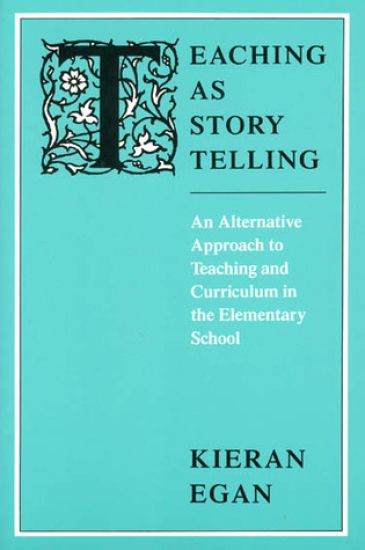
Teaching as Story Telling

Teaching as Story Telling

Kieran Egan

University of Chicago Press
1989
nidottu
"I am very impressed by the practicality of [Egan's] introduction of the use of story-forms in curriculum for young children. His model is fascinating, and its various possibilities in a range of fields makes it worth a good look by many kinds of teachers."—Maxine Greene, Teachers College, Columbia
Imagination in Teaching and Learning

Imagination in Teaching and Learning

Kieran Egan

University of Chicago Press
1992
pokkari
It is widely believed that a child's imagination ought to bestimulated and developed in education. Yet, few teachersunderstand what imagination is or how it lends itself topractical methods and techniques that can be used easily inclassroom instruction. In this book, Kieran Egan winner ofthe prestigious Grawemeyer Award for his work onimagination takes up where his "Teaching as Story Telling"left off, offering practical help for teachers who want toengage, stimulate, and develop the imaginative and learningprocesses of children between the ages of eight to fifteen. This book is not about unusually imaginative students andteachers. Rather, it is about the typical student'simaginative life and how it can be stimulated in learning, how the average teacher can plan to achieve this aim, and howthe curriculum can be structured to help achieve this aim.Slim and determinedly practical, this book contains a wealthof concrete examples of curriculum design and teachingtechniques structured to appeal specifically to children intheir middle school years."
The Educated Mind

The Educated Mind

Kieran Egan

University of Chicago Press
1998
nidottu
The ills of education are caused, this text argues, by the fact that we have inherited three major educational ideas, each of which is incompatible with the other two. These mutual incompatibilities, it continues, bring about clashes at every level of the educational process, from curriculum decisions to teaching methods. The text presents an alternative. It concludes with practical proposals for how teaching and curriculum should be changed to reflect this new conception and fit in with how we actually learn.
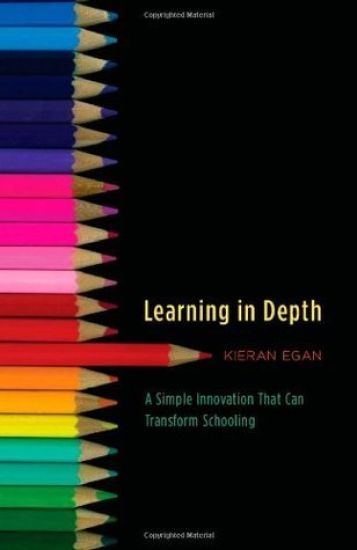
Learning in Depth

Learning in Depth

Kieran Egan

University of Chicago Press
2011
sidottu
For generations, schools have aimed to introduce students to a broad range of topics through curricula that ensure that they will at least have some acquaintance with most areas of human knowledge by the time they graduate. Yet such broad knowledge can't help but be somewhat superficial - and, as Kieran Egan argues, it omits a crucial aspect of true education: deep knowledge. Real education, Egan explains, consists of both general knowledge and detailed understanding, and in "Learning in Depth" he outlines an ambitious yet practical plan to incorporate deep knowledge into basic education. Under Egan's program, students will follow the usual curriculum, but with one crucial addition: beginning with their first days of school and continuing until graduation, they will each also study one topic - such as apples, birds, sacred buildings, mollusks, circuses, or stars - in depth. Over the years, with the help and guidance of their supervising teacher, students will expand their understanding of their one topic and build portfolios of knowledge that grow and change along with them.By the time they graduate each student will know as much about his or her topic as almost anyone on earth - and in the process will have learned important, even life-changing lessons about the meaning of expertise, the value of dedication, and the delight of knowing something in depth. Though Egan's program may be radical in its effects, it is strikingly simple to implement - as a number of schools have already discovered - and with "Learning in Depth" as a blueprint, parents, educators, and administrators can instantly begin taking the first steps toward transforming our schools and fundamentally deepening their students' minds.
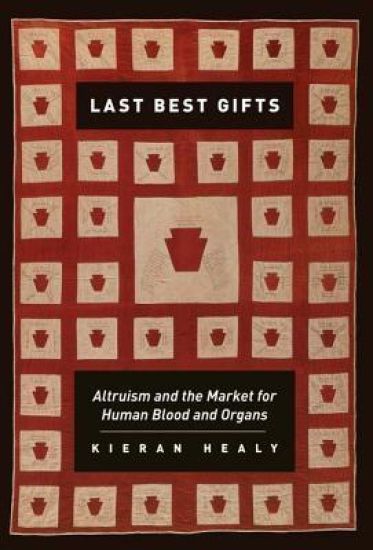
Last Best Gifts

Last Best Gifts

Kieran Healy

University of Chicago Press
2006
sidottu
More than any other altruistic gesture, blood and organ donation exemplies the true spirit of self-sacrifice. Donors literally give of themselves for no reward so that the life of an individual - often anonymous - may be spared. But, as the demand for blood and organs has grown, the value of a system that depends solely on gifts has been called into question, and the possibility has surfaced that donors might be supplemented or replaced by paid suppliers. "Last Best Gifts" offers a fresh perspective on this ethical dilemma, by examining the social organization of blood and organ donation in Europe and the United States. Gifts of blood and organs are not given everywhere in the same way or to the same extent - contrasts that allow Kieran Healy to uncover the crucial role that institutions play in creating the contexts for donations. Procurement organizations, he shows, sustain altruism by providing opportunities to give and by producing public accounts of what giving means. In the end, Healy suggests, successful systems rest on the fairness of the exchange, rather than the purity of a donor's altruism or the size of a financial incentive.
Last Best Gifts

Last Best Gifts

Kieran Healy

University of Chicago Press
2006
nidottu
More than any other altruistic gesture, blood and organ donation exemplies the true spirit of self-sacrifice. Donors literally give of themselves for no reward so that the life of an individual - often anonymous - may be spared. But, as the demand for blood and organs has grown, the value of a system that depends solely on gifts has been called into question, and the possibility has surfaced that donors might be supplemented or replaced by paid suppliers. "Last Best Gifts" offers a fresh perspective on this ethical dilemma, by examining the social organization of blood and organ donation in Europe and the United States. Gifts of blood and organs are not given everywhere in the same way or to the same extent - contrasts that allow Kieran Healy to uncover the crucial role that institutions play in creating the contexts for donations. Procurement organizations, he shows, sustain altruism by providing opportunities to give and by producing public accounts of what giving means. In the end, Healy suggests, successful systems rest on the fairness of the exchange, rather than the purity of a donor's altruism or the size of a financial incentive.
Euphoria and Symposia

Euphoria and Symposia

Kieran Bonner

MCGILL-QUEEN'S UNIVERSITY PRESS
2025
nidottu
Euphoria and Symposia explores the relationship between euphoria, desire, and well-being in the human practices of drinking and thinking, both phenomena in which seeking more – more alcohol, more knowledge – can be understood, ambiguously, as simultaneously positive and negative. Drinking leads to both euphoria and depression and is potentially destabilizing for both the individual and the collective. While medical science understands it is risky for our health (dependency, addiction, illness), anthropology sees drinking as contributing to communal celebration (euphoria, sociability). Since health and celebration are both desirable goods, Kieran Bonner suggests that it is this balancing act – our desire for what is better and good, our preference for one thing over another – that creates ambiguity, revealing a grey zone that is fundamental to a fuller understanding of well-being. In a series of case studies, revealing intricacies and ambiguities not usually picked up in typical scientific, philosophical, or sociological discourses, Bonner posits well-being as harmony, requiring nuanced judgments about the various things that humans desire, including wealth, health, beauty, power, vitality, leisure, pleasure, love, and wisdom. Informed by a creative synthesis of Socratic interrogation, hermeneutic perspectives drawn from post-phenomenological thinkers such as Hans-Georg Gadamer and Hannah Arendt, and distinctive perspectives found in the tradition of reflexive sociology, Euphoria and Symposia asserts that reconciling unlimited desire with the finite nature of the human condition is essential for the understanding and enjoyment of life itself.
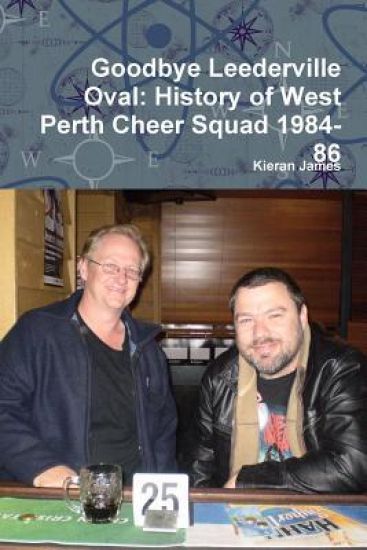
Goodbye Leederville Oval

Goodbye Leederville Oval

Kieran James

Lulu.com
2017
pokkari
This book is the memoir of Kieran James, and details his experiences as co-founder of West Perth Football ClubOs unofficial cheer squad (hardcore support) from 1984 to 1986 (Western Australian Football League / WAFL). Using MarshOs theory of the Oillusion of violenceO, the author links the cheer squad to the academic literature on British soccer hooligans, Italian ultras, and other soccer supporter groups from around the world. The book details OtraditionalO, OhotO support for West Perth Football Club among teenaged supporters from middle-class and working-class backgrounds. The findings conform to Armstrong and HughsonOs idea of fluid Opost-modernO Oneo-tribesO where affiliations are very loose and people can easily adjust their degree of commitment to a group and / or leave the group when their personal priorities change. The book also allows the reader to relive great WAFL matches and meet again key players from the era.
Kiss

Kiss

Kieran James; Susan P Briggs; Bligh Grant

Lulu.com
2017
sidottu
This book is a collective effort on the authors' part to remember KISS, one of the most important hard-rock bands of the 1970s and 1980s. Arguably KISS was the first major act in rock music history to present rock music as Entertainment Product firstly and music only secondarily. We discuss the original, democratic concept of the Fab Four - Gene, Paul, Ace, and Peter - as well as Simmons' and Stanley's subsequent American Dream ideology. We go on to analyse the current version of the band in the light of the original line-up. We find that the KISS fan base is divided with some fans accepting Simmons' current view that the four personas can be utilized by anyone chosen by the band's leadership; a second group which tries to correct the alleged historical injustices committed against Frehley and Criss; and a third group which is cynical about the current version of the band but mostly holds its peace. Includes bonus 68-page Metallica book.
Metallica

Metallica

Kieran James; Christopher Tolliday

Lulu.com
2017
sidottu
This book was written mostly in calendar year 2008 either before the Death Magnetic album had been released or after it was released but before we had heard it. It reflects the anger and betrayal many fans of our generation, who had supported Metallica since Ride the Lightning days or even earlier, felt because of the Napster incident of 2000-2001 and the abysmal St. Anger album of 2003. We don't have this level of anger towards the band anymore. Maybe writing the article (as it was then) was a cathartic process. We admit that it was somewhat enjoyable bashing Lars Ulrich over the head with a weighty copy of Karl Marx's 1,100 page opus Capital Volume 1. Like Marx's Capital, our book was a product of its time. Please enjoy this book because it reflects the real anger towards Metallica which many older fans of the band were feeling in that time between the releases of St. Anger in 2003 and Death Magnetic in 2008.
Florence Maybrick and Jack the Ripper
The criminal trial of Mrs Florence Maybrick, held in Liverpool, England during the height of the British Empire 1889, is widely regarded as one of the greatest travesties of justice in British legal history. Mrs Maybrick was tried for murdering her husband via arsenic poisoning. However, the trial became a morality trial when the learned judge, Mr Justice James Fitzjames Stephen, linked Mrs Maybrick's demonstrated adultery to her alleged desire to physically remove her husband by administering poison. The jury, which pronounced a guilty verdict, consisted of twelve untrained and unschooled men who were unable to grasp the technical evidence and were probably unduly influenced by the judge's summing-up and by the professional status of one of the medical witnesses for the prosecution. The case is a timely reminder today for an international audience of the fallibility and inherent weaknesses of the legal system and the desperate need to retain Courts of Criminal Appeal within the courts system.
Sydney's Construction Union Strategy and Immigrant Workers

Sydney's Construction Union Strategy and Immigrant Workers

Kieran James; Jenny Kwai-Sim Leung

Lulu.com
2017
sidottu
This book studies the Sydney (Lidcombe) branch of Australia's CFMEU in an attempt to document and critique its branch level strategy in the year immediately after the removal of the Howard-Costello Government, i.e. November 2007 to November 2008. This 'transitional time', prior to the Rudd-Gillard Government releasing its own plans for workplace relations, was a time of excitement and anticipation in union offices and building sites across the country as people perceived that the balance of power between labour and capital had changed. However, industry participants remained unsure of exactly how far the new government would go in dismantling the repressive workplace laws of its predecessor. CFMEU strategy at the Sydney branch level revolved around a program of 'rebuilding influence' on the building sites. We also document CFMEU strategy in relation to immigrant worker issues, as revealed through several micro-cases, and offer some observations as to how effective the CFMEU's actions were in each case.
Sydney's Construction Union Strategy and Immigrant Workers

Sydney's Construction Union Strategy and Immigrant Workers

Kieran James; Jenny Kwai-Sim Leung

Lulu.com
2017
pokkari
This book studies the Sydney (Lidcombe) branch of Australia's CFMEU in an attempt to document and critique its branch level strategy in the year immediately after the removal of the Howard-Costello Government, i.e. November 2007 to November 2008. This ?transitional time?, prior to the Rudd-Gillard Government releasing its own plans for workplace relations, was a time of excitement and anticipation in union offices and building sites across the country as people perceived that the balance of power between labour and capital had changed. However, industry participants remained unsure of exactly how far the new government would go in dismantling the repressive workplace laws of its predecessor. CFMEU strategy at the Sydney branch level revolved around a program of ?rebuilding influence' on the building sites. We also document CFMEU strategy in relation to immigrant worker issues, as revealed through several micro-cases, and offer some observations as to how effective the CFMEU's actions were in each case.
Sydney's Construction Union Strategy and Immigrant Workers

Sydney's Construction Union Strategy and Immigrant Workers

Kieran James; Jenny Kwai-Sim Leung

Lulu.com
2017
sidottu
This book studies the Sydney (Lidcombe) branch of Australia's CFMEU in an attempt to document and critique its branch level strategy in the year immediately after the removal of the Howard-Costello Government, i.e. November 2007 to November 2008. This 'transitional time', prior to the Rudd-Gillard Government releasing its own plans for workplace relations, was a time of excitement and anticipation in union offices and building sites across the country as people perceived that the balance of power between labour and capital had changed. However, industry participants remained unsure of exactly how far the new government would go in dismantling the repressive workplace laws of its predecessor. CFMEU strategy at the Sydney branch level revolved around a program of 'rebuilding influence' on the building sites. We also document CFMEU strategy in relation to immigrant worker issues, as revealed through several micro-cases, and offer some observations as to how effective the CFMEU's actions were in each case.