Kirjojen hintavertailu. Mukana 12 390 323 kirjaa ja 12 kauppaa.

Kirjahaku

Etsi kirjoja tekijän nimen, kirjan nimen tai ISBN:n perusteella.

1000 tulosta hakusanalla Konrad Schaefer

Konrad Wallenrod: A Modern English Paraphrase of Adam Mickiewicz's Poem

Konrad Wallenrod: A Modern English Paraphrase of Adam Mickiewicz's Poem

Adam Mickiewicz; Leslie Noelani Laurio

Independently Published
2018
nidottu
A historic tale by the Polish poet Adam Mickiewicz in 1828 now paraphrased into modern, easy to read English prose. This story of the struggle between Lithuania and Germany struck a chord with patriotic Poles, who were involved in struggles with Russia. It is believed that Frederic Chopin based his Ballade No.1 in G minor on this poem.

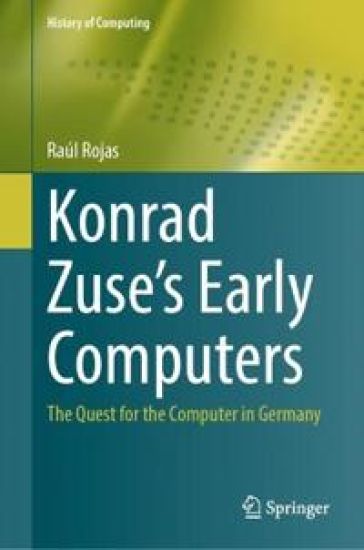
Konrad Zuse's Early Computers

Konrad Zuse's Early Computers

Raúl Rojas

Springer International Publishing AG
2023
sidottu
This book describes the historical development of the architectures of the first computers built by the German inventor Konrad Zuse in Berlin between 1936 and 1945. Zuse's machines are historically important because they anticipated many features of modern computers. Specifically, these include the separation of processor and memory, the ability to compute with floating-point numbers, a hardware architecture based on microprogramming of the instruction set, and a layered design with a high-level programming language on top. In fact, Zuse's early computers are closer to modern computers than the Harvard Mark I or ENIAC, two other contenders for the title of "world's first computer." The theoretical program first conceived by Zuse in 1936/37 was fulfilled with a series of machines built before and during World War II: the Z1, Z2, Z3, and Z4. Separate chapters deal with the architecture of each computer, culminating in the description of Plankalkül, the first proposal for a high-level programming language. Students of the sciences and practitioners of computer science should have no trouble following the material. The concise introductory summary sets the reader on the historical path to retrace this remarkable intellectual adventure.
Konrad Wachsmann and the Grapevine Structure
This book sheds new light on the work of German-born modernist architect Konrad Wachsmann (1901-1980) and his legendary knotted joints. It is based on years of research on Wachsmann's work by Swiss architect Christian Sumi. At the core of this book is Wachsmann's dynamic 'Grapevine Structure', a universal construction element developed with students in the early 1950s at the Chicago Institute of Design. The book also investigates the 'Local Orientation Manipulator' (LOM), an apparatus developed in 1969 by Wachsmann at the University of Southern California in Los Angeles that anticipated the robotic assembly of building components. Moreover, it explores Wachsmann's 'Packaged House System' and his designs for relocatable hangars for the US Air Force. The book features these through concise texts and rich illustrated material, the majority of which are published here for the first time. Fabio Gramazio, Matthias Kohler, and Hannes Mayer (Gramazio Kohler Research, ETH Zurich) revisit Wachsmann's ideas from a contemporary perspective where robotic building processes become increasingly common. An essay by neuroscientist Andreas Burkhalter looks at the phenomenon of knotted joints in the context of similar structures in the human brain. Architectural historian Marko Pogacnik highlights the significance of Wachsmann's lectures at the Salzburg Summer Academy in the late 1950s. Published to accompany the 16th International Architecture Exhibition of the Venice Biennale, 26 May - 25 November 2018.
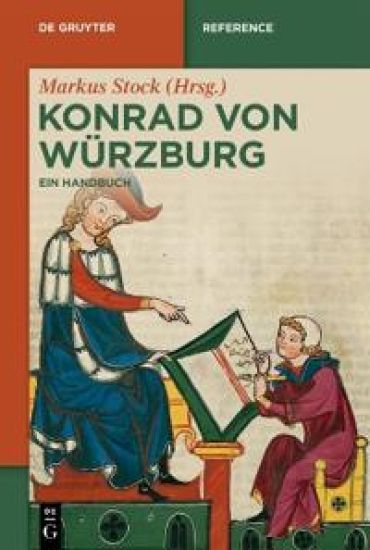
Konrad von Würzburg
Konrad von Würzburg was the most significant and versatile German author of the thirteenth century, possibly even the Middle Ages. His works stand out due to their stylistic quality, the diversity of their themes and genres, and the lasting impact they have made. This handbook is the first of its kind, bringing together texts written by a group of experts, and addresses a specialist German studies audience as well as students of German studies and neighboring medieval studies fields. It documents the rich, enduring international research that has been conducted on Konrad as well as new methodological approaches to his oeuvre. Alongside an introduction to the author’s biographical traces, this handbook comprises overarching chapters on aesthetics, and the reception and transmission of Konrad’s works, as well as individual chapters on Konrad’s verse, his shorter stories (Das Herzmaere, Heinrich von Kempten, Die halbe Birne, Der Schwanritter) and legends (Silvester, Alexius, Pantaleon), his heraldic poem (Das Turnier von Nantheiz), and Konrad's innovative allegorical poems (Die Klage der Kunst, Die goldene Schmiede, Der Welt Lohn). It also contains chapters on Konrad’s two romances (Engelhard, Partonopier und Meliur) and his great Trojanerkrieg fragment.
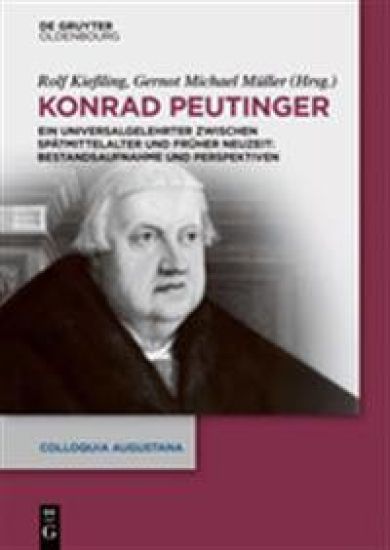
Konrad Peutinger

Konrad Peutinger

de Gruyter Oldenbourg
2018
sidottu
Dr. Konrad Peutinger (1465-1546) verk rperte als Stadtschreiber von Augsburg, als Politiker, Gelehrter und Kunstsammler das, was in Italien mit dem Begriff des 'uomo universale' benannt wurde. Er pr gte ber lange Jahre die Politik der Reichsstadt und agierte vielfach im Brennpunkt des Reichsgeschehens. Als Humanist sammelte er mit ber 2000 B nden eine der gr ten Privatbibliotheken n rdlich der Alpen. Und er stand als f hrende Pers nlichkeit der sog. "Sodalitas Augustana" in Kontakt mit vielen gelehrten Zeitgenossen, edierte r mische Inschriften und war ma geblich an der Selbstinszenierung Kaiser Maximilians I. beteiligt. Der vorliegende Band dokumentiert eine Tagung zum 550. Geburtstag Peutingers mit dem Ziel, die breite Palette seiner T tigkeiten zu w rdigen: den Stand der Forschung zu rekapitulieren, neue Akzente zu setzen und Anregungen f r weitere Studien zu geben. Das Themenfeld reicht deshalb von seinen ganz spezifischen Anteilen an der st dtischen Politik und Publizistik ber Aspekte seiner Wissensfelder und Mediennutzung bis zur kritischen Beleuchtung des Umgangs mit der Erinnerungskultur.
Konrad Hesses normative Kraft der Verfassung
Was der Verfassung unter sich stetig wandelnden Rahmenbedingungen ihre rechtliche Wirkung sichert, ist seit jeher eine Frage verfassungsrechtlichen Denkens. Konrad Hesse legte 1958 mit seiner Freiburger Antrittsvorlesung unter dem Titel "Die normative Kraft der Verfassung" einen klassischen Text zu diesem zentralen Thema der Verfassungstheorie vor. Der Band macht den Originaltext Hesses wieder verfügbar und stellt aus Anlass des 60. Jubiläums des Textes im Jahr 2018 und des 100. Geburtstags Konrad Hesses im Jahr 2019 die Frage nach der Normativität von Verfassung neu. Die Beiträge ermessen die Bedeutung des Textes als Klassikertext der Rechtswissenschaft, analysieren die Normativitätsdiskurse der verschiedenen Verfassungswissenschaften und untersuchen die Normativität des geltenden deutschen wie europäischen Verfassungsrechts.