

Kirjahaku
Etsi kirjoja tekijän nimen, kirjan nimen tai ISBN:n perusteella.
1000 tulosta hakusanalla Kristine M. McCusker


The Perils and Promise of Global Transparency
Kristin M. Lord
State University of New York Press
2007
pokkari
Argues that increasing levels of transparency do not always change international politics for the better. While the trend toward greater transparency will bring many benefits, Kristin M. Lord argues that predictions that it will lead inevitably to peace, understanding, and democracy are wrong. The conventional view is of authoritarian governments losing control over information thanks to technology, the media, and international organizations, but there is a darker side, one in which some of the same forces spread hatred, conflict, and lies. In this book, Lord discusses the complex implications of growing transparency, paying particular attention to the circumstances under which transparency's effects are negative. Case studies of the 1994 genocide in Rwanda and the government of Singapore's successful control of information are included.
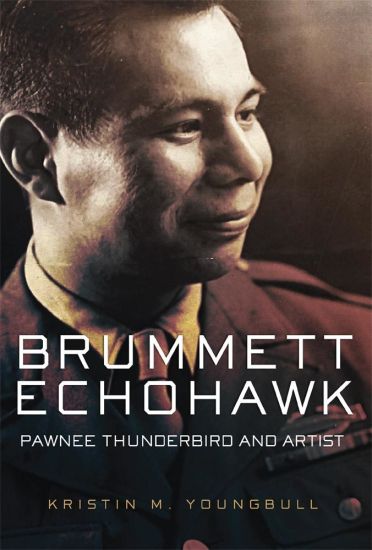
A true American hero who earned a Purple Heart, a Bronze Star, and a Congressional Gold Medal, Brummett Echohawk was also a Pawnee on the European battlefields of World War II. He used the Pawnee language and counted coup as his grandfather had done during the Indian wars of the previous century. This first book-length biography depicts Echohawk as a soldier, painter, writer, humorist, and actor profoundly shaped by his Pawnee heritage and a man who refused to be pigeonholed as an ""Indian artist."" Through his formative war service in the 45th Infantry Division (known as the Thunderbirds), Echohawk strove to prove himself both a patriot and a true Pawnee warrior. Pawnee history, culture, and spiritual belief inspired his courageous conduct and bolstered his confidence that he would return home. Echohawk's career as an artist began with combat sketches published under such titles as ""Death Shares a Ditch at Bloody Anzio."" His portraits of Allied and enemy soldiers, some of which appeared in the Detroit Free Press in 1944, included drawings of men from all over the world, among them British infantrymen, Gurkhas, and a Japanese American soldier. After the war, without relying on the GI Bill, Echohawk studied at the Art Institute of Chicago for three years. His persistence paid off, leading to work as a staff artist for several Chicago newspapers. Echohawk was also a humorist whose prodigious output includes published cartoons and several parodies of famous paintings, such as a Mona Lisa wearing a headband, turquoise ring, and beaded necklace.Featuring eight of Echohawk's paintings in full color, this thoroughly researched biography shows how one unusual man succeeded in American Indian and mainstream cultures. World War II aficionados will marvel at Echohawk's military feats, and American art enthusiasts will appreciate a body of work characterized by deep historical research, an eye for beauty, and a unique ability to capture tribal humor.

Vatican I and Vatican II represent two of the three ecumenical councils in modern times, yet relatively few studies have sought to understand their relation to one another. In fact, the councils are often positioned as mutually exclusive so that one must choose either Vatican I’s or Vatican II’s presentations of church and ecclesial authority. Failing to understand the relationship between these councils inhibits the church’s self-understanding and risks misinterpreting key aspects of its own tradition; further, it limits the church’s ability to teach effectively on topics of concern to modern women and men, such as authority, freedom, and ecclesiology. Vatican I and Vatican II: Councils in the Living Tradition uses the questions of what, why,and how the councils taught to frame and demonstrate significant points of continuity, complementarity, and difference between them. It argues that only by seeing both Vatican I and Vatican II as communicating vital dimensions of the Christian faith can the church’s living tradition be fully appreciated and speak meaningfully to modern Christian women and men.?


Estimating the Effects of Radio Frequency Identification Tagging Technologies on the Army's War-Time Logistics Network
Kristina M O'Brien
Hutson Street Press
2025
sidottu

Estimating the Effects of Radio Frequency Identification Tagging Technologies on the Army's War-Time Logistics Network
Kristina M O'Brien
Hutson Street Press
2025
pokkari
This volume discusses the development of governmental proto-bureaucracy, which led to and was influenced by the inclusion of professional agents and spies in the early modern English government. In the government’s attempts to control religious practices, wage war, and expand their mercantile reach both east and west, spies and agents became essential figures of empire, but their presence also fundamentally altered the old hierarchies of class and power. The job of the spy or agent required fluidity of role, the adoption of disguise and alias, and education, all elements that contributed to the ideological breakdown of social and class barriers. The volume argues that the inclusion of the lower classes (commoners, merchants, messengers, and couriers) in the machinery of government ultimately contributed to the creation of governmental proto-bureaucracy. The importance and significance of these spies is demonstrated through the use of statistical social network analysis, analyzing social network maps and statistics to discuss the prominence of particular figures within the network and the overall shape and dynamics of the evolving Elizabethan secret service.The Eye of the Crown is a useful resource for students and scholars interested in government, espionage, social hierarchy, and imperial power in Elizabethan England.

This volume discusses the development of governmental proto-bureaucracy, which led to and was influenced by the inclusion of professional agents and spies in the early modern English government. In the government’s attempts to control religious practices, wage war, and expand their mercantile reach both east and west, spies and agents became essential figures of empire, but their presence also fundamentally altered the old hierarchies of class and power. The job of the spy or agent required fluidity of role, the adoption of disguise and alias, and education, all elements that contributed to the ideological breakdown of social and class barriers. The volume argues that the inclusion of the lower classes (commoners, merchants, messengers, and couriers) in the machinery of government ultimately contributed to the creation of governmental proto-bureaucracy. The importance and significance of these spies is demonstrated through the use of statistical social network analysis, analyzing social network maps and statistics to discuss the prominence of particular figures within the network and the overall shape and dynamics of the evolving Elizabethan secret service.The Eye of the Crown is a useful resource for students and scholars interested in government, espionage, social hierarchy, and imperial power in Elizabethan England.

Shakespeare and Identity in a Divided World examines some of the most pressing issues about identity and so-called identity politics in the highly polarized twenty-first century. The book uses Shakespeare’s plays and the history of sixteenth and seventeenth century England to discuss gender, race, mental health, disability, and fatness as they were perceived in Shakespeare’s age and then considers ways in which audiences, readers, and classrooms might use them to think about those same topics in the twenty-first century. The book includes discussion of both Shakespeare’s text and contemporary productions, films, and reimaginings of those plays, as well as the historical and theoretical context relevant to each topic. Beginning with the question of Shakespeare’s identity, the book then goes on to discuss femininity, masculinity, trans and queer identity, race, mental health, and then disability and fatness before concluding with a discussion of Shakespeare’s condemnation of polarization, whether social or political.

Shakespeare and Identity in a Divided World examines some of the most pressing issues about identity and so-called identity politics in the highly polarized twenty-first century. The book uses Shakespeare’s plays and the history of sixteenth and seventeenth century England to discuss gender, race, mental health, disability, and fatness as they were perceived in Shakespeare’s age and then considers ways in which audiences, readers, and classrooms might use them to think about those same topics in the twenty-first century. The book includes discussion of both Shakespeare’s text and contemporary productions, films, and reimaginings of those plays, as well as the historical and theoretical context relevant to each topic. Beginning with the question of Shakespeare’s identity, the book then goes on to discuss femininity, masculinity, trans and queer identity, race, mental health, and then disability and fatness before concluding with a discussion of Shakespeare’s condemnation of polarization, whether social or political.

There is no one-size-fits-all decentralized fix to deeply divided and conflict-ridden states. One of the hotly debated policy prescriptions for states facing self-determination demands is some form of decentralized governance - including regional autonomy arrangements and federalism - which grants minority groups a degree of self-rule. Yet the track record of existing decentralized states suggests that these have widely divergent capacity to contain conflicts within their borders. Through in-depth case studies of Chechnya, Punjab and Québec, as well as a statistical cross-country analysis, this book argues that while policy, fiscal approach, and political decentralization can, indeed, be peace-preserving at times, the effects of these institutions are conditioned by traits of the societies they (are meant to) govern. Decentralization may help preserve peace in one country or in one region, but it may have just the opposite effect in a country or region with different ethnic and economic characteristics.

Antioch in Syria critically reassesses this ancient city from its Seleucid foundation into Late Antiquity. Although Antioch's prominence is famous, Kristina M. Neumann newly exposes the gradations of imperial power and local agency mediated within its walls through a comprehensive study of the coins minted there and excavated throughout the Mediterranean and Middle East. Patterns revealed through digital mapping and Exploratory Data Analysis serve as a significant index of spatial politics and the policies of the different authorities making use of the city. Evaluating the coins against other historical material reveals that Antioch's status was not fixed, nor the people passive pawns for external powers. Instead, as imperial governments capitalised upon Antioch's location and amenities, the citizens developed in their own distinct identities and agency. Antioch of the Antiochians must therefore be elevated from traditional narratives and static characterisations, being studied and celebrated for the dynamic polis it was.
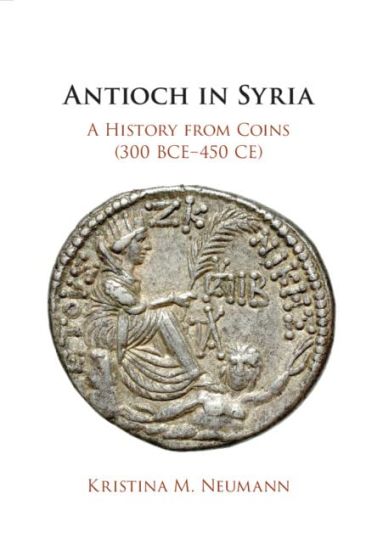
Antioch in Syria critically reassesses this ancient city from its Seleucid foundation into Late Antiquity. Although Antioch's prominence is famous, Kristina M. Neumann newly exposes the gradations of imperial power and local agency mediated within its walls through a comprehensive study of the coins minted there and excavated throughout the Mediterranean and Middle East. Patterns revealed through digital mapping and Exploratory Data Analysis serve as a significant index of spatial politics and the policies of the different authorities making use of the city. Evaluating the coins against other historical material reveals that Antioch's status was not fixed, nor the people passive pawns for external powers. Instead, as imperial governments capitalised upon Antioch's location and amenities, the citizens developed in their own distinct identities and agency. Antioch of the Antiochians must therefore be elevated from traditional narratives and static characterisations, being studied and celebrated for the dynamic polis it was.

Why work from home when you can work anywhere? Not all who wander are lost! Digital Nomads For Dummies answers all your questions about living and working away from home, short term or long term. Become a globetrotter or just trot around your home country, with the help of experienced digital nomad Kristin Wilson. Millions of people have already embraced the lifestyle, moving around as the spirit takes them, exploring new places while holding down a job and building a fantastic career. Learn the tricks of building a nomad mindset, keeping your income flowing, creating a relocation plan, and enjoying the wonders of the world around you. Learn what digital nomadism is and whether it's the right lifestyle for youUncover tips and ideas for keeping travel fun while holding down a 9-to-5Travel solo or with a family, internationally or within your home countryCreate a plan so you can keep growing in your career, no matter where you are If you’re ready to put the office life behind you and the open road in front of you, check out Digital Nomads For Dummiesand get your adventure started!

Implementing Student-Athlete Programming
Kristina M. Navarro; Lisa Melanie Rubin; Geoff Mamerow
Routledge
2019
sidottu
In Implementing Student-Athlete Programming, scholar-practitioners provide an approachable and comprehensive overview of how to design, implement, and sustain best practices in the growing area of student-athlete development. Exploring research approaches and critical frames for thinking about student-athlete programming while covering topics such as the current context, challenges, programmatic approaches to support, and trends for the future, this resource also highlights programs that are effective in supporting students to success. This book provides higher education practitioners with the tools they need to effectively work with student-athletes to not only transition to college, but to develop meaningful personal, social, career, and leadership development experiences as they prepare for the transition to life after sport.

Implementing Student-Athlete Programming
Kristina M. Navarro; Lisa Melanie Rubin; Geoff Mamerow
Routledge
2019
nidottu
In Implementing Student-Athlete Programming, scholar-practitioners provide an approachable and comprehensive overview of how to design, implement, and sustain best practices in the growing area of student-athlete development. Exploring research approaches and critical frames for thinking about student-athlete programming while covering topics such as the current context, challenges, programmatic approaches to support, and trends for the future, this resource also highlights programs that are effective in supporting students to success. This book provides higher education practitioners with the tools they need to effectively work with student-athletes to not only transition to college, but to develop meaningful personal, social, career, and leadership development experiences as they prepare for the transition to life after sport.

Sultz & Young's Health Care USA: Understanding Its Organization And Delivery
Kristina M. Young; Philip J. Kroth
Jones and Bartlett Publishers, Inc
2017
sidottu
Health Care USA, Ninth Edition offers students of health administration, public health, medicine, and related fields a wide-ranging overview of America’s health care system. Combining historical perspective with analysis of current trends, including the implementation of the Affordable Care Act (ACA) and the Medicare Access & CHIP Reauthorization Act (MACRA), this thoroughly updated edition charts the evolution of modern American health care, providing a complete examination of its organization and delivery while offering critical insight into the issues that the U.S. health system faces today. Balanced in perspective and comprehensive in its coverage, Health Care USA, Ninth Edition, provides students with a clearly organized, straightforward illustration of the complex structures, relationships and processes of this rapidly growing industry. Now with a new, highly experienced co-author Philip J. Kroth, the Ninth Edition explores new and evolving trends in the health care delivery marketplace and workforce including the forthcoming physician shortage, the status of the nursing profession, hospitalists, and the move of many physicians from small group practices to hospitals. New to the Ninth Edition: • Up-to-date information on the implementation of the ACA woven throughout the chapters • New, comprehensive coverage of MACRA and its impact on all parts of the health care delivery system woven throughout the chapters • Coverage of new trends including mergers, acquisitions, and the vertical integration of health systems • New coverage in the Health Information Technology chapter on the challenges of achieving interoperability • Current information on workforce issues such as the coming physician shortage; the role, certification, and training of physician assistants; trends in pharmacy and dentistry; nurse practitioners; hospitalists; and a new section on the increasingly important role of medical assistants • Completely overhauled chapter on Public Health including new international comparisons, and data on U.S. spending on prevention efforts with examples from the Flint, Michigan water crisis, Gun violence, as well as SARS and Zika

Sultz & Young's Health Care USA: Understanding Its Organization And Delivery
Kristina M. Young; Philip J. Kroth
Jones and Bartlett Publishers, Inc
2017
sidottu
Health Care USA, Ninth Edition offers students of health administration, public health, medicine, and related fields a wide-ranging overview of America’s health care system. Combining historical perspective with analysis of current trends, this expanded edition charts the evolution of modern American health care, providing a complete examination of its organization and delivery while offering critical insight into the issues that the U.S. health system faces today. Balanced in perspective and comprehensive in its coverage, Health Care USA, Ninth Edition, provides students with a clearly organized, straightforward illustration of the complex structures, relationships and processes of this rapidly growing industry, including thoroughly updated information throughout, on the progress and impact of the Affordable Care Act (ACA). In addition to updated financial, utilization, and other data, the Ninth Edition explores new and evolving trends in the health care delivery marketplace, including implications for quality and cost will be a focus in appropriate chapters, particularly regarding: physician employment by health systems, hospital mergers, and health insurance market consolidations. The Health Information Technology chapter offers new information on the achievement of “meaningful use” criteria among hospitals and individual providers, status of system interoperability and continuing challenges including proprietary vendor issues and demands for federal solutions, status of the EHR’s impact on health care quality and efficiency, and RHIO sustainability following cessation of federal funding.