Something has happened. Something powerful. Somebody wiped the sky. Now the thirsty air is draining the ground of its precious water. Rivers and lakes begin to dry up with not a cloud in sight to ever refill them. If something isn't done, the whole world will dry up and die.Thomas the Dragon and his companion, Trent McCormick, see the change in the sky and know that some powerful magic is behind the catastrophe. They begin their quest to find and reverse this destructive spell. If they can find the source, maybe they can prevent some of the villages from dying out. The grass is dead, the crops are dried and wilted and the water of all but gone. It is a race against time to save everybody. But how much can an adolescent dragon do? It had better be a lot or the world will go silent and dead.
In this first scholarly biography of George Fox (1624-91), Ingle examines the fascinating life of the reformation leader and founding organizer of the Religious Society of Friends, more popularly known today as the Quakers.
In The Friendship Project, Faehnle and Jaminet explore the cardinal and theological virtues with an eye toward friendship. Focusing on faith, hope, love, prudence, gratitude, loyalty, generosity, and prayerfulness, they help us answer questions such as, "What does it mean to be women of hope, and how does that change our lives and make us more compassionate friends during difficult times?" and "How does prayerfulness teach us how to listen to and talk with both God and our friends, which helps us reach out to those we love?"Faehnle and Jaminet answer these questions and more by employing Church teaching and telling us stories of their own friendships and those from the lives of saints and biblical women-including the Blessed Virgin Mary and St. Elizabeth, St. Therese of Lisieux and her sister Servant of God Leonie. Not only will you be drawn closer to friends both new and old but you'll also be reminded how these friendships draw you closer to God.Prayers, discussion questions, and a study guide make this a perfect resource for women's groups.
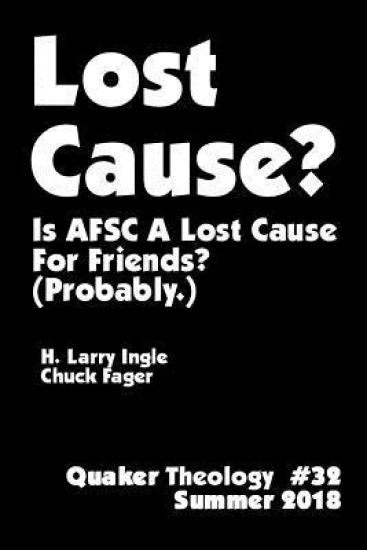
No sooner had the AFSC's Centennial bash gotten underway in spring of 2017, when somebody rained on their parade: another multi-million budget shortfall was acknowledged, with the expected fallout of more job and program cuts. This was getting to be an all-too familiar story; almost as familiar as the empty promises to "re-connect" AFSC with actual living Quakers. What had happened? In marketing talk, the answer is straightforward: besides foolishly wasting millions of dollars, AFSC had trashed and squandered its brand, and is paying the price. And what was that brand? Look at the name: It wasn't "American." It wasn't "Service. And by god, it wasn't "Committee." It was "Friends. And more than that: the Society of Friends. Still more; the Religious Society of Friends. (Or RSOF.) What's all this got to do with Quaker theology? Everything. The thesis of this compilation is that it is theology - or whatever is behind that term, which makes Quakerism real, and this this difficult-to-pin-down "quotidian" is what animates Quaker witness and service; and that without it, the service is fatally compromised. And that AFSC, in cutting loose from the RSOF, in all its messy "quotidian" (yet through which somehow the Spirit seems to work; after all, it birthed AFSC) has undermined the most precious aspect of its brand: its authenticity. Marketing experts agree that without that, the group is like a cut flower, the roots severed. This cutting is not a new phenomenon. Clarence Pickett, its most revered Director, said as far back as 1945 that "there is no legal connection between the S ociety] of F riends] and the AFSC." "Theoretically," he admitted, "the AFSC could become composed of non-Friends entirely." As, in practice - not theoretically - it almost entirely has. What had happened? As one Board member put it in 1991, "If you look down the list of major donors, people say again and again, 'I'm giving money to AFSC because it's a Quaker organization and when Quakers do peace work, they do it right. . . .'" Well, maybe they once did it right. But in AFSC, Quakers aren't doing it anymore. Alas, while drawing up their latest list of experts, AFSC has overlooked two of the most experienced analysts in the field, namely: professor H. Larry Ingle, and Chuck Fager. We stumbled into this assignment in1979, when a discussion of AFSC unexpectedly broke loose. I was the convenor, Larry an enthusiastic participant. We've been on this unfolding case ever since. This collection brings together most of the major pieces we have produced. Reading AFSC internal documents, it looks more and more like AFSC's "anti-oppression" thrust has indeed displaced "the formal Quaker identity" as the group's sacred center. Certainly it's been endlessly useful in internal politics. As one exasperated CEO put it in 2008 in an uncharacteristically candid moment: "There is a culture of white guilt in this organization that is stifling and patronizing." But what if this exaltation is misplaced? What if the legacy of racism is a problem to be worked on rather than the successor to Quakerism as the group's religious center? And what has happened when a culture's sacred has been sucked out of its vessel, replaced with a farrago of imported and shifting notions, given over to outsiders, and the vessel is then paraded around to collect money from the credulous? Larry and I are aware that our work has not endeared us to many at the higher levels of AFSC's rickety staff ladder, and likely frightened some at lower rungs who fear for their jobs (probably rightly, but not on our account.) It is a kind of consolation to find in its records evidence that some of its higher-ups have occasionally put in serious effort at not taking us seriously. No doubt our worst continuing offense is that we have insisted, unlike almost all the internal reshufflers and reformers, in doing our work openly, in the public prints, and online. And here we are, doing
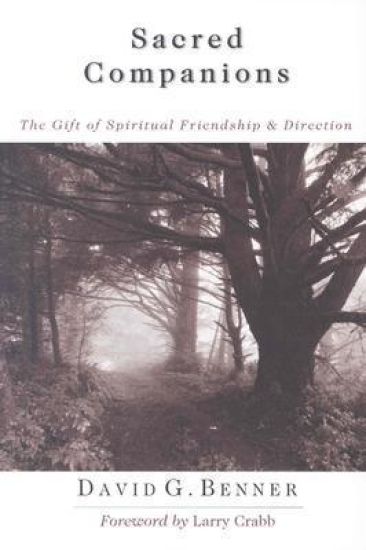
ECPA Gold Medallion Finalist We need companions on our spiritual journey. The modern world has taught us to value autonomy and individualism. Our churches often see spirituality as personal and private. But we cannot go long in our Christian pilgrimage before realizing that isolation leads to spiritual barrenness. We soon discover that our souls long for accompaniment, intimacy and spiritual friendship. As a result, many Christians today are rediscovering the ancient practice of spiritual direction. In this inviting guide, David G. Benner introduces readers to the riches of spiritual friendship and direction, explaining what they are and how they are practiced. Spiritual direction moves beyond mere moral lifestyle accountability and goes deeper than popular notions of mentoring or discipling. Through prayerful, guided attunement to God's activity, sacred companions provide care for the soul. If we are to experience significant spiritual formation and growth, our souls must be nurtured through spiritual companions. Benner, well-accustomed to God's work through relationships, models the kind of traveling companion who can move us toward deeper intimacy with God.
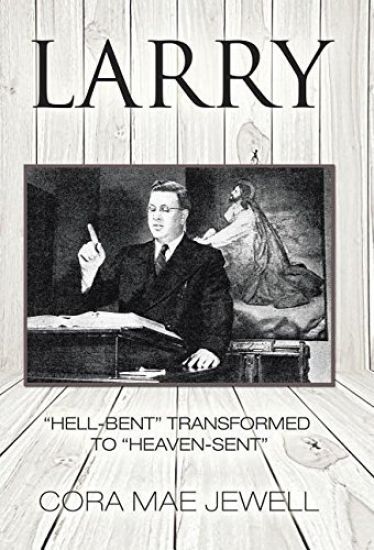
When it seemed the best years of his life were over, Larry Baker gained a new passion for living through unexpected, life-changing friendships and adventures. He invites you to join him in the daily exhilaration of discovering the surprises and relationships God has waiting for each of us, just around the corner
Westlake Girl: My Oregon Frontier Childhood is the true story of a spirited girl coming of age in an isolated village on the Oregon coast from 1928 to 1936. It portrays the artless feminist strivings of a capable girl who dreamed of a career in the Coast Guard on the merit of her skills as a boat pilot and champion swimmer. Frieda’s triumphs (taming a harbor seal as a pet, winning swim races against older boys) and disappointments (exclusion from the Coast Guard “for no better reason than that I was a girl”) will resonate with modern women who still meet obstacles – some natural and some arbitrary – to having it all.
Taurean Nelson, a creative writer and journeyman illustrator from St. Louis, Missouri, currently living in Chicago, Illinois, decided to embark on a journey into book writing. Taurean is new to fiction, and with this step, he's hoping to show that he deserves a seat at the table. Taurean never saw himself as a children's book writer; he primarily focused on poetry and micro stories but was prompted to try after a friend's suggestion. Children's fiction is a new feather in his hat, and he hopes that you and your family find his latest work enjoyable as he indeed found creating it enjoyable. So have a seat and spend a little time reading this incredible story from a budding young author.
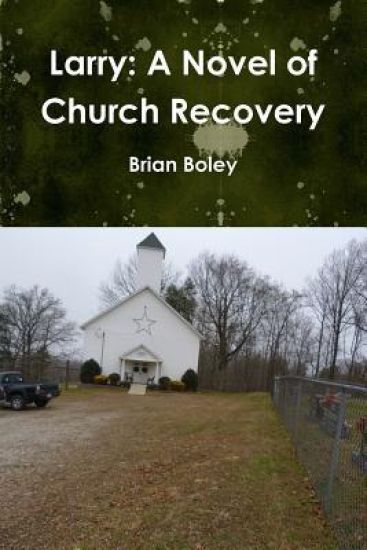
A teaching novel: How does a small, dying church turn itself around? What are some concrete steps that a church with little money and no energetic young members can take that will grow the church? Perhaps the answer lies in the wise mysterious visitor's advice...
Between 1975 and 1978, Larry 'Pigface' Travers terrorised Camp Diamond Creek, killing more than a hundred horny, stoned teens, hacking them to death with his axe (the machete was already taken by some hockey guy over in New Jersey), and making a general nuisance of himself. Life couldn't have been better for a psycho slasher.But in '78, after being outwitted by that year's 'final girl', Pigface found himself trapped (and a little bit on fire). Presumed dead, Larry Travers disappeared, but his legend lived on.It's 2014. Now living in the woods with his overbearing - and slightly antique - mother, Larry's old enough to play bingo and enjoy jigsaw puzzles without feeling guilty. But the urge to kill has returned, and Larry thinks he still has what it takes to be a homicidal lunatic.Pigface is back. Trouble is, he's not as young as he used to be...